
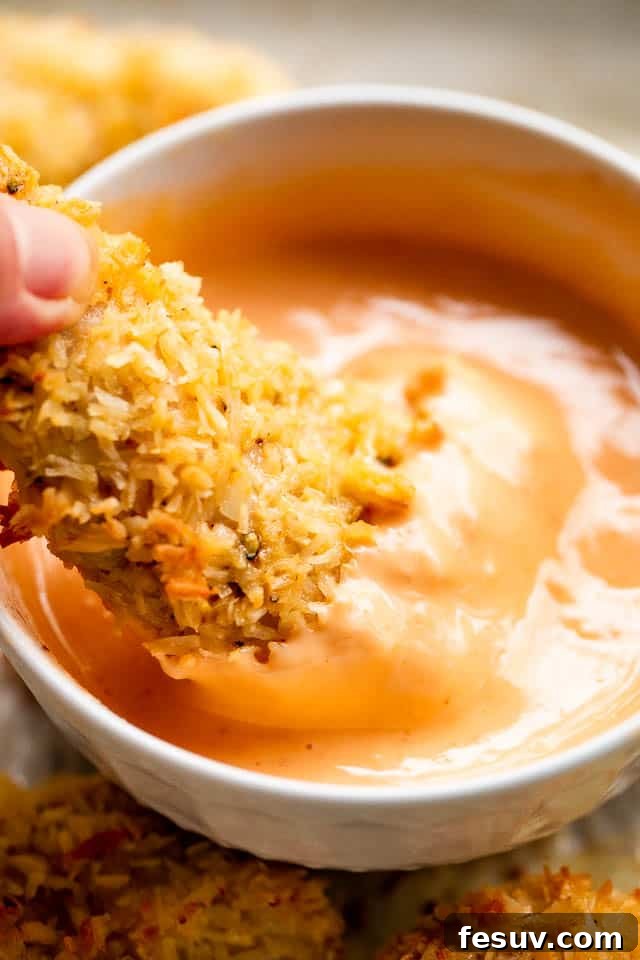
Irresistibly Crispy Baked Coconut Chicken Tenders: A Family Favorite Recipe
Discover the ultimate weeknight dinner solution or a crowd-pleasing appetizer with these incredible Baked Coconut Chicken Tenders. A household staple, these tenders transform ordinary chicken into a culinary delight that’s both healthy and utterly delicious. Each piece is perfectly seasoned, generously coated with delicate coconut flakes, and baked to a golden crisp. Forget the mess and guilt of deep-frying; this recipe delivers a satisfying crunch and mouthwatering flavor that will have everyone reaching for more!
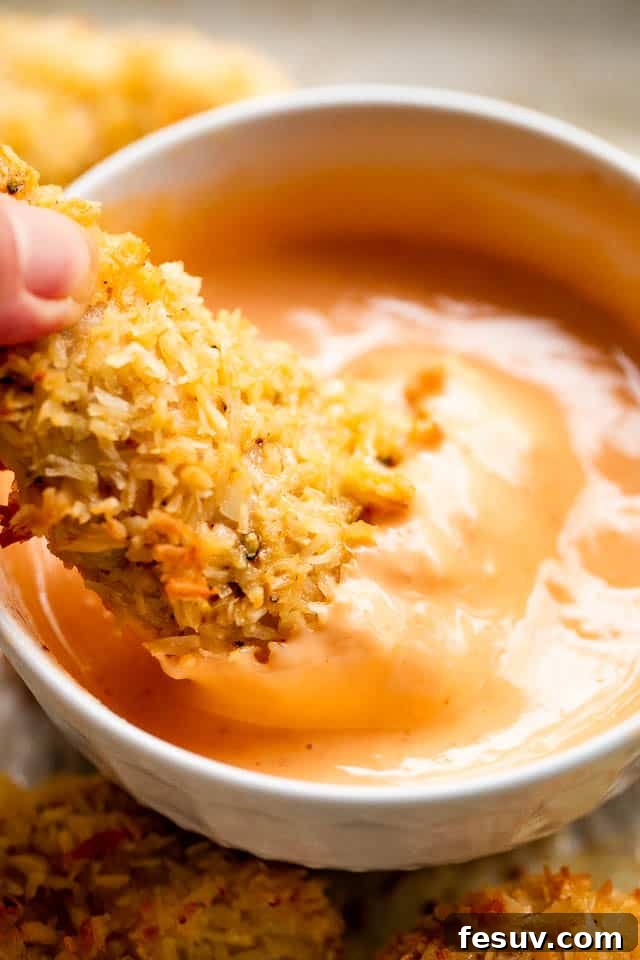
Why You’ll Love These Crispy Coconut Chicken Tenders
While the allure of classic fried chicken is undeniable, the time, effort, and health implications of deep-frying can often deter us. This recipe for Coconut Chicken Tenders offers a brilliant alternative, delivering all the satisfying crispy texture and robust flavor you crave, but with a lighter, healthier twist. The secret lies in the simple baking method and the unique, flavorful coating of coconut flakes. It’s an Asian-fusion inspired dish that’s incredibly versatile, serving equally well as a main course or a fantastic appetizer for gatherings.
What makes these tenders truly stand out?
- Healthier Alternative: Baked instead of fried, reducing unhealthy fats and making it a guilt-free indulgence.
- Incredible Texture: The shredded coconut forms a beautifully crispy crust that locks in moisture, ensuring tender, juicy chicken every time.
- Exotic Flavor Profile: The subtle sweetness of coconut combined with savory spices creates a unique and irresistible taste.
- Kid-Friendly: A guaranteed hit with children and adults alike, making dinner time a breeze.
- Quick & Easy: Ready in under 30 minutes, it’s perfect for busy weeknights when you need a delicious meal fast.
- Versatile Pairing: Delicious on its own, with a variety of dipping sauces, or as part of a larger meal.
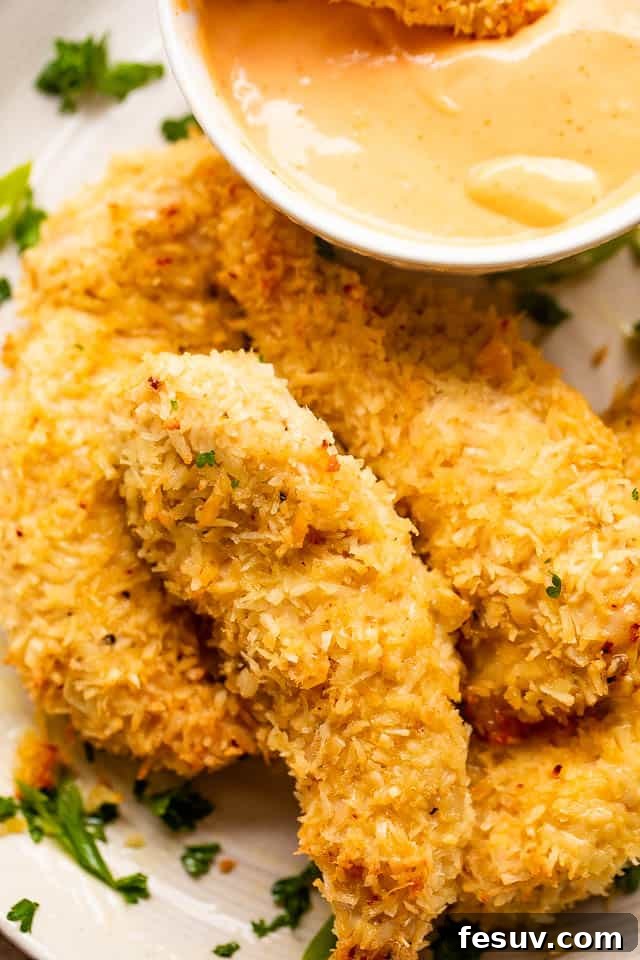
Key Ingredients for Irresistible Coconut Chicken
Crafting these delectable chicken tenders requires just a handful of simple ingredients. Each component plays a crucial role in achieving the perfect flavor and texture, making this recipe both accessible and incredibly satisfying.
For the Baked Coconut Chicken Tenders:
- Egg: A single, lightly beaten egg acts as the binding agent, helping the spices and coconut flakes adhere to the chicken. It’s essential for creating that crispy coating.
- Olive Oil: While any olive oil works, a lighter variety is often preferred for baking as it doesn’t overpower the delicate flavors. It also contributes to the golden-brown crispness.
- Salt and Freshly Ground Black Pepper: Fundamental seasonings that enhance the natural taste of the chicken and the overall dish. Adjust to your preference.
- Smoked Paprika: This spice adds a beautiful depth of flavor with its subtle, smoky notes. If you prefer, sweet or hot paprika can be substituted to match your taste, but the smoked variety truly elevates this dish.
- Garlic Powder: A pantry staple that provides an aromatic kick and complements the other seasonings perfectly.
- Unsweetened Shredded Coconut: The star of the show! You’ll need about 1 ½ cups. Using unsweetened coconut allows the natural sweetness of the flakes to shine through without making the dish overly sweet. It forms the incredible, crispy coating.
- Chicken Breast Tenderloins: One pound of chicken tenderloins is ideal for this recipe. Their size and natural tenderness make them perfect for quick baking. If using full chicken breasts, simply slice them into strips of similar size for even cooking.
For the Spicy Sriracha Mayonnaise Dipping Sauce (Optional, but highly recommended!):
This vibrant sauce adds a fantastic contrast and an optional kick that complements the coconut chicken beautifully.
- Mayonnaise: Your favorite brand will work here, whether it’s a classic, light, or even a keto-friendly option. It forms the creamy base of the sauce.
- Honey: Adds a touch of sweetness that balances the heat of the Sriracha and the tang of the vinegar.
- Sriracha Sauce: Provides the signature heat and Asian-inspired flavor. If you’re sensitive to spice, you can reduce the amount or substitute it entirely with sweet chili sauce for a milder, sweeter option (in which case, you might omit the honey).
- White Wine Vinegar: A splash of white wine vinegar (or rice vinegar for a more authentic Asian touch) brightens the sauce and adds a subtle tang, cutting through the richness of the mayo.
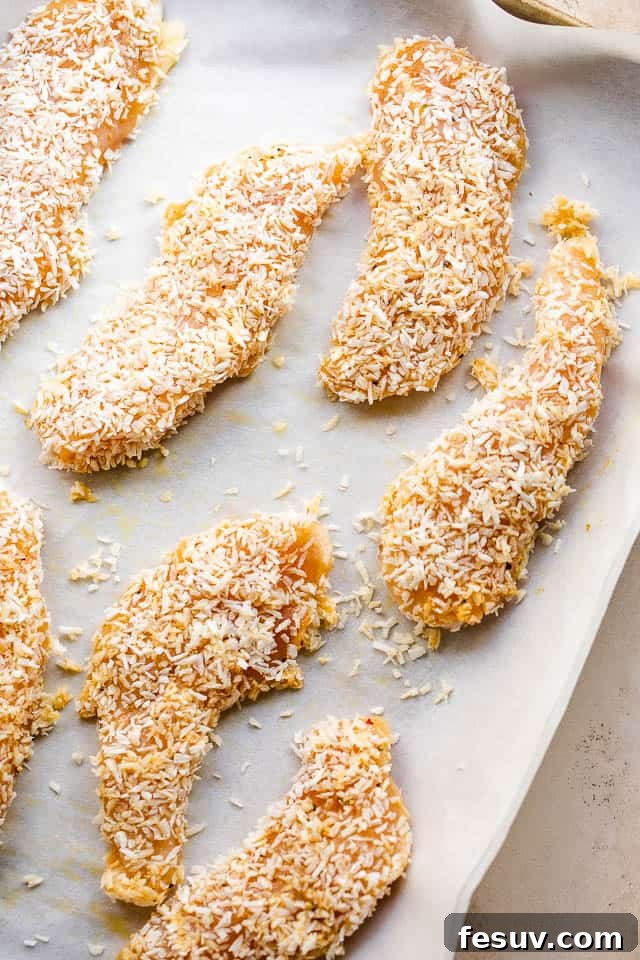
Step-by-Step Guide: How to Make Baked Coconut Chicken Tenders
Making these delicious coconut chicken tenders is incredibly straightforward, perfect for a busy weeknight. Follow these simple steps for perfectly crispy and flavorful results every time.
- Prepare Your Oven and Baking Sheet: Begin by preheating your oven to 400°F (200°C). Line a baking sheet with aluminum foil for easy cleanup, then lightly grease it with cooking spray. This prevents sticking and promotes crispiness. Set the prepared sheet aside.
- Prepare the Chicken Dredging Mixture: In a medium-sized bowl, whisk together the lightly beaten egg, olive oil, salt, black pepper, smoked paprika, and garlic powder until well combined. This mixture will serve as the flavorful base for your coconut coating.
- Set Up Your Breading Station: In a separate, shallow dish (a pie plate or a wide, shallow bowl works well), spread out the unsweetened shredded coconut flakes evenly. Having your dredging and coating stations ready makes the process smooth.
- Coat the Chicken Tenders: Take each chicken tenderloin and first dip it into the egg mixture, ensuring it’s fully coated. Allow any excess liquid to drip off briefly. Then, transfer the chicken tender to the dish with the coconut flakes. Press the coconut firmly onto all sides of the chicken to ensure a generous and even coating.
- Arrange on Baking Sheet: Place the coated chicken tenders onto the previously prepared baking sheet, ensuring they are arranged in a single layer with a little space between each piece for optimal air circulation. For extra crispiness and a beautiful golden-brown finish, lightly spray the tops of the coated chicken tenders with cooking spray.
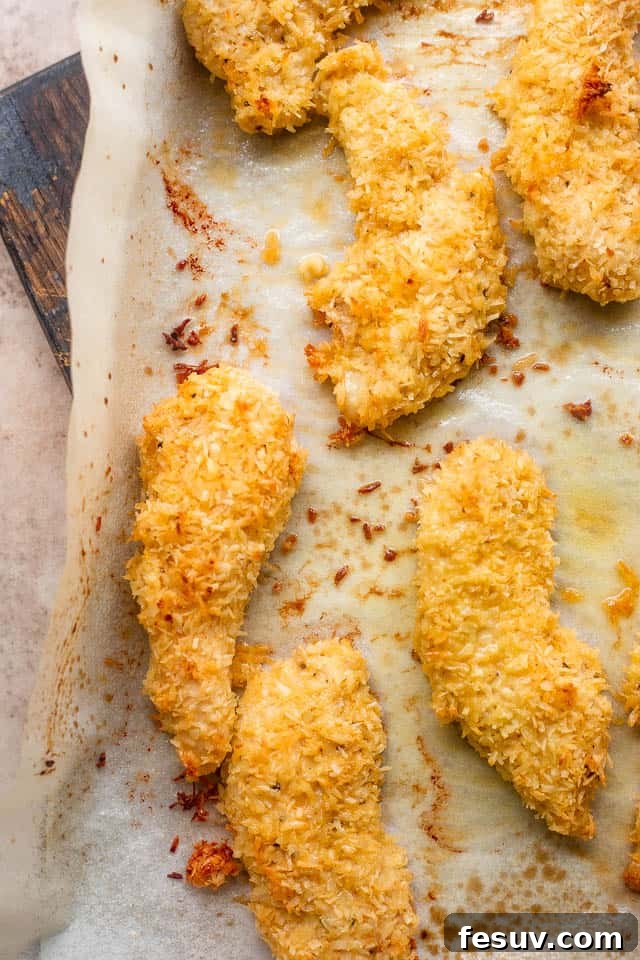
- Bake to Perfection: Transfer the baking sheet to your preheated oven. Bake for approximately 12 to 15 minutes, or until the internal temperature of the thickest part of the chicken registers 165°F (74°C) on an instant-read thermometer. Avoid overcooking to keep the chicken tender and juicy.
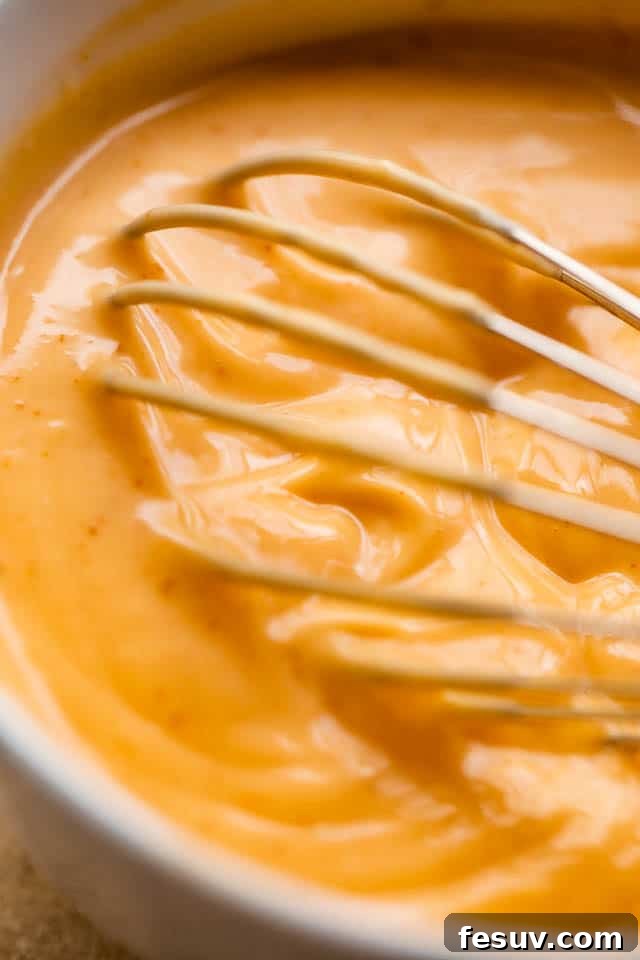
- Prepare the Dipping Sauce: While the chicken is baking, take this opportunity to whip up the spicy Sriracha mayonnaise. In a small bowl, combine the mayonnaise, honey, Sriracha sauce, and white wine vinegar. Stir well until all ingredients are thoroughly mixed and the sauce is smooth. Taste and adjust the spice or sweetness to your liking.
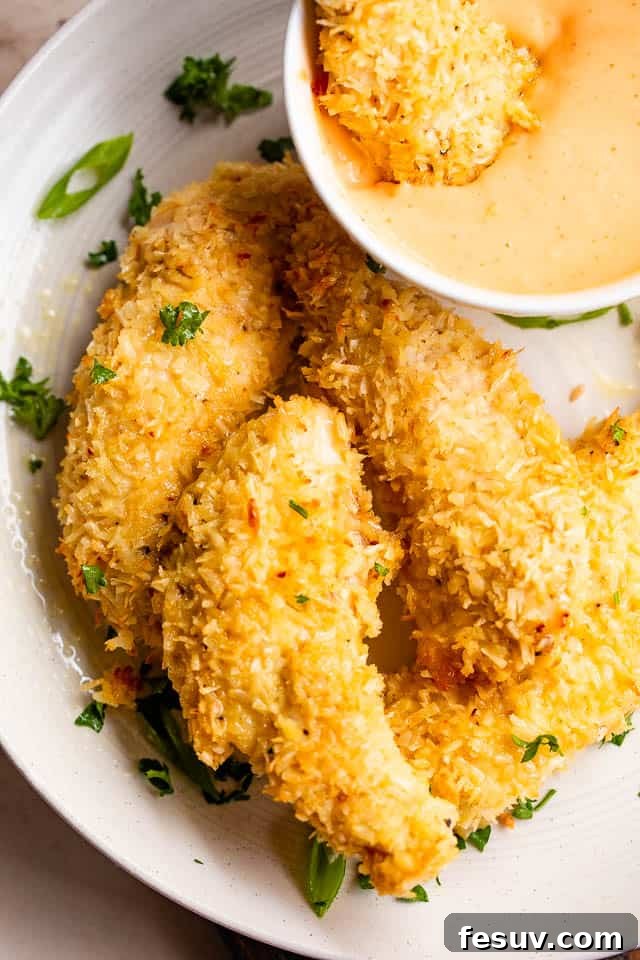
- Serve and Enjoy!: Once the chicken tenders are cooked through, remove them from the oven. Let them rest for a few minutes to retain their juiciness and crispness. Serve the warm, crispy baked coconut chicken tenders immediately with the side of spicy Sriracha mayonnaise for dipping. Get ready for a flavor explosion!
Expert Tips for Perfectly Crispy and Juicy Chicken Tenders
Achieving restaurant-quality chicken tenders at home is easier than you think. These expert tips will help ensure your coconut chicken tenders are perfectly cooked, irresistibly crispy, and bursting with flavor.
- Avoid Overcooking is Key: White meat chicken, especially tenderloins, can dry out very quickly if overcooked. The moment an internal temperature of 165°F (74°C) is reached in the thickest part of the chicken, it’s done. Remove it from the oven immediately. An Instant Read Thermometer is your best friend here for accuracy.
- The Importance of Resting: While chicken tenders are smaller than a whole chicken breast, a short resting period after cooking is still beneficial. Let them rest for about 5 minutes, preferably on a wire rack placed over a baking sheet (to maintain crispness) or on paper towels. This allows the juices to redistribute throughout the meat, ensuring maximum tenderness and preventing a burst of hot liquid when bitten into.
- Employ the Broiler for Extra Crispness: If, after baking, you find the coconut coating isn’t quite as crispy as you’d like, the broiler is your secret weapon. Remove the cooked chicken from the oven and set it aside. Turn your oven to a high broil setting and allow it a few minutes to heat up. Then, slide the tenders back under the hot broiler for about one minute per side. Keep a close eye on them, as broilers can toast quickly, and coconut can burn fast! This high, direct heat will rapidly crisp up the outside.
- Even Coating for Even Crispness: Ensure each chicken tender is thoroughly and evenly coated with the coconut mixture. Press the coconut flakes onto the chicken firmly. This creates a uniform crust that crisps up consistently.
- Don’t Crowd the Pan: When placing the tenders on the baking sheet, make sure they have enough space between them. Overcrowding the pan can lead to steaming instead of baking, resulting in a less crispy exterior. If necessary, use two baking sheets.
- Consider an Air Fryer: For an alternative method that often yields extra crispness with less oil, try cooking these in an air fryer. Preheat your air fryer to 375°F (190°C) and cook for 10-12 minutes, flipping halfway, until golden and cooked through.
- Pound for Uniform Thickness: If your chicken tenderloins vary significantly in thickness, consider gently pounding the thicker parts slightly to achieve a more uniform thickness. This ensures even cooking and prevents some pieces from drying out while others are still cooking.
Delicious Dipping Sauce Ideas
While the spicy Sriracha mayonnaise is a fantastic match for these coconut chicken tenders, the beauty of this dish lies in its versatility. If spicy isn’t your preference, or if you simply want to try something new, these tenders pair wonderfully with a variety of dipping sauces. Experiment and find your favorite combination!
- Classic Barbecue Sauce: A sweet and tangy barbecue sauce provides a smoky contrast to the subtle sweetness of the coconut.
- Honey Mustard: The creamy, sweet, and tangy notes of honey mustard are a timeless pairing for chicken tenders, especially loved by kids.
- Sweet Chili Sauce: If you want a hint of Asian-inspired flavor without the intense heat of Sriracha, a pre-made sweet chili sauce is an excellent choice. Its sticky, sweet, and mildly spicy profile is irresistible.
- Plain Old Ketchup: Sometimes, the simplest option is the best! Ketchup offers a familiar, savory-sweet taste that many enjoy with chicken tenders.
- Mango Habanero or Pineapple Salsa: For a tropical twist, pair the coconut chicken with a fruity salsa. The sweetness and acidity of mango or pineapple can perfectly complement the coconut.
- Garlic Aioli: A rich, garlicky mayonnaise-based dip can add a sophisticated touch and depth of flavor.
- Ranch Dressing: A creamy, herby ranch dressing is another family-friendly favorite that pairs well with crispy chicken.
What to Serve With Coconut Chicken Breast Tenders
These versatile coconut chicken tenders can anchor a full meal or serve as a delicious component of a lighter spread. Here are some fantastic pairing ideas to complete your culinary experience:
- Classic Comfort Sides: To create a satisfying and hearty meal, consider serving these tenders with beloved comfort food sides. Try them with Crispy Garlic Parmesan Baked Potato Wedges for a textural delight, a creamy Macaroni Salad, or the rich and smoky flavors of Maple Bacon Baked Beans.
- Wholesome Vegetable Pairings: For a balanced meal, roasted vegetables are an excellent choice. Asparagus, broccoli, bell peppers, or sweet potato fries would all complement the chicken beautifully. A simple green salad with a light vinaigrette also works wonderfully.
- Grains and Rice Dishes: Coconut chicken pairs perfectly with a variety of grain-based sides. Serve with fluffy jasmine rice, brown rice, quinoa salad, or even a side of flavorful coconut rice to amplify the tropical notes.
- Light and Fresh Lunches: These coconut chicken tenders aren’t just for dinner! They can be transformed into a delicious, light, yet filling lunch by plating them alongside a refreshing Avocado Tomato Salad. The bright and colorful flavors of this salad create a delightful contrast with the savory chicken.
- Hearty Soup Companions: Surprisingly, chicken tenders make a perfect accompaniment to a warm bowl of soup. On a chilly evening, pair these crispy tenders with a comforting soup like my Quick and Easy Instant Pot Corn Chowder. The creamy chowder and crispy chicken create an incredibly satisfying combination.
- Asian-Inspired Sides: Lean into the Asian-fusion aspect by serving with a quick stir-fry of mixed vegetables, a noodle salad, or spring rolls.
Storage and Reheating Tips
Making a bigger batch of these coconut chicken tenders is a great idea for meal prep or to have delicious leftovers on hand. Proper storage and reheating will ensure they remain as tasty as possible.
- Refrigerating Leftovers: Allow any leftover chicken tenders to cool completely to room temperature. Then, transfer them to airtight food storage bags or containers. Stored properly, cooked tenders will maintain their freshness and flavor for 3-4 days in the refrigerator.
- Freezing for Later: For longer storage, these tenders freeze beautifully. Once cooled, wrap individual tenders well in two layers of plastic wrap, or place them in freezer-safe bags. Be sure to press out as much air as possible before sealing to prevent freezer burn. They can be kept in the freezer for up to 2 months.
- Reheating for Optimal Crispness:
- From Refrigerator: If refrigerated, arrange the tenders in a single layer on a baking sheet. Bake at 400°F (200°C) for about 10 minutes, or until just heated through and crispy again.
- From Frozen: If frozen, it’s best to thaw the tenders completely in the refrigerator overnight before reheating. Once thawed, follow the instructions for reheating from the refrigerator. For a quicker option, you can reheat from frozen in an air fryer at 350°F (175°C) for 10-15 minutes, or until heated through and crispy.
- Air Fryer Reheating: An air fryer is an excellent tool for reheating leftover tenders, as it helps restore their crispiness. Place cooled or thawed tenders in a single layer in the air fryer basket and cook at 375°F (190°C) for 5-7 minutes, shaking the basket halfway, until hot and crispy.
Coconut Chicken Breast Tenders Recipe
Rated 5 out of 5 stars by 7 readers
Prep Time: 10 minutes
Cook Time: 15 minutes
Total Time: 25 minutes
Servings: 4
Ingredients
For the Chicken:
- 1 egg, lightly beaten
- 1 tablespoon olive oil
- ½ teaspoon garlic powder
- ½ teaspoon salt
- ¼ teaspoon freshly ground black pepper
- ¼ teaspoon smoked paprika
- 1 ½ cups unsweetened shredded coconut
- 1 pound chicken breast tenderloins
For the Sauce (Optional):
- ½ cup mayonnaise
- 3 tablespoons honey
- 3 tablespoons sriracha sauce
- ½ tablespoon white wine vinegar
Instructions
- Preheat oven to 400˚F (200°C).
- Line a baking sheet with foil and lightly grease with cooking spray. Set aside.
- In a bowl, whisk together egg, olive oil, salt, black pepper, paprika, and garlic powder.
- In a separate, shallow bowl, spread out the coconut flakes.
- Dip each chicken tender in the egg mixture; allow excess to drip off.
- Then, coat thoroughly with coconut, pressing firmly to adhere.
- Transfer coated chicken tenders to the previously prepared baking sheet in a single layer.
- Lightly spray the tops of the chicken tenders with cooking spray for extra crispness.
- Bake for 12 to 15 minutes, or until the internal temperature of the chicken registers 165˚F (74°C).
- In the meantime, prepare the sauce by mixing together the mayo, honey, sriracha, and white vinegar until smooth.
- Remove chicken tenders from oven and let rest for 5 minutes.
- Serve the crispy chicken tenders with the mayo-sriracha sauce.
Equipment
- Oven
- Baking Sheet
- Mixing Bowls
- Instant-Read Thermometer (optional, but recommended)
Nutrition
Calories: 648kcal | Carbohydrates: 22g | Protein: 28g | Fat: 51g | Saturated Fat: 25g | Cholesterol: 125mg | Sodium: 887mg | Potassium: 638mg | Fiber: 6g | Sugar: 16g | Vitamin A: 189IU | Vitamin C: 9mg | Calcium: 21mg | Iron: 2mg
Nutritional information is an estimate and provided as a courtesy. Values may vary according to the ingredients and tools used. Please use your preferred nutritional calculator for more detailed info.
Did you make this recipe? Leave a rating and let us know what you think!
Frequently Asked Questions (FAQ)
Here are answers to some common questions about making and enjoying these coconut chicken tenders:
Can I use sweetened shredded coconut?
While unsweetened shredded coconut is recommended for a balanced flavor, you can use sweetened coconut if that’s what you have on hand. Just be aware that the overall dish will be sweeter. You might want to adjust the amount of honey in the dipping sauce accordingly or opt for a less sweet sauce.
Can I make these gluten-free?
Yes, absolutely! Chicken tenders are naturally gluten-free. Ensure your shredded coconut and any spices you use are certified gluten-free, and you’re good to go. The recipe does not use any wheat flour in the coating.
How can I make the tenders even crispier?
Several methods can enhance crispiness:
- Cooking Spray: Lightly spraying the coated tenders with cooking spray before baking helps achieve a golden, crispy crust.
- Wire Rack: Bake the tenders on a wire rack placed over a baking sheet. This allows air to circulate around all sides, preventing a soggy bottom.
- Broiler Finish: As mentioned in the tips, a quick 1-2 minute finish under the broiler can give them an extra crisp boost. Watch carefully to prevent burning.
- Air Fryer: Using an air fryer is an excellent alternative to baking for maximum crispness.
Can I prepare the chicken tenders ahead of time?
You can prepare the chicken tenders up to the point of coating them with coconut. Arrange the coated tenders on a baking sheet lined with parchment paper and flash freeze them for about 30 minutes until firm. Then, transfer them to a freezer-safe bag. When ready to cook, bake from frozen (this may require an extra 5-10 minutes of baking time) or thaw in the refrigerator first.
What if I don’t have chicken tenderloins?
No problem! You can use boneless, skinless chicken breasts. Simply slice them lengthwise into strips of similar size and thickness as tenderloins. Aim for pieces that are about 1 inch wide for even cooking.
Can I add other spices to the coating?
Absolutely! Feel free to customize the spice blend. A pinch of cayenne pepper for extra heat, a dash of curry powder for an Indian twist, or some dried ginger for more Asian flair would all work well. Just be mindful of how strong the flavors are and adjust accordingly.