
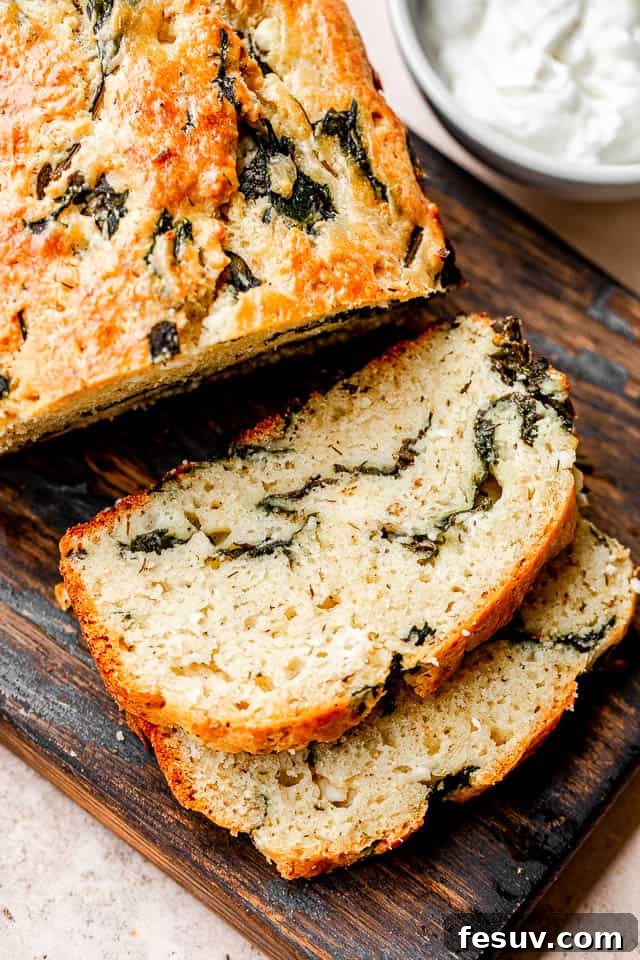
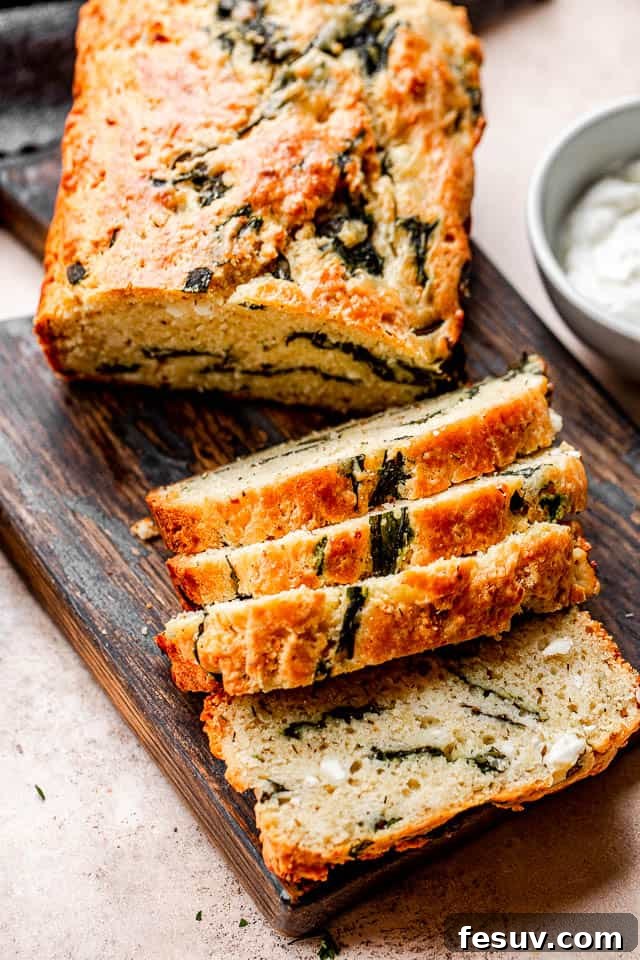
Craving the comforting aroma of freshly baked bread but short on time or yeast? Look no further! This delightful homemade Spinach and Feta No-Yeast Bread offers a remarkably easy, quick, and utterly delicious solution to your bread cravings. Perfect for a hearty breakfast, a flavorful side dish with dinner, or a satisfying snack any time of day, this recipe proves that incredible bread doesn’t always require hours of waiting for dough to rise. Its rich, savory notes from fresh spinach and tangy feta, combined with aromatic herbs, create a truly irresistible loaf that will become a staple in your kitchen.
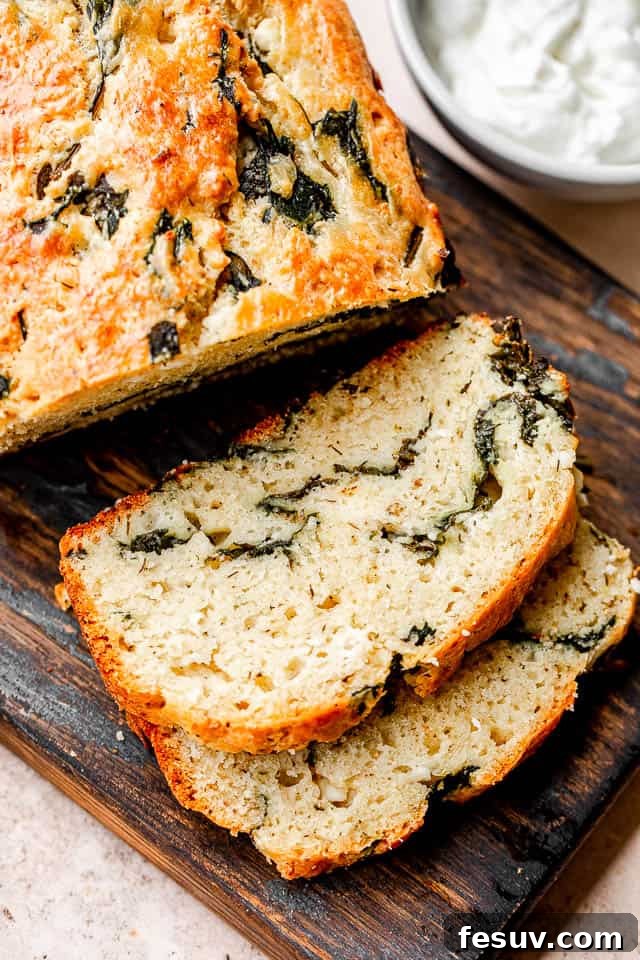
Delicious Spinach and Feta No-Yeast Bread: Your Ultimate Quick & Easy Homemade Recipe
There’s a unique joy in baking bread from scratch, but often, the process can seem daunting due to the time commitment required for yeast activation and dough rising. This is where the magic of no-yeast bread comes in. Our Spinach and Feta No-Yeast Bread recipe revolutionizes homemade baking, allowing you to whip up a fragrant, savory loaf without a single packet of yeast. Whether you’re a seasoned baker or just starting your culinary journey, this recipe promises a satisfying experience and a loaf that tastes incredible, sliced thick and slathered with creamy butter, or as the foundation for a gourmet sandwich.
The Magic of No-Yeast Bread: Why You’ll Love This Recipe
Imagine the aroma of freshly baked bread filling your home in under an hour and a half, from start to finish. This is the promise of no-yeast bread, and particularly this Spinach and Feta variant. It’s the ideal recipe for those moments when you yearn for a homemade loaf but find your pantry lacking yeast, or simply don’t have the luxury of time to wait for a traditional dough to proof. Many bakers, even those with yeast readily available, often opt for this quick bread due to its sheer convenience and delightful results.
Fast & Convenient Baking
One of the most compelling reasons to embrace no-yeast bread is its incredible speed. Unlike traditional yeast breads that demand multiple rising cycles, this quick bread relies on chemical leavening agents like baking powder and baking soda. This means you can mix the batter, pop it into the oven, and have a freshly baked loaf ready for cooling in a fraction of the time. It’s perfect for busy weeknights, last-minute gatherings, or when an unexpected craving strikes. You get all the satisfaction of homemade baking without the extensive commitment.
Perfect for Beginners & Busy Bakers
If the complexities of yeast-based baking, with its precise temperatures and proofing times, have intimidated you in the past, no-yeast bread offers a welcoming entry point into the world of bread making. This recipe is incredibly forgiving, requiring minimal technique and delivering consistent results. It’s an excellent way for beginners to build confidence in the kitchen and for experienced bakers to enjoy a delicious, low-effort alternative to their usual routines.
A Delightful Savory Twist
While many quick breads lean towards sweet profiles, this recipe takes a savory turn that is utterly captivating. The combination of earthy spinach, tangy crumbled feta cheese, and aromatic fresh herbs creates a flavor profile that is both comforting and sophisticated. If you appreciate the dense, flavorful breads often served in authentic Italian or Greek restaurants, you will undoubtedly fall in love with this unique spinach and feta version. It’s a wonderful departure from plain bread, adding a burst of Mediterranean-inspired taste to your meal or snack.
What is Quick Bread? Understanding No-Yeast Baking
To truly appreciate this recipe, it’s helpful to understand the concept of “quick bread.” Quick breads are a category of baked goods that are leavened with chemical leavening agents such as baking powder, baking soda, or a combination of both, rather than yeast. This means they do not require the time-consuming process of fermentation and rising that is characteristic of yeast breads. Common examples include muffins, scones, pancakes, and many types of loaf cakes.
The science behind quick breads is relatively simple: when baking powder and/or baking soda react with acidic ingredients (like sour cream in this recipe) and moisture, they produce carbon dioxide gas. This gas gets trapped in the batter, creating bubbles that expand in the heat of the oven, causing the bread to rise. The result is typically a denser, moister crumb compared to the airy texture of yeast breads, often described as cake-like, but in the most satisfying way. This specific Spinach and Feta No-Yeast Bread offers a beautifully tender texture with a hearty feel, making it incredibly versatile.
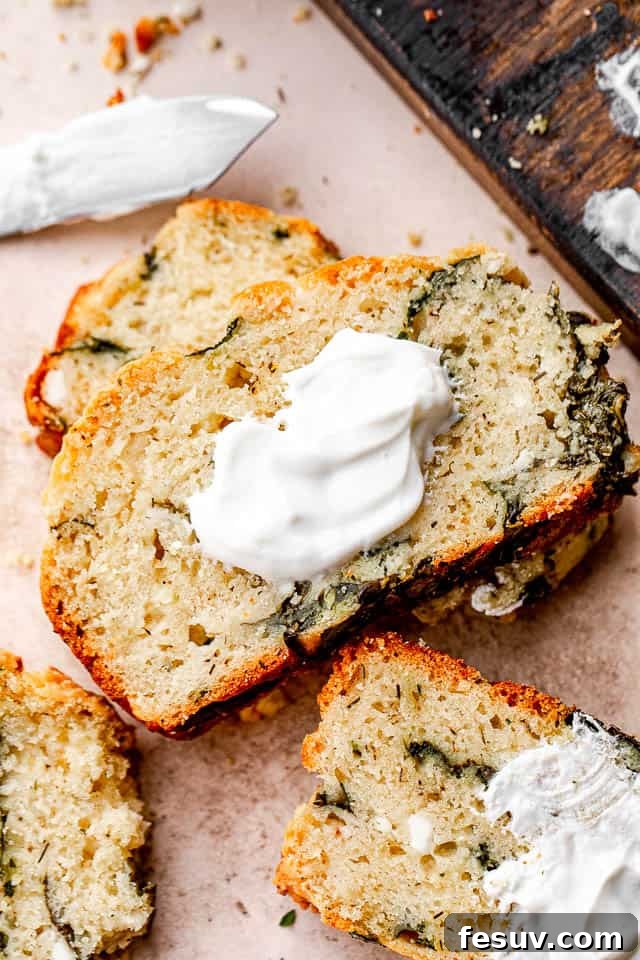
Essential Ingredients for Your Spinach and Feta Loaf
Crafting this flavorful bread requires a thoughtful selection of fresh, high-quality ingredients. Each component plays a crucial role in achieving the perfect texture and taste profile that makes this bread truly stand out.
- Olive Oil: A foundational ingredient for sautéing the spinach and garlic, it imparts a rich, Mediterranean flavor and helps to tenderize the greens. Choose a good quality extra virgin olive oil for the best results.
- Baby Spinach: Fresh baby spinach is ideal for its mild flavor and tender texture. When cooked, it wilts down significantly, infusing the bread with subtle earthiness and vibrant green flecks. You can use frozen spinach, but be sure to thaw it completely and squeeze out all excess water to prevent a soggy loaf.
- Garlic: Minced garlic is a flavor powerhouse. It pairs beautifully with spinach and feta, ensuring that every bite of your bread is infused with an aromatic punch. Freshly minced garlic offers the best flavor compared to jarred alternatives.
- All-Purpose Flour: The backbone of our bread, providing structure and body. Measure it correctly by spooning it into your measuring cup and leveling it off, rather than scooping directly, to avoid a dense bread.
- Sugar: A small amount of sugar balances the savory notes and aids in the bread’s browning, contributing to a beautifully golden crust without making the bread sweet.
- Baking Powder + Baking Soda: These are the dynamic duo responsible for the bread’s rise. Baking powder is a complete leavening agent, while baking soda requires an acidic ingredient (like the sour cream) to activate fully. Together, they create a light, tender crumb.
- Fresh Thyme: Adds a fragrant, earthy, and slightly minty note that complements the other savory ingredients beautifully. Fresh herbs always provide a more vibrant flavor than dried ones.
- Fresh Rosemary: With its distinct piney aroma and flavor, fresh rosemary brings a touch of sophistication and depth to the bread. Its robust character stands up well to the strong flavors of feta and garlic.
- Salt: Essential for seasoning, it enhances all the other flavors in the bread and prevents it from tasting bland.
- Fresh Ground Black Pepper: Adds a subtle warmth and a touch of piquant flavor that beautifully complements the savory profile of the bread.
- Sour Cream: This ingredient is a secret weapon for moist, tender quick breads. Its acidity reacts with the baking soda, and its fat content contributes to a rich, soft texture and a delicate tang.
- Vegetable Oil: Adds moisture and helps to keep the bread soft and tender. A neutral-flavored oil is best to let the spinach and feta shine.
- Eggs: Act as a binder, providing structure to the bread and contributing to its richness and golden color. Large eggs are typically used in baking for consistency.
- Crumbled Feta Cheese: The star of the show! Feta offers a salty, briny, and tangy flavor that pairs exquisitely with spinach. Its creamy texture melts slightly into the batter, distributing pockets of deliciousness throughout the loaf.
Step-by-Step Guide: How to Bake Spinach and Feta No Yeast Bread
Baking this savory no-yeast bread is a straightforward process that yields impressive results. Follow these simple steps for a perfect loaf every time.
- Prepare for Baking: Begin by preheating your oven to 350˚F (175˚C). This ensures the oven is at the correct temperature when your batter is ready, promoting an even rise. Line a standard 9 x 5 inch loaf pan with parchment paper, leaving an overhang on the sides to easily lift the bread out later. Generously coat the parchment paper with cooking spray to prevent sticking. Set the prepared pan aside.
- Cook Spinach: Heat 1 tablespoon of olive oil in a skillet over medium heat. Add the baby spinach and minced garlic to the hot oil. Sauté for about 2 minutes, or until the spinach has completely wilted and the garlic is fragrant. Remove the skillet from the heat and set the spinach mixture aside to cool down slightly. This step is crucial for preventing the spinach from overcooking in the oven and for allowing any excess moisture to evaporate.
- Combine Dry Ingredients: In a large mixing bowl, whisk together the all-purpose flour, sugar, baking powder, fresh thyme, fresh rosemary, salt, fresh ground black pepper, and baking soda. Whisk thoroughly until all the dry ingredients are evenly distributed. This ensures that the leavening agents are well-mixed, which is key for a consistent rise. Set this bowl aside.
- Combine Wet Ingredients: In a separate, medium-sized mixing bowl, combine the sour cream, vegetable oil, and eggs. Whisk these wet ingredients together until they are smooth and fully incorporated.
- Form the Batter: Pour the wet ingredient mixture into the large bowl with the dry ingredients. Using a spatula or wooden spoon, gently fold the sour cream mixture into the flour mixture until just combined. Be careful not to overmix the batter; a few lumps are perfectly fine and will help keep the bread tender.
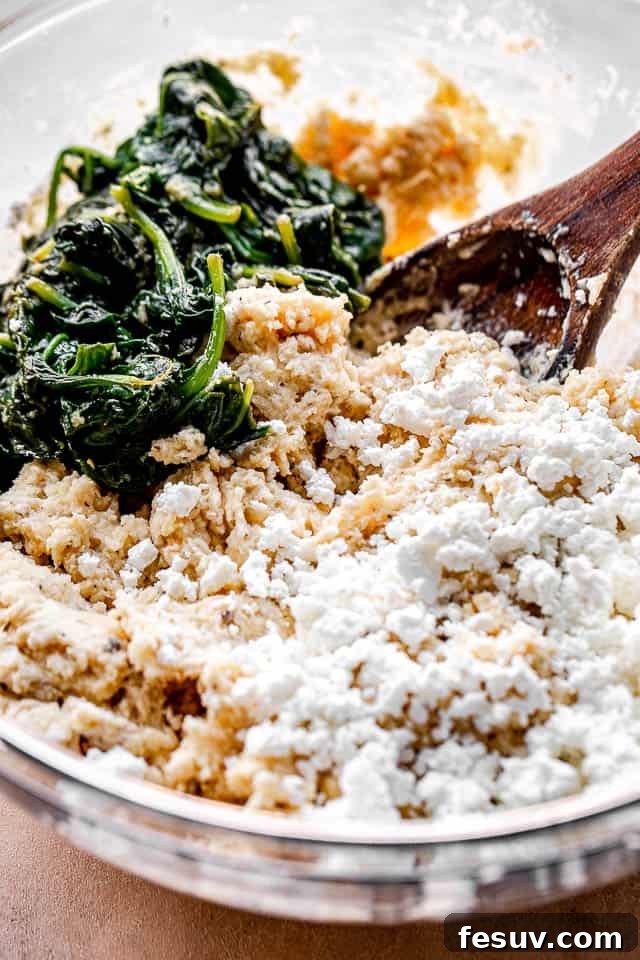
- Add Spinach & Cheese: Once the batter is mostly combined, add the cooled spinach and garlic mixture, along with the crumbled feta cheese. Gently stir the spinach and feta into the batter until they are evenly distributed. Again, avoid overmixing to maintain a light texture.
- Bake: Pour the prepared batter into your previously lined and greased 9×5 inch loaf pan. Spread the top evenly with your spatula. Transfer the pan to the preheated oven and bake for 40 to 50 minutes. The bread is done when a toothpick inserted into the center comes out clean, with no wet batter attached.
- Let Cool: Once baked, remove your Spinach and Feta No-Yeast Bread from the oven. Let it cool in the loaf pan for about 1 hour. This initial cooling period allows the bread to set and prevents it from crumbling. After 1 hour, use the parchment paper overhang to carefully lift the loaf out of the pan and transfer it to a wire rack to cool completely. Cooling completely on a rack is important for air circulation, preventing the bottom of the bread from becoming soggy.
- Serve and Enjoy: Once fully cooled, slice your delicious homemade bread and serve!
Pro Tips for Baking Success
Achieving the perfect loaf of Spinach and Feta No-Yeast Bread is simple, but a few expert tips can elevate your baking experience and ensure fantastic results every time.
- Line with Parchment Paper and Grease Your Loaf Pan: While it might seem like an extra step, lining your loaf pan with parchment paper and then greasing it thoroughly is crucial for this denser quick bread. This dual protection ensures that your beautiful loaf can be easily removed from the pan without sticking or tearing, making cleanup a breeze. The parchment paper also helps lift the bread out cleanly.
- Transfer to Rack While Cooling: After the initial 1-hour cooling period in the pan, it’s essential to transfer your bread to a wire rack to cool completely. Allowing the bread to cool on a rack ensures proper air circulation around all sides, preventing condensation from forming on the bottom and making your loaf soggy. This results in a perfectly crisp crust and a consistently tender crumb.
- Don’t Overmix the Batter: Overmixing is the arch-nemesis of quick breads. When you combine the wet and dry ingredients, mix only until just combined – a few lumps are normal and even desirable. Overmixing develops the gluten in the flour too much, leading to a tough, dense, and less tender bread. The less you mix after the flour is incorporated, the more delicate and crumbly your loaf will be.
- Ensure Spinach is Cooled and Drained: After wilting the spinach, allow it to cool completely before adding it to the batter. If the spinach is too hot, it can start to cook the eggs or melt the feta prematurely. Also, ensure you’ve squeezed out any excess moisture from the spinach to prevent a watery batter, which could affect the bread’s texture.
- Room Temperature Wet Ingredients: For optimal mixing and a smoother batter, make sure your eggs, sour cream, and even vegetable oil are at room temperature. Room temperature ingredients emulsify more easily, leading to a more consistent and tender crumb in your final baked product.
- Accurate Flour Measurement: For quick breads, precise flour measurement is key. Avoid scooping flour directly from the bag, as this can compact it and lead to using too much. Instead, spoon the flour lightly into your measuring cup and then level it off with the back of a knife. This method ensures you have the correct amount, resulting in a perfectly balanced texture.
- Don’t Open the Oven Door Too Soon: Resist the urge to peek during the first 30 minutes of baking. Opening the oven door too early can cause a sudden drop in temperature, which can make the bread collapse and lead to a less desirable texture. Trust your oven and the timing provided in the recipe.
- Adjust Bake Time for Your Oven: Every oven is slightly different. The specified bake time of 40-50 minutes is a guideline. Keep an eye on your bread, especially towards the end of the baking time. If the top is browning too quickly, you can loosely tent it with aluminum foil. Always rely on the toothpick test for true doneness.
Creative Serving Ideas & Pairings
This savory Spinach and Feta No-Yeast Bread is incredibly versatile and can be enjoyed in numerous ways. Its rich flavor and satisfying texture make it a fantastic addition to almost any meal.
- As Toast: Simply slice and toast for a quick and flavorful breakfast. Top it with a fried egg, a dollop of Greek yogurt, a sprinkle of fresh herbs, or even a smear of cream cheese for a truly indulgent start to your day.
- With Pasta: Its Mediterranean flavors make it an excellent accompaniment to a comforting pasta dish. Imagine dipping a slice into the rich sauce of this Easy Cheesy Baked Ziti – pure bliss!
- Alongside Soup: There’s nothing quite like a warm slice of savory bread dipped into a hearty bowl of soup. This bread is perfect with a creamy tomato soup, a robust lentil soup, or my personal favorite, this Creamy Ravioli Soup recipe.
- With Chicken Dishes: Elevate a simple chicken dinner with this flavorful side. It pairs wonderfully with a roasted chicken, grilled chicken, or even breaded cutlets. Try it alongside my Crispy Honey Sesame Chicken or these Oven Baked Chicken Tenders for a complete and satisfying meal.
- Brunch Highlight: This bread is a showstopper for any brunch spread. Serve it alongside quiches, fruit salads, and other brunch favorites. It’s also fantastic with a variety of spreads and cheeses.
- Appetizer or Mezze Plate: Cut into small squares or triangles, this bread can be served as an appetizer on a mezze platter with olives, hummus, tzatziki, and other dips.
- Sandwich Base: For a unique and flavorful sandwich, use slices of this bread instead of plain bread. It’s particularly good with grilled vegetables, roasted chicken, or a simple feta and tomato sandwich.
- Alongside Salads: Serve a slice with a fresh green salad or a Greek salad for a light yet satisfying lunch. The savory notes of the bread perfectly complement crisp greens and vinaigrette.
Storage and Freezing: Keep Your Bread Fresh
To ensure your delicious Spinach and Feta No-Yeast Bread stays fresh and flavorful for as long as possible, proper storage is key. Here’s how to store it, whether you plan to enjoy it over a few days or save it for later.
- Room Temperature: For short-term storage, allow the bread to cool completely. Once cool, place the entire loaf or individual slices in a resealable airtight bag or wrap it tightly in plastic wrap. Store it at room temperature, ideally in a cool, dry place. It will remain fresh and delicious for up to 3 days.
- Refrigerator: If you need to extend its shelf life, store the completely cooled bread in an airtight container or bag in the refrigerator. This will keep it fresh for up to a week. Be aware that refrigeration can sometimes slightly alter the texture of bread, making it a bit drier. A quick toast can often revive it.
- Freezer: For longer storage, this bread freezes beautifully! You can freeze it as a whole loaf or slice it first for easy individual portions. Wrap the loaf or slices tightly in plastic wrap, then place them in a heavy-duty freezer bag or airtight container. This double-layer protection helps prevent freezer burn. Stored properly in the freezer, your bread will last for up to 3 months.
- Reheating Frozen Bread: To enjoy frozen slices, simply pop them into a toaster or toaster oven until warmed through and lightly crispy. For a whole loaf, thaw it overnight in the refrigerator, then warm it in a preheated oven at 300°F (150°C) for about 10-15 minutes, or until heated through.
Spinach and Feta No-Yeast Bread
Katerina | Easy Weeknight Recipes
This flavorful homemade Spinach and Feta No-Yeast Bread is super easy to make, and it makes for a great breakfast, side dish, or snack option!
15 minutes
45 minutes
1 hour 30 minutes
1 hour (active time)
12
Ingredients
- 1 tablespoon olive oil
- 6 ounces baby spinach
- 2 cloves garlic, minced
- 1 3/4 cups all purpose flour
- 1 tablespoon sugar
- 1 1/2 teaspoons baking powder
- 1 teaspoon chopped fresh thyme
- 1 teaspoon chopped fresh rosemary
- 1/2 teaspoon salt
- 1/2 teaspoon fresh ground black pepper
- 1/4 teaspoon baking soda
- 3/4 cups sour cream
- 1/2 cup vegetable oil
- 2 large eggs
- 4 ounces crumbled feta cheese
Instructions
- Preheat oven to 350˚F (175˚C).
- Line a 9 x 5 inch loaf pan with parchment paper, leaving an overhang on the sides. Coat well with cooking spray and set aside.
- Heat olive oil in a skillet; add spinach and garlic and cook for 2 minutes, or until spinach is wilted.
- Remove from heat and set aside to cool completely.
- In a large mixing bowl, whisk together the flour, sugar, baking powder, thyme, rosemary, salt, pepper, and baking soda. Whisk until thoroughly combined and set aside.
- In a separate mixing bowl, combine sour cream, vegetable oil and eggs; whisk until smooth.
- Fold the sour cream mixture into the flour mixture until just combined, being careful not to overmix.
- Add the cooled spinach mixture and crumbled feta cheese to the batter; gently stir to combine.
- Pour the batter into the previously prepared loaf pan and bake for 40 to 50 minutes, or until a toothpick inserted into the center of the bread comes out clean.
- Remove from oven and let cool in the pan for about 1 hour. Carefully remove the loaf from the pan using the parchment paper overhang and transfer to a wire rack to cool completely.
- Cut into slices and serve.
Equipment
- Loaf pan (9 x 5 inch)
- Large mixing bowls
- Skillet
- Whisk
- Spatula or wooden spoon
- Wire rack
Nutrition Information (Estimated Per Serving)
Calories: 228 kcal | Carbohydrates: 17g | Protein: 5g | Fat: 16g | Saturated Fat: 11g | Cholesterol: 47mg | Sodium: 313mg | Potassium: 136mg | Fiber: 1g | Sugar: 2g | Vitamin A: 1512IU | Vitamin C: 5mg | Calcium: 114mg | Iron: 2mg
Nutritional information is an estimate and provided as a courtesy. Values may vary according to the exact ingredients, brands, and tools used. Please use your preferred nutritional calculator for more detailed and precise information.
Frequently Asked Questions (FAQs) About Spinach and Feta No-Yeast Bread
Can I use frozen spinach instead of fresh?
Yes, you can! If using frozen spinach, make sure to thaw it completely and then squeeze out as much excess water as possible. This is a crucial step; too much moisture will make your bread soggy. A good way to do this is by wrapping the thawed spinach in a clean kitchen towel or paper towels and wringing it out firmly. Use approximately 10 ounces of frozen spinach (thawed and drained) to yield about 6 ounces of cooked fresh spinach.
Can I substitute other cheeses for feta?
Absolutely! While feta provides a unique salty and tangy flavor that works wonderfully, you can experiment with other cheeses. Crumbled goat cheese would offer a similar tanginess, albeit a softer texture. Shredded Parmesan or a mild provolone could also work, though they would alter the flavor profile significantly. For a creamier texture, you might try a blend of mozzarella and a hint of parmesan. Choose a cheese that complements spinach and your personal taste preferences.
Is this bread gluten-free?
As written, this recipe uses all-purpose flour, so it is not gluten-free. However, you can often adapt quick bread recipes by using a good quality gluten-free all-purpose flour blend. Look for blends that are specifically designed for baking and often contain xanthan gum to aid in structure. The texture might be slightly different, but you can still achieve a delicious gluten-free version.
How do I know when the bread is perfectly baked?
The best way to determine if your no-yeast bread is done is by performing the toothpick test. Insert a wooden toothpick or a thin skewer into the very center of the loaf. If it comes out clean, without any wet batter attached, your bread is ready. If it comes out with wet crumbs, continue baking for another 5-10 minutes and re-test. The top should also be golden brown and the edges slightly pulled away from the pan.
Can I add other herbs or spices to this bread?
Of course! This recipe is quite adaptable. Beyond thyme and rosemary, you could consider adding a pinch of dried oregano or dill for a more distinct Mediterranean flavor. A touch of red pepper flakes could introduce a subtle heat. Always start with small amounts, about 1/2 teaspoon, and adjust to your liking.
Whether you’re looking for a quick breakfast option, a unique side dish to impress guests, or just a comforting snack, this Spinach and Feta No-Yeast Bread is a recipe that delivers on all fronts. Its simplicity, speed, and vibrant flavor make it an absolute winner in any kitchen. So, preheat your oven, gather your ingredients, and prepare to enjoy the irresistible taste of homemade bread without the wait. Happy baking!