
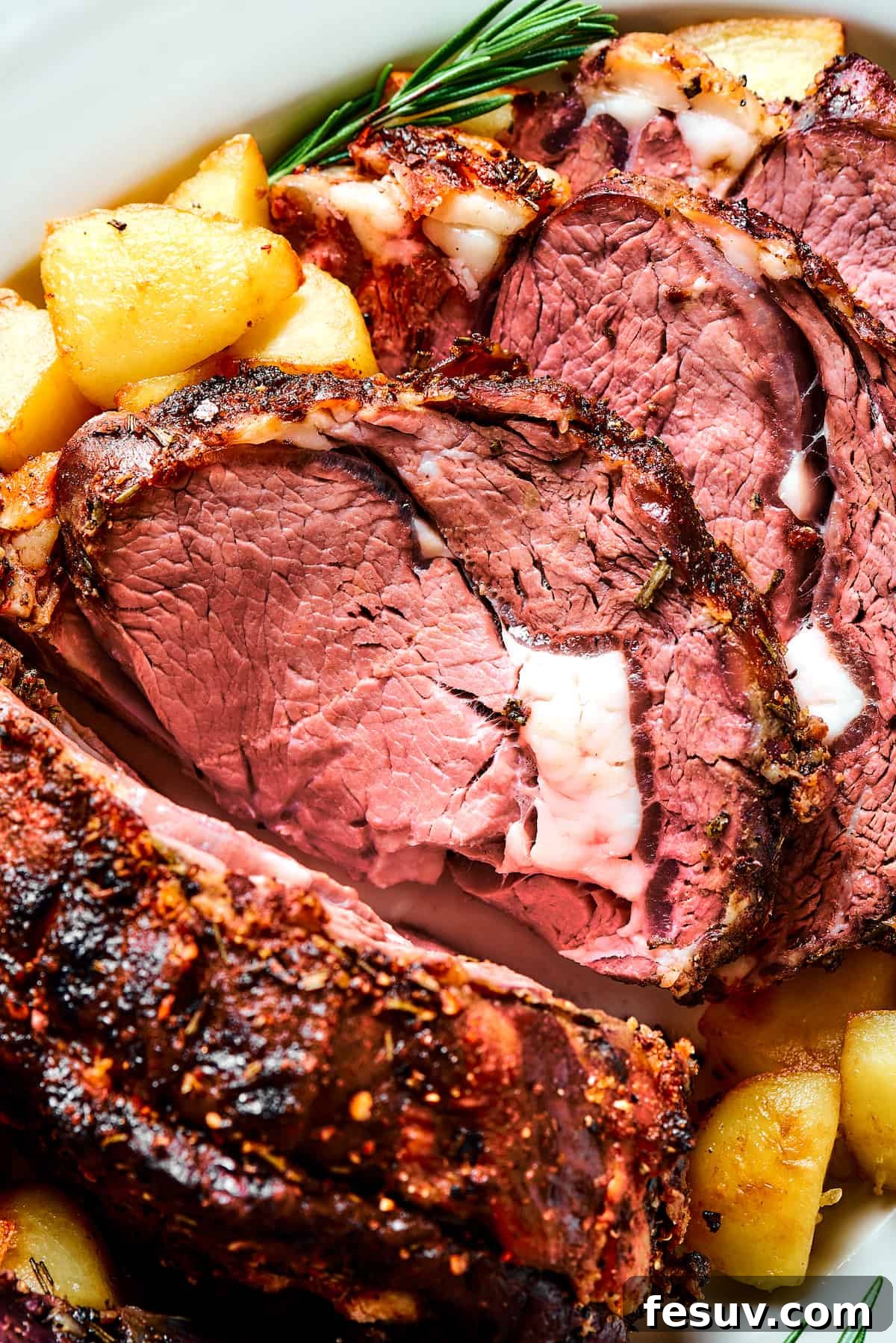
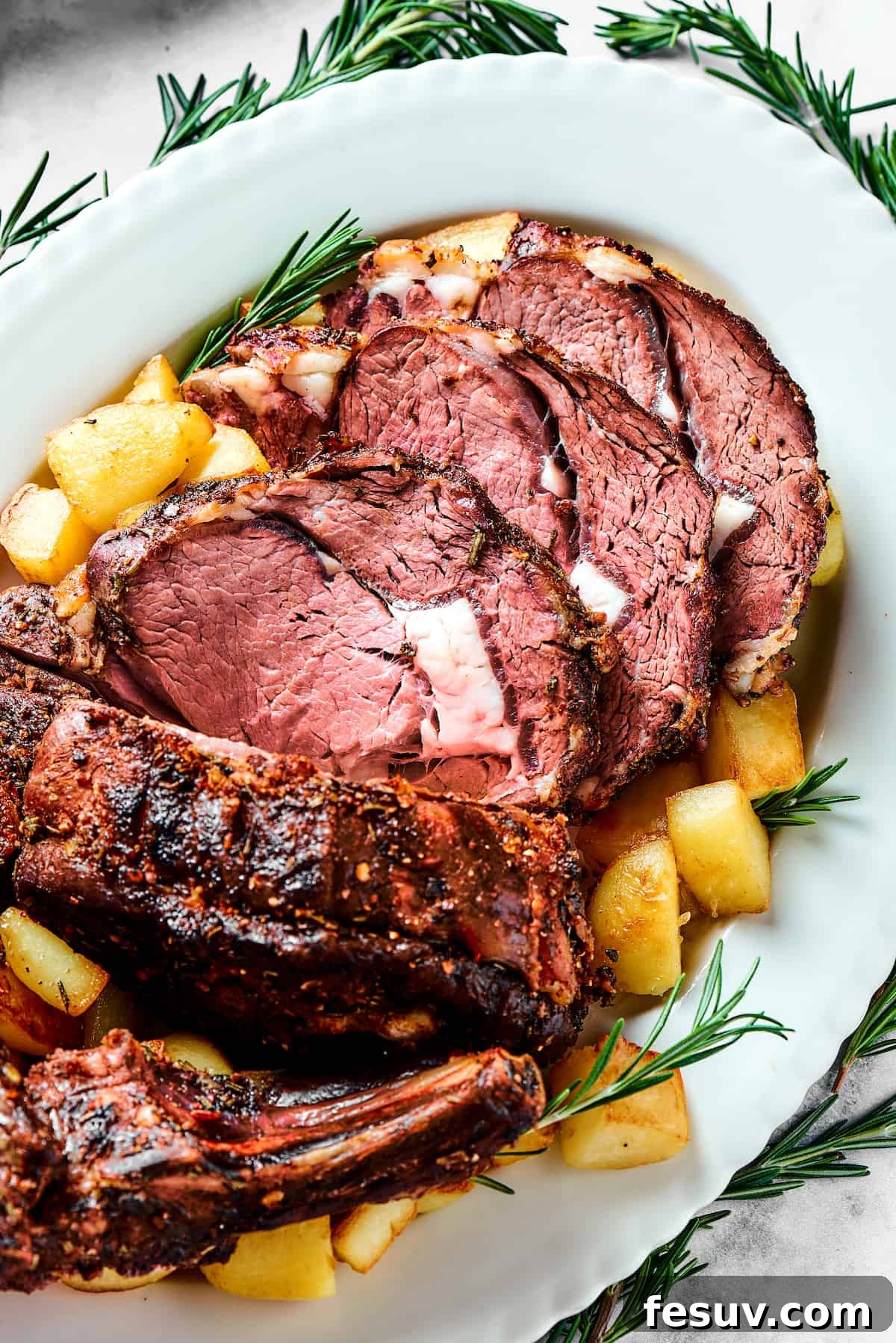
Unlock the secrets to crafting the ultimate Prime Rib, a magnificent centerpiece perfect for any special occasion. This guide unveils a straightforward yet sophisticated reverse-sear roasting technique, ensuring your roast is incredibly juicy and tender on the inside with a beautifully crusted exterior. Enhanced by a vibrant blend of rosemary, Worcestershire sauce, and a hint of chili, this holiday classic promises an unforgettable culinary experience that will impress even the most discerning palates.
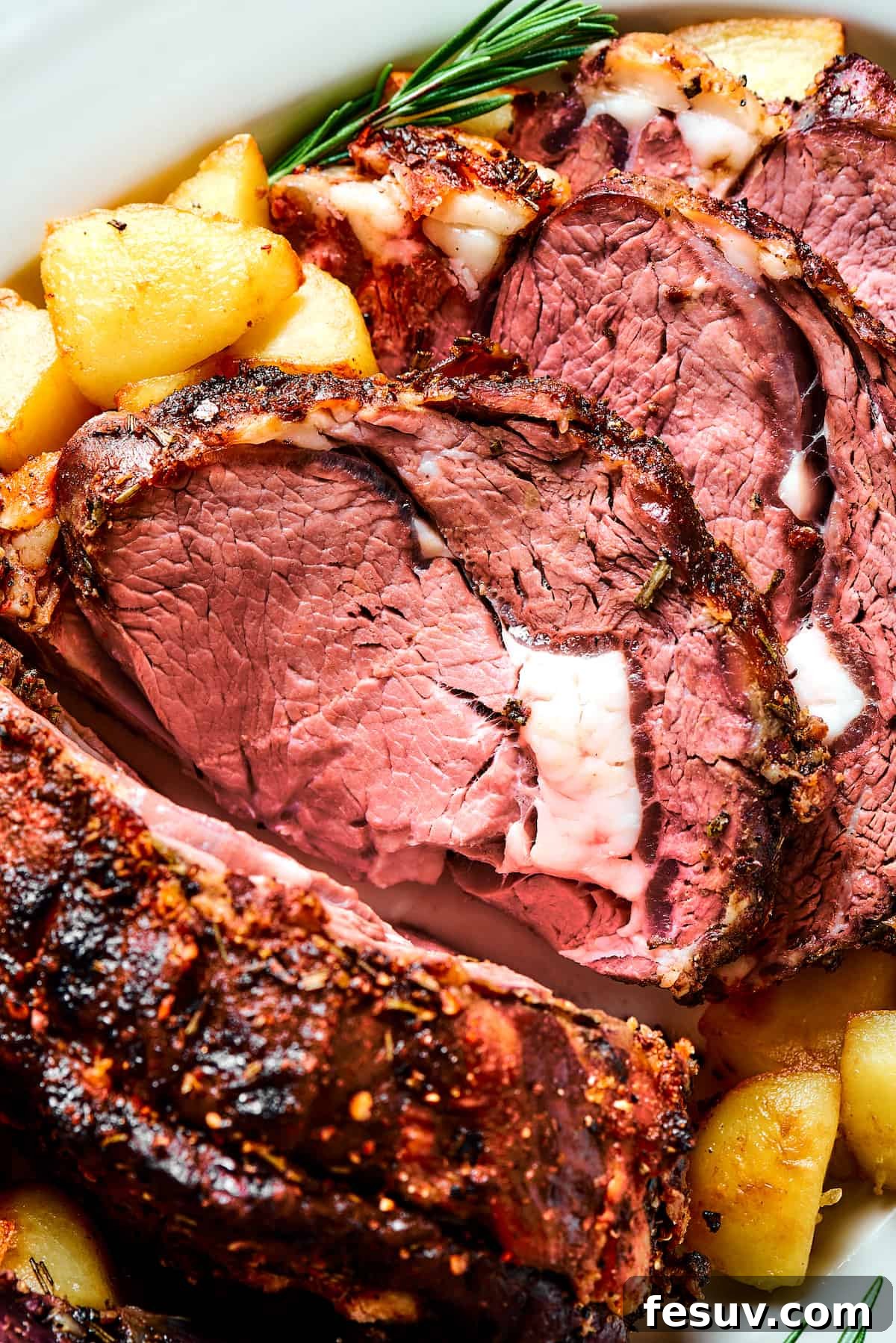
Elevate Your Holiday Dinner with a Showstopping Prime Rib
The holiday season often brings with it a delightful pressure to create memorable experiences, especially when it comes to food. While we all crave a relaxing and joyful time, there’s also an undeniable desire for something truly extraordinary, something that stands out and delivers exceptional flavor. Striking the balance between “easy and fun” and “extra-gorgeous and extra-special” can seem challenging, but with this prime rib roast recipe, you absolutely can have both!
Prime rib, inherently, is a spectacular cut of beef. Its natural tenderness, generous marbling, and rich flavor make it a beloved choice for celebrations. Beyond its intrinsic quality, a properly cooked prime rib boasts an impressive visual presence that will instantly elevate your dining table. The secret to achieving this culinary masterpiece lies in mastering the right roasting technique—and thankfully, that technique is surprisingly simple and incredibly effective.
Understanding Prime Rib: The King of Roasts
What exactly makes prime rib so special? At its core, a prime rib, often referred to as a standing rib roast, is essentially a large, bone-in cut comprising several ribeye steaks. This generous portion of beef is celebrated for its unparalleled tenderness, succulent juiciness, and intense beefy flavor, largely due to its excellent marbling—the intramuscular fat that melts during cooking, basting the meat from within. Many connoisseurs consider it the pinnacle of beef cuts, though some tenderloin enthusiasts might politely disagree. If you appreciate a well-executed ribeye steak or any premium steakhouse cut, you are destined to fall in love with a perfectly roasted prime rib. Its rich taste and luxurious texture are truly second to none, making it an ideal choice for grand occasions and festive feasts.
The Magic of the Reverse Sear Method
While traditional roasting involves a high initial blast of heat followed by lower temperatures, the reverse-sear method flips this approach on its head, offering superior results for large cuts like prime rib. This technique begins with slow, low-temperature cooking, allowing the roast to cook evenly from edge to center, preventing the outer layers from overcooking before the interior reaches the desired doneness. This gentle cooking process also helps to break down collagen, ensuring maximum tenderness and juiciness by minimizing moisture loss. Once the internal temperature is nearly perfect, a final short burst of very high heat creates that coveted, deeply browned, and crispy crust, locking in all the exquisite flavors and creating a beautiful textural contrast. The reverse sear is a game-changer, guaranteeing a flawless prime rib every time.
Essential Ingredients for an Unforgettable Rib Roast
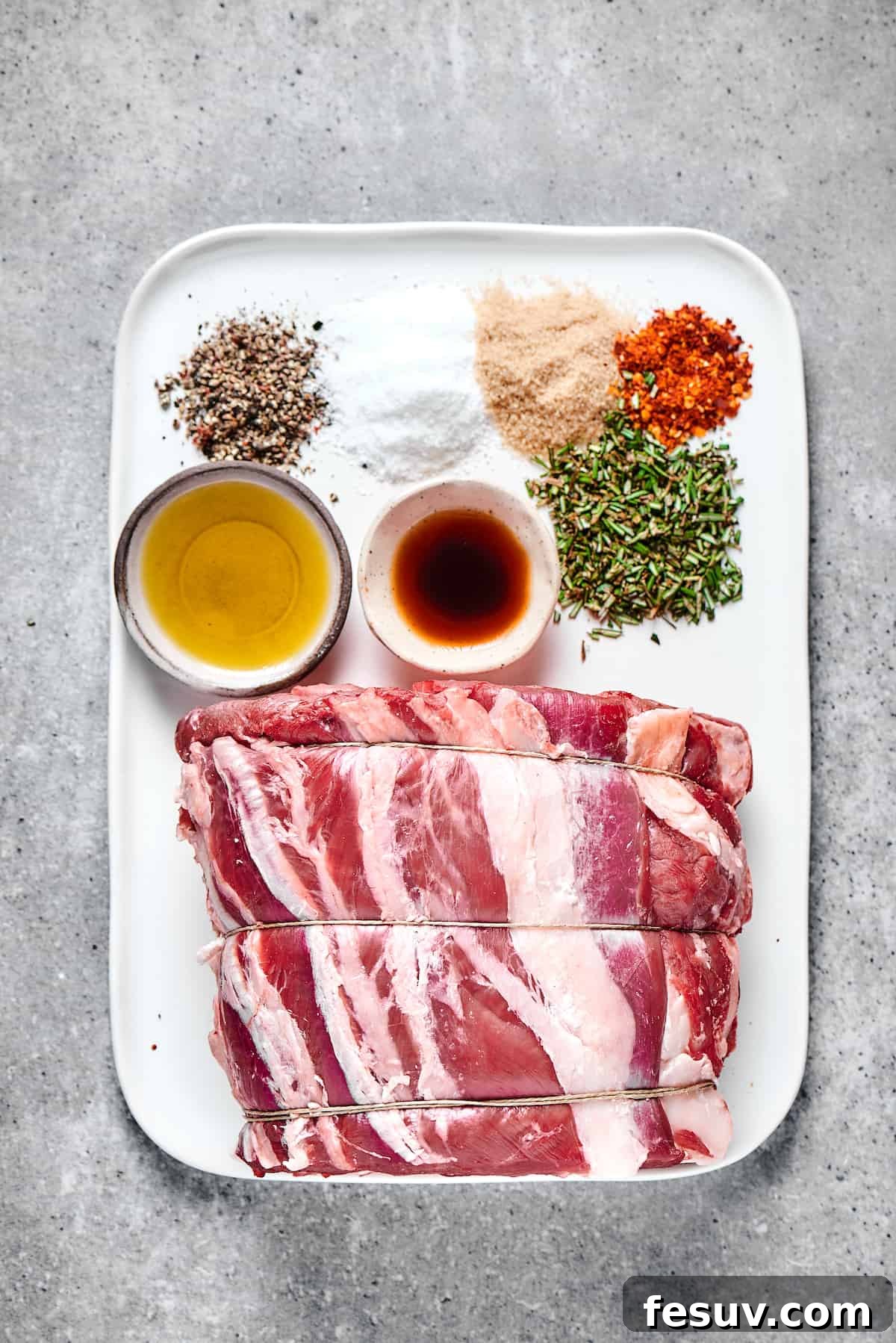
While a prime rib roast can be simply seasoned with salt and pepper, a few additional ingredients can elevate it to a spectacular, show-stopping dish with an aromatic, herbed crust. Choosing quality ingredients is key to unlocking the full potential of this magnificent cut.
- Rib Roast: The star of the show! When shopping, look for labels such as “prime rib,” “standing rib roast,” or “rib roast.” For this recipe, we recommend a classic bone-in roast, ideally weighing between 4 to 5 pounds. Bone-in roasts tend to offer more flavor and retain moisture better during cooking.
- Olive Oil: A good quality extra virgin olive oil provides a rich base for the seasonings to adhere and helps achieve a beautiful sear. Lighter olive oils are also perfectly acceptable.
- Worcestershire Sauce: This savory, pungent sauce is a secret weapon. Its umami-rich profile complements the robust flavor of the beef, adding depth and complexity to the crust.
- Salt and Pepper: Essential flavor enhancers. Use coarse sea salt for a more intense flavor and freshly ground black pepper for superior aroma.
- Sugar: Just a touch of sugar in the rub helps create a gorgeous, deeply caramelized, and crispy crust. It promotes browning through the Maillard reaction, contributing to both color and flavor.
- Chili Flakes: Also known as crushed red pepper, these add a subtle, warming kick that enhances the beef’s richness without overwhelming it. Feel free to adjust the quantity or omit entirely if you prefer a milder flavor.
- Fresh Rosemary: The fragrant, piney notes of fresh rosemary are a classic pairing with beef. Strip the leaves from about four sprigs and chop them finely to distribute their aromatic essence evenly across the roast.
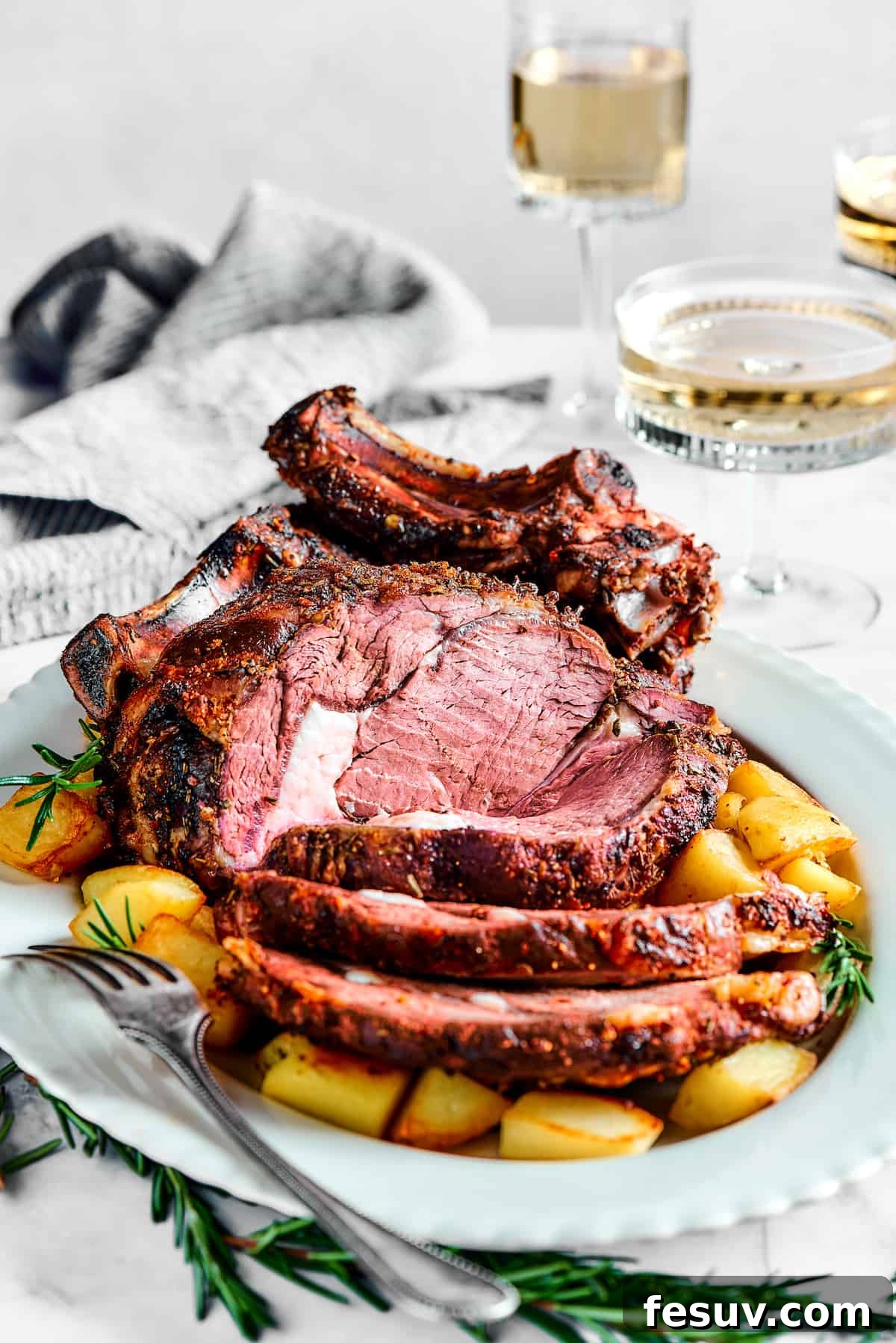
Mastering the Perfect Prime Rib: A Step-by-Step Guide
This method employs the reverse-sear technique, beginning with a low, slow roast and finishing with a high-heat sear for that irresistible crust. Remember, resting periods are just as crucial as cooking times for a truly juicy roast.
Preparation is Key
- Bring to Room Temperature: For the most even cooking and best results, it’s vital to allow your prime rib to come to room temperature before roasting. Approximately two hours before you plan to start cooking, remove the roast from the refrigerator and place it on your kitchen counter. This step ensures that the meat cooks more uniformly and reduces overall cooking time. Give yourself ample time for this crucial initial step.
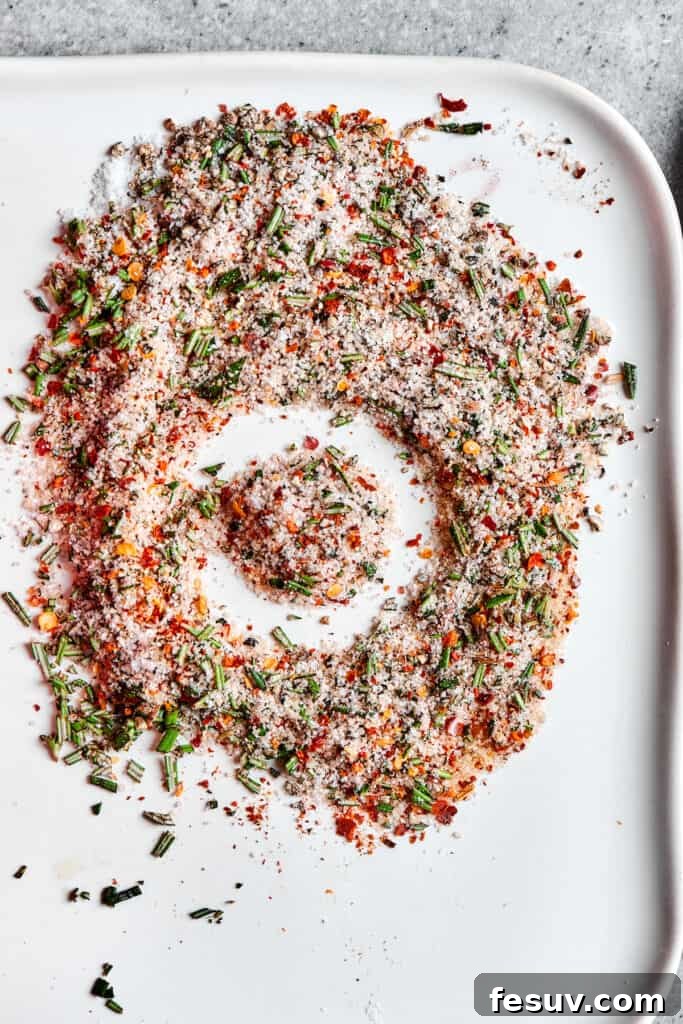
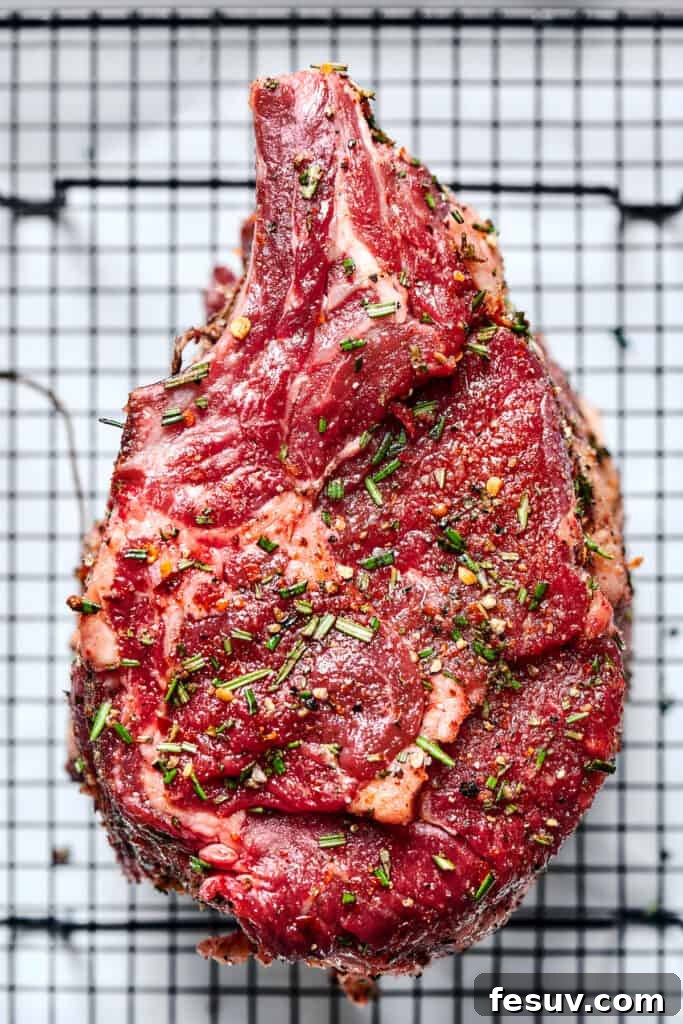
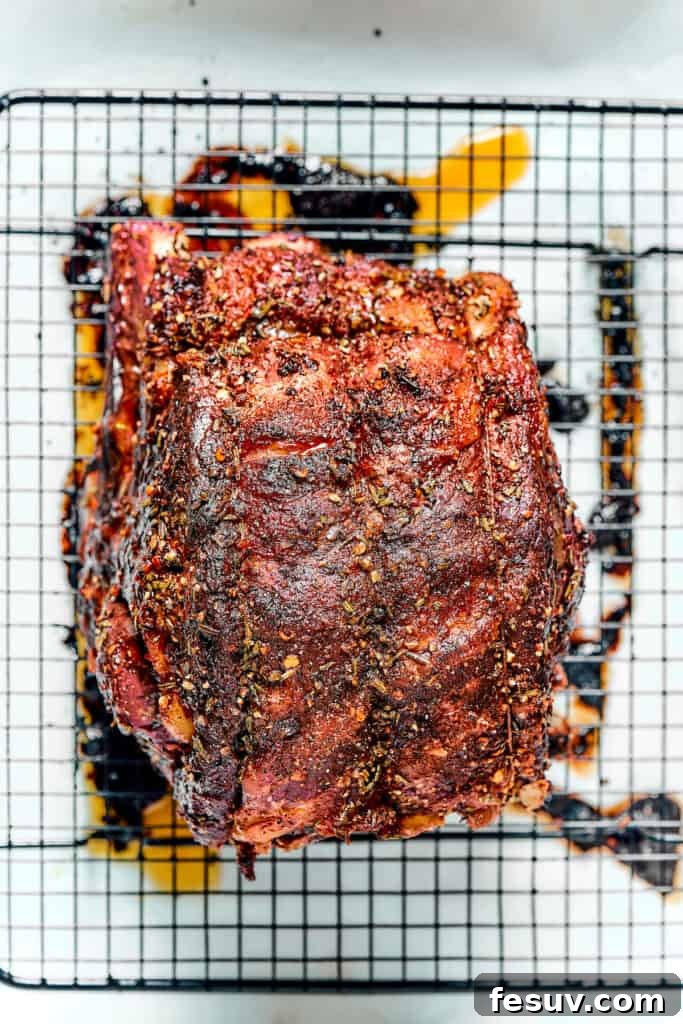
- Season Generously: Once the two hours have passed, gently pat the entire roast dry with paper towels. A dry surface is essential for a good sear and crust formation. Preheat your oven to a low 250°F (120°C). Now, it’s time to flavor your roast. Drizzle the olive oil and Worcestershire sauce over the beef, ensuring it’s evenly coated. Then, liberally sprinkle the sea salt, fresh ground black pepper, sugar, chili flakes (if using), and finely chopped fresh rosemary over all sides of the roast. Gently press the seasoning mixture into the meat to form a flavorful crust.
The Low and Slow Roast
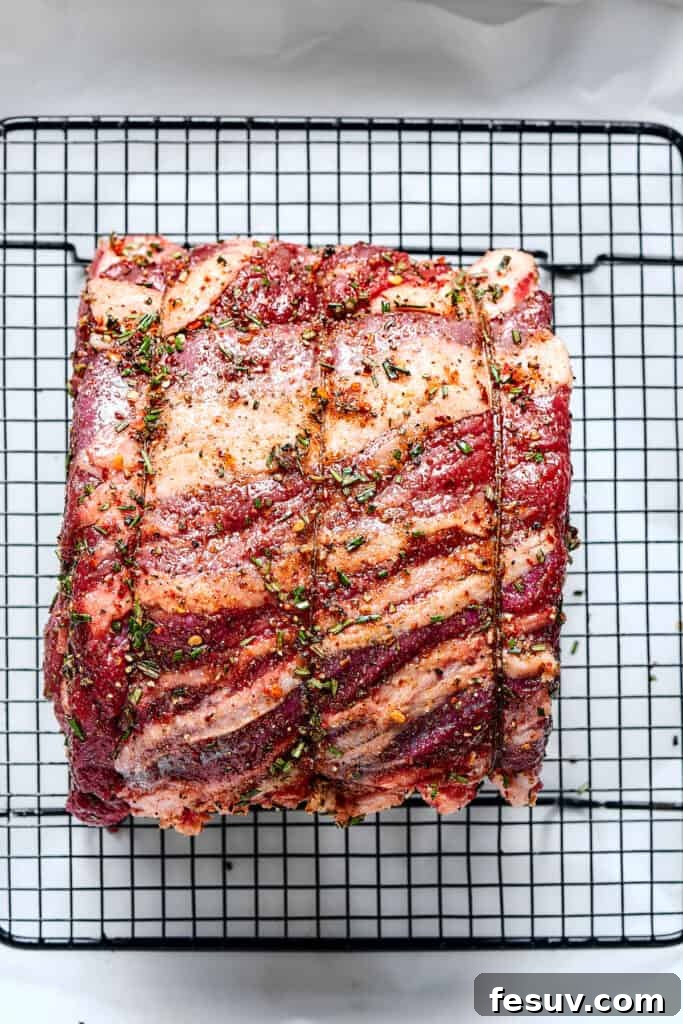
- Initial Roast: Place the seasoned prime rib on a wire rack set inside a sturdy roasting pan. This elevated position allows for even heat circulation around the entire roast. Transfer the pan to your preheated 250°F (120°C) oven. Roast for approximately two and a half hours, or until the internal temperature reaches 125°F (52°C) when measured with a reliable meat thermometer inserted into the thickest part of the meat, avoiding the bone. Cooking time can vary based on the size and shape of your roast, so relying on a thermometer is key.
- First Rest Period: Once the roast reaches 125°F (52°C), carefully remove it from the oven. Tent the entire roasting pan loosely with aluminum foil. Let the prime rib rest at room temperature for at least 30 minutes. This resting period is crucial; it allows the juices within the meat to redistribute, ensuring a more tender and uniformly juicy roast.
The High-Heat Sear and Final Rest
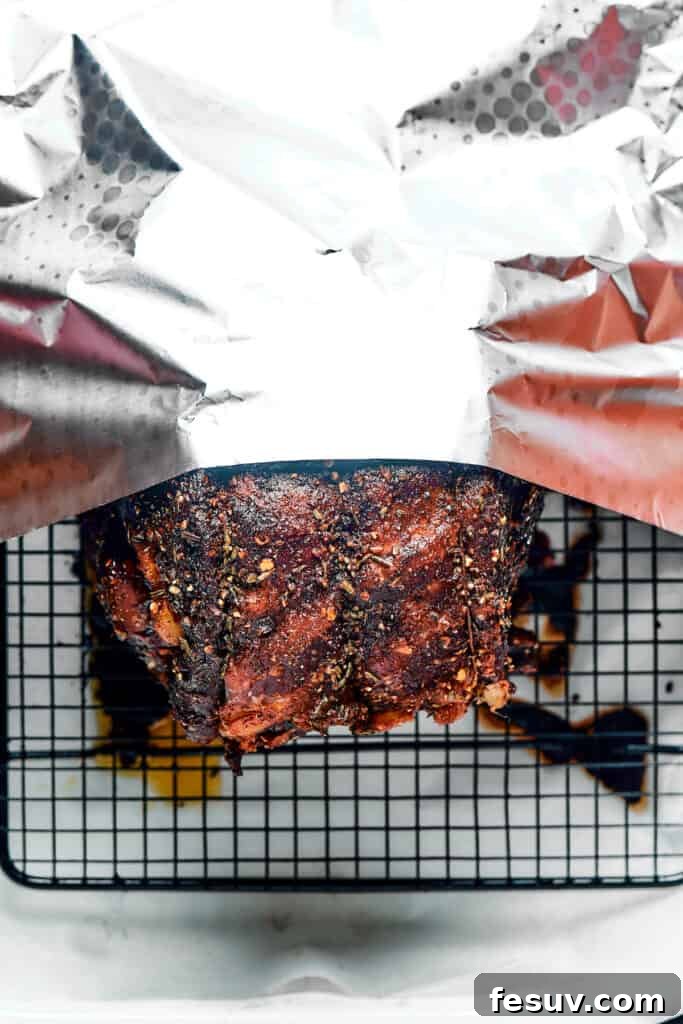
- The Final Sear: Approximately one hour before you intend to serve, uncover the roast and increase your oven temperature dramatically to 500°F (260°C). Once the oven is fully preheated, place the prime rib back into the scorching hot oven. Roast for an additional 5 to 10 minutes. This short, intense burst of heat will create a magnificent, deep brown, and crisp crust on the outside, providing a delightful texture contrast to the tender interior. Keep a close eye on it to prevent burning.
- The Essential Final Rest: Once the crust is perfectly formed, remove the prime rib from the oven for the last time. Transfer it to a clean cutting board. Allow it to rest, uncovered, for a full hour before you begin carving and serving. This extended rest allows the internal temperature to stabilize and the meat fibers to relax, resulting in an incredibly tender and juicy roast. Resist the urge to carve early – patience is rewarded!
Achieving Your Desired Doneness for Prime Rib
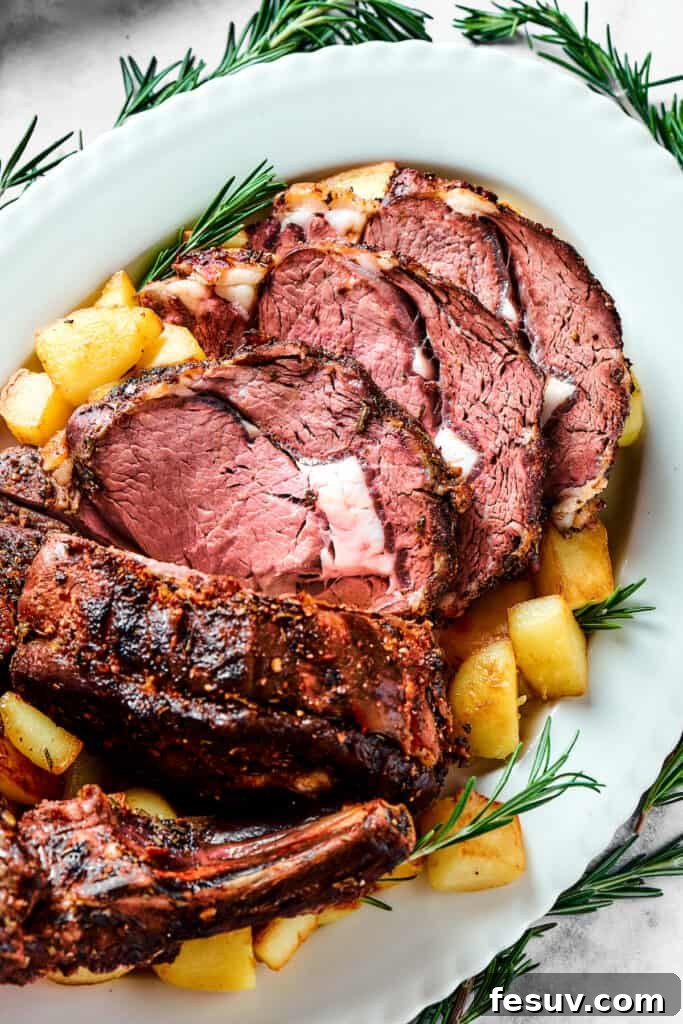
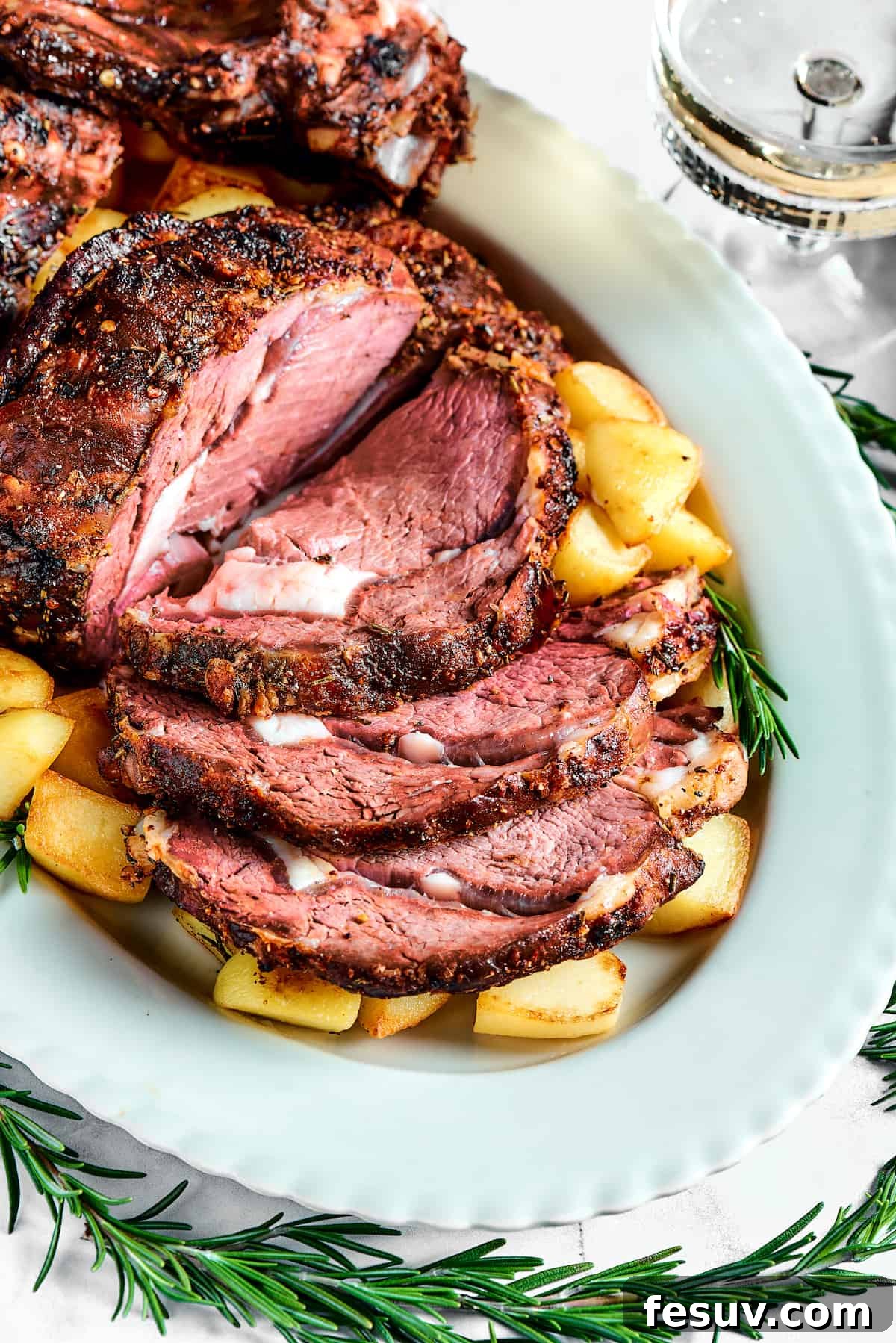
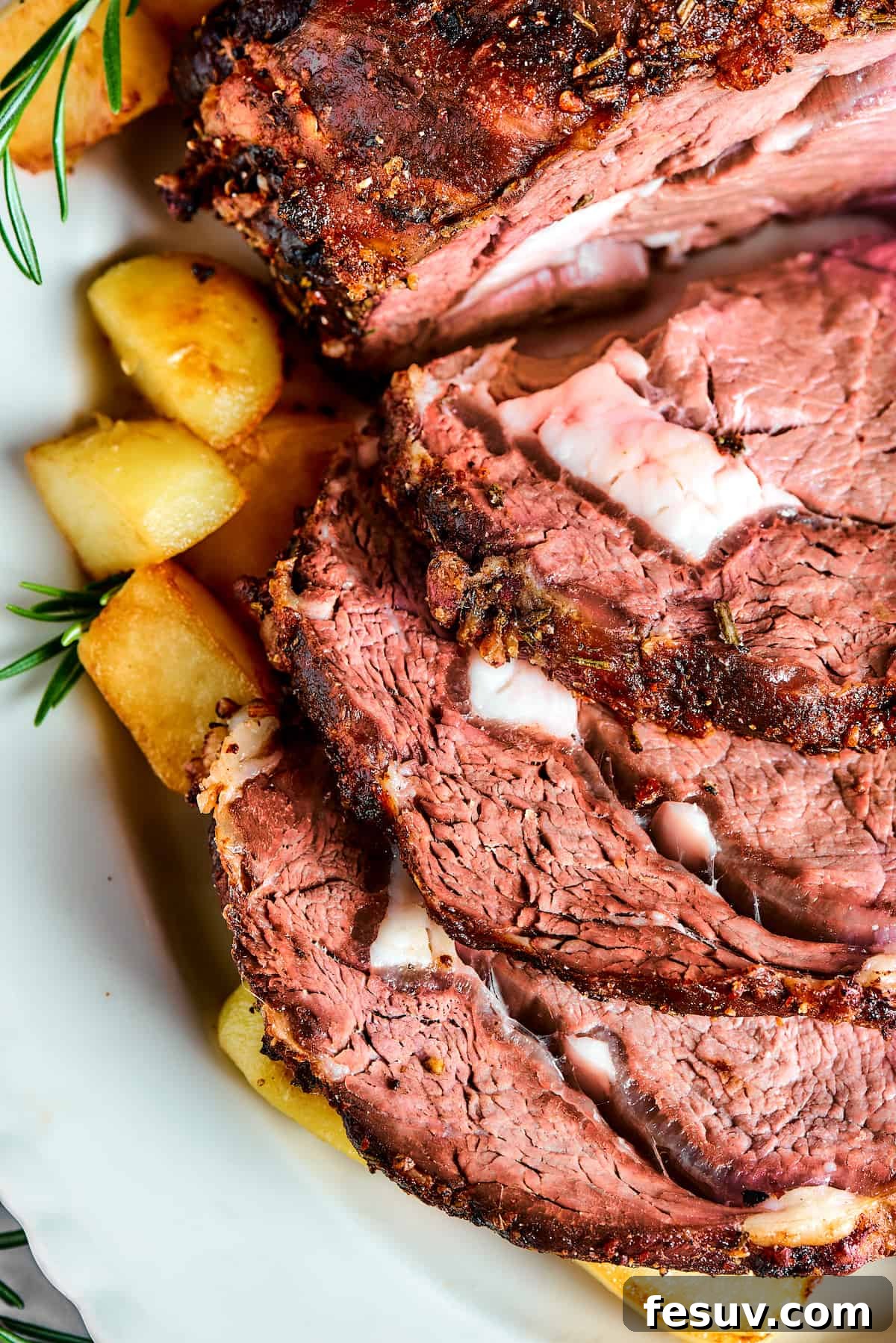
Given prime rib’s rich marbling and juicy nature, cooking it to a medium doneness or less is generally recommended to preserve its tenderness and moisture. My personal preference leans towards a perfect medium-rare, though medium is also an excellent choice. While you can opt for medium-well, be aware that overcooking a prime rib can quickly lead to a dry and less enjoyable result. The beauty of prime rib lies in its pink, succulent interior.
Here’s a guide to internal temperatures for different levels of doneness (remembering that the temperature will rise a few degrees during resting, known as carryover cooking):
- Rare: 120-125°F (49-52°C) – Very red, cool center.
- Medium-Rare: 130-135°F (54-57°C) – Rosy pink, warm center. This is often considered ideal for prime rib, showcasing its full flavor and juiciness.
- Medium: 135-140°F (57-60°C) – Pink center, slightly firmer. Still incredibly delicious and tender.
- Medium-Well: 140-145°F (60-63°C) – Slightly pink center, mostly gray. While still palatable, it risks drying out. Avoid exceeding 145°F to ensure a moist roast.
Expert Tips for Prime Rib Perfection
Achieving a perfectly cooked prime rib that is juicy, tender, and beautifully crusted is often considered the hallmark of a skilled cook. The most critical factor is ensuring the meat is cooked to perfection, without being overdone. Here are some expert tips to guarantee your prime rib roast is a resounding success:
- Invest in a Quality Meat Thermometer: A reliable meat thermometer is your most essential tool when roasting prime rib. Without it, accurately gauging the internal doneness of such a large and valuable cut is nearly impossible. Guessing can lead to an undercooked or, worse, an overcooked and dry roast. Insert the probe into the thickest part of the meat, ensuring it doesn’t touch any bone, for the most accurate reading. An instant-read thermometer is highly recommended for quick checks.
- Understand Carryover Cooking: Meat continues to cook for a period after it’s removed from the oven, a phenomenon known as “carryover cooking.” To account for this, take your prime rib out of the oven when it’s about 3 to 5 degrees Fahrenheit (1-2 degrees Celsius) below your desired final internal temperature. The heat retained within the roast will naturally bring it up to those last few degrees during its resting period, ensuring a perfectly cooked center.
- Tie the Roast (Optional but Recommended): If your roast is irregularly shaped or if you want to ensure even cooking and a compact form, consider tying it with butcher’s twine at 1-inch intervals. This helps maintain a consistent thickness, promoting uniform heat distribution throughout the meat.
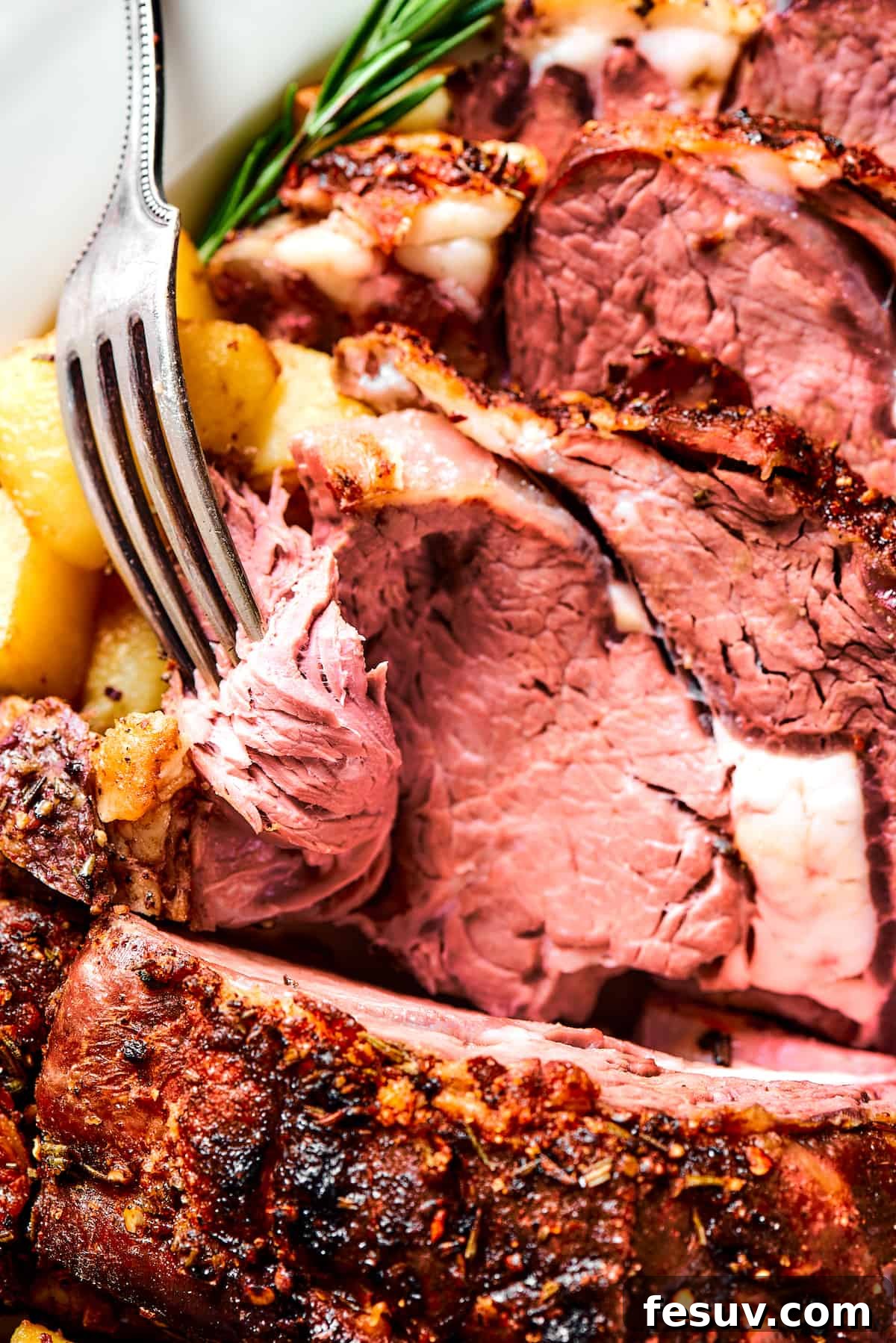
- Carving with Confidence: Once the roast has fully rested, carve it against the grain for maximum tenderness. If your roast is bone-in, first slice along the bones to remove the entire rib section, then slice the meat into desired thickness.
- Don’t Rush the Rest: As mentioned, the resting periods are non-negotiable. Skipping or shortening them allows the juices to escape when you slice, resulting in a dry roast. Patience truly makes all the difference here.
Yummy Side Dish Ideas to Complement Your Prime Rib
Prime rib is a versatile main course that pairs beautifully with a wide array of side dishes. While almost anything goes well with this magnificent roast, these hearty, holiday-worthy ideas will elevate your meal even further and are just a starting point for culinary creativity!
- Creamy Mashed Potatoes: A timeless classic, fluffy and buttery mashed potatoes are the perfect canvas for soaking up the rich juices from the prime rib. Consider infusing them with roasted garlic or herbs for an extra layer of flavor.
- Macaroni and Cheese: Classic mac and cheese isn’t just for a busy weeknight; when done right, it transforms into a velvety, cheesy masterpiece worthy of a holiday spread. A rich Baked Macaroni and Cheese recipe with a golden-brown crust offers incredible comfort.
- Roasted Brussels Sprouts with Balsamic Glaze: If you had told me as a child that I would grow up to adore Brussels sprouts, I would have thought you were crazy! But these cute “mini cabbages” have come a long way. Roasted until crispy in some spots and meltingly soft in others, then drizzled with a sweet and tangy balsamic glaze, they are pretty darn irresistible and just right for the holidays.
- Homemade Crescent Rolls: Better make a double batch, because nothing disappears faster than freshly made Crescent Rolls at a dinner table! Their soft, flaky texture is perfect for wiping up every last bit of gravy or au jus. If you are lucky enough to have leftovers, try them the next morning with jam for a simply indulgent breakfast.
- Yorkshire Pudding: This traditional English side is a must-have for a proper roast beef dinner. Made from a simple batter, these savory puffs are designed to catch and absorb the drippings from the roast, adding a unique texture and flavor.
- Horseradish Sauce: A creamy, pungent horseradish sauce provides a fantastic counterpoint to the richness of the prime rib. It’s a simple condiment that adds a vibrant kick and enhances the overall dining experience.
- Asparagus with Lemon Butter: For a lighter, fresher contrast, tender asparagus spears lightly sautéed or roasted and tossed with lemon butter offer a bright and elegant addition to your plate.
How to Store and Reheat Leftovers for Continued Enjoyment
If you’re fortunate enough to have prime rib leftovers, proper storage and reheating are crucial to maintain their quality and flavor. This ensures you can savor the deliciousness long after the initial feast.
- Storage: Once the prime rib has cooled completely to room temperature (this is important to prevent condensation and bacterial growth), wrap the individual slices or larger pieces tightly in plastic wrap. For an extra layer of protection, place the wrapped meat in an airtight container. Stored this way, prime rib leftovers will remain fresh and delicious in the refrigerator for up to 5 days.
- Reheating: The goal when reheating prime rib is to warm it gently without continuing to cook it further, which can dry it out. Preheat your oven to a low temperature, around 250°F (120°C). Place the prime rib slices or pieces in a baking dish. Add a splash of water or beef broth to the bottom of the dish; this creates a moist environment that helps prevent the meat from drying. Cover the dish tightly with aluminum foil to trap the steam. Bake until just heated through, typically between 10 to 20 minutes, depending on the thickness of the slices and your oven’s efficiency. Avoid high heat or microwave reheating if you want to preserve the tender, juicy texture.
Can I Freeze Leftover Prime Rib?
Absolutely! Freezing leftover prime rib is an excellent way to extend its shelf life and enjoy this gourmet meal another time. To ensure the best quality and prevent freezer burn, follow these steps carefully:
- Freezing Technique: First, allow the cooked prime rib to cool completely. This is a critical step to avoid freezer burn and ice crystal formation. Once cool, wrap individual slices or portions tightly in plastic wrap. Then, add a second protective layer using a freezer bag (expelling as much air as possible) or heavy-duty aluminum foil. Label the package with the date, and freeze for up to three months. While the meat may last longer than three months, its quality, especially texture and flavor, can begin to degrade over time.
- Thawing: When you’re ready to enjoy your frozen prime rib, transfer it from the freezer to your refrigerator. Allow it to thaw slowly overnight, which helps maintain its texture. Once thawed, you can reheat it using the gentle oven method described above.
Recipe: The Perfect Reverse-Seared Prime Rib
Ingredients
- 4 to 5 pounds bone-in standing rib roast (about 3 to 4 ribs)
- 2 tablespoons olive oil
- 1 tablespoon Worcestershire sauce
- 1½ tablespoons sea salt
- 1 teaspoon fresh ground black pepper
- ½ tablespoon sugar
- ½ teaspoon red chili flakes (optional)
- 4 sprigs fresh rosemary, leaves only, finely chopped
Instructions
- Take the prime rib out of the fridge 2 hours before cooking to allow it to come to room temperature.
- Preheat the oven to 250°F (120°C).
- Dry the roast thoroughly with paper towels.
- Rub olive oil and Worcestershire sauce over the roast. Then, season all sides generously with salt, ground black pepper, sugar, chili flakes (if using), and chopped rosemary leaves.
- Place the prime rib roast in a roasting pan fitted with a wire rack.
- Roast at 250°F (120°C) for approximately 2 hours and 30 minutes, or until the internal temperature reaches 125°F (52°C) in the thickest part of the meat (avoiding the bone). Use an instant-read meat thermometer to check for doneness.
- Remove the prime rib from the oven, cover loosely with foil, and let it rest at room temperature for 30 minutes.
- While the roast is resting, increase the oven temperature to 500°F (260°C).
- Uncover the prime rib and place it back into the preheated 500°F oven.
- Roast until the outside is deeply browned and crisp, about 5 to 10 minutes. Watch carefully to prevent burning.
- Remove from the oven and let it rest, uncovered, for a full 1 hour before cutting and serving. This final rest is crucial for juiciness.
Equipment
- Roasting Pan with Rack
- Aluminum Foil
- Instant Read Meat Thermometer
- Carving Set
Notes
- Meat Thermometer: Essential for accurate doneness. Insert into the thickest part, avoiding bone.
- Doneness: Remove the roast when it’s 3-5°F below your target temperature; it will continue to cook during resting (carryover cooking).
- Prime Rib Temperatures: 125-130°F for medium-rare (rosy pink). Up to 140°F for medium. Avoid exceeding 145°F to prevent dryness.
Nutritional info is an estimate and provided as courtesy. Values may vary according to the ingredients and tools used. Please use your preferred nutritional calculator for more detailed info.
More Holiday Dinner Ideas to Explore
If you’re planning a festive spread and looking for other impressive main courses or delicious accompaniments, here are some fantastic holiday dinner ideas that are sure to delight your guests:
- Christmas Ham with Brown Sugar Glaze: A succulent ham glazed to perfection, offering a sweet and savory alternative.
- Perfect Roast Turkey with Stuffing: The quintessential holiday bird, roasted to golden perfection with a flavorful stuffing.
- Classic Rack of Lamb: An elegant and flavorful option for a smaller, yet equally impressive gathering.
We hope this comprehensive guide inspires you to create a truly spectacular prime rib for your next special occasion. Happy cooking!