
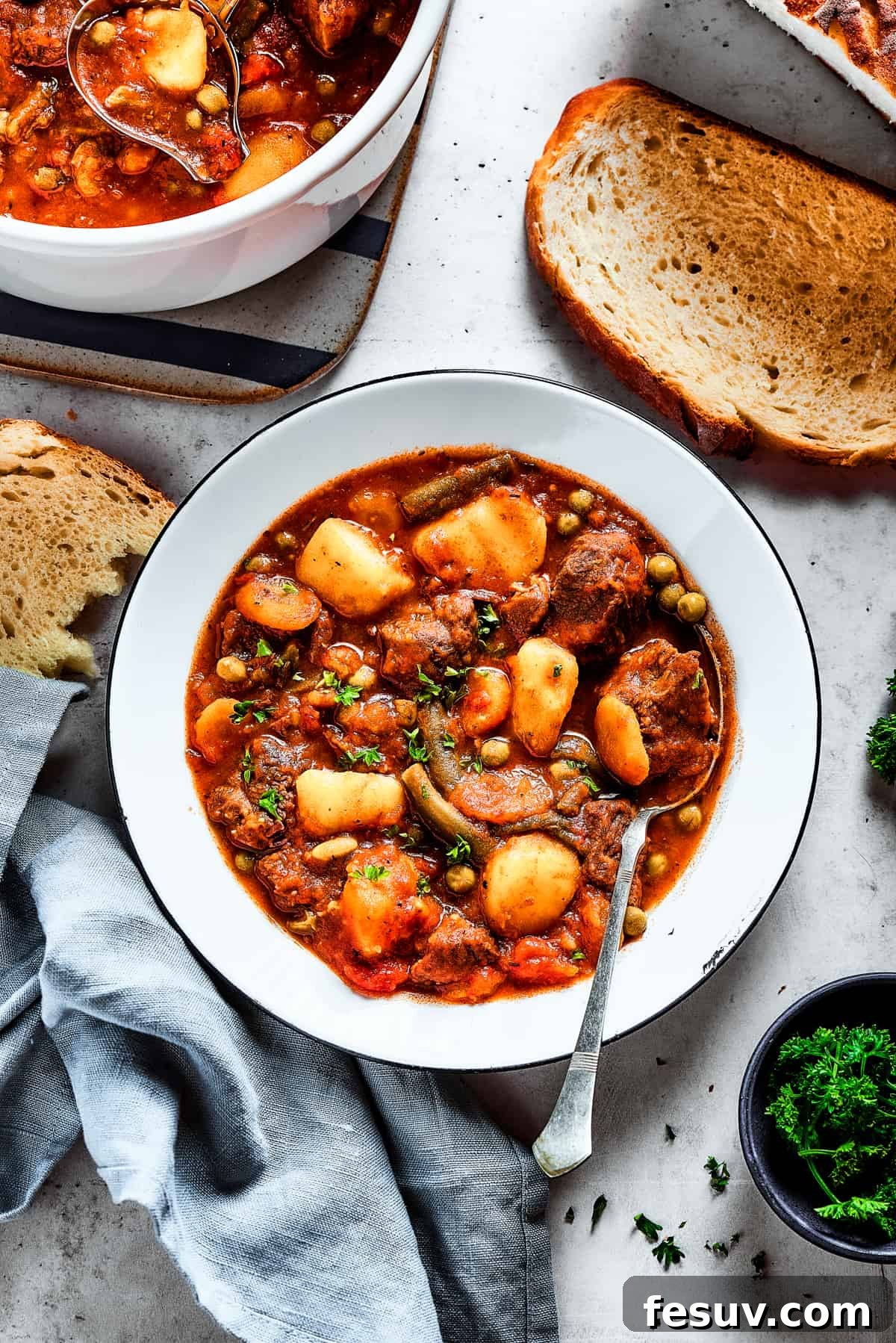
As autumn’s crisp air rolls in and vibrant leaves paint the landscape in hues of gold and crimson, there’s an undeniable craving for warmth, comfort, and a truly satisfying meal. This season calls for something special, something that wraps you in a cozy embrace with every spoonful. And what could be better than a steaming bowl of classic, old-fashioned Mulligan Stew? This isn’t just any stew; it’s a timeless, rib-sticking dish that promises effortless preparation and profoundly delicious results, perfect for gathering around the table with loved ones.
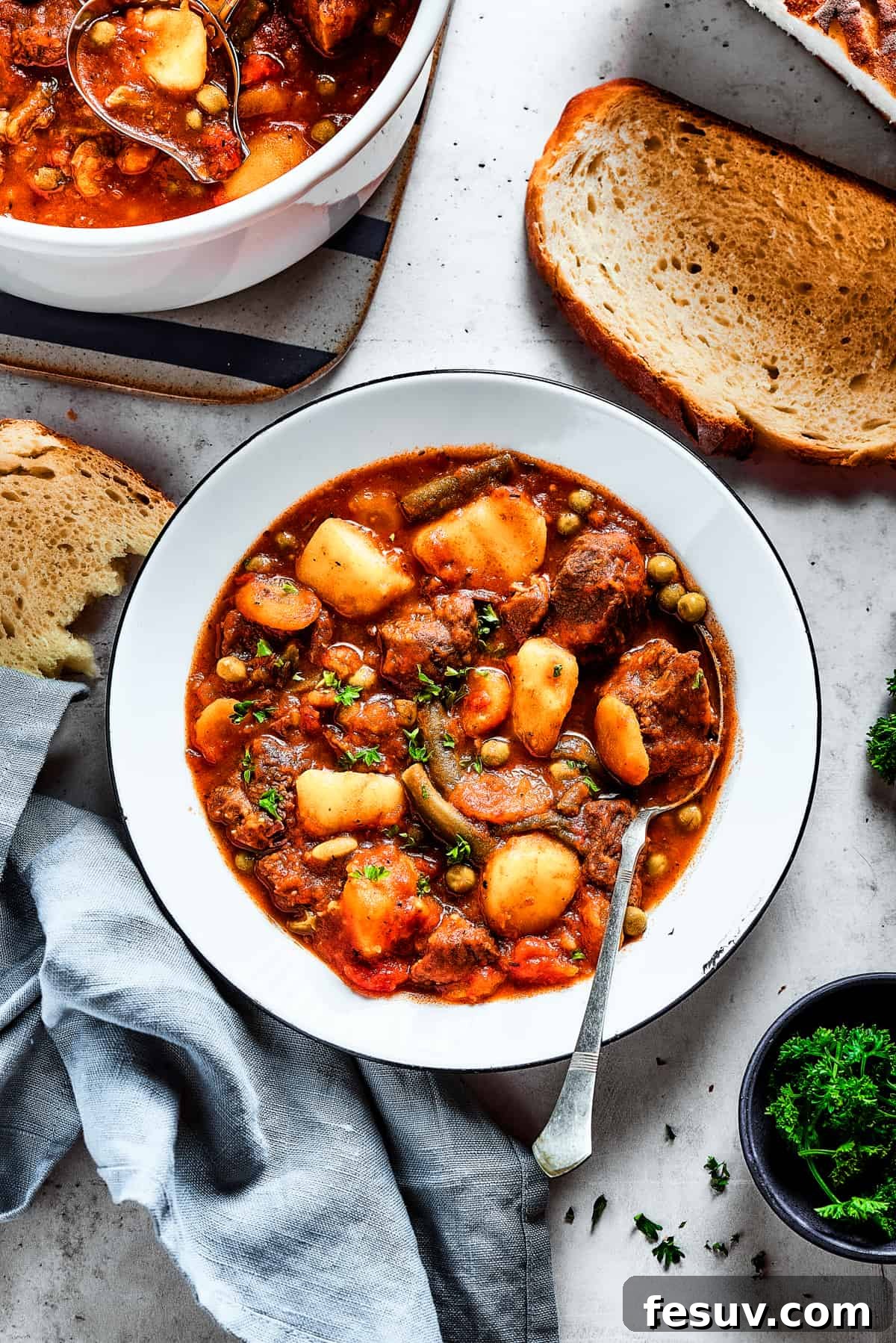
The Ultimate Old-Fashioned Mulligan Stew: A Hearty Fall Favorite
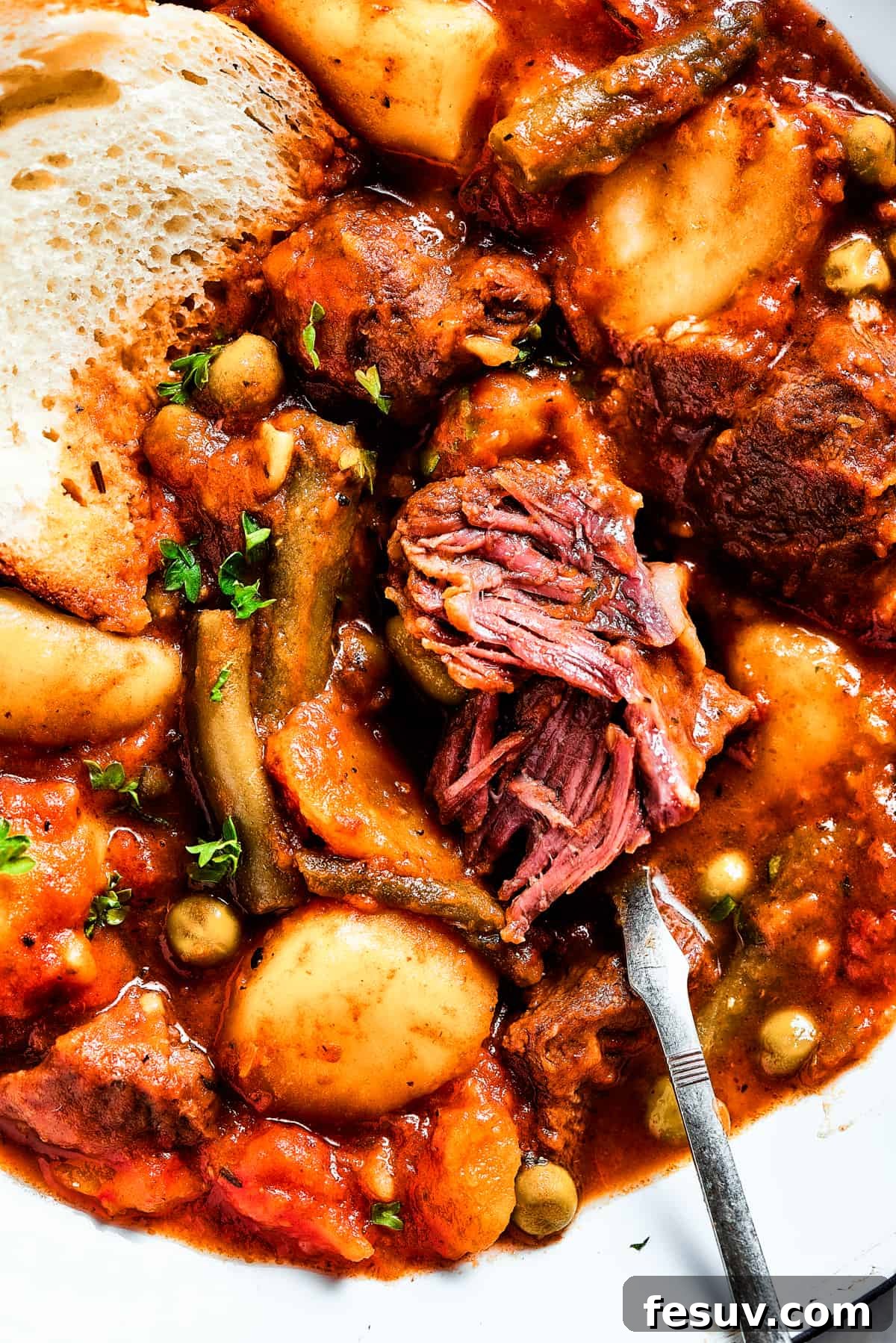
Are you searching for a one-pot wonder that breaks away from the usual weeknight rotation of chili or standard beef stew? Then prepare to discover your new favorite: Mulligan Stew. If you’ve never experienced the wholesome goodness of this traditional dish, get ready for it to become a beloved staple in your culinary repertoire. Far from ordinary, Mulligan Stew masterfully blends the best elements of a robust vegetable soup with the rich, savory depth of a thick beef stew. Imagine fork-tender chunks of beef mingling with the bright tang of tomatoes, the sweet burst of peas, and the earthy crunch of green beans, all simmered together in a profoundly flavorful broth. It’s a complete meal in itself, delivering unparalleled comfort and satisfaction on even the chilliest of evenings.
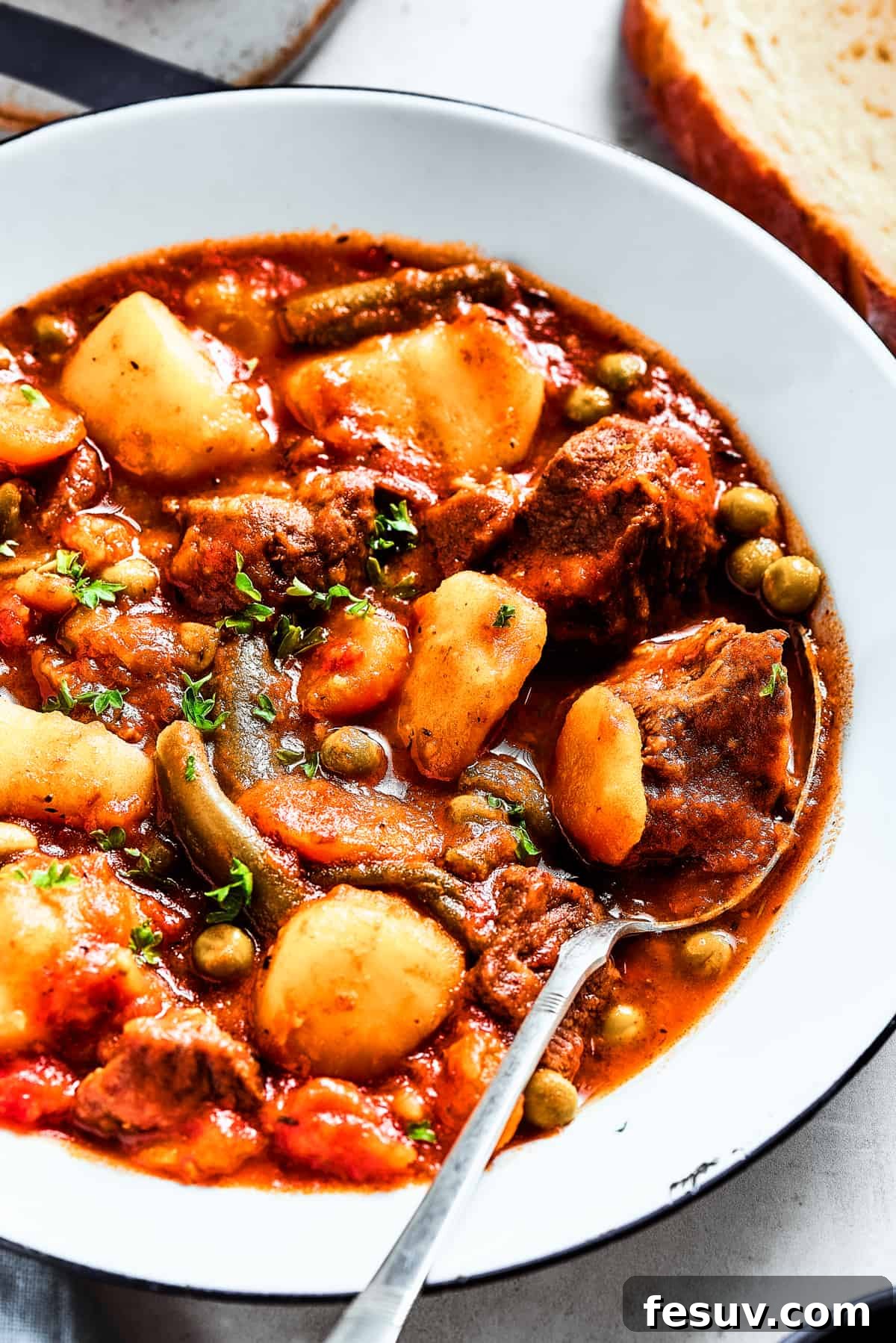
Why This Mulligan Stew Recipe Will Become Your Go-To Comfort Food
Mulligan Stew isn’t just a meal; it’s an experience. Here’s why this rustic, deeply flavorful dish deserves a permanent spot in your kitchen:
- A Journey Back in Time: Nostalgic Comfort
Mulligan Stew embodies old-fashioned comfort food at its absolute finest. Rooted in humble beginnings, often referred to as “hobo stew” or “campfire stew,” it carries a rich history of resourcefulness and heartwarming sustenance. Each spoonful connects you to a simpler time, offering a comforting embrace reminiscent of cherished family traditions and cozy evenings spent by the fire. It’s the kind of dish that warms you from the inside out and evokes fond memories. - Smart & Sustainable: Frugal Cooking at Its Best
One of the greatest charms of Mulligan Stew is its inherent flexibility and economy. Historically, this stew was a clever way to utilize whatever ingredients were readily available, making it the ultimate “everything but the kitchen sink” meal. This tradition lives on, allowing you to creatively use up leftover vegetables, various cuts of meat, or pantry staples. It’s an ingenious solution for reducing food waste and making the most of your ingredients without compromising on flavor, perfect for budget-conscious cooks. - Unrivaled Coziness: The Quintessential Warm-Up
When the temperatures drop and you long for a meal that feels like a warm hug, stews are the answer, and Mulligan Stew is no exception. Its thick, savory broth, combined with tender meat and a medley of vegetables, creates a deeply satisfying and nourishing dish. It’s the perfect antidote to a chilly day, providing a hearty, wholesome meal that leaves you feeling content and utterly cozy. - Effortlessly Flavorful: Simple Ingredients, Incredible Taste
Despite its rich and complex taste, Mulligan Stew is surprisingly simple to prepare. It truly showcases how a few basic, high-quality ingredients, thoughtfully combined and slow-simmered, can yield an extraordinary depth of flavor. The hands-on time is minimal, allowing the pot to do most of the work, making it an ideal recipe for both novice cooks and seasoned home chefs seeking maximum flavor with minimal fuss.
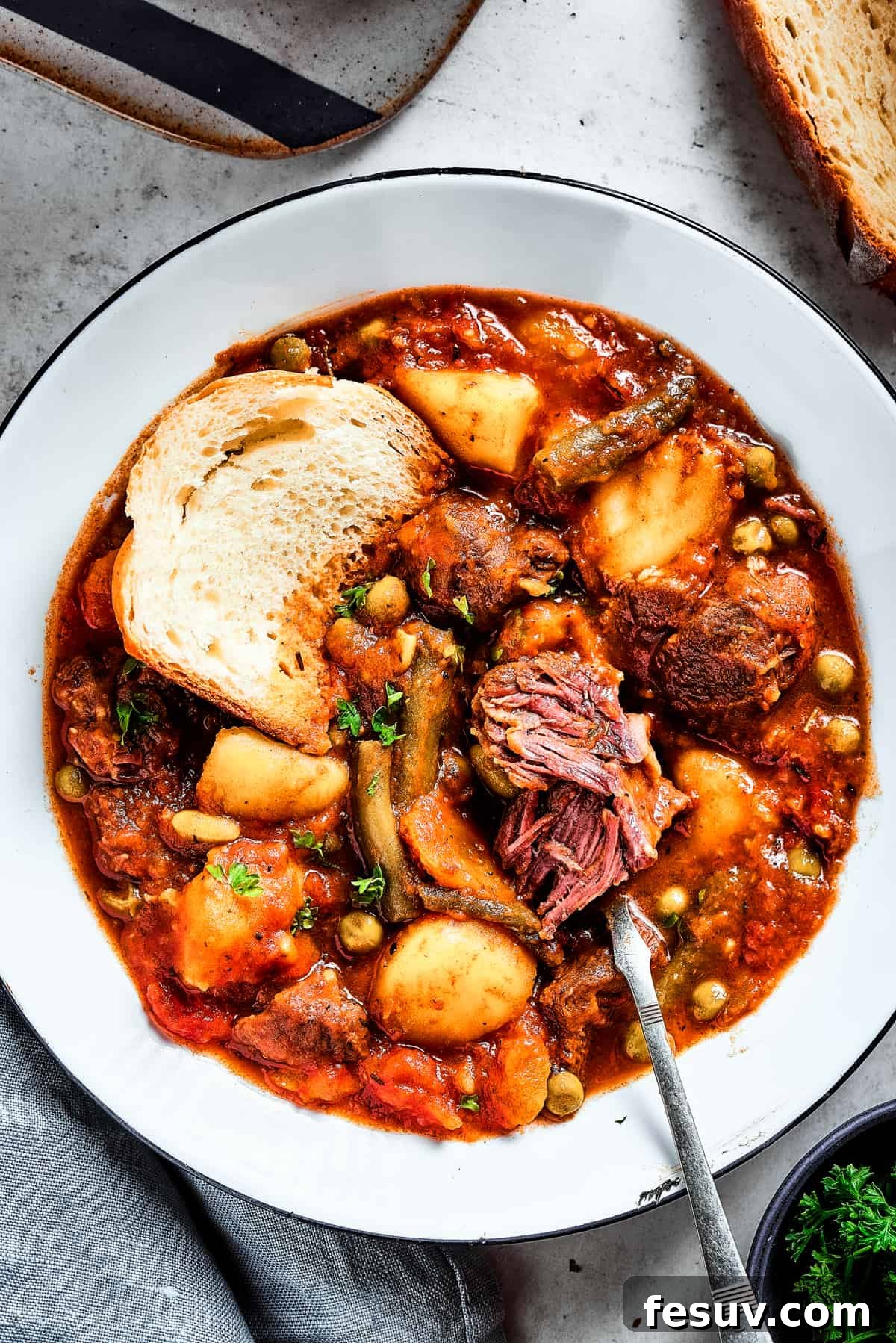
Mulligan Stew vs. Irish Stew: Understanding the Culinary Distinctions
While both Irish Stew and Mulligan Stew are celebrated as hearty, traditional comfort foods, they possess distinct characteristics that set them apart. Irish stew is famously a more minimalist and historically specific dish, typically featuring lamb (though sometimes beef), potatoes, onions, and carrots. Its charm lies in its simplicity and the purity of its core ingredients, often relying on a clear broth and slow cooking to tenderize the meat and meld the flavors.
Mulligan Stew, on the other hand, embraces a more eclectic and adaptable philosophy. Its very name, “Mulligan,” is often associated with the concept of a “second chance” or a “mixed bag,” reflecting its origin as a resourceful meal. It’s a culinary canvas where a wider array of ingredients can be incorporated, often utilizing whatever meats and seasonal vegetables are on hand or need to be used up. This means you might find anything from bell peppers and corn in a summer version to more root vegetables and hardy greens in a winter rendition. Our recipe provides a fantastic basic framework for Mulligan Stew, allowing for easy customization based on your pantry and preferences, ensuring a delicious outcome even if your “leftovers” shelf isn’t overflowing.
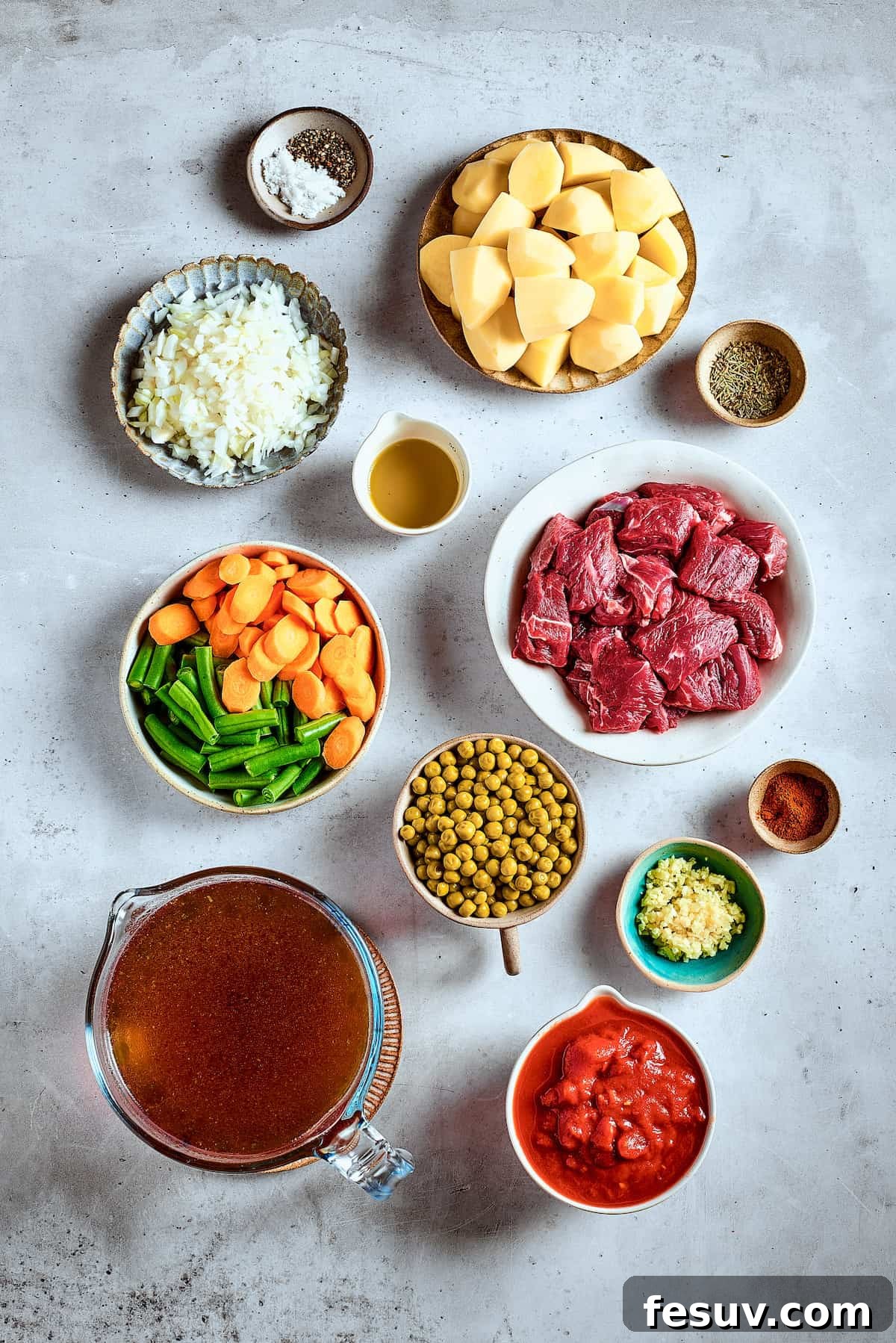
Essential Ingredients for a Perfect Mulligan Stew
Curious about what goes into creating this magnificent, soul-warming stew? Our version of classic Mulligan Stew is packed with tender chunks of beef, a vibrant medley of garden-fresh vegetables, and a thoughtful selection of savory seasonings. Here’s a detailed look at the ingredients you’ll need to bring this comforting dish to life:
- Olive Oil: The foundation for building flavor. Use a good quality extra virgin olive oil for sautéing. If you prefer, any neutral cooking oil such as canola, vegetable, or grapeseed oil will work equally well.
- Beef: The star of our stew! Opt for stew beef, which is typically pre-cut from tougher cuts like chuck, or purchase a chuck roast and cube it yourself into one-inch pieces. Chuck roast is ideal due to its rich marbling and collagen, which break down during slow cooking to create incredibly tender, flavorful meat.
- Salt and Pepper: Basic yet essential seasonings to enhance the natural flavors of the beef and vegetables. We recommend kosher salt for its even flavor distribution, and freshly ground black pepper for its aromatic bite.
- Onion and Garlic: The aromatic backbone of nearly every great stew. Dice one large onion and mince or press three cloves of garlic. These ingredients provide a sweet, pungent, and deeply savory base that permeates the entire dish.
- Paprika: A crucial spice that adds both color and depth. We highly recommend smoked paprika for this recipe, as it imparts a rustic, campfire-like smokiness that perfectly complements the stew’s hearty nature. Sweet paprika is also an excellent substitute if you prefer a milder flavor profile.
- Beef Broth: The liquid foundation that carries all the rich flavors. Six cups of quality beef broth are essential for developing that deep, robust color and savory taste. While vegetable or chicken broth can be substituted in a pinch, they will result in a lighter color and a slightly different flavor profile.
- Carrots: Adds natural sweetness and vibrant color. Cut four medium carrots into robust one-inch chunks to ensure they hold their shape and texture during the long simmer.
- Potatoes: A classic stew ingredient that provides body and comforting starchiness. Four medium Yukon Gold potatoes, peeled and cubed, are perfect for this recipe. Yukon Golds are ideal because they hold their shape well while still becoming wonderfully tender.
- Tomatoes: Introduces a tangy, bright note that balances the richness of the beef. While fresh, ripe tomatoes are always wonderful if in season, a 28-ounce can of crushed tomatoes is a convenient and consistent option that provides excellent flavor and thickness.
- Green Beans: Adds a fresh, slightly crisp texture and verdant color. Two cups of fresh green beans, trimmed and halved, are preferred, but frozen green beans work just as well and can be added directly to the pot.
- Peas: A final burst of sweetness and vibrant green. One cup of frozen peas, added towards the end of cooking, ensures they remain bright and tender, not overcooked.
- Herbs: The aromatic finishing touch. Dried oregano and dried rosemary contribute a classic, earthy, and aromatic complexity to the stew. A generous ¼ cup of freshly chopped parsley stirred in at the end adds a burst of freshness and brightens the overall flavor.
Mastering Mulligan Stew: A Simple Step-by-Step Guide
Creating this deeply flavorful Mulligan Stew is a straightforward process, built on layering flavors from the very beginning. Here’s how you can prepare this comforting meal in your own kitchen:
Instructions
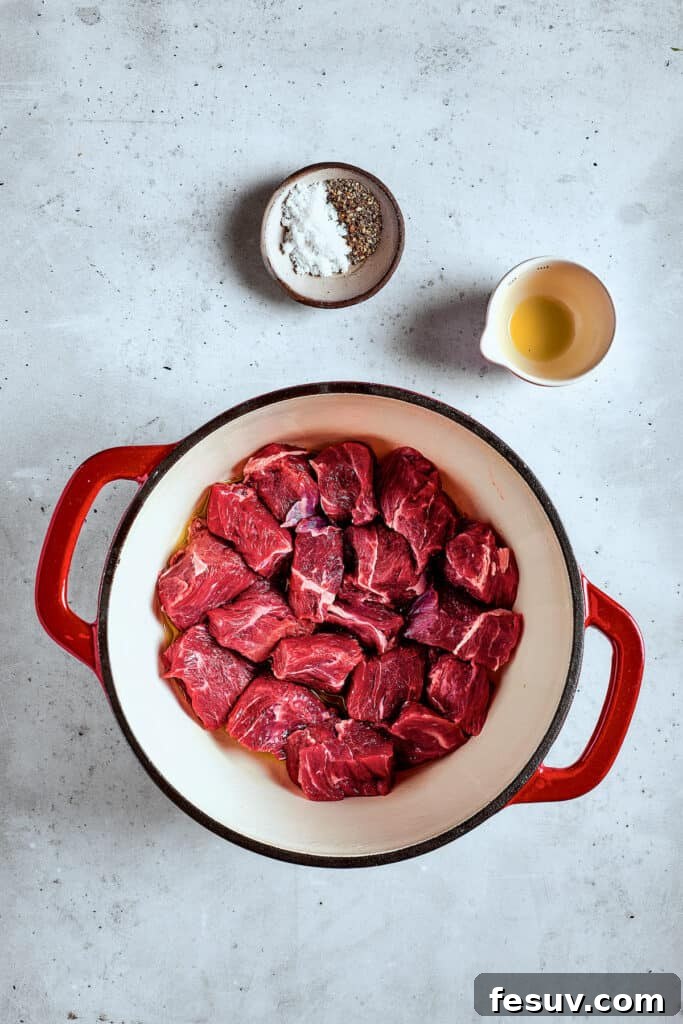
- Prepare Your Pot: In a large, heavy-bottomed soup pot or a Dutch oven, heat the 3 tablespoons of olive oil over medium-high heat. Ensure the pot is spacious enough to accommodate all ingredients.
- Season and Sear the Beef: While the oil heats, season your 1 pound of cubed beef stew meat evenly with 1 teaspoon of kosher salt and 1/4 teaspoon of freshly ground black pepper. Once the oil is shimmering, add the seasoned beef to the pot, being careful not to overcrowd it. If necessary, brown the beef in batches to ensure a good sear rather than steaming. Brown the beef on all sides for about 5 to 7 minutes until a rich, dark crust forms. This crucial step develops deep, savory notes that will infuse the entire stew. Once browned, remove the beef from the pot and set it aside on a clean plate.
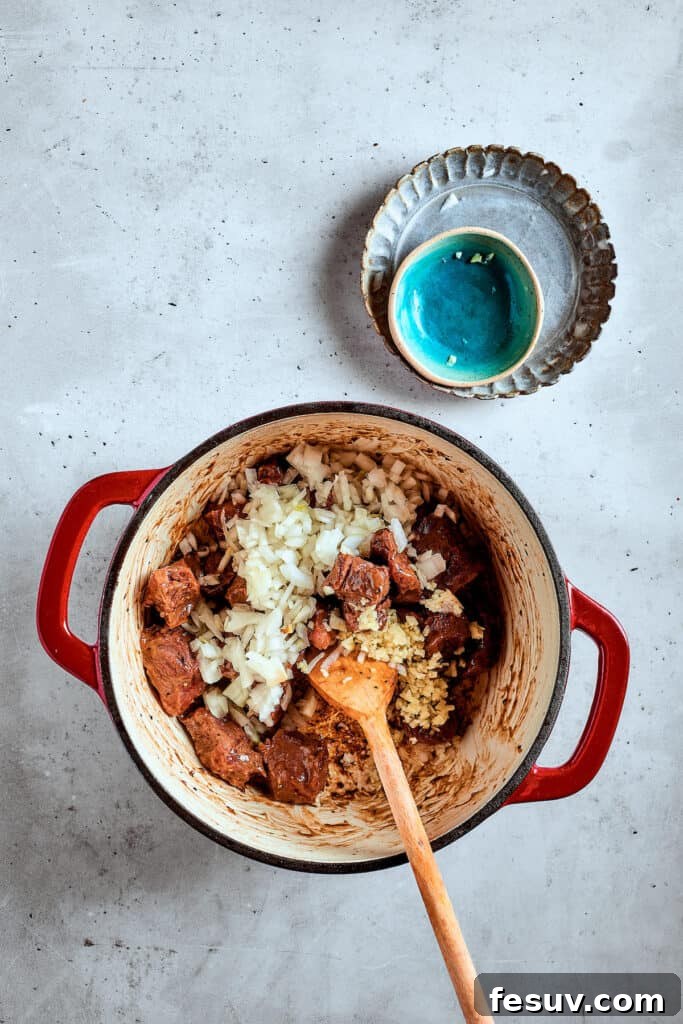
- Sauté the Aromatics: Reduce the heat to medium. Add the diced onion and minced garlic to the same pot, utilizing the rendered beef fat and any browned bits (fond) left behind. Cook, stirring occasionally, until the onions become translucent and fragrant, which usually takes about 2 to 3 minutes.
- Infuse with Paprika: Stir in the 1 teaspoon of smoked paprika and cook for just one minute more. Heating the paprika briefly helps to bloom its flavors and release its vibrant aroma into the pot.
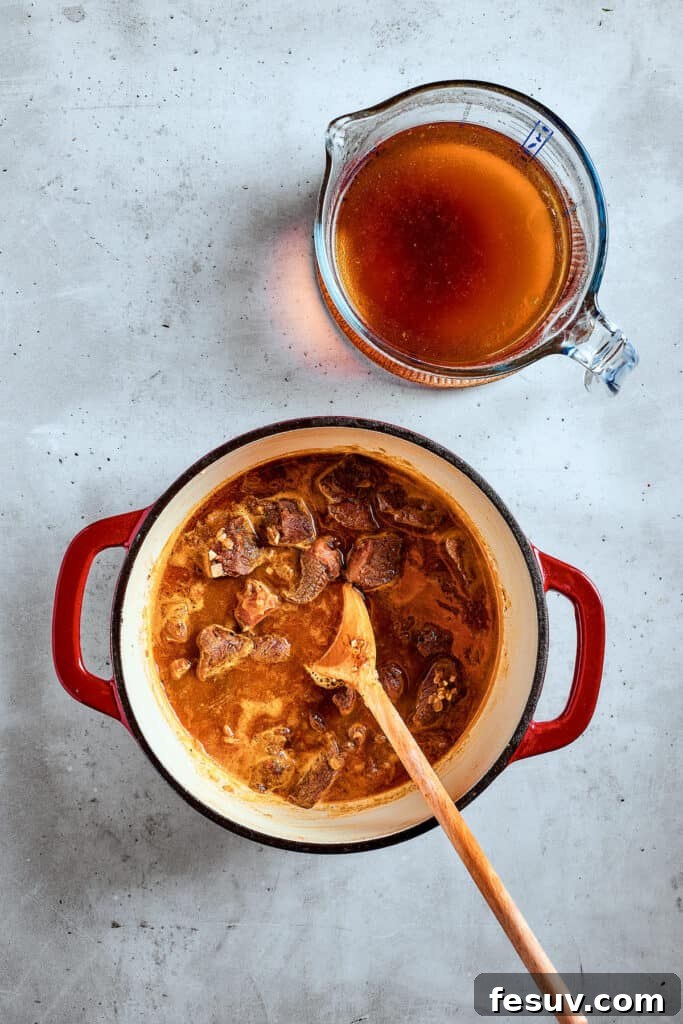
- Deglaze and Simmer the Beef: Return the browned beef to the pot. Pour in the 6 cups of beef broth, making sure to scrape up any delicious browned bits stuck to the bottom of the pan with your spoon – this deglazing step adds immense flavor. Ensure the beef is fully submerged in the liquid. Bring the mixture to a boil, then immediately reduce the heat to low, cover the pot tightly, and let the stew simmer gently for 1 hour. This slow simmer will tenderize the beef beautifully, making it fall-apart tender.
- Add Mid-Cooking Vegetables: After the first hour of simmering, carefully remove the lid. Add the cubed potatoes, carrot pieces, and green beans to the pot. Stir everything together gently to combine. Cover the pot again and continue to simmer for an additional 30 minutes, or until these harder vegetables are beginning to soften.
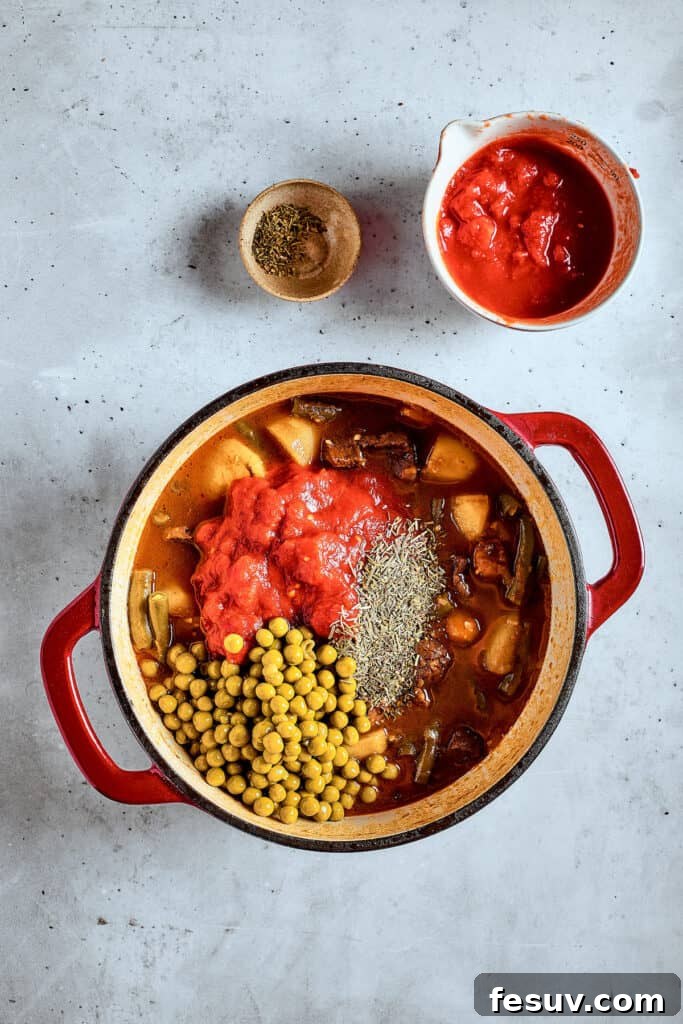
- Introduce the Tomatoes: Next, add the 28-ounce can of crushed tomatoes to the stew and mix well. Allow the stew to simmer uncovered for another 15 minutes, giving the tomato flavors time to meld and deepen with the rest of the ingredients.
- Finish with Herbs and Peas: Finally, stir in the 1 cup of frozen peas, 1 teaspoon of dried oregano, and ½ teaspoon of dried rosemary. Continue to simmer for a final 10 minutes, or until all the vegetables are perfectly tender but not mushy, and the peas are heated through.
- Adjust Seasoning and Serve: Taste the stew and adjust the seasoning as needed. You may wish to add the remaining 1 teaspoon of kosher salt and 1/4 teaspoon of black pepper, or more to your personal preference. Just before serving, stir in the ¼ cup of freshly chopped parsley for a burst of fresh flavor and vibrant color. Remove the pot from the heat and ladle the hot Mulligan Stew into bowls.
Expert Tips for the Most Flavorful Mulligan Stew
While Mulligan Stew is inherently forgiving, a few expert tips can elevate your dish from delicious to truly unforgettable:
- Master the Art of Layering Flavors: The secret to a deeply rich stew begins with proper searing. Always brown your meat (whether beef, lamb, or poultry) in batches. This process creates a beautiful crust and develops profound savory notes, forming the essential base flavor for your stew. Don’t rush this step!
- Deglaze for Depth: After sautéing your aromatics like onions and garlic, and browning your meat, don’t leave those flavorful browned bits at the bottom of the pot. Deglaze the pot with a splash of broth, red wine, or even a robust beer. Use a wooden spoon to scrape up all the fond (the browned bits) – these tiny remnants are packed with concentrated flavor that will dissolve into your liquid, adding incredible depth and complexity to the stew.
- Embrace a Variety of Vegetables: Mulligan stew is celebrated for its flexibility. Don’t be afraid to experiment with a diverse range of vegetables. Beyond potatoes, carrots, peas, and green beans, consider adding bell peppers, corn (in season), mushrooms, celery, or even parsnips for added sweetness and earthiness. Pay attention to what’s in season or simply use what you have readily available in your pantry and fridge. Root vegetables like turnips or rutabaga can also be wonderful additions for a heartier winter stew.
- Quality Broth Makes a Difference: Since broth is the primary liquid, using a high-quality beef broth can significantly impact the overall flavor of your stew. Look for low-sodium options so you can control the seasoning yourself.
- Don’t Overcook the Veggies: Add vegetables in stages according to their cooking times. Harder root vegetables like carrots and potatoes go in earlier, while softer vegetables like peas and green beans should be added towards the end to maintain their texture and vibrant color.
- Thickening the Stew: If you prefer a thicker stew, you have a few options. You can mash some of the cooked potatoes against the side of the pot, or create a slurry by mixing a tablespoon or two of cornstarch with a bit of cold water and stirring it into the simmering stew during the last 15-20 minutes.
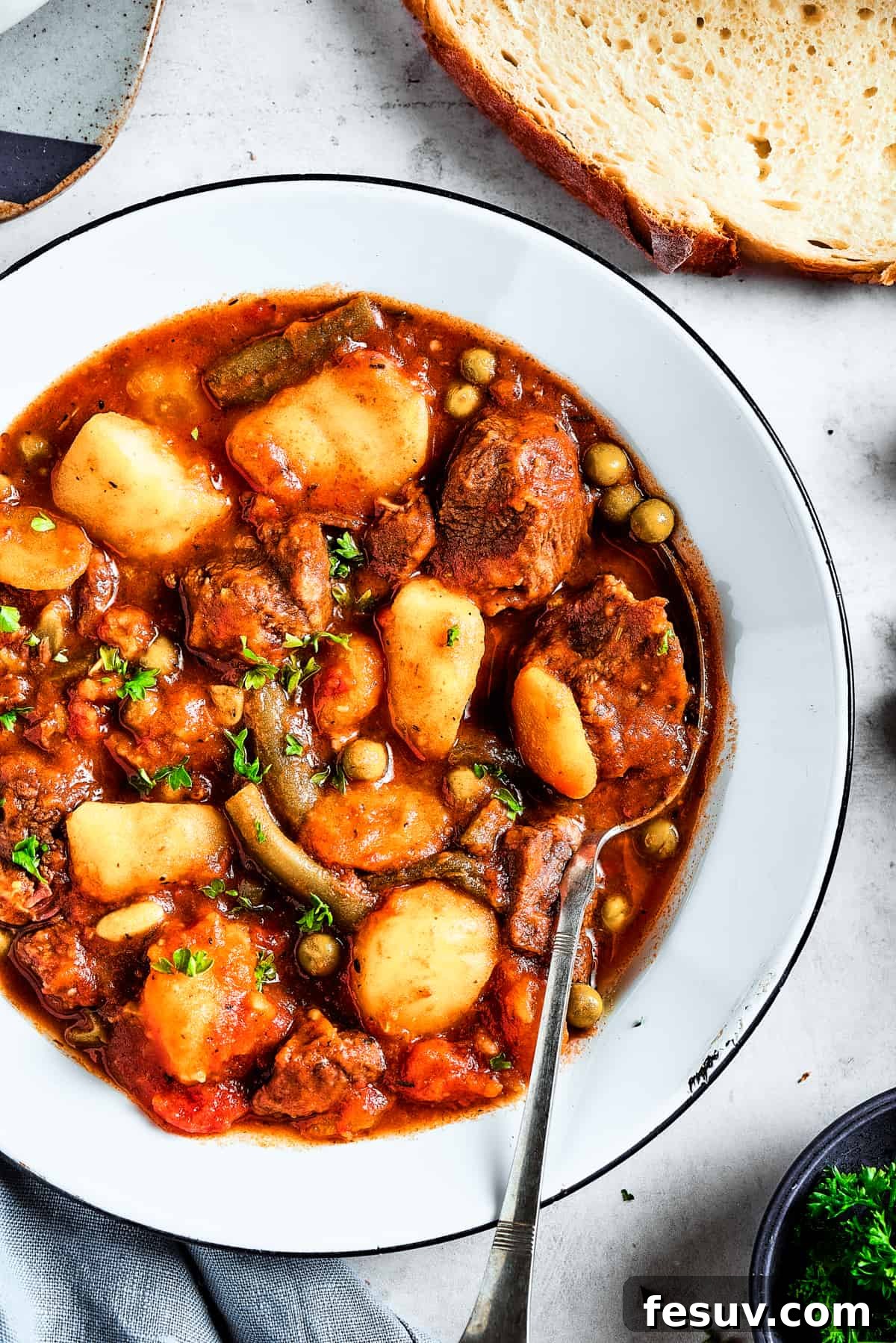
Perfect Pairings: What to Serve with Mulligan Stew
Mulligan Stew is a wonderfully complete meal on its own, but it truly shines when paired with a side that can soak up its rich, flavorful broth. Here are a few irresistible ideas to complete your cozy dining experience:
- Golden Cornbread: A classic pairing! Whether you dunk it whole into the savory broth or crumble it directly into your bowl, sweet, honey-topped Homemade Cornbread is the perfect accompaniment to a hot bowl of Mulligan Stew. Its slight sweetness and crumbly texture offer a delightful contrast.
- Flaky Crescent Rolls: Light, airy, and utterly irresistible, homemade crescent rolls are a fantastic choice. The buttery, flaky layers are ideal for sopping up every last drop of the stew’s delectable sauce. Make a double batch of these Homemade Crescent Rolls (also known as butterhorn rolls) – you won’t regret having extras, and they freeze beautifully for future meals.
- Crisp Side Salad: If you’re looking for something a little lighter to complement the richness of the stew, a fresh, vibrant garden salad is an excellent choice. A simple mix of leafy greens, cherry tomatoes, cucumbers, and a light vinaigrette provides a refreshing contrast. For something with a creamy, zesty kick, consider serving this bright Cucumber Salad with Sour Cream Dressing.
- Crusty Bread: A simple yet eternally satisfying choice. A warm, crusty loaf of French bread, sourdough, or even a hearty peasant bread is perfect for tearing and dipping into the stew’s robust broth.
Storing and Reheating Your Delicious Mulligan Stew
One of the many virtues of stews and soups is that their flavors often deepen and become even more harmonious the next day. Mulligan Stew is no exception, making it an excellent meal for meal prepping or enjoying leftovers.
- Refrigeration: To store your leftover stew, allow it to cool completely before transferring it to an airtight container. Keep the container in the refrigerator for up to 3 to 4 days. When you’re ready to enjoy it again, simply reheat the stew on the stovetop over low to medium heat, stirring occasionally, until it is warmed through. If the stew appears too thick after refrigeration, add a splash or two of extra beef broth or water to achieve your desired consistency.
- Freezing: Mulligan Stew freezes exceptionally well, making it perfect for long-term storage and convenient future meals. Portion the cooled stew into freezer-safe containers or heavy-duty freezer bags, leaving a little space at the top for expansion during freezing. It can be stored in the freezer for up to 3 months. When you’re ready to serve, transfer the frozen stew to the refrigerator to thaw overnight. Once thawed, reheat it on the stovetop as described above, adding more liquid if necessary.
Mulligan Stew
by Katerina | Easy Weeknight Recipes
It’s time to cozy up with a bowl of pure comfort with this Mulligan Stew! Get ready for a rib-sticking dish that’s easy, warm, and scrumptious.
Cook Time: 2 hours 30 minutes
Total Time: 2 hours 50 minutes
Servings: 6
Ingredients
- 3 tablespoons olive oil
- 1 pound beef stew meat, or use chuck roast cut into cubes
- 2 teaspoons kosher salt
- ½ teaspoon freshly ground black pepper
- 1 large onion, diced
- 3 cloves garlic, minced
- 1 teaspoon smoked paprika
- 6 cups beef broth
- 4 carrots, cut into about 1 inch chunks
- 4 medium Yukon gold potatoes, peeled and cubed
- 28 ounce can crushed tomatoes
- 2 cups fresh green beans
- 1 cup frozen peas
- 1 teaspoon dried oregano
- ½ teaspoon dried rosemary
- ¼ cup chopped fresh parsley
Instructions
- In a large pot or Dutch oven, heat the olive oil over medium-high heat.
- Season the cubed beef with 1 teaspoon of kosher salt and 1/4 teaspoon of freshly ground black pepper.
- Add the seasoned beef to the pot and brown it on all sides, stirring occasionally. This will take about 5 to 7 minutes. Once browned, remove the beef from the pot and set aside.
- In the same pot, add the diced onion and minced garlic. Cook until the onions are translucent and fragrant, about 2 minutes.
- Stir in the smoked paprika and cook for another minute to release its flavor.
- Pour in the beef broth while stirring all the browned bits from the bottom of the pan and ensuring that the beef is fully covered with the liquid. Bring the mixture to a boil.
- Once boiling, reduce the heat to low, cover the pot, and let the stew simmer for 1 hour.
- After an hour, add the cubed potatoes, carrot pieces, and green beans to the pot. Stir everything together and continue to simmer for 30 minutes or until the vegetables are softened.
- Next, add the crushed tomatoes to the stew and mix well. Allow the stew to simmer for 15 minutes to incorporate the flavors.
- Add the peas, dried oregano, and dried rosemary to the pot. Stir everything together and let the stew simmer for another 10 minutes or until the vegetables are tender.
- Taste the stew and adjust the seasoning with the remaining 1 teaspoon of kosher salt and 1/4 teaspoon of black pepper, or to taste.
- Finally, stir in the chopped parsley.
- Remove the pot from the heat and serve.
Equipment
- Dutch Oven
- Measuring Cups and Spoons
- Wooden Spoons
Notes
- Flavor Building: Sear the meat (beef, lamb, or poultry) in stages to enrich the stew’s flavor.
- Pot Deglazing: After sautéing, use broth, wine, or beer to deglaze the bottom of the pot.
- Veggie Selection: Use root vegetables and mushrooms, too, keeping in mind seasonal availability or whatever you have on hand.
- Store: To store, transfer the stew to an airtight container and keep it in the fridge for three to four days. To serve it again, simply reheat it on the stovetop over low heat, adding a splash of broth if the stew seems too thick.
- Freeze: Mulligan stew freezes wonderfully, so if you want to save it for a longer period of time, you can portion it out into freezer-safe containers (leaving a little space for expansion) and keep it in the freezer for up to 3 months. Thaw in the fridge before reheating on the stove.
Nutrition
Calories: 424 kcal | Carbohydrates: 46 g | Protein: 26 g | Fat: 17 g | Saturated Fat: 5 g | Polyunsaturated Fat: 2 g | Monounsaturated Fat: 10 g | Trans Fat: 1 g | Cholesterol: 52 mg | Sodium: 1945 mg | Potassium: 1637 mg | Fiber: 11 g | Sugar: 12 g | Vitamin A: 7798 IU | Vitamin C: 48 mg | Calcium: 136 mg | Iron: 6 mg
Nutritional info is an estimate and provided as courtesy. Values may vary according to the ingredients and tools used. Please use your preferred nutritional calculator for more detailed info.
Frequently Asked Questions About Mulligan Stew
- Can I use other meats in Mulligan Stew?
Absolutely! While beef is traditional and provides a rich flavor, Mulligan Stew is highly adaptable. You can easily substitute lamb, pork, or even hearty cuts of chicken or turkey. Adjust cooking times as needed to ensure the meat is tender. - What if I don’t have all the vegetables listed?
That’s the beauty of Mulligan Stew! It’s designed to be flexible. Feel free to use any combination of hardy vegetables you have on hand. Common additions include celery, bell peppers, corn, parsnips, turnips, or even a handful of spinach or kale added at the very end. - How can I thicken my Mulligan Stew?
There are a few ways to thicken your stew. You can mash a portion of the cooked potatoes against the side of the pot with the back of a spoon. Alternatively, create a cornstarch slurry by mixing 1-2 tablespoons of cornstarch with an equal amount of cold water until smooth. Stir this into the simmering stew during the last 15-20 minutes of cooking until it reaches your desired thickness. - Can I make Mulligan Stew in a slow cooker?
Yes, Mulligan Stew is excellent in a slow cooker! Brown the beef and sauté the aromatics (onion, garlic, paprika) on the stovetop first for maximum flavor. Then, transfer them to the slow cooker along with the broth, carrots, and potatoes. Cook on low for 6-8 hours or on high for 3-4 hours, adding the softer vegetables like green beans, tomatoes, peas, and herbs during the last hour of cooking. - Is Mulligan Stew gluten-free?
This recipe, as written, is typically gluten-free, provided your beef broth is gluten-free. Always check the labels of your broth and any other processed ingredients to ensure they don’t contain hidden gluten.
More Satisfying Soups and Stews to Warm Your Soul
If you love the comforting embrace of a hearty stew, you’ll definitely want to explore these other delicious recipes:
- Hearty Guinness Beef Stew: A rich and robust stew with a distinctive deep flavor from dark beer.
- Pasta Fagioli Recipe: A classic Italian pasta and bean soup that’s both light and incredibly satisfying.
- Quick Chicken Chili: A flavorful and easy chili recipe perfect for busy weeknights.
There’s nothing quite like a steaming bowl of Mulligan Stew to bring warmth and joy to your table. Its comforting flavors, tender meat, and wholesome vegetables make it an ideal choice for any cool-weather gathering or a simple, nourishing family dinner. Enjoy the timeless appeal of this classic dish!