
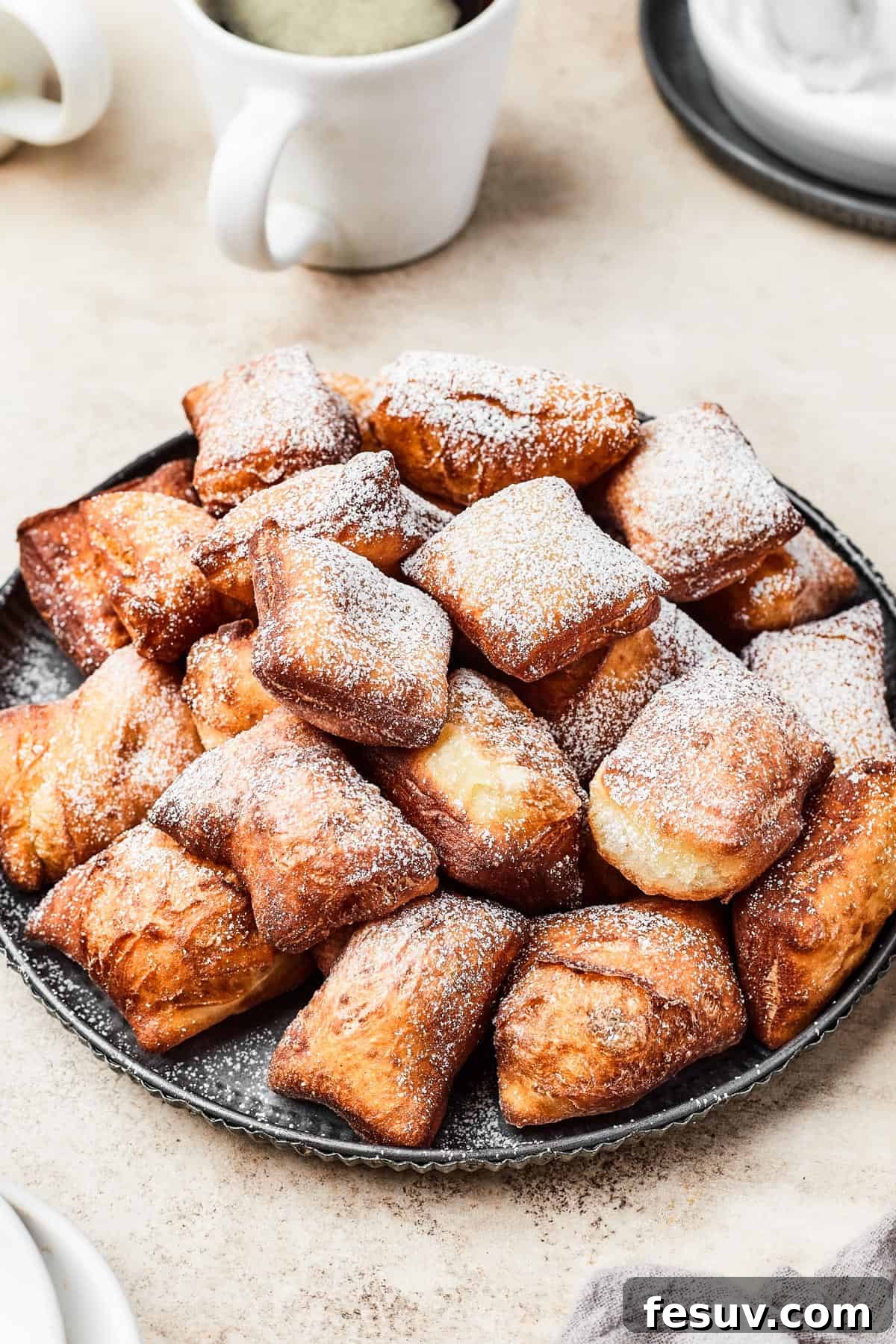
Welcome to the delightful world of homemade Beignets – those soft, cloud-like pastries reminiscent of the French Quarter! Forget about long queues at famous cafes; now you can recreate the magic of New Orleans-style beignets right in your kitchen. These lightly sweetened, irresistibly pillowy fried dough squares are surprisingly simple to master, even if you’re a novice baker. Get ready to experience the true taste of Louisiana comfort with this easy-to-follow recipe, guaranteed to become a family favorite.
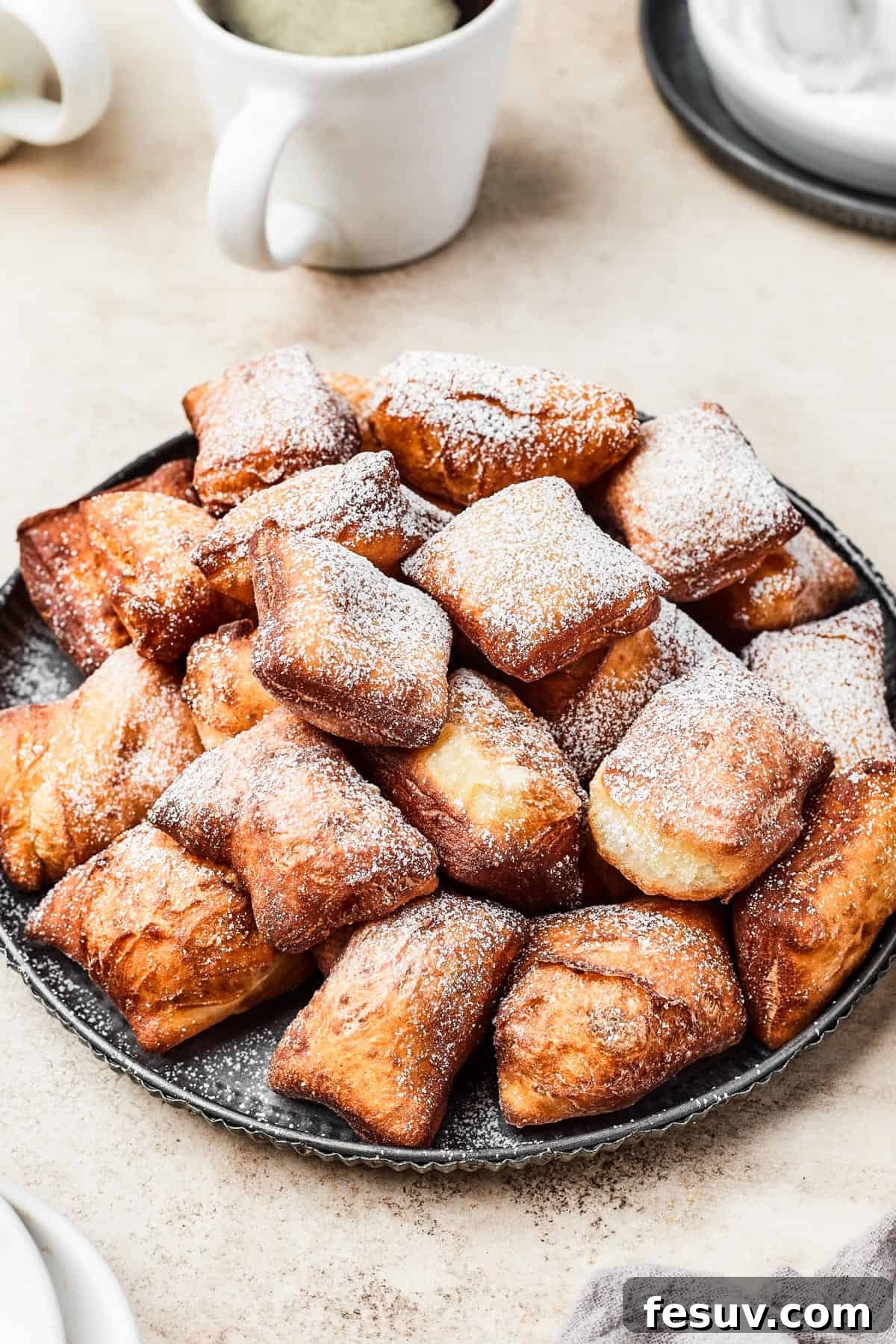
Experience the Irresistible Charm of Authentic Homemade Beignets
Beignets are a beloved culinary treasure, famed for their ethereal lightness and delicate sweetness. These deep-fried dough delights bear a close resemblance to traditional doughnuts but possess a unique character all their own. Their legendary status is deeply intertwined with New Orleans, especially the iconic Cafe Du Monde, which has been serving its world-renowned beignets alongside rich cafe au lait since 1862. A tradition spanning over a century and a half is a testament to their enduring appeal and undeniable deliciousness!
The good news is that these addictively tasty treats are not just for expert chefs. This recipe is specifically designed for home bakers of all skill levels, from beginners to seasoned pros. With a straightforward list of ingredients and uncomplicated instructions, you’ll be amazed at how easily you can bring the vibrant flavors of New Orleans into your home. Imagine the delight on your family’s faces as they bite into these warm, fluffy squares, generously dusted with powdered sugar. It’s more than just a snack; it’s an experience, a slice of culinary history made accessible and enjoyable for everyone.
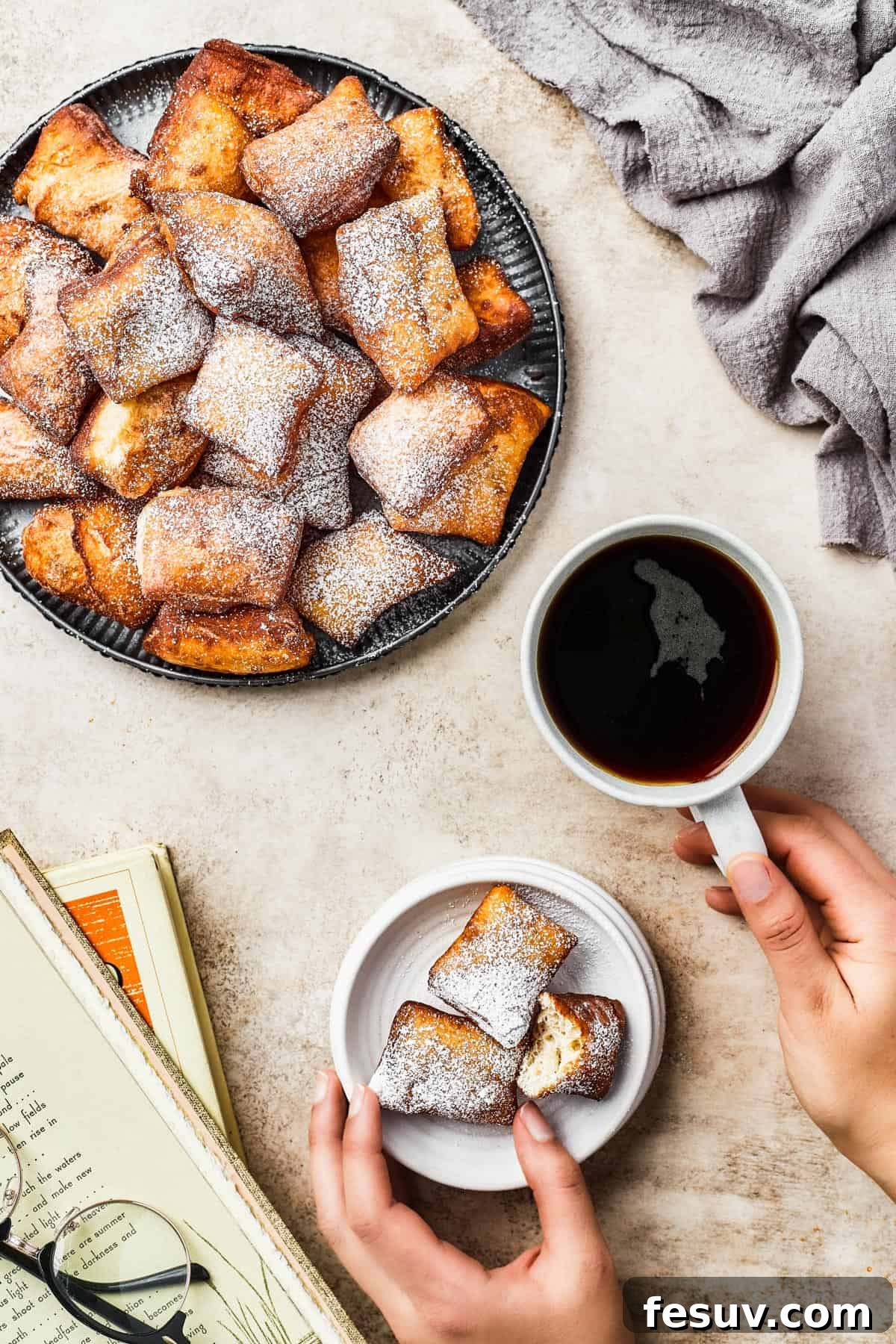
Beignets vs. Doughnuts: Unpacking the Subtle Distinctions
While often grouped together, beignets and doughnuts, though similar in their fried dough essence, possess distinct characteristics that set them apart. Understanding these differences enhances the appreciation for each unique pastry.
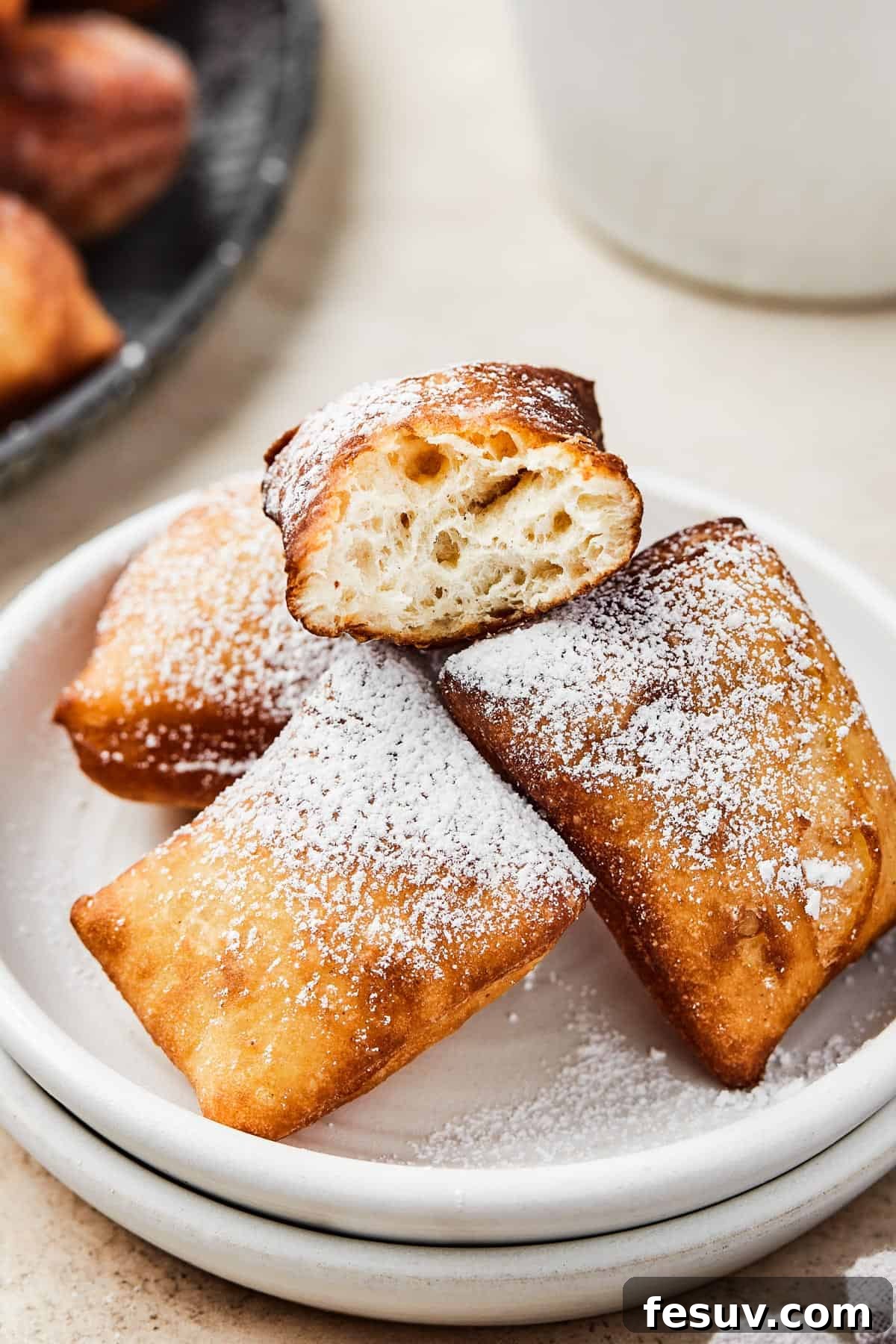
The most immediately noticeable distinction lies in their shape. Classic American doughnuts are typically round with a characteristic hole in the center, or sometimes filled. Beignets, on the other hand, are traditionally cut into squares. They are never filled and often boast a delightful hollow interior, which contributes to their signature lightness. This lack of a hole means more surface area for that delightful powdered sugar coating!
Beyond shape, the texture and composition differ subtly. Beignet dough typically incorporates fewer eggs than most doughnut recipes, resulting in a distinctly lighter, fluffier, and less dense crumb. This lighter consistency makes them almost melt in your mouth, a quality highly prized by beignet connoisseurs. Doughnuts, while delicious, tend to be a bit chewier and richer due to their higher egg content and often denser dough structure. Both offer a satisfying sweetness, but the beignet’s cloud-like bite is truly unparalleled.
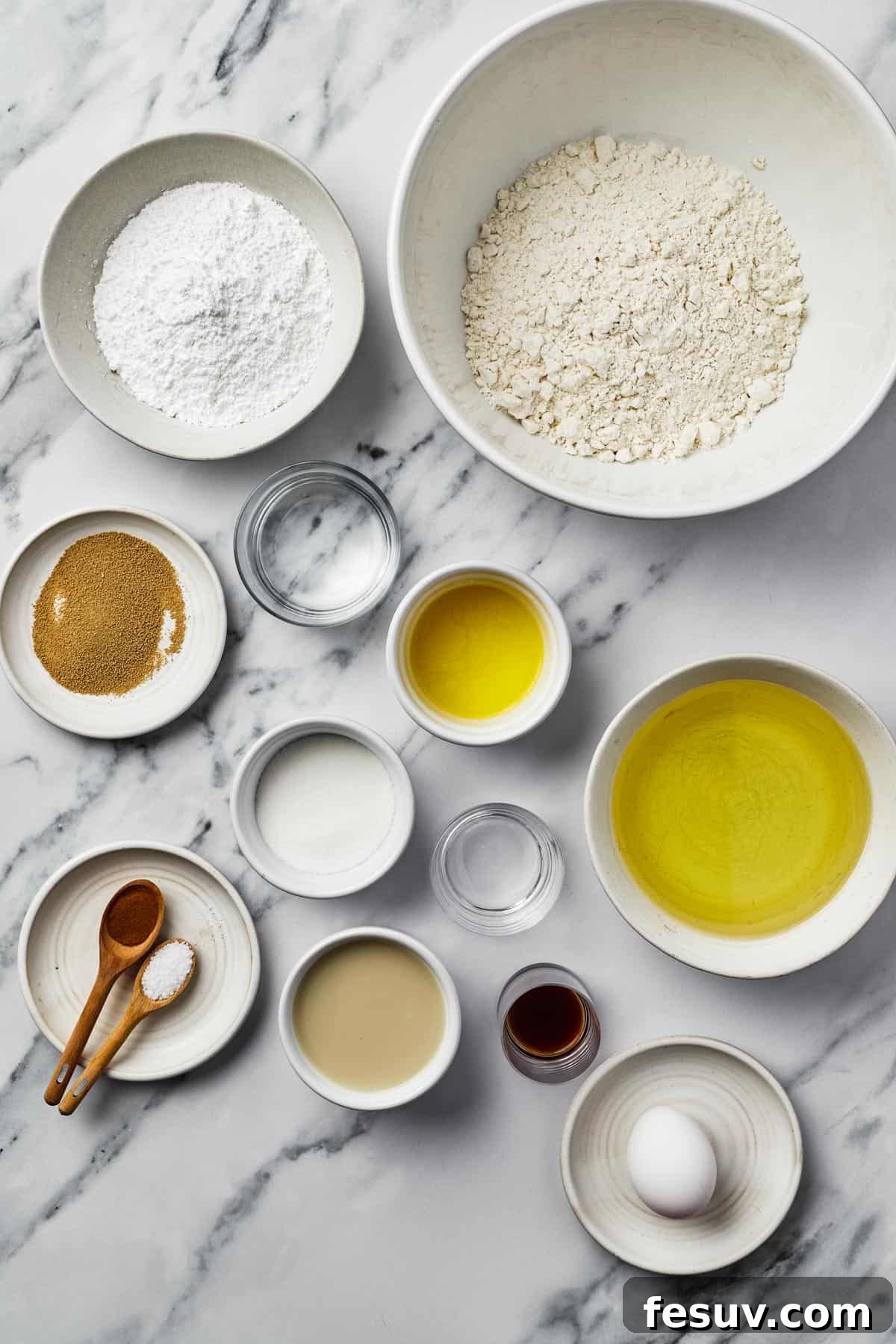
Essential Ingredients for Fluffy Beignets
Crafting these delectable fried treats requires just a handful of basic ingredients, most of which you likely already have in your pantry. However, one crucial component is the frying oil, and you’ll need a generous amount. While Cafe Du Monde famously recommends cottonseed oil, any high-smoke-point oil suitable for deep frying will work wonderfully. Vegetable or canola oil are excellent, widely available choices that deliver fantastic results.
- Warm Water: Essential for activating the yeast. Ensure it’s between 105°F and 110°F – too hot will kill the yeast, too cold won’t activate it.
- Active Dry Yeast: This is the leavening agent that gives beignets their signature airy, fluffy texture. One packet is typically just enough.
- Egg: A single whole egg adds richness and helps bind the dough. For best results, use it at room temperature to ensure it incorporates smoothly.
- Milk: Whole milk is recommended for its ability to moisten the dough and provide a subtle, creamy richness, contributing to a tender crumb.
- Granulated Sugar: Provides sweetness to the dough itself. You’ll also want a generous supply of powdered sugar for dusting the finished beignets.
- Vinegar: A small amount of white vinegar, apple cider vinegar, or even rice vinegar is a secret ingredient. It helps balance the sweetness, tenderizes the dough, and enhances the overall flavor profile. Each type offers a slight nuance in taste.
- Pure Vanilla Extract: A splash of pure vanilla extract elevates the flavor, adding a warm, aromatic depth to the beignets.
- Salt: Kosher salt is preferred for its cleaner taste, but regular table salt works perfectly fine. It’s crucial for balancing flavors and enhancing the sweetness.
- Cinnamon: A touch of cinnamon adds a delightful warmth and subtle spice, complementing the sweetness beautifully.
- All-Purpose Flour: The foundation of our dough, all-purpose flour provides the structure for these pillowy treats.
- Unsalted Butter: Melted butter adds richness and contributes to the dough’s tender texture. If using salted butter, remember to slightly reduce the amount of added salt in the recipe.
- Frying Oil: As mentioned, canola or vegetable oil are excellent choices for deep frying. You’ll need enough to allow the beignets to float freely, typically 3-4 cups.
Step-by-Step Guide: Crafting Your Own New Orleans-Style Beignets
Now for the most exciting part – bringing these delightful treats to life! While the process involves a few steps, each is straightforward. Be sure to set aside ample time, as the dough requires a good resting period. Reading through the entire instructions once or twice before you begin will ensure a smooth and enjoyable baking experience.
- Activate the Yeast and Prepare the Dough: In the bowl of a stand mixer, whisk together the warm water and the packet of active dry yeast. Let this mixture sit undisturbed for 5 minutes. You should see it become foamy or bubbly, indicating the yeast is active and ready to work its magic. Next, add the egg, milk, granulated sugar, vinegar, vanilla extract, salt, and cinnamon to the yeast mixture. Whisk these ingredients on low speed until they are thoroughly combined.
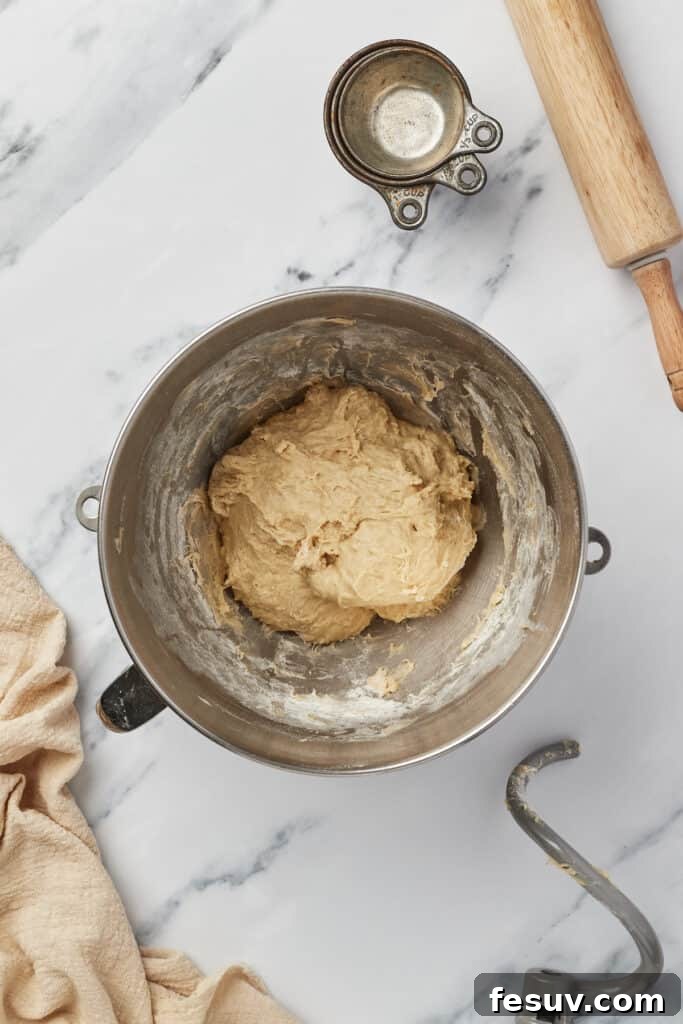
- Knead the Dough: Switch to the dough hook attachment on your stand mixer. Gradually add the all-purpose flour to the wet ingredients. Mix on low speed, allowing the dough hook to gently knead the mixture until the dough is smooth, elastic, and pulls away from the sides of the bowl. It should form a cohesive ball, yet remain slightly sticky and soft to the touch. If, at this stage, the dough appears too wet to handle comfortably, you can incorporate an extra tablespoon or two of flour, one at a time, until the desired consistency is achieved. Finally, pour in the melted butter and continue mixing on low speed until it is completely incorporated into the dough.
- Allow the Dough to Rise: Once the dough is prepared, cover the bowl with plastic wrap or a clean kitchen towel. Place it in a warm environment, free from drafts, and let it rise for 4 to 6 hours. The goal is for the dough to double in size, becoming visibly plump and airy. This slow rise is crucial for developing the characteristic flavor and light texture of authentic beignets.
- Prepare for Frying: While the dough finishes its rise, or once it has risen, begin preparing your frying station. In a large, deep skillet or a sturdy Dutch oven, pour in enough cooking oil (about two inches deep) to allow the beignets to float. Heat the oil over medium-high heat until it reaches a temperature of 350°F (175°C). This typically takes 5-10 minutes. Using a kitchen thermometer is highly recommended for accuracy, as proper oil temperature is key to perfectly cooked beignets.
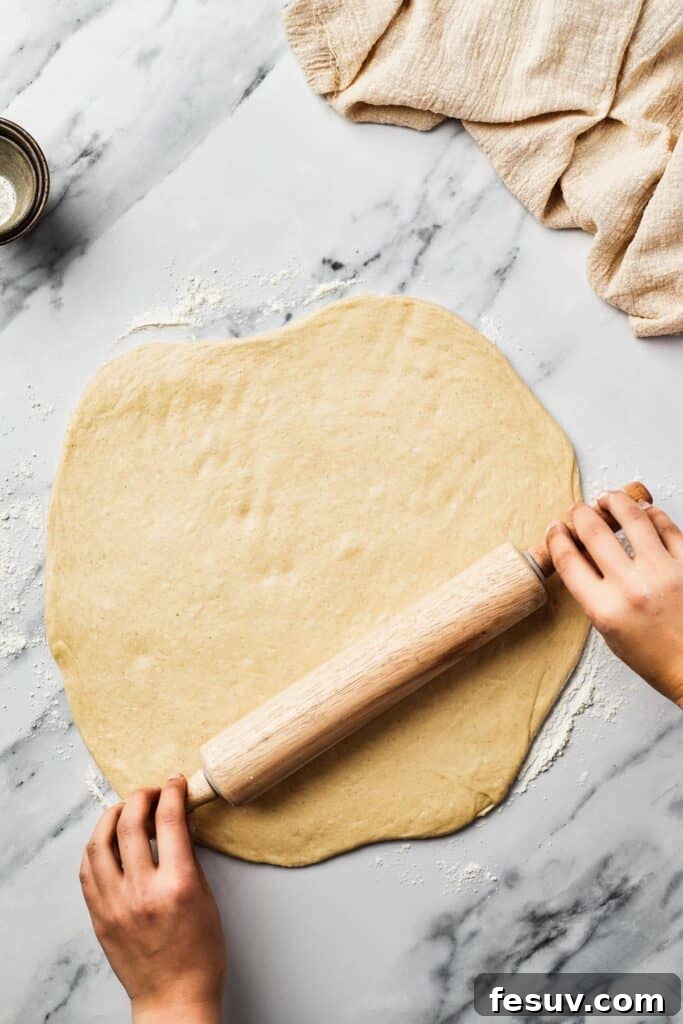
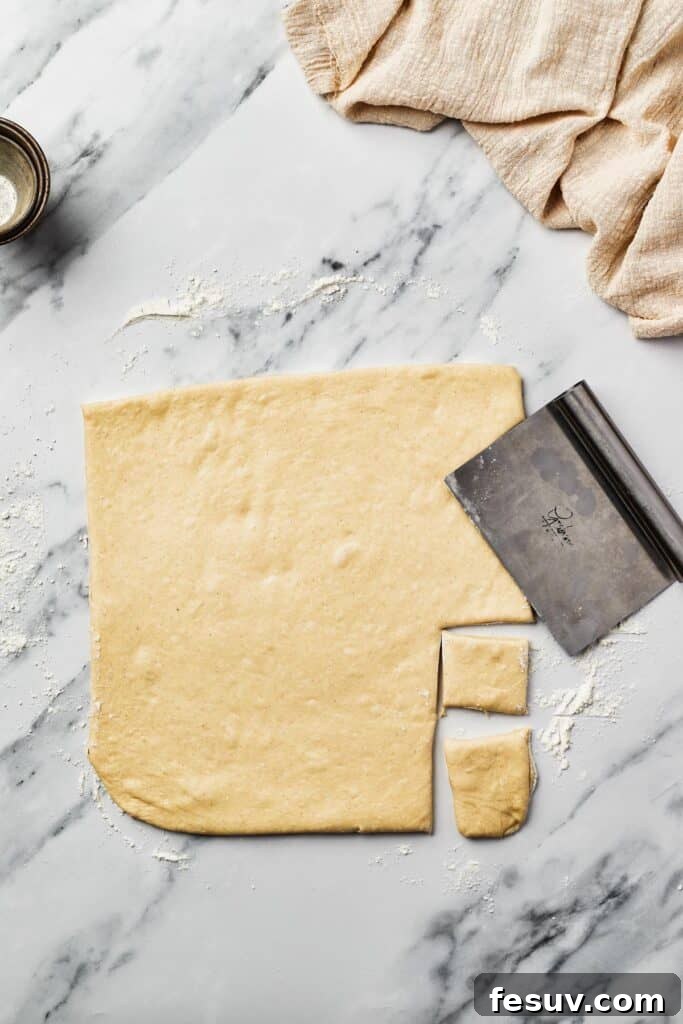
- Roll and Cut the Dough: Lightly flour a clean work surface. Gently transfer the risen dough onto the floured surface. Using a rolling pin, roll the dough out evenly into a rectangular shape, aiming for a thickness of about ¼ inch. With a sharp knife or a pizza cutter, slice the dough into uniform 2-inch by 2-inch squares. Consistency in size helps ensure even frying.
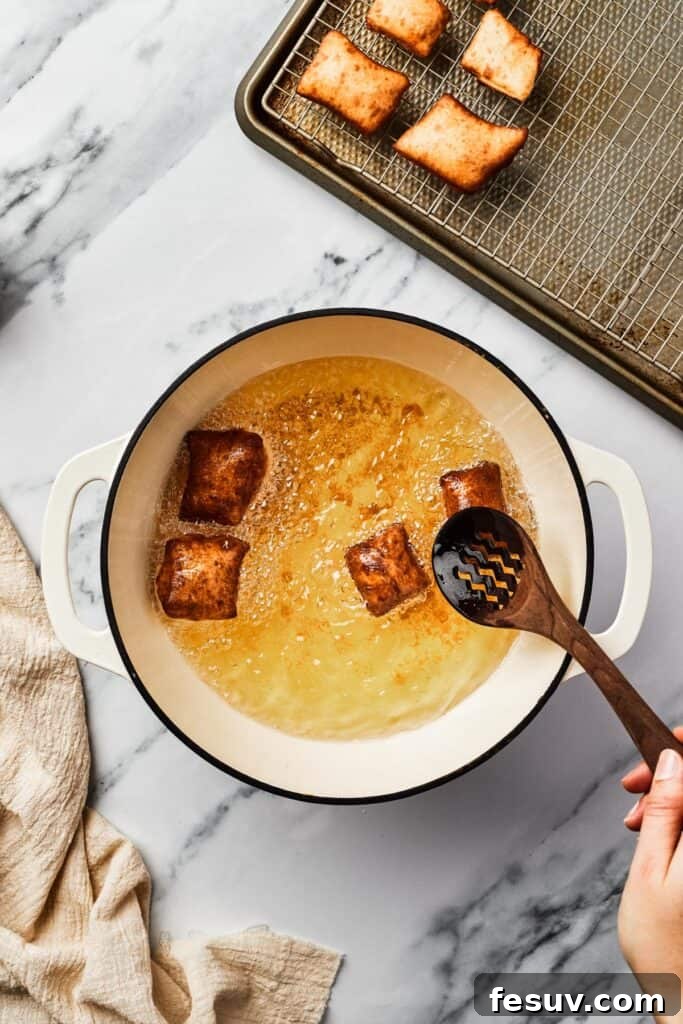
- Fry the Beignets: Carefully lower 3 to 4 beignet squares into the hot oil at a time, being careful not to overcrowd the pan. Use a clean, dry slotted spoon for this. As soon as the beignets float to the surface and puff up beautifully (this happens quickly!), gently flip them over. Fry them for approximately 30 seconds to 1 minute on each side, until they achieve a gorgeous golden-brown color.
- Cool and Serve: Once fried to perfection, use your slotted spoon or spider spoon to carefully lift the beignets from the hot oil. Transfer them to a wire rack placed over a baking sheet to drain any excess oil and cool slightly. While still warm, generously dust the beignets with powdered sugar. Serve immediately and enjoy their unparalleled freshness!
Expert Tips for Flawless Beignets
While making beignets is a rewarding experience, a few pointers can elevate your results from good to absolutely fantastic. Pay attention to these expert tips for achieving those perfectly light and airy pastries every time.
- Avoid Overmixing the Dough: Overmixing can develop too much gluten, leading to a tough, chewy beignet instead of the desired light and fluffy texture. Mix just until the ingredients are combined and the dough is smooth and elastic.
- Maintain Optimal Oil Temperature: This is arguably the most critical factor. If your oil is too hot, the beignets will brown too quickly on the outside, leaving the inside raw and doughy. If the oil isn’t hot enough, they will absorb too much oil, becoming greasy and heavy, failing to puff up properly. A deep-fry thermometer is your best friend here; aim for a consistent 350°F (175°C). Adjust heat as needed to keep the temperature stable between batches.
- Ensure Yeast Activation: Always confirm your yeast is active before proceeding. After mixing the warm water and yeast, let it sit for 5 minutes. If it doesn’t foam or bubble, your yeast might be old or inactive, and the dough won’t rise. In such a case, it’s best to start over with fresh yeast to prevent disappointment.
- Don’t Overcrowd the Pan: Fry only a few beignets at a time (3-4 squares). Overcrowding the pan will drastically lower the oil temperature, leading to greasy, undercooked results. Give them space to swim and puff!
- Gentle Dough Handling: Once the dough has risen, handle it gently. Overworking it will deflate the precious air bubbles that contribute to its fluffiness.
- Serve Immediately: Beignets are best enjoyed warm, fresh from the fryer, and generously dusted with powdered sugar. Their texture and flavor are at their peak when hot.
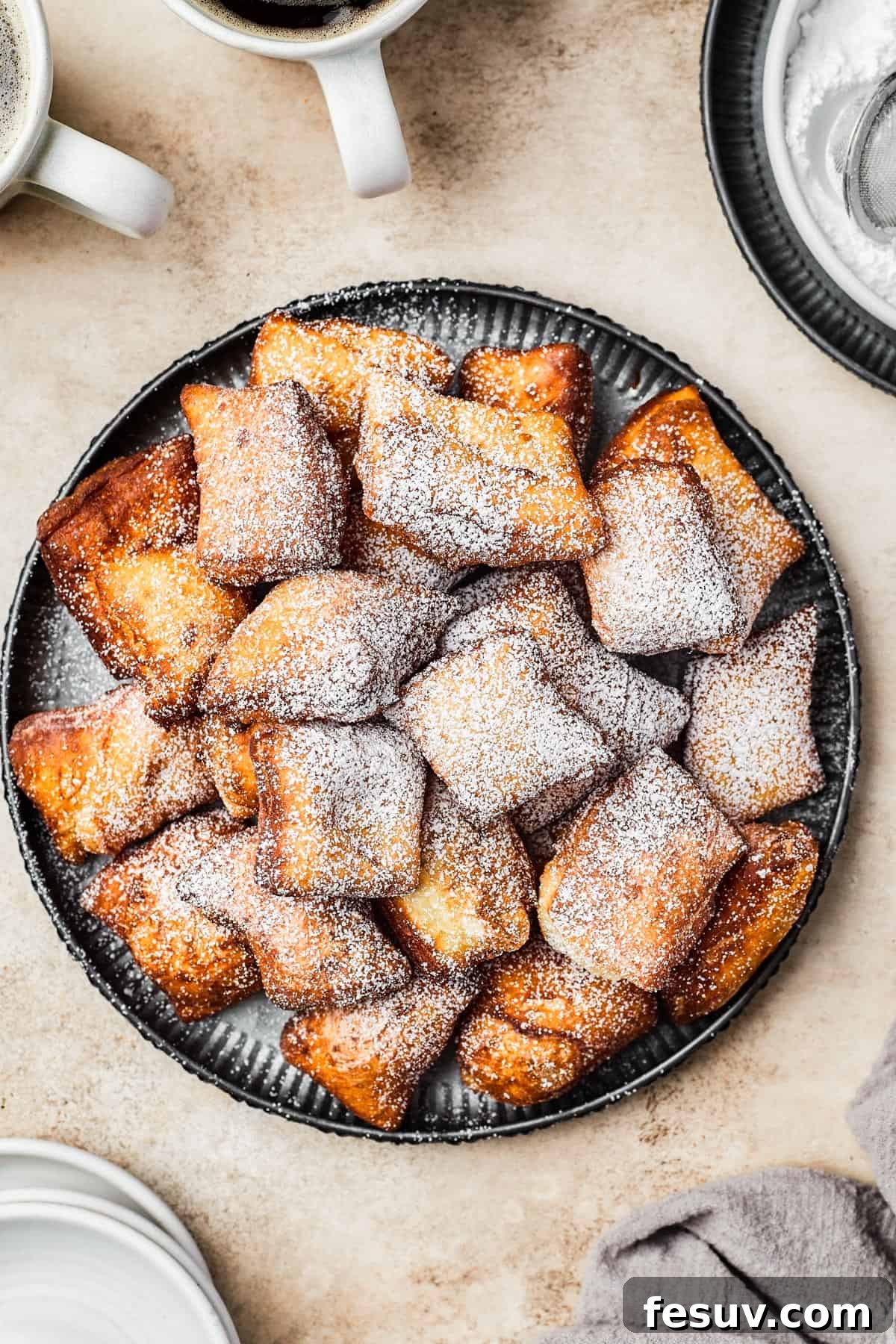
Creative Variations for Your Beignets
Classic beignets, simply dusted with powdered sugar, are a masterpiece on their own. However, if you’re feeling adventurous and want to put a unique spin on this traditional treat, there are countless ways to customize them. Experiment with these tasty variations to create a dessert that’s uniquely yours!
- Fun Shapes: While squares are traditional, don’t hesitate to get creative with your cookie cutters! Try cutting your dough into diamonds, hearts, or even miniature circles for a charming presentation. Just remember that when fried, the dough will puff up, so intricate shapes might become less defined.
- Diverse Toppings: Powdered sugar is classic, but why stop there? Elevate your beignets with decadent toppings like a warm melted chocolate drizzle, a vibrant lemon glaze, rich maple syrup, or even a creamy vanilla bean icing. You could also sprinkle them with cinnamon sugar for a different kind of sweet spice.
- Flavorful Extracts: Infuse your dough with exciting new flavors by adding different extracts. Maple extract can give a cozy, autumnal twist, almond extract offers a sophisticated nutty note, and orange extract provides a bright, citrusy zing. A combination of extracts can also yield surprising and delicious results.
- Savory Beignets: For a truly unconventional twist, consider a savory version! Omit the sugar from the dough and serve them with a savory dip, a sprinkle of herbs and parmesan, or alongside a hearty chili.
- Spice Blends: Beyond cinnamon, consider incorporating a pinch of nutmeg, cardamom, or even a very subtle touch of cayenne pepper for a New Orleans kick.
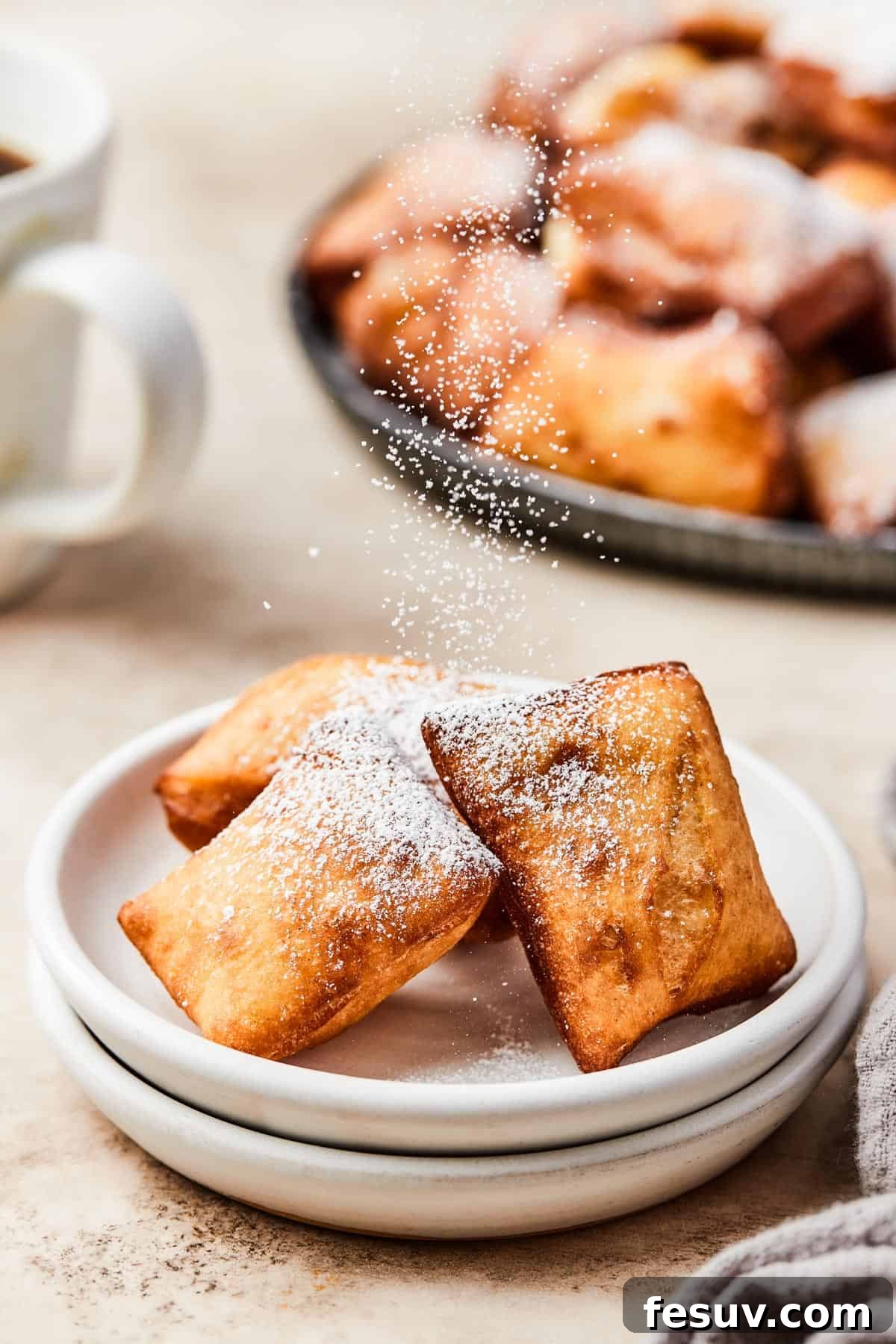
Storing and Reheating Your Delicious Beignets
While beignets are undoubtedly best enjoyed fresh and warm, you might find yourself with a few leftovers (a rare but possible occurrence!). Proper storage ensures they remain enjoyable for a little longer, and effective reheating methods can bring back some of their original glory.
- Storing Cooked Beignets: Once cooled completely, store any leftover beignets in an airtight container at room temperature. They will retain their best quality for up to 1 day. Beyond that, their texture tends to firm up, though they remain edible.
- Reheating Cooked Beignets: To refresh day-old beignets, you have a couple of options. For a quick warm-up, place them in the microwave for just a few seconds until heated through. Be careful not to overheat, or they can become rubbery. For a crispier exterior, warm them in an oven preheated to 350°F (175°C) for a few minutes until they are warm to the touch. Once reheated, a fresh dusting of powdered sugar is a must!
- Storing Raw Dough: If you’ve prepared the dough ahead of time or have extra, you can store the raw beignet dough in an airtight container in the refrigerator for up to 4 days. This allows you to have fresh beignets on demand throughout the week. When you’re ready to use it, let the dough come to room temperature for about 30-60 minutes before rolling and frying, as cold dough will not puff up as effectively.
Freezing Beignets for Later Enjoyment
Yes, you absolutely can! Freezing beignets, whether cooked or as raw dough, is a fantastic way to enjoy these New Orleans treats at your convenience, making them perfect for future brunches or unexpected cravings.
- Freezing Cooked Beignets: Allow the fried beignets to cool completely after frying. Do not dust them with powdered sugar before freezing, as it can get soggy when thawed. Place them in a single layer on a baking sheet and freeze until solid, then transfer them to an airtight freezer-safe container or a heavy-duty freezer bag. They will keep well for 1 to 2 months. To reheat, you can bake them from frozen at 350°F (175°C) for 10-15 minutes, or until warmed through and slightly crisp. Dust with powdered sugar immediately after reheating.
- Freezing Raw Dough: The raw dough also freezes beautifully. After the initial rise, punch down the dough gently. Wrap it tightly in plastic wrap, then place it in a freezer-safe bag or container. It can be frozen for up to 3 months. When you’re ready to use it, thaw the dough in the refrigerator overnight. Once thawed, let it come to room temperature, then proceed with rolling, cutting, and frying as per the recipe instructions. You may need to allow for a second, shorter rise if it seems a bit deflated.
Frequently Asked Questions About Beignets
Here are some common questions to help you become a beignet master:
- Can I make beignet dough the night before? Absolutely! After the initial rise, you can punch down the dough, cover it tightly, and refrigerate it overnight. Just let it come to room temperature for about 30-60 minutes before rolling and frying. This makes for a quick breakfast treat!
- What should I serve with beignets? The classic accompaniment is a cup of chicory coffee or cafe au lait, just like at Cafe Du Monde. They also pair wonderfully with hot chocolate, milk, or a fruit compote for breakfast or brunch.
- Are beignets difficult to make? Not at all! While there are a few steps involving yeast and frying, the recipe is very forgiving. The key is to follow the instructions for yeast activation and oil temperature. Even beginners can achieve delicious results.
- Why are my beignets not puffing up? This is usually due to inactive yeast or oil that isn’t hot enough. Ensure your warm water for yeast activation is the correct temperature (105-110°F), and always check your oil temperature with a thermometer before frying. Overworking the dough can also prevent proper puffing.
- Can I bake beignets instead of frying them? While you technically could bake them, they would not be authentic beignets. The deep-frying process is essential for achieving their signature light, airy, and slightly crispy texture. Baking would result in a denser, bread-like pastry rather than a true beignet.

Beignets
Ingredients
- ½ cup warm water, (temperature should be about 105˚F to 110°F for proofing)
- 2 ¼ teaspoons (1 packet) active dry yeast
- 1 whole egg
- ½ cup milk
- ⅓ cup granulated sugar
- 1 teaspoon white vinegar
- 1 teaspoon pure vanilla extract
- ½ teaspoon kosher salt
- ½ teaspoon cinnamon
- 3 ¾ cups all purpose flour
- 2 tablespoons unsalted butter, melted
- 3-4 cups canola oil, for frying
Instructions
-
In a stand mixer, whisk together water and yeast. Let sit for 5 minutes.
-
Add egg, milk, sugar, vinegar, vanilla, salt, and cinnamon. Whisk on low until combined.
-
Switch to the dough hook attachment and add in flour. Knead on low speed until the dough is smooth and elastic. It should form a ball, but still be slightly sticky and soft.
Mix in 1 to 2 tablespoons of flour at a time IF the dough is too wet to handle.
-
Last, add in the melted butter and mix on low until fully incorporated.
-
Cover the dough and let rise in a warm environment for 4 to 6 hours, or until doubled in size.
-
Heat 2 inches of canola oil over medium-high heat in a large skillet or dutch oven. Allow the oil to heat to 350 degrees Fahrenheit, this should take about 5 to 10 minutes.
-
Meanwhile, place dough on a floured surface and roll it out into a rectangle, about ¼ inch thick. Cut into 2-inch by 2-inch squares.
-
Carefully add the beignets to the oil, frying about 3 to 4 at a time. As soon as they rise to the oil surface and puff up, flip them over. Fry until golden brown on both sides, about 30 seconds to 1 minute. Transfer beignets to a wire rack to cool.
-
Dust beignets with powdered sugar and serve warm.
Nutrition
Carbohydrates: 22g |
Protein: 3g |
Fat: 35g |
Saturated Fat: 3g |
Polyunsaturated Fat: 10g |
Monounsaturated Fat: 22g |
Trans Fat: 1g |
Cholesterol: 4mg |
Sodium: 62mg |
Potassium: 48mg |
Fiber: 1g |
Sugar: 4g |
Vitamin A: 45IU |
Vitamin C: 1mg |
Calcium: 13mg |
Iron: 1mg
Nutritional info is an estimate and provided as courtesy. Values may vary according to the ingredients and tools used. Please use your preferred nutritional calculator for more detailed info.
Did you make a recipe? Leave a rating
More Delightful Dessert Recipes to Explore
If you enjoyed crafting these delicious beignets, you’ll love venturing into more sweet treats from our collection. Expand your baking repertoire with these easy and satisfying dessert ideas:
- Fluffy Homemade Blueberry Scones
- Simple and Fun Easy Cake Pops
- Bright and Zesty Easy Homemade Lemon Bars