
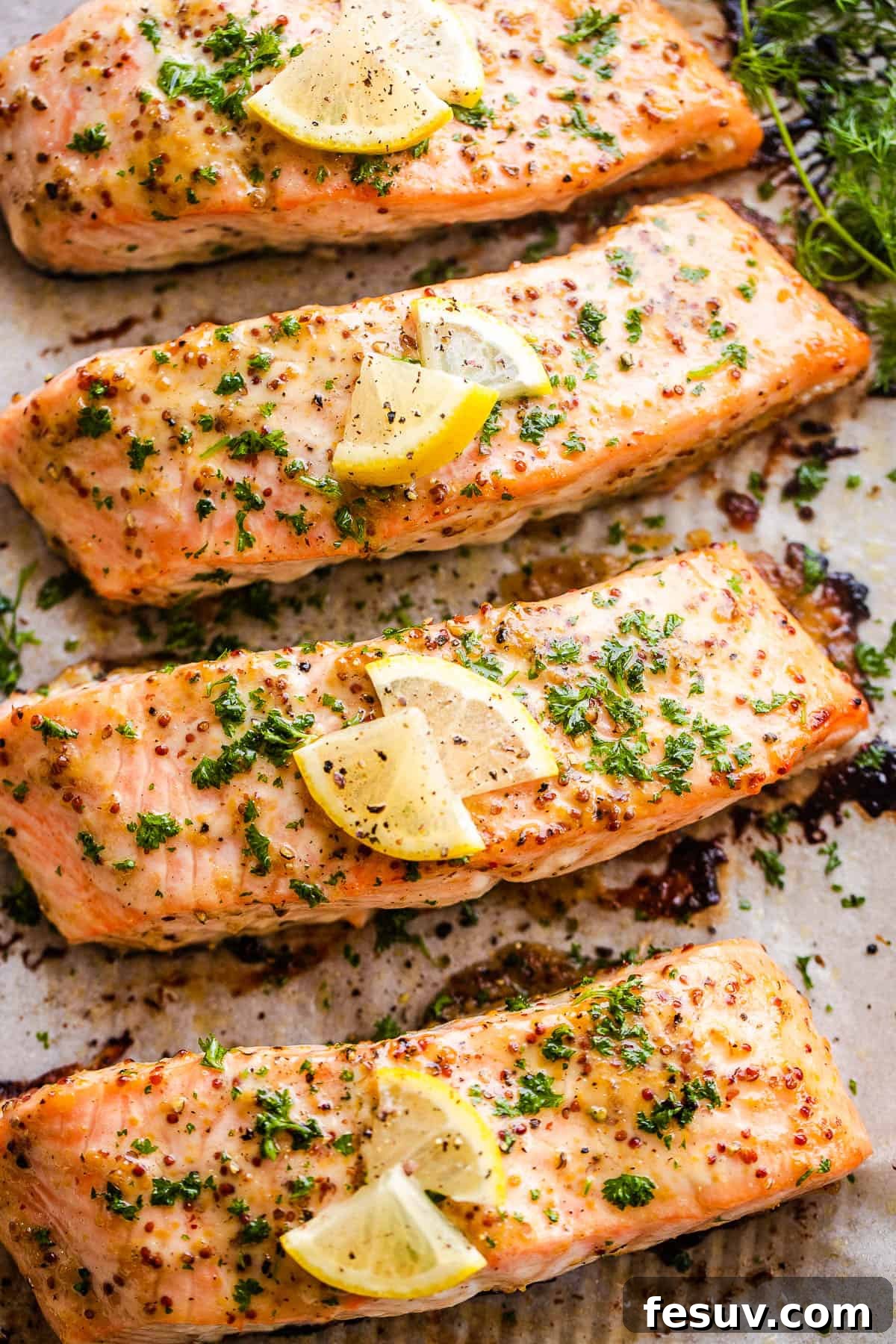
Prepare to delight your taste buds with an effortlessly elegant dish: Baked Maple Mustard Salmon Fillets. This recipe marries the robust, earthy notes of stone-ground Dijon mustard with the sweet, amber warmth of pure maple syrup, creating an irresistible glaze that perfectly complements sizzling salmon fillets. Lightly seasoned with salt and freshly cracked black pepper, this dish is not just a meal; it’s an experience of harmonious flavors that come together in less than 30 minutes. Whether you’re a seasoned chef or a kitchen novice, this recipe promises tender, juicy salmon every single time, making it an ideal choice for busy weeknights or special occasions alike.
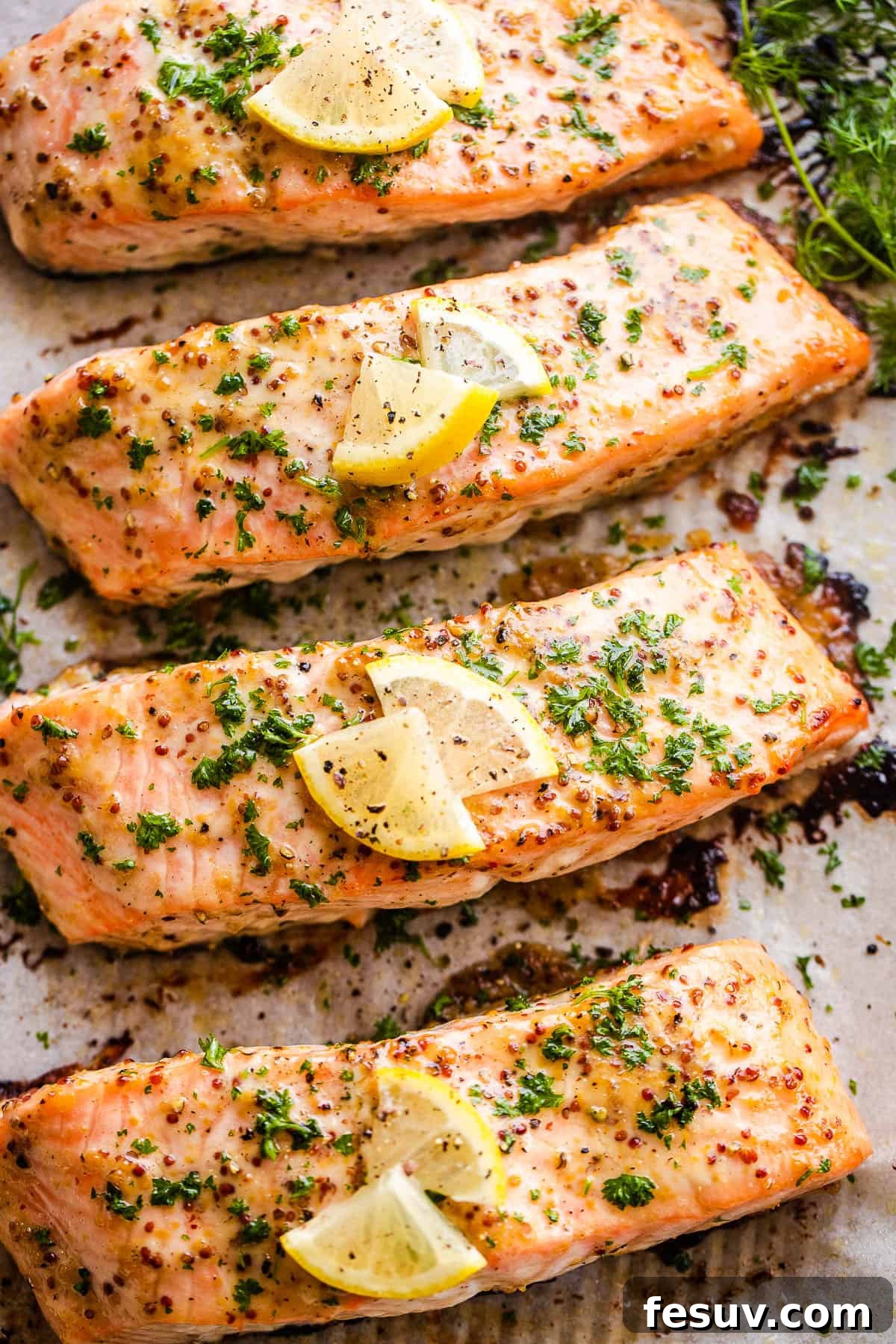
Why This Easy Maple Mustard Glazed Salmon Will Become Your New Favorite
This salmon recipe isn’t just simple; it’s a culinary revelation that combines ease, exceptional flavor, and incredible tenderness. Far from your average fish dish, this recipe is designed to impress without demanding hours in the kitchen or a long list of complex techniques. It’s wonderfully flexible, allowing for minor adjustments to suit your pantry or preferences, and the results are consistently outstanding.
One of the star features of this dish, contributing to its unparalleled tenderness and moisture, is the unexpected addition of mayonnaise to the glaze. While it might seem unconventional, mayonnaise works wonders by locking in moisture and ensuring a creamy texture that elevates each bite. This simple secret transforms ordinary salmon into a succulent, flavorful centerpiece that everyone will rave about.
For families who enjoy cooking together, this recipe offers a fantastic opportunity to involve younger helpers. My children always love assisting with the preparation, from sprinkling the fillets with salt and pepper to mixing the glorious sauce and brushing it onto the salmon. It’s a fun, interactive way to get them excited about healthy eating and cooking, and it often encourages even the pickiest eaters to give fish a try. Watching them take pride in their culinary contributions makes the meal even more special.
The flavor profile of this maple mustard salmon is versatile and appealing throughout the year. As spring approaches, the fresh taste of seafood feels particularly fitting, yet the hearty, comforting notes of Dijon mustard and sweet maple syrup create an aroma that fills the home with a wonderfully cozy ambiance. It’s a dish that can adapt to any season, feeling light and refreshing in warmer months, or rich and warming during colder ones.
When selecting salmon, I always lean towards wild-caught varieties. Wild-caught seafood is generally regarded as more nutritious, offering a richer profile of omega-3 fatty acids and often possessing a superior flavor compared to farmed alternatives. However, don’t hesitate to use your preferred brand or type of salmon. If you choose to leave the skin on, it will add another layer of flavor and help keep the fish moist during baking. The key is to select fresh, high-quality fillets for the best possible outcome.
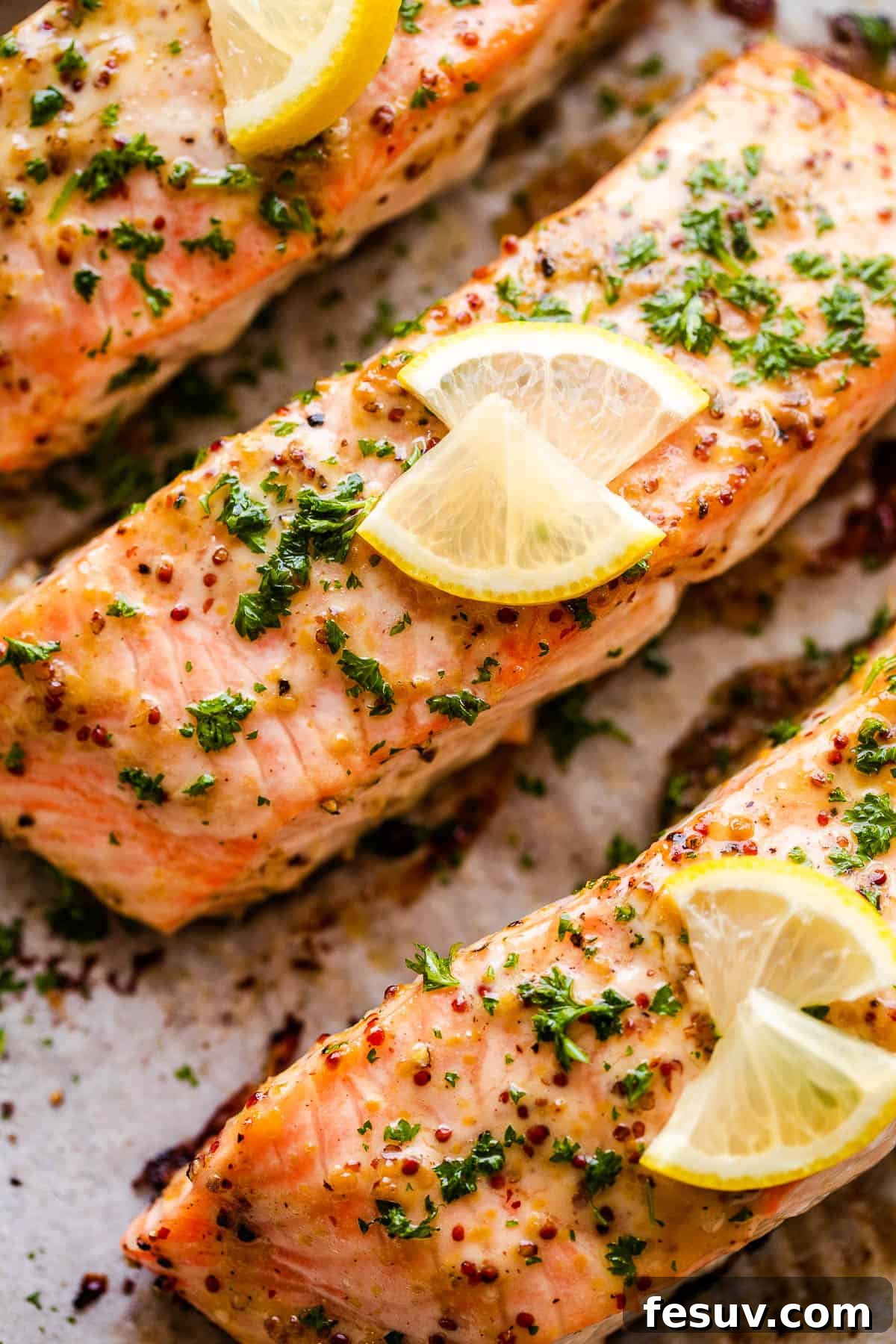
Essential Ingredients for Your Glazed Salmon Masterpiece
The beauty of this maple mustard salmon lies in its simplicity. You need only a handful of ingredients to create a dish bursting with complex, delightful flavors. Each component plays a crucial role in building the signature sweet and tangy profile that makes this salmon so memorable.
- Salmon Fillets: The foundation of our dish. Aim for four fillets that are roughly 4 to 6 ounces each and similar in thickness. This ensures even cooking and consistent results. You can choose skin-on or skin-off based on your preference; both work wonderfully with this glaze.
- Salt & Black Pepper: Simple yet essential. These basic seasonings enhance the natural flavor of the salmon, providing a crucial base layer before the glaze is applied. A good quality cracked black pepper adds a subtle, aromatic kick.
- Stone-Ground Dijon Mustard: The heart of the savory tang. Approximately 2 tablespoons of stone-ground Dijon mustard provide a robust, slightly coarse texture and a distinctive pungent flavor that is beautifully mellowed by the maple syrup. If you don’t have stone-ground, regular Dijon or even a spicy brown mustard can be substituted for a slightly different, but still delicious, outcome.
- Mayonnaise: Our secret weapon for tenderness. A tablespoon or two of your favorite mayonnaise might seem unusual in a glaze, but it contributes an incredible creaminess and helps keep the salmon incredibly moist during baking, preventing it from drying out. It also emulsifies the sauce beautifully.
- Pure Maple Syrup: The touch of golden sweetness. It’s crucial to use pure maple syrup for this recipe, not pancake syrup. The depth of flavor in pure maple syrup is unmatched and creates that perfect sweet balance against the sharp Dijon. For a delightful twist, you could substitute honey to create a luscious honey-mustard salmon.
- Chopped Fresh Parsley: For garnish. A sprinkle of freshly chopped parsley adds a vibrant pop of color and a touch of fresh, herbaceous flavor that brightens the final dish. It’s not just for aesthetics; it truly enhances the overall eating experience.
Step-by-Step: Crafting Your Maple Mustard Salmon
One of the many joys of this recipe is how quickly and easily it comes together, making it an absolute lifesaver for busy weeknights. You don’t need any specialized equipment or advanced cooking techniques to achieve perfectly cooked, flavorful salmon. Just follow these simple steps:
- Prepare Oven & Baking Sheet: Begin by preheating your oven to 400˚F (200˚C). Line a standard baking sheet with parchment paper or aluminum foil. This crucial step not only ensures easy cleanup but also prevents the salmon from sticking to the pan, allowing for a seamless transfer to your serving platter.
- Prep Salmon Fillets: Arrange the salmon fillets evenly spaced on your prepared baking sheet. Season each fillet generously with pinches of salt and a few cracks of fresh black pepper. For best results, aim for about ¼ teaspoon of salt per fillet, ensuring an even coating on all sides. Don’t be shy with the seasoning; it forms the foundational flavor layer.
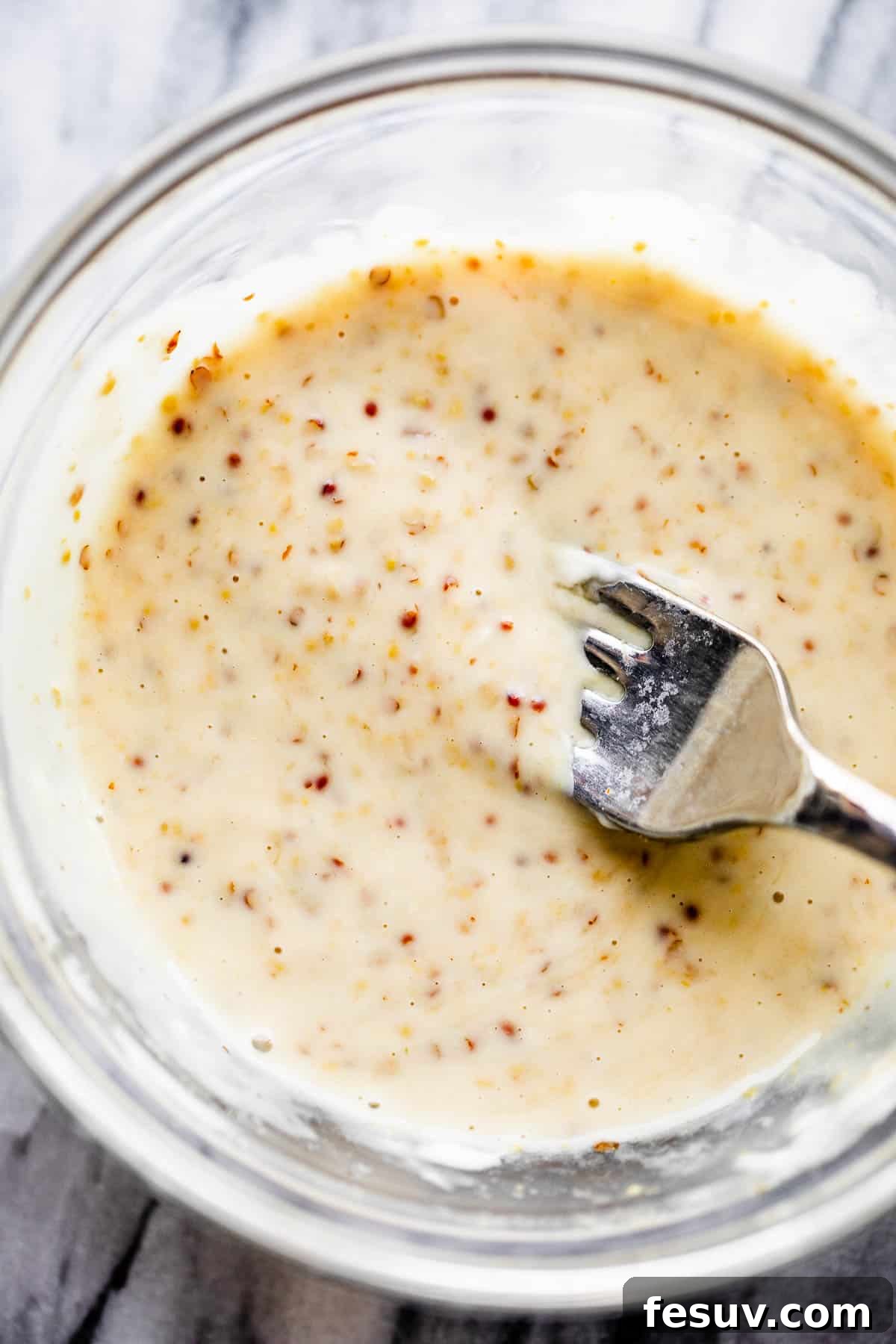
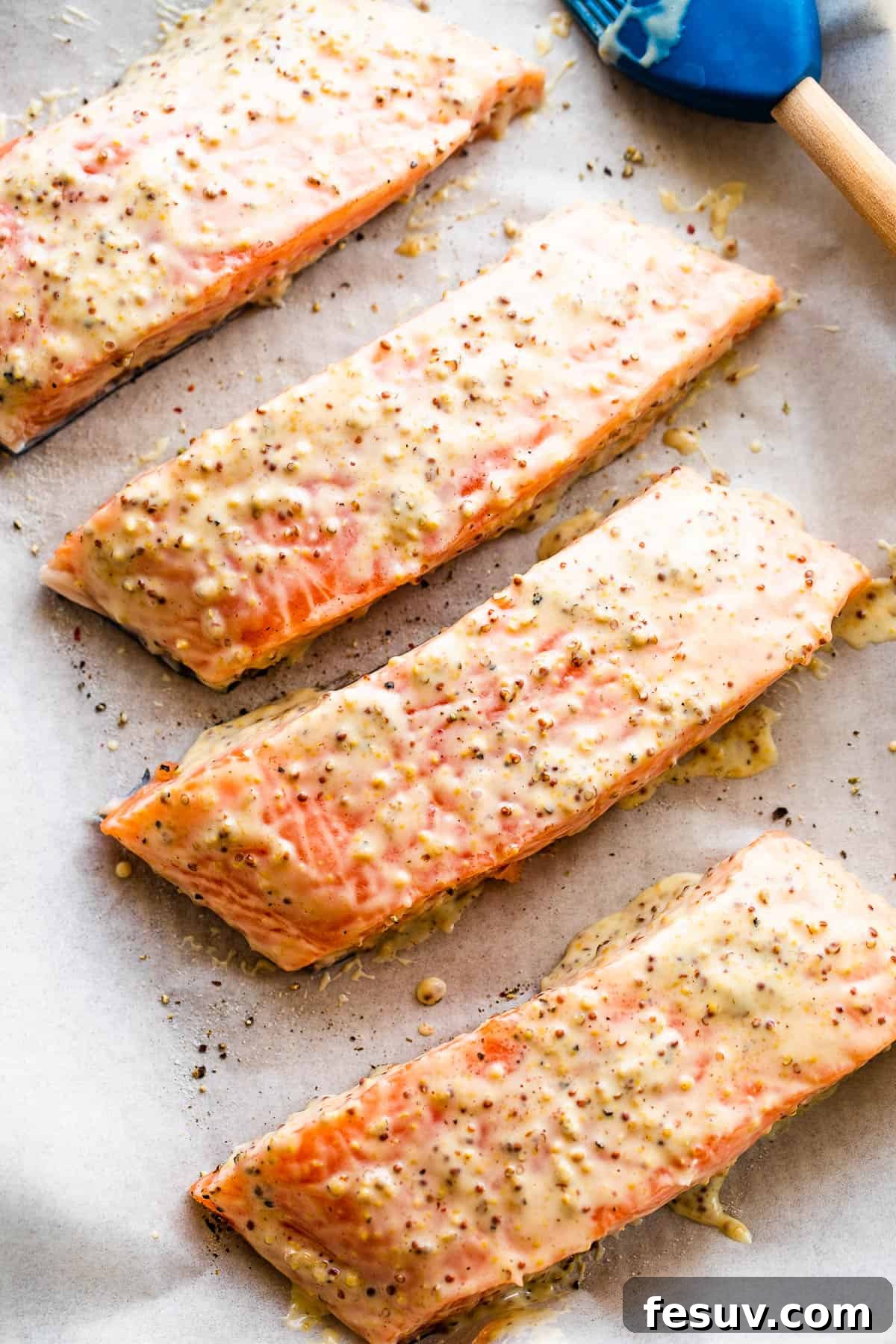
- Make the Irresistible Glaze & Brush On Salmon: In a medium-sized mixing bowl, combine the stone-ground Dijon mustard, mayonnaise, and pure maple syrup. Whisk these ingredients together until they are thoroughly blended and smooth, forming a luscious, cohesive sauce. Using a pastry brush or the back of a spoon, evenly coat the top and sides of each salmon fillet with this delectable mixture. Ensure every part of the fish is covered for maximum flavor and moisture retention.
- Bake to Perfection: Transfer the baking sheet to your preheated oven. Bake for approximately 13 to 16 minutes. The exact cooking time will vary depending on the thickness and size of your salmon fillets, so keep a close eye on them. Salmon is perfectly cooked when it flakes easily with a fork and its internal temperature registers 140˚F (60˚C) with an instant-read thermometer. Avoid overcooking, as this can lead to dry fish.
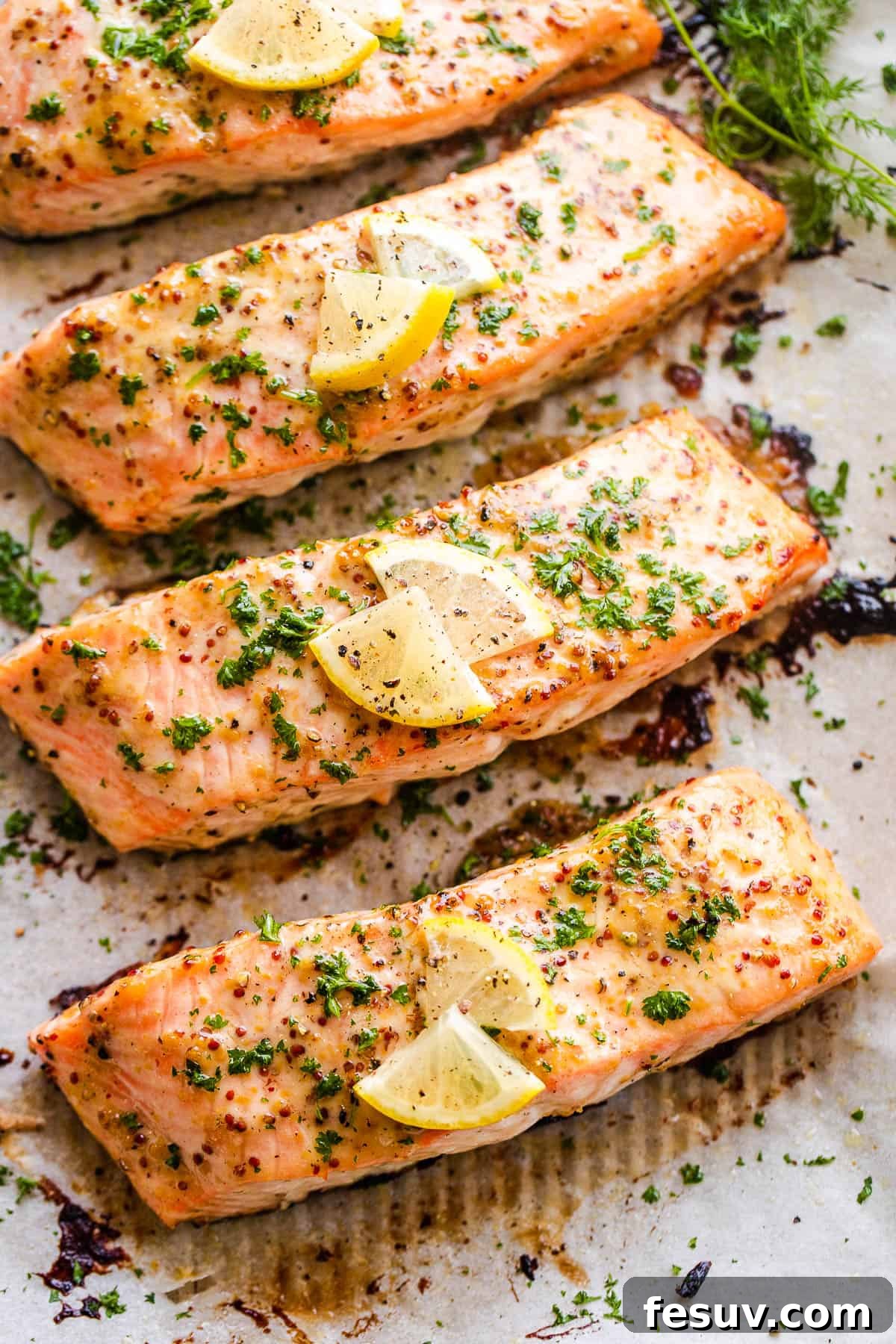
- Garnish & Enjoy! Once cooked, carefully remove the fish from the oven. Garnish generously with freshly chopped parsley for a vibrant burst of color and a hint of herbaceous freshness. Serve immediately and savor the rich, sweet, and tangy flavors of your homemade maple mustard salmon.
Expert Tips for Flawlessly Cooked Salmon Every Time
If you’ve ever found yourself disappointed with rubbery or dry salmon in the past, rest assured, you’re not alone. Achieving that perfect, tender, flaky texture can seem daunting, but with a few professional tips, you can elevate your salmon from mediocre to magnificent. Trust these guidelines to transform your cooking experience and deliver consistently delicious results:
- Bring the Salmon to Room Temperature: This simple step is a game-changer. Placing cold fillets directly into a hot oven can lead to uneven cooking, where the outside cooks too quickly while the inside remains underdone. For optimal, even cooking and a tender result, allow your salmon fillets to sit at room temperature for about 15 to 20 minutes before baking. This helps the fish cook more uniformly throughout.
- Pat the Fillets Dry: Moisture is the enemy of a good crust and can hinder flavor development. Before you season and glaze your salmon, use paper towels to thoroughly pat each fillet dry. This step helps the seasonings adhere better, prevents the fish from steaming (which can happen if there’s excess moisture), and ensures a more flavorful, less “fishy” outcome.
- Use a Meat Thermometer: The single most reliable way to prevent overcooking is to use an instant-read thermometer. Salmon is notoriously easy to overcook, turning dry and unappetizing. Insert the thermometer into the thickest part of the fillet; it should register 140˚F (60˚C) for a perfectly done, moist piece of fish. Remember, it will continue to cook slightly after being removed from the oven (carryover cooking).
- Don’t Overcrowd the Pan: Give your salmon fillets space to breathe on the baking sheet. If they are too close together, they will steam instead of baking, resulting in a less desirable texture and a less flavorful crust. Use two baking sheets if necessary to ensure adequate spacing.
- Rest the Salmon: Just like with other meats, letting your salmon rest for a few minutes after it comes out of the oven allows the juices to redistribute throughout the fillet. This ensures maximum tenderness and moisture, making each bite more succulent. A quick 3-5 minute rest is all it takes.
Delicious Side Dishes to Complement Your Salmon
A flavorful entrée like maple mustard salmon deserves equally delicious companions. The right side dishes can enhance the overall dining experience, balancing the sweet and tangy notes of the fish. Here are some fantastic suggestions to create a complete and satisfying meal:
- Refreshing Cucumber Salad: Salmon and cucumber are a match made in culinary heaven. My easy cucumber salad with sour cream dressing offers a cool, crisp, and tangy contrast that beautifully cuts through the richness of the salmon, providing a refreshing palate cleanser with every bite.
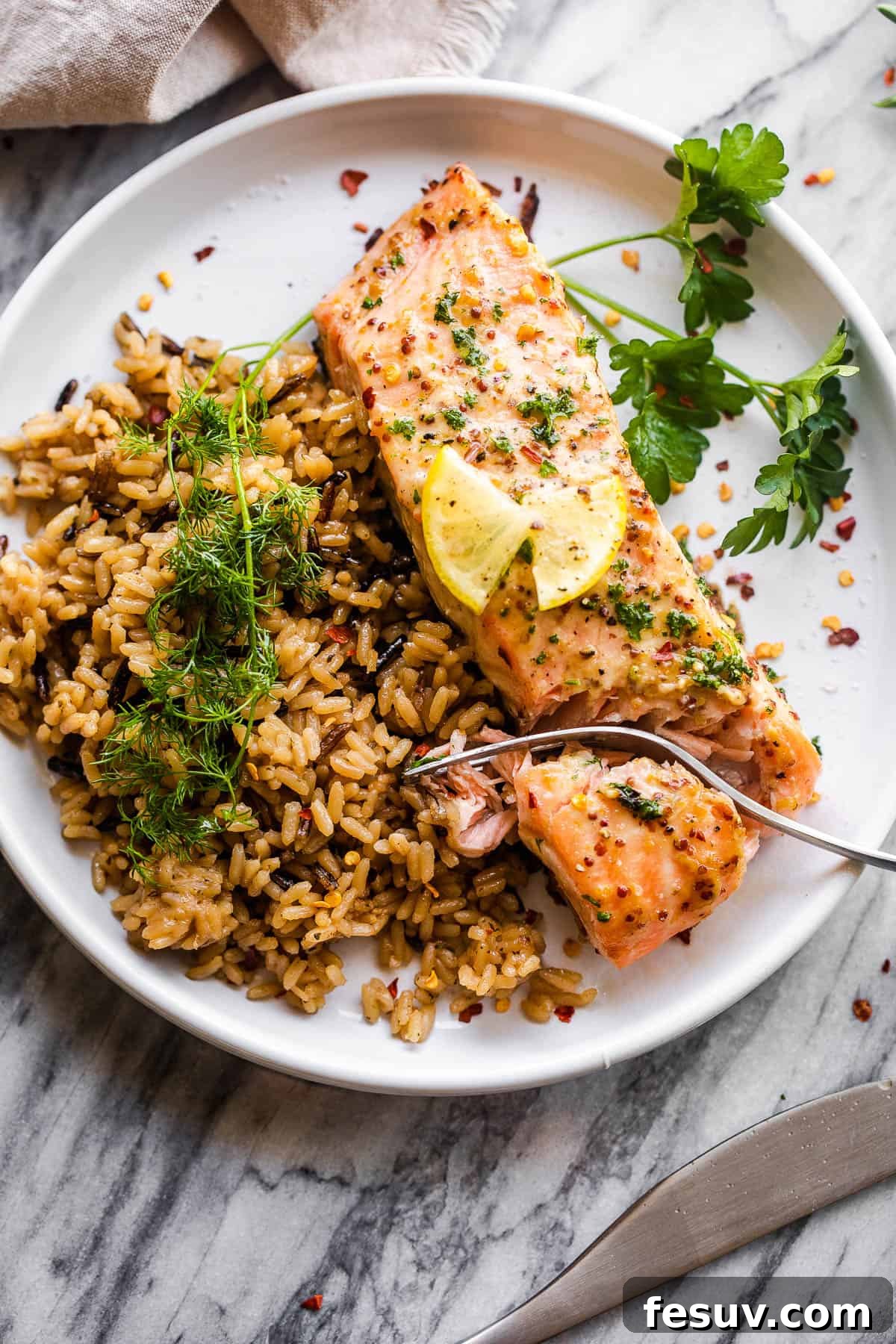
- Hearty Garlic Butter Parmesan Rice: For a comforting and incredibly flavorful carb option, try my garlic butter Parmesan rice. The savory, cheesy richness of the rice provides a wonderful foundation for the salmon, soaking up any excess glaze and adding a layer of indulgence to your plate. Alternatively, plain brown or white rice offers a more traditional and wholesome accompaniment.
- Crisp Roasted Sugar Snap Peas: Add a vibrant green and healthy component with my roasted sugar snap peas. These are incredibly easy to prepare, offering a delightful crunch and natural sweetness that complements the salmon without overpowering it. They are a universal crowd-pleaser and a simple way to boost your vegetable intake.
- Steamed Asparagus with Lemon: A classic pairing for fish, steamed asparagus provides a delicate bitterness and earthy flavor. A squeeze of fresh lemon juice over the asparagus echoes the brightness in the salmon glaze, tying the flavors together beautifully.
- Quinoa Salad with Roasted Vegetables: For a lighter, nutrient-dense option, a vibrant quinoa salad packed with roasted bell peppers, zucchini, and cherry tomatoes offers a delightful textural contrast and a burst of Mediterranean-inspired flavors.
- Lemon Roasted Potatoes: Crispy on the outside and fluffy on the inside, lemon roasted potatoes provide a satisfying starch. The acidity from the lemon again works to brighten the meal and complement the fish.
Experiment with these suggestions to find your perfect pairing. Bon appétit!
How to Store and Reheat Salmon Leftovers
Proper storage and reheating are key to enjoying your delicious maple mustard salmon for days to come. While salmon is best enjoyed fresh, its leftovers can be incredibly versatile and flavorful if handled correctly.
- Storing Leftovers: To maintain freshness and prevent bacterial growth, wrap any leftover salmon fillets tightly in plastic wrap, place them in food storage bags, or transfer them to airtight containers as soon as they have cooled to room temperature. Stored this way in the refrigerator, the salmon will remain delicious for up to 3 days.
- Reheating for Best Texture: To reheat, the oven is your best friend for preserving moisture and flavor. Place the leftover salmon in an ovenproof dish. For optimal results, you can add a splash of water or broth to the bottom of the dish and cover it loosely with foil to create a steaming effect. Bake at a low temperature, around 300˚F (150˚C), until just heated through, which usually takes about 12 to 15 minutes. Avoid high heat or extended reheating, as this can dry out the fish. The microwave can also be used, but be cautious and heat in short bursts to prevent it from becoming tough.
Can I Freeze Cooked Salmon?
Yes, you can freeze cooked salmon, which is a convenient way to extend its shelf life. However, it’s important to set realistic expectations regarding texture, as freezing and thawing can sometimes alter the delicate flakiness of the fish.
- Freezing Technique: To freeze cooked salmon, allow it to cool completely. Then, wrap individual portions in two layers of plastic wrap, or one layer of plastic wrap followed by a layer of aluminum foil. This double-layer protection helps prevent freezer burn and preserves quality. Place the wrapped salmon in an airtight freezer-safe bag or container.
- Duration & Thawing: Cooked salmon can be frozen for up to 3 months. When you’re ready to enjoy it, thaw the salmon overnight in the refrigerator.
- Best Uses for Thawed Salmon: While it might not have the exact same firm texture as freshly baked salmon, thawed cooked salmon is still incredibly flavorful. It’s excellent for incorporating into dishes where the texture is less critical. Consider flaking it into salads, using it in sandwiches, mixing it into a pasta dish, or adding it to a quiche or frittata. These applications allow you to enjoy the delicious taste of maple mustard salmon in new and creative ways.
More Weeknight Seafood Inspirations to Try
If you’re looking for more quick, easy, and delicious seafood dishes to add to your weeknight rotation, be sure to explore these fantastic recipes:
- Old Bay Roasted Salmon: A zesty and aromatic salmon dish, perfect for those who love classic seafood seasoning with minimal effort.
- Crab Rangoon Wontons: Indulgent and crispy, these wontons are a fun appetizer or a light meal, offering all the flavors of your favorite takeout in a homemade package.
- Creamy Tomato Sauce Tilapia: A lean and flaky white fish cooked in a rich, creamy tomato sauce, making for a comforting and satisfying dinner.
- Shrimp Nachos: A creative and crowd-pleasing twist on traditional nachos, loaded with seasoned shrimp and all your favorite toppings for a fun meal.
Maple Mustard Salmon Fillets
Ingredients
- 4 (4 to 6 ounces, each) salmon fillets, skin ON or OFF
- 1 teaspoon salt, divided
- ½ teaspoon cracked black pepper, divided
- 2 tablespoons stone ground Dijon mustard
- 2 tablespoons mayonnaise
- 1 tablespoon maple syrup
- chopped fresh parsley, for garnish
Instructions
- Preheat oven to 400˚F (200˚C).
- Line a baking sheet with parchment paper or foil.
- Place the salmon fillets on the baking sheet and season with salt and pepper, using ¼ teaspoon of salt for each fillet and a crack or two of black pepper. Set aside.
- In a mixing bowl whisk together the mustard, mayonnaise, and maple syrup.
- Brush the mustard mixture over the salmon fillets.
- Bake for 13 to 16 minutes, or until cooked through. Cooking time depends on the size and thickness of the fillets.
Salmon is cooked through when the fish flakes easily, and when the internal temperature registers at 140˚F (60˚C). Use an instant read thermometer to check for doneness. - Remove from oven.
- Garnish with parsley and serve.
Nutrition
Nutritional info is an estimate and provided as courtesy. Values may vary according to the ingredients and tools used. Please use your preferred nutritional calculator for more detailed info.