
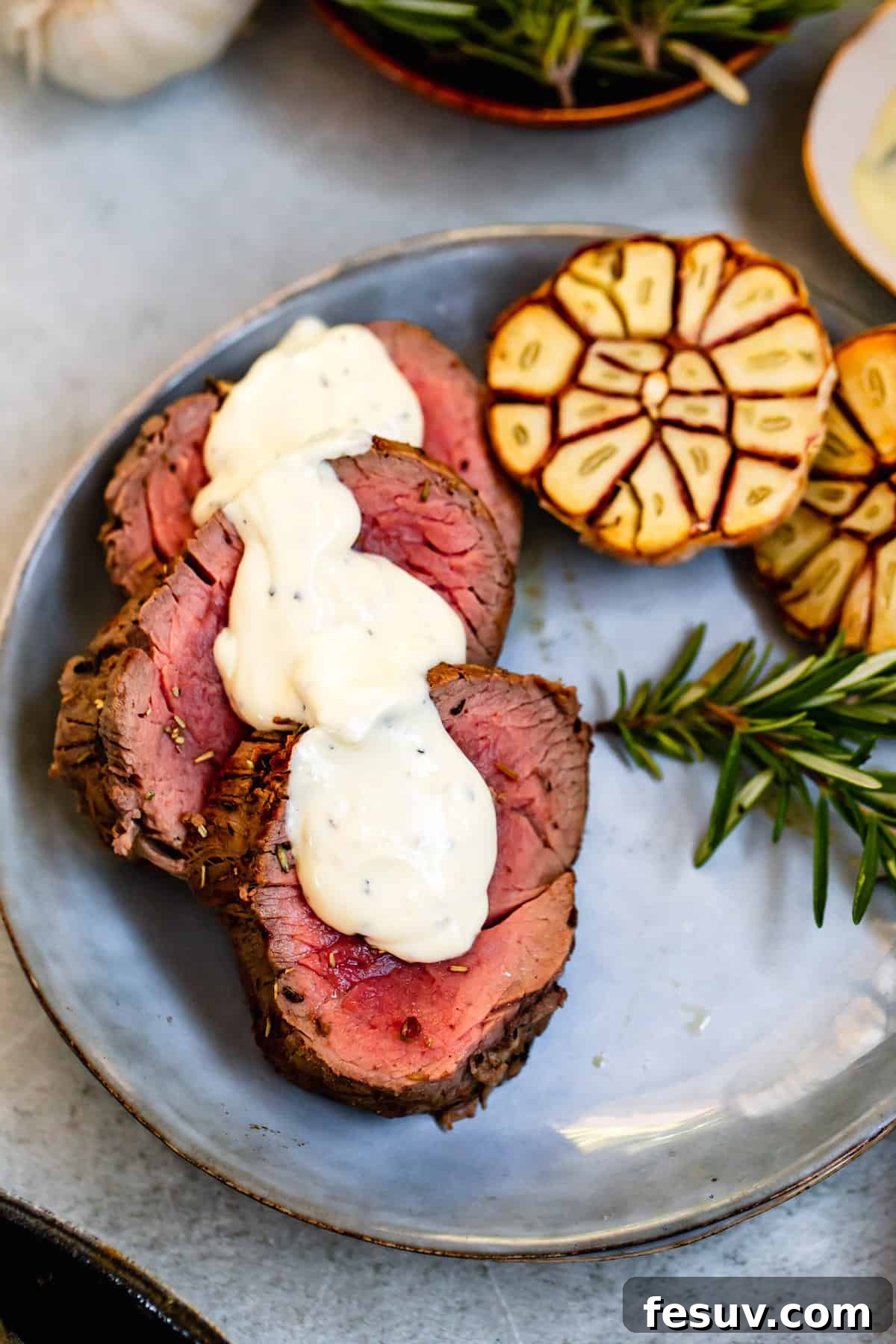
Transform your dining experience with this exquisite Roast Beef Tenderloin with Horseradish Sauce. While it boasts a sophisticated appearance perfect for any special occasion, this recipe is remarkably simple to prepare, utilizing a convenient stovetop-to-oven method. You’ll delight in the succulent, herb-crusted tenderloin, perfectly complemented by a creamy, spicy horseradish sauce that adds a vibrant kick to every tender bite.
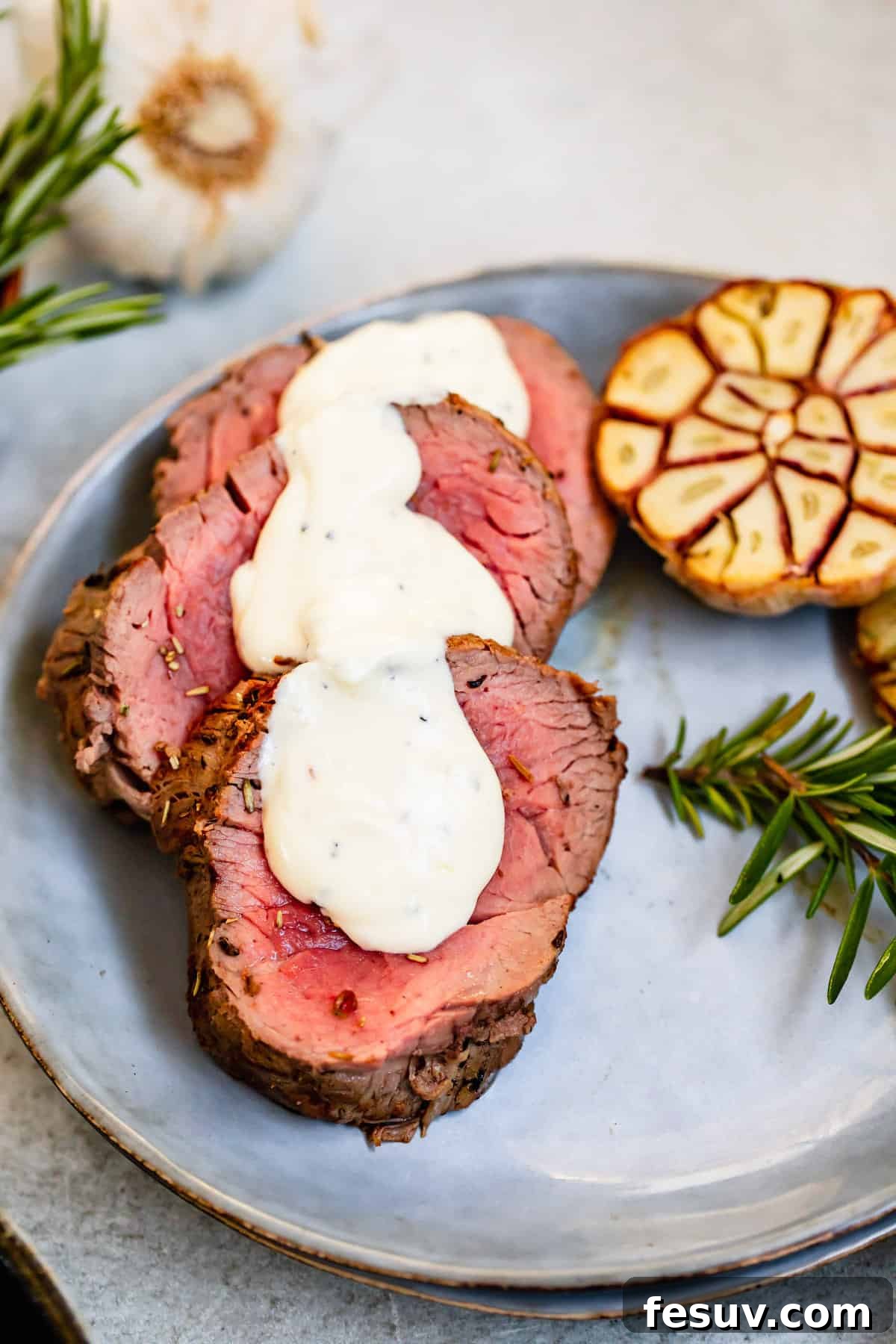
Effortlessly Impressive: The Easiest Roast Beef Tenderloin Recipe
Have you ever noticed that some of the most impressive dishes are often the simplest to create? This roast beef tenderloin recipe embodies that philosophy, delivering a show-stopping meal without requiring hours of effort or a culinary degree. Forget overly complicated techniques and extensive ingredient lists; this recipe focuses on enhancing the natural exquisite flavor of beef tenderloin with a straightforward yet highly effective cooking method.
We understand that elaborate recipes, with their balsamic reductions and intricate garnishes, have their place. However, for many home cooks, simplicity is paramount, increasing the likelihood that a delicious meal actually makes it to the table. This recipe is designed with ease in mind, guiding you through a quick sear on the stovetop to develop a beautiful crust, followed by a gentle roast in the oven to achieve perfect internal doneness. Paired with a vibrant homemade horseradish sauce, you’ll have a gourmet meal ready with minimal fuss, leaving more time to enjoy with your guests.
Understanding Beef Tenderloin: A Premium Cut for Roasting
Beef tenderloin, often referred to as filet, is widely regarded as one of the most tender and desirable cuts of beef available. Located along the animal’s spine, this muscle experiences very little movement, resulting in its signature buttery texture. It’s the source of luxurious steaks like filet mignon, Chateaubriand, and parts of the porterhouse and T-bone. Consequently, it’s typically a more expensive cut, making its preparation for a special meal a true treat.
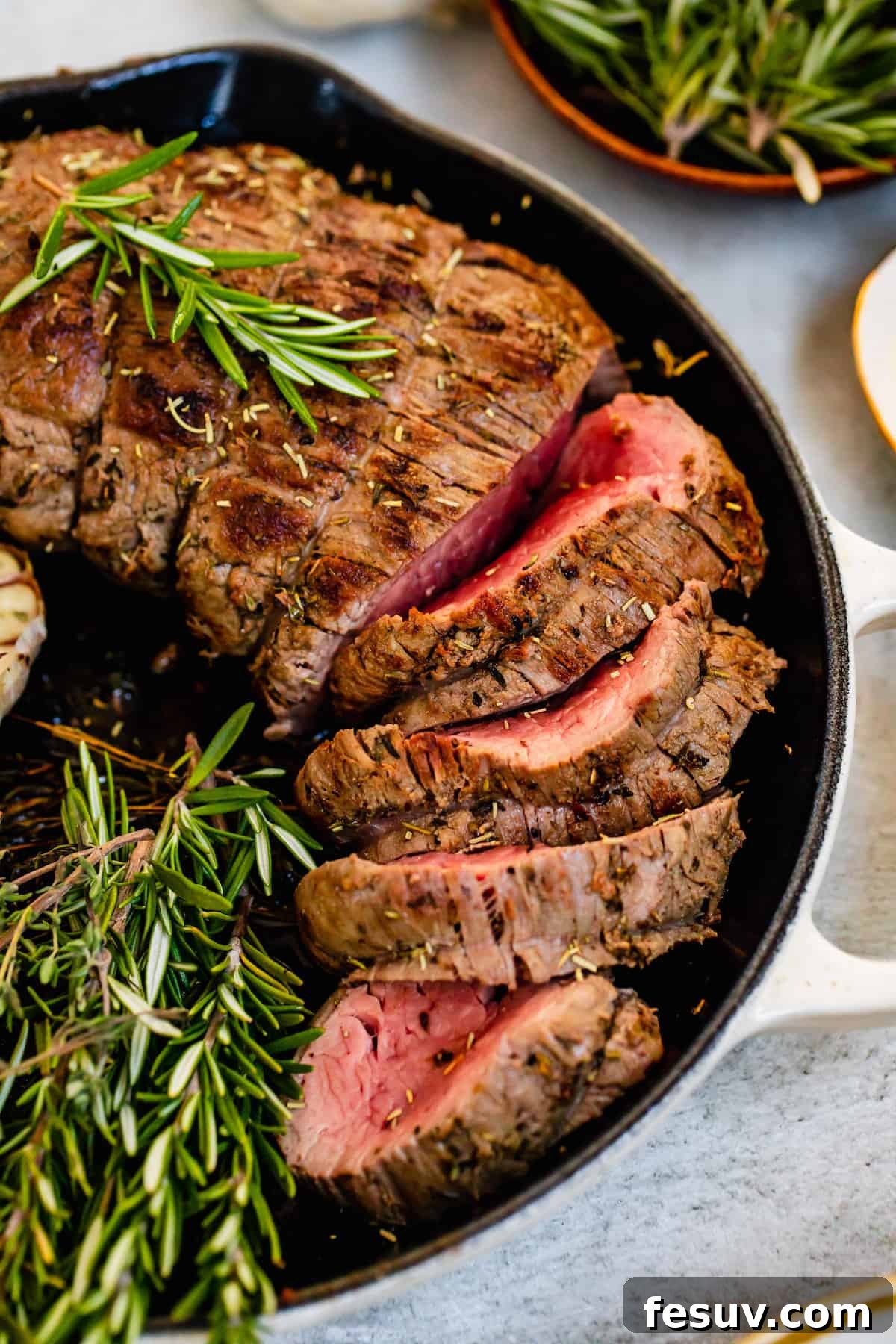
Because beef tenderloin is inherently lean and lacks significant marbling (intramuscular fat), it requires careful cooking to prevent it from drying out. This delicate balance is why many culinary experts recommend serving tenderloin at a rare to medium-rare doneness. This ensures the meat remains incredibly juicy and tender, highlighting its natural, delicate flavor profile. Our recipe is crafted to achieve this ideal level of doneness, maximizing the succulence of this premium cut.
Essential Ingredients for a Perfect Roast
This recipe champions quality ingredients and a straightforward approach, proving that you don’t need exotic items to create an extraordinary meal. We focus on a harmonious blend of herbs that beautifully complement the rich taste of the beef, along with staple pantry items for the decadent horseradish sauce.
For the Beef Tenderloin
- Beef Tenderloin: Opt for a trimmed and tied 4-pound whole beef tenderloin. Having it tied by your butcher helps it cook more evenly and maintain its shape, resulting in a more attractive roast. Ensure it’s brought to room temperature for about an hour before cooking for optimal results.
- Dried Herbs: You’ll need two teaspoons each of dried thyme and rosemary. These robust herbs infuse the beef with an aromatic, earthy flavor that stands up beautifully to the rich meat.
- Fresh Herbs: Complement the dried herbs with sprigs of fresh thyme and rosemary, added during the searing stage. The fresh herbs release their essential oils, contributing a wonderful fragrance and depth of flavor.
- Garlic Powder: Two teaspoons of garlic powder provide an intense, savory garlic flavor without the need for peeling and mincing fresh cloves, simplifying the preparation process.
- Salt & Pepper: Essential for seasoning the beef, enhancing its natural taste. Use one teaspoon each of fine sea salt and freshly ground black pepper, adjusting to your preference.
- Olive Oil & Butter: Three tablespoons of good quality olive oil are used for searing to create a crisp exterior, while three tablespoons of butter are added later for basting, adding richness and helping the herbs adhere.
For the Zesty Horseradish Sauce
- Sour Cream: Half a cup of full-fat sour cream forms the creamy base of the sauce, providing a pleasant tang. For the best flavor and texture, choose a sour cream without gums or other added stabilizers if possible.
- Mayonnaise: Two tablespoons of your favorite mayonnaise add extra richness, body, and a subtle savory note to the sauce, balancing the tartness of the sour cream.
- Salt: A half teaspoon of salt, or to taste, helps to bring out the flavors in the sauce and balance the spiciness of the horseradish.
- Prepared Horseradish: Add prepared horseradish to taste. Start with a smaller amount and gradually add more until you reach your desired level of heat and pungency. The quality of your horseradish significantly impacts the sauce’s zestiness.
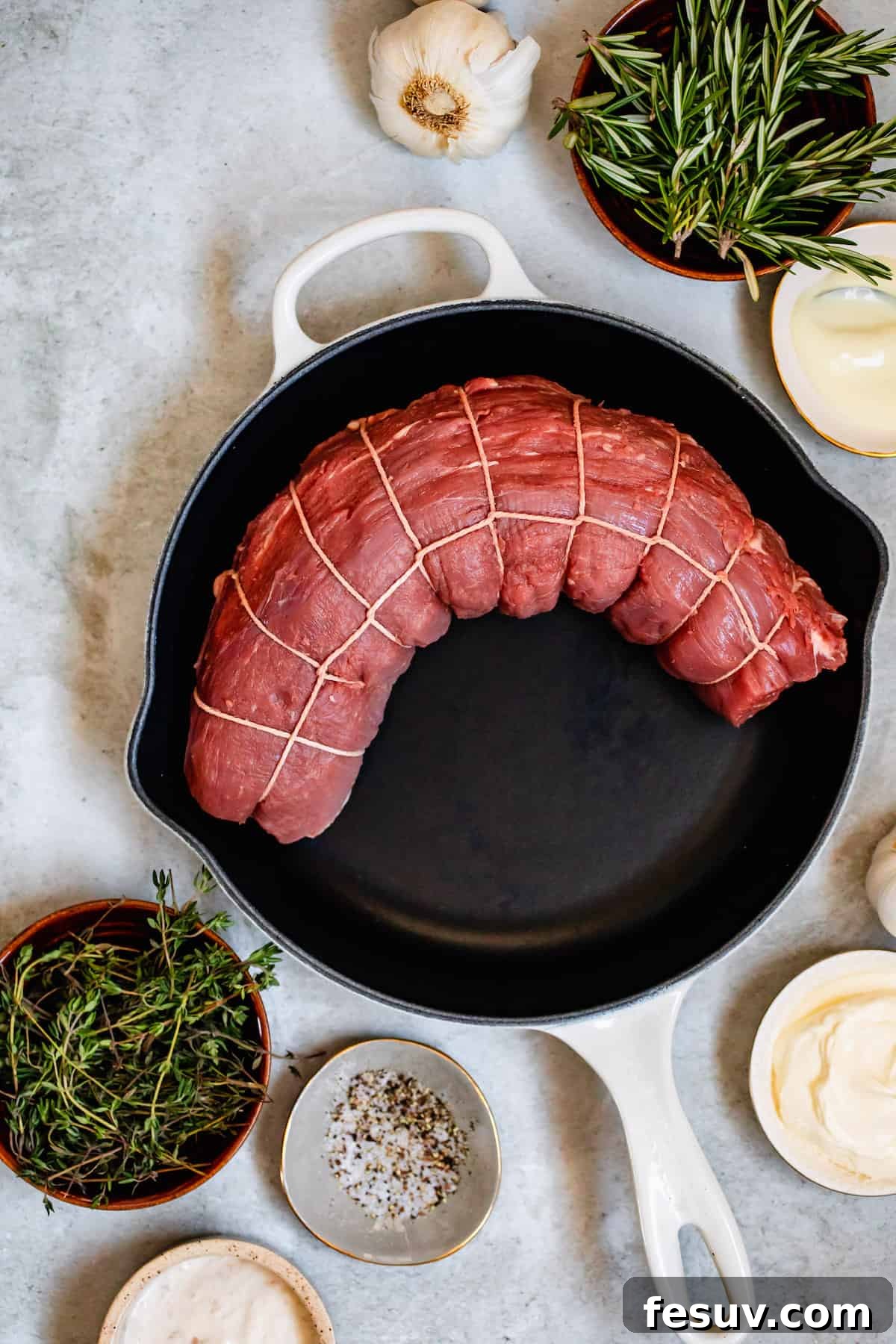
Mastering the Perfect Roast Beef Tenderloin: Step-by-Step
Even if you’re new to cooking beef tenderloin, this recipe provides a foolproof method to achieve a perfectly cooked, incredibly tender roast. The secret lies in a good sear and precise temperature control, making an instant-read meat thermometer an indispensable tool for guaranteed success. Seriously, don’t start without one; it’s the key to preventing overcooking this prized cut!
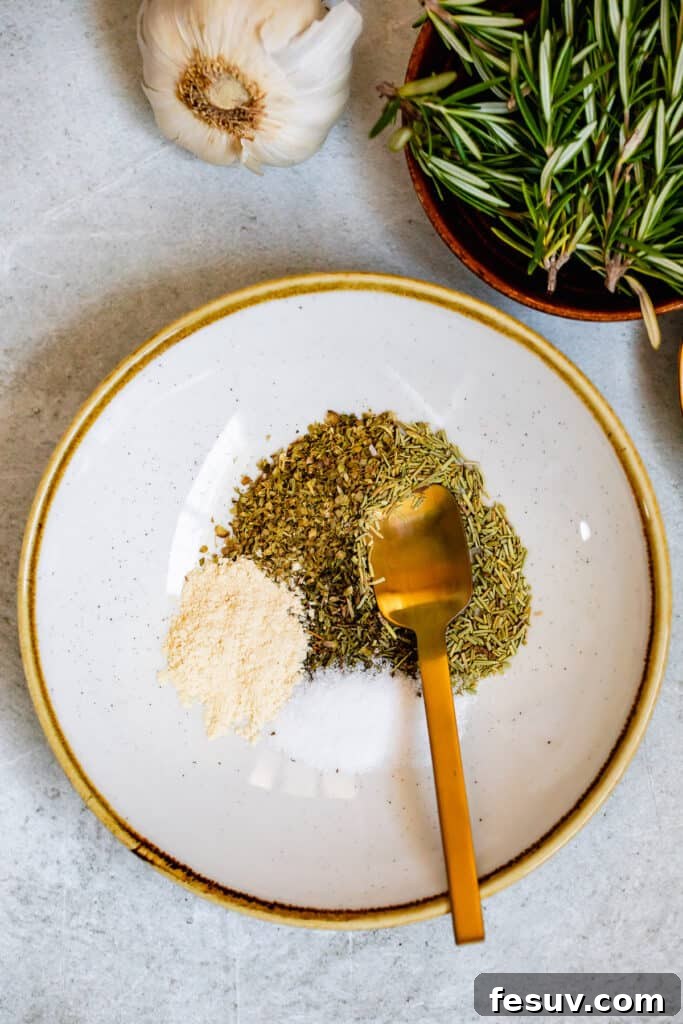
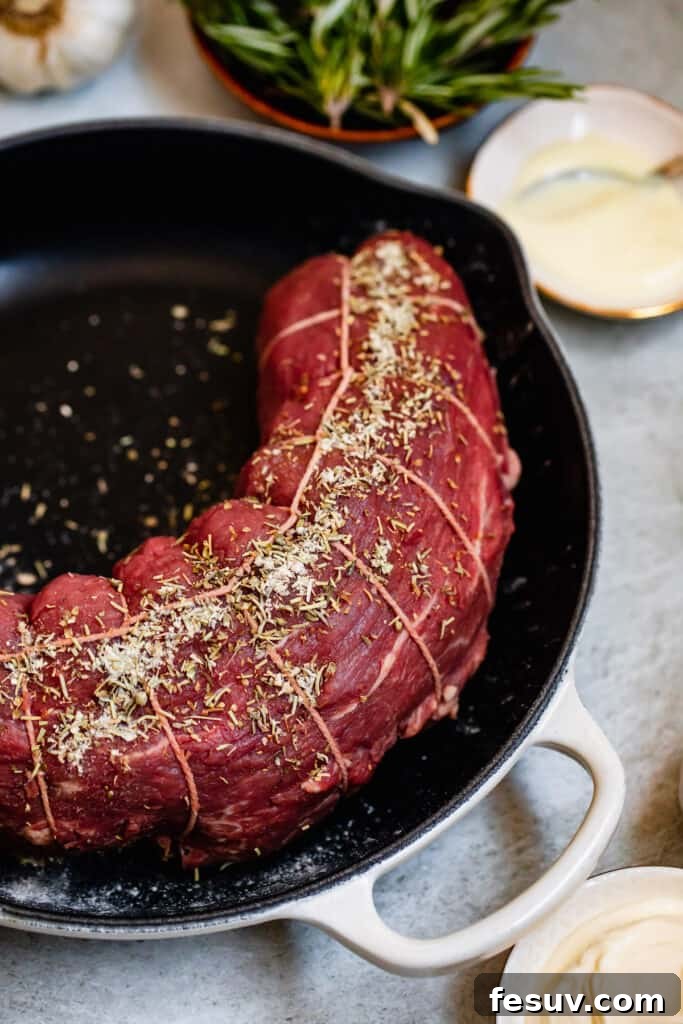
- Prepare Oven & Season Beef: Begin by preheating your oven to 325°F (160°C). In a small bowl, thoroughly combine the dried oregano, thyme, rosemary, garlic powder, salt, and black pepper. Generously coat the entire surface of the beef tenderloin with this aromatic herb mixture, ensuring an even crust for maximum flavor.
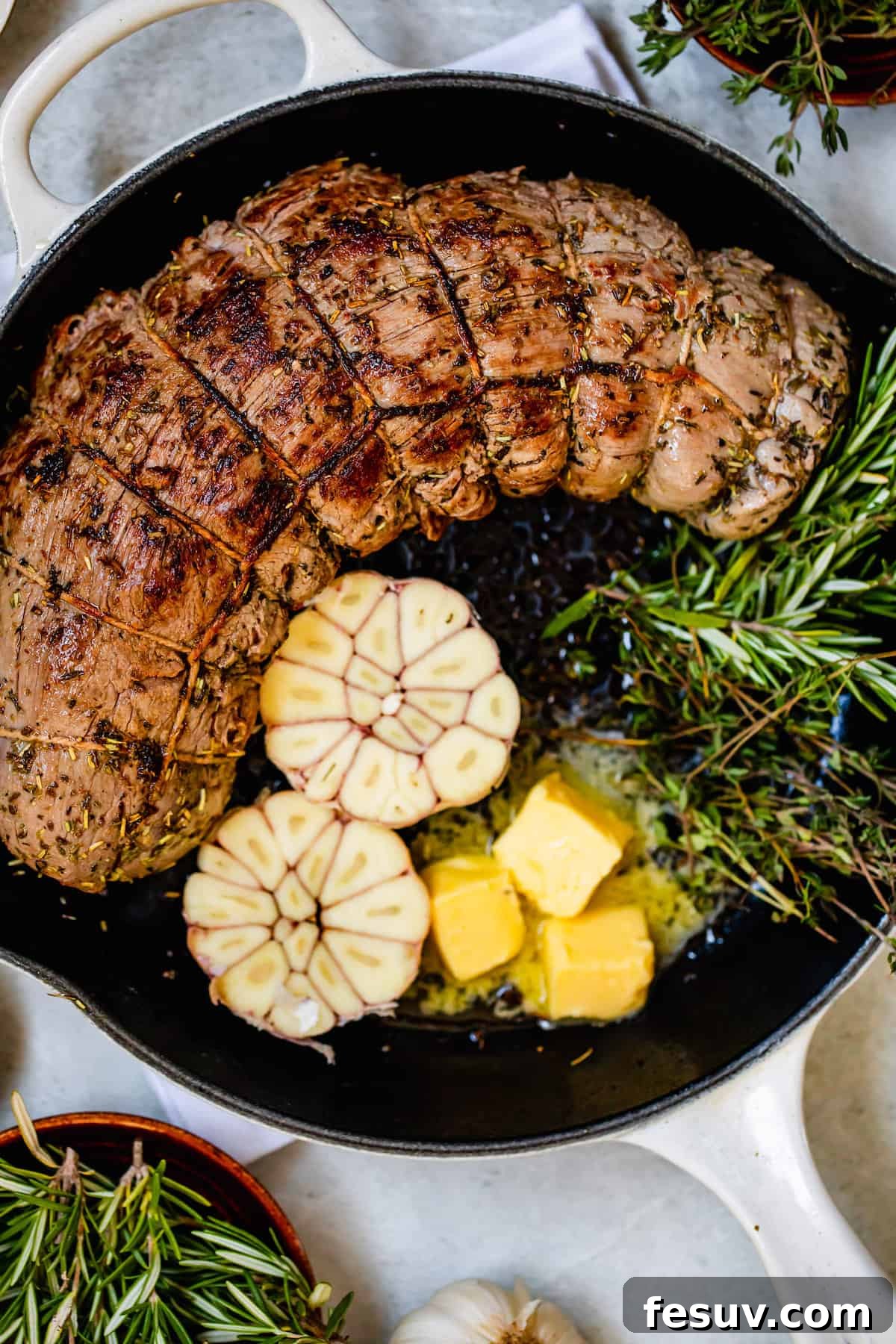
- Sear the Tenderloin: Heat a heavy-bottomed, oven-safe skillet (such as cast iron) over medium-high heat. Once the skillet is hot, add the olive oil. Carefully place the seasoned tenderloin into the hot oil and sear each side for 3 to 4 minutes, until a beautiful golden-brown crust forms all around. This searing step is crucial for locking in juices and developing rich flavor.
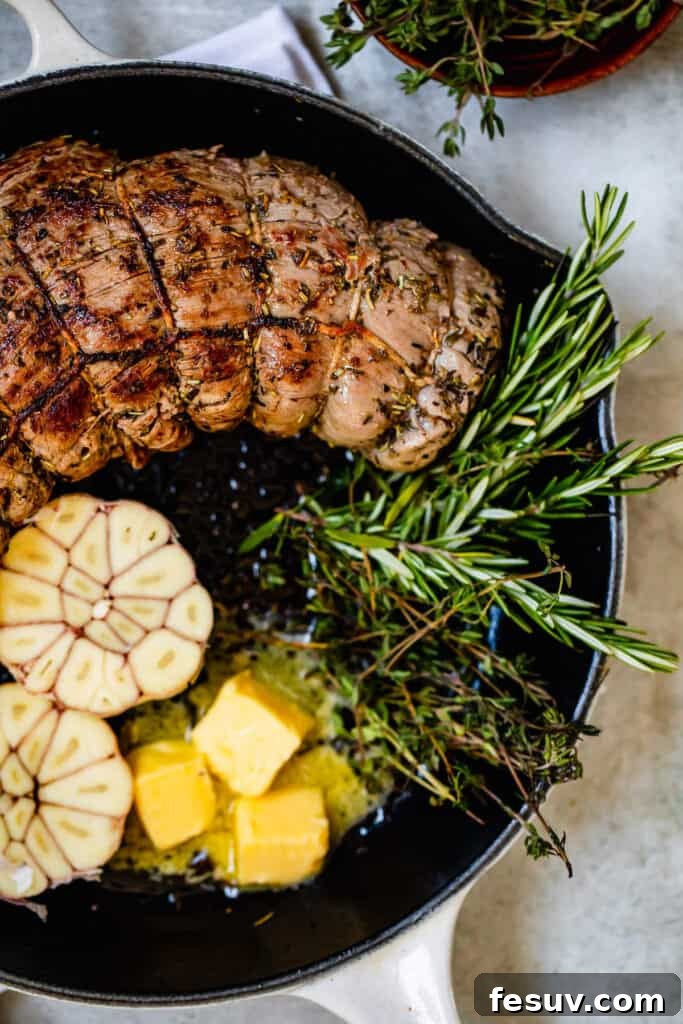
- Infuse with Butter & Fresh Herbs: Reduce the heat to medium-low. Add the butter, fresh rosemary sprigs, and fresh thyme sprigs to the skillet. As the butter melts, it will combine with the pan drippings and herbs. Spoon this fragrant butter mixture generously over the tenderloin, basting it to infuse more flavor and keep the surface moist.
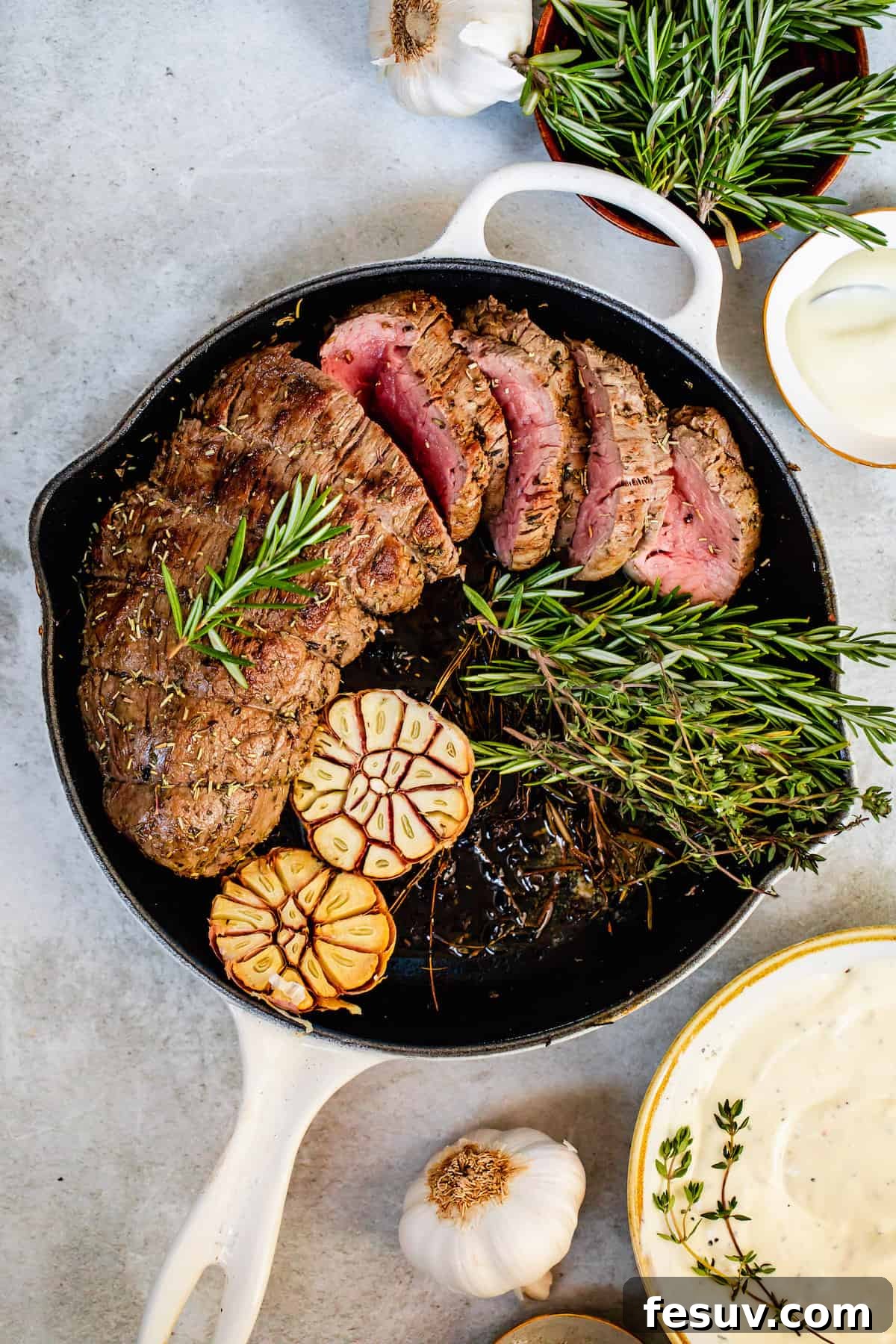
- Roast to Perfection: Transfer the skillet directly into the preheated oven. Roast for approximately 30 minutes, or until an instant-read meat thermometer inserted into the thickest part of the tenderloin registers an internal temperature of 135°F to 140°F (57°C to 60°C) for medium-rare. Begin checking for doneness around the 22-minute mark to avoid overcooking.
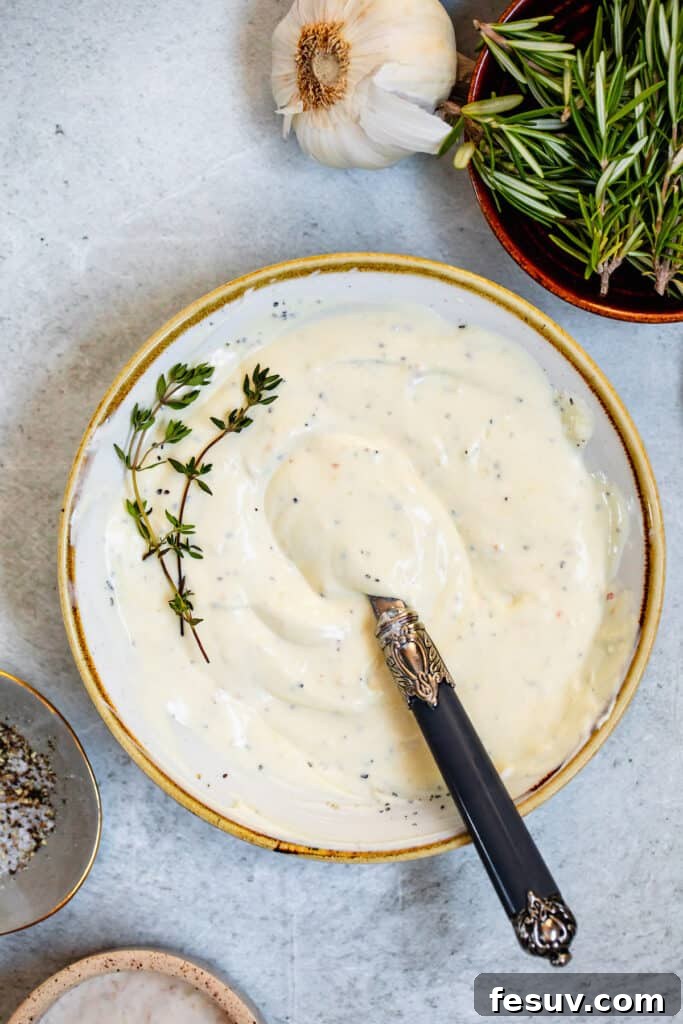
- Rest the Meat & Prepare Sauce: Once the desired temperature is reached, remove the tenderloin from the oven and transfer it to a clean cutting board. Tent it loosely with aluminum foil to retain warmth and allow it to rest for at least 15 to 20 minutes before slicing. This resting period is vital, as it allows the juices to redistribute throughout the meat, resulting in an incredibly tender and moist roast. While the tenderloin rests, prepare the horseradish sauce: in a small bowl, whisk together the sour cream, mayonnaise, salt, and prepared horseradish. Taste and adjust the seasoning or horseradish quantity to your preference.
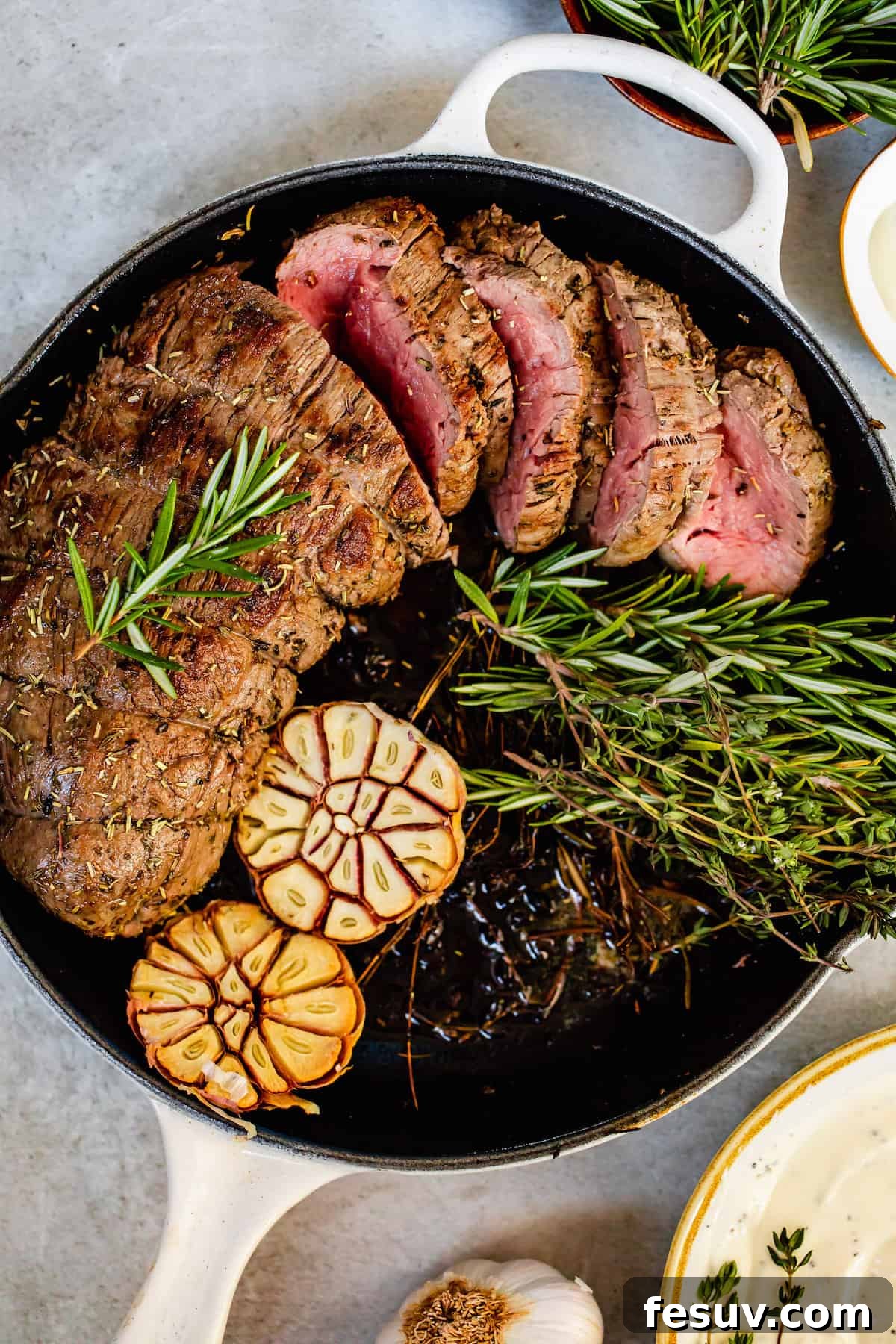
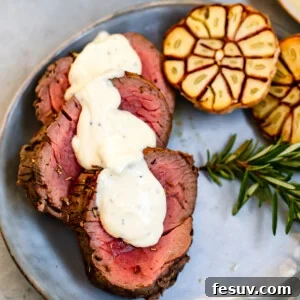
- Slice and Serve: After resting, slice the tenderloin against the grain into thick, medallions. Serve immediately with generous dollops of the creamy, zesty horseradish sauce.
Expert Tips for a Flawless Roast Beef Tenderloin
Achieving a perfectly cooked, tender, and juicy roast beef tenderloin is simpler than you might think with these expert tips and tricks. Follow these guidelines to ensure your tenderloin turns out impeccably every time, making it a staple in your culinary repertoire.
- Address Silver Skin: Before cooking, inspect your tenderloin for “silver skin” – a tough, silvery strip of connective tissue that can make the meat chewy. While most butchers remove this, if you find any, use a very sharp, thin-bladed knife to carefully trim it away. It’s not edible and won’t break down during cooking.
- Don’t Rush the Rest: The resting period after roasting is non-negotiable for tenderloin. It allows the muscle fibers to relax and reabsorb the juices, ensuring a uniformly moist and tender result. Cutting into the meat too soon will cause the juices to run out, leading to a dry roast. Resist the urge to slice immediately; patience is key here.
- Invest in a Quality Meat Thermometer: An instant-read meat thermometer is your best friend when roasting expensive cuts like tenderloin. It provides quick and accurate temperature readings, eliminating guesswork and guaranteeing your roast is cooked to your preferred doneness without being overdone. Check the temperature in the thickest part of the meat, avoiding any bone if present.
- Room Temperature Start: Always allow your beef tenderloin to come to room temperature for about an hour before searing. This helps the meat cook more evenly from edge to center, preventing a cold interior and a overcooked exterior.
- Hot Skillet for Searing: Ensure your heavy-bottomed skillet is very hot before adding the olive oil and then the tenderloin. A proper sear creates a beautiful, flavorful crust (Maillard reaction) that locks in juices and adds significant depth of flavor.
- Internal Temperature Guidelines: For optimal tenderness and juiciness, aim for these internal temperatures before resting:
- Rare: 125-130°F (52-54°C)
- Medium-Rare: 130-135°F (54-57°C) – *Recommended for tenderloin.*
- Medium: 135-140°F (57-60°C)
- Medium-Well: 140-145°F (60-63°C)
Remember that the temperature will rise by 5-10 degrees during resting.
Perfect Pairings: What to Serve with Roast Beef Tenderloin
A magnificent roast beef tenderloin deserves equally delightful accompaniments. Whether you’re planning a lavish holiday feast or an intimate dinner party, these serving suggestions will beautifully complement your main dish, creating a memorable meal experience.
- Gnocchi & Bacon Casserole: For a hearty and comforting side, consider a creamy Gnocchi and Bacon Casserole. The pillowy potato dumplings in a rich, cheesy sauce, flavored with crispy bacon and fresh chives, create a wonderfully satisfying contrast to the tender beef.
- Fresh Salads: A crisp, refreshing salad always provides a welcome balance to rich meats. A classic Caesar salad or a simple garden salad with a light vinaigrette would be excellent choices. Alternatively, for a burst of fresh, vibrant flavors, try our Avocado Tomato Salad, packed with healthy ingredients and bright notes.
- Roasted Vegetables: Seasonal roasted vegetables are always a fantastic accompaniment. Think asparagus, green beans, Brussels sprouts, or a medley of root vegetables like carrots and parsnips, tossed with olive oil, salt, and pepper, then roasted until tender and caramelized.
- Creamy Mashed Potatoes: A classic pairing, smooth and buttery mashed potatoes provide a comforting base that perfectly soaks up any delicious pan juices from the beef and the zesty horseradish sauce.
- Dessert Delights: Conclude your meal with a sweet indulgence. A warm, sweetly spiced apple pie is a timeless choice. Our Dutch Apple Slab Pie is not only easy to make on a sheet pan but also perfect for feeding a crowd with its tender crust and delightful streusel topping.
- Wine Pairing: A robust red wine like Cabernet Sauvignon, Merlot, or a Syrah/Shiraz will beautifully complement the rich flavors of the beef tenderloin.
Storing and Reheating Leftover Roast Beef Tenderloin
Properly storing and reheating leftover roast beef tenderloin ensures that you can enjoy its deliciousness for days to come. This valuable cut of meat deserves to be savored completely.
- To Refrigerate Leftovers: Allow the cooked tenderloin to cool completely. Wrap it tightly in plastic wrap or aluminum foil, or place it in an airtight food storage container. For optimal freshness, press out as much air as possible before sealing. Stored this way, it will remain fresh in the refrigerator for 3 to 5 days.
- To Reheat: To prevent the tenderloin from drying out, reheat it gently. Place the leftover slices or whole piece in an ovenproof dish. Add a splash of beef broth or water to the bottom of the dish to create some steam. Cover the dish with foil and bake in a preheated oven at a low temperature, around 250°F (120°C), until the internal temperature of the meat reaches about 140°F (60°C). For best texture, briefly sear the reheated tenderloin in a hot skillet with a little butter or oil for 1-2 minutes per side to refresh the crust before serving. Slice and enjoy.
Freezing Beef Tenderloin for Future Indulgence
Yes, beef tenderloin can be frozen, making it convenient for future meals or preserving larger quantities. Freezing is an excellent way to extend the shelf life of this premium meat.
- To Freeze: Wrap the cooked and cooled tenderloin thoroughly in several layers of plastic wrap, ensuring no air pockets. Then, wrap it again in a layer of heavy-duty aluminum foil to prevent freezer burn. Label with the date. It can be stored in the freezer for up to 3 months.
- To Thaw and Reheat: When ready to use, transfer the frozen tenderloin to the refrigerator and allow it to thaw overnight. Once thawed, reheat it according to the instructions provided above for refrigerated leftovers, ensuring it reaches a safe internal temperature.
Roast Beef Tenderloin with Horseradish
Katerina | Easy Weeknight Recipes
A perfectly seasoned and impeccably cooked Roast Beef Tenderloin with Horseradish Sauce! This fantastic recipe delivers a succulent, herb-crusted tenderloin accompanied by a spicy, creamy sour cream horseradish sauce, ideal for any special meal.
10 minutes
50 minutes
20 minutes
1 hour 30 minutes
10
Ingredients
For the Beef
- 4 pound whole beef tenderloin, trimmed and tied, at room temperature (take tenderloin out of the fridge 1-hour before cooking)
- 2 teaspoons dried oregano
- 2 teaspoons dried thyme
- 2 teaspoons dried rosemary
- 2 teaspoons garlic powder
- 1 teaspoon salt
- 1 teaspoon fresh ground black pepper
- 3 tablespoons olive oil
- 3 tablespoons butter
- 2 sprigs fresh rosemary
- 4 sprigs fresh thyme
For the Horseradish Sauce
- ½ cup sour cream
- 2 tablespoons mayonnaise
- ½ teaspoon salt, or to taste
- Horseradish, to taste (prepared, not fresh root)
Instructions
- Preheat oven to 325˚F (160°C).
- In a small mixing bowl, combine the oregano, thyme, rosemary, garlic powder, salt, and pepper. Coat the beef tenderloin with the herb mixture.
- Heat a heavy-bottomed skillet over medium-high heat. Add the olive oil once the skillet is hot. To the hot oil, add the tenderloin and sear each side for 3 to 4 minutes, or until golden brown and a crust has formed.
- Reduce the heat to medium-low. Add butter, fresh rosemary, and fresh thyme to the skillet. Once the butter has melted, spoon it generously over the tenderloin to baste.
- Place the skillet into the oven, and roast for 30 minutes, or until the internal temperature reaches 135˚F to 140˚F (57°C to 60°C) for medium-rare. Begin checking doneness around the 22-minute mark.
- Remove from oven; transfer to a cutting board and tent loosely with foil. Let rest for 15 to 20 minutes before cutting. This is a crucial step for juicy meat.
- While tenderloin is resting, prepare the horseradish sauce by whisking together the sour cream, mayonnaise, salt, and horseradish in a small bowl. Taste and adjust seasoning or horseradish as needed.
- Slice the tenderloin against the grain and serve immediately with the homemade horseradish sauce.
Equipment
- Stovetop
- Oven
- Heavy-bottomed, oven-safe skillet (e.g., cast iron)
- Small mixing bowls
- Whisk
- Instant-read meat thermometer (highly recommended)
- Cutting board
- Aluminum foil
Notes
This recipe comfortably serves 8 to 10 people, making it ideal for gatherings and celebrations.
Nutrition Information (Estimated)
Nutritional values are approximate and may vary based on ingredients and specific preparation methods. Please consult your preferred nutritional calculator for precise details relevant to your ingredients.
- Calories: 610 kcal
- Carbohydrates: 1g
- Protein: 33g
- Fat: 52g
- Saturated Fat: 21g
- Cholesterol: 143mg
- Sodium: 495mg
- Potassium: 580mg
- Fiber: 1g
- Sugar: 1g
- Vitamin A: 216 IU
- Vitamin C: 1mg
- Calcium: 38mg
- Iron: 5mg
Explore More Delicious Dinner Ideas
If you’re seeking to expand your weekly menu with more effortless yet flavorful dinner options, these recipes are sure to impress without overwhelming your schedule:
- Creamy Chicken Fettuccine Alfredo: A classic, rich pasta dish that comes together quickly, perfect for a satisfying weeknight meal.
- Flaky Tilapia with Creamy Tomato Sauce: Light, healthy, and incredibly flavorful, this fish dish is both simple to prepare and elegantly delicious.
- Hearty Beef Tips in Mushroom Gravy: Tender beef morsels simmered in a savory mushroom gravy, ideal for serving over noodles or mashed potatoes.