
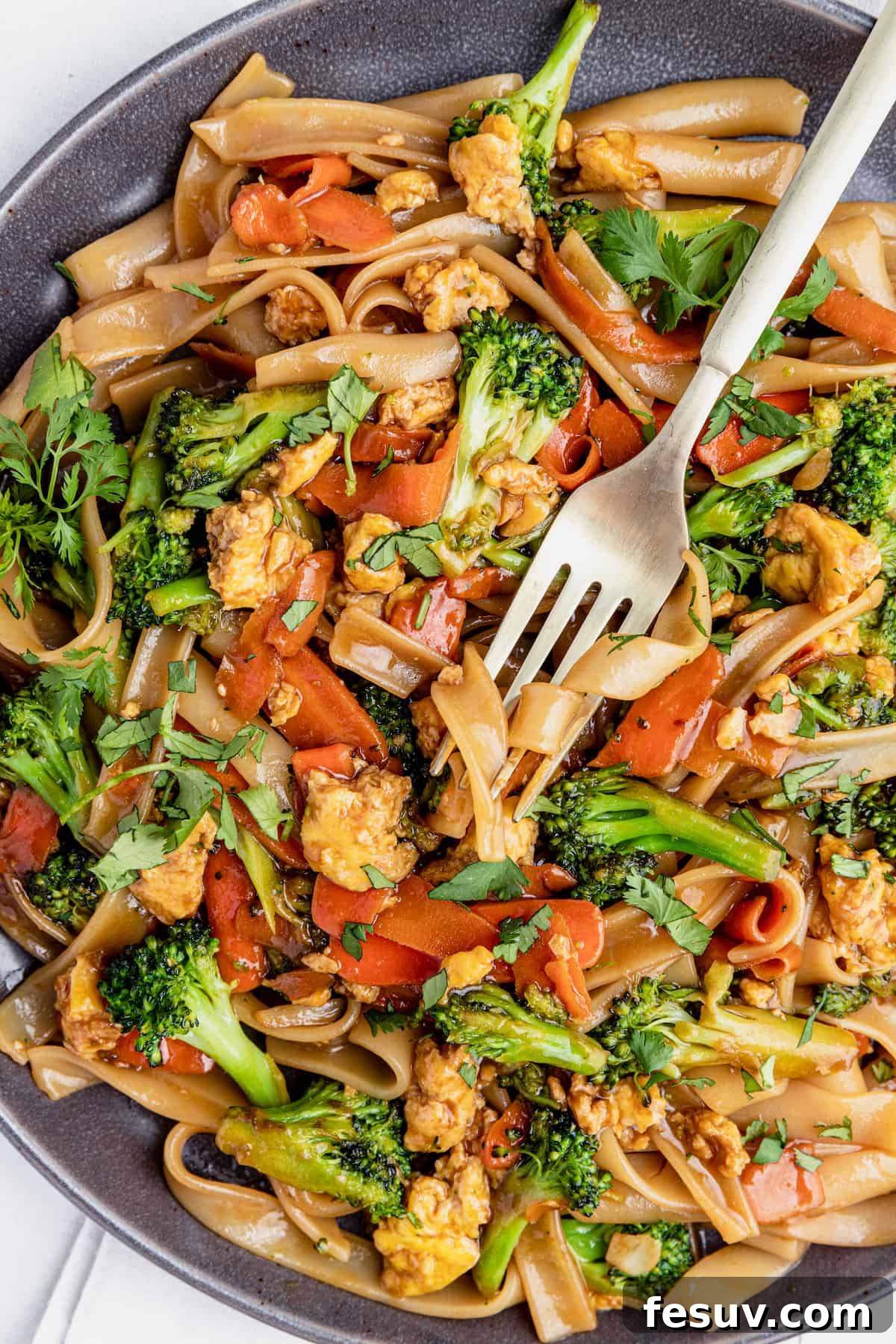
Unlock the secrets to crafting an authentic and incredibly delicious Pad See Ew right in your own kitchen! This beloved Thai stir-fried noodle dish delivers an irresistible trifecta of sweet, savory, and tangy flavors, perfectly coating tender rice noodles, crisp broccoli, and fluffy scrambled eggs. Once you experience the magic of this homemade version, you’ll find yourself craving it again and again.
Craving more exquisite Asian-inspired culinary adventures? You might also love our Easy Pad Thai recipe!
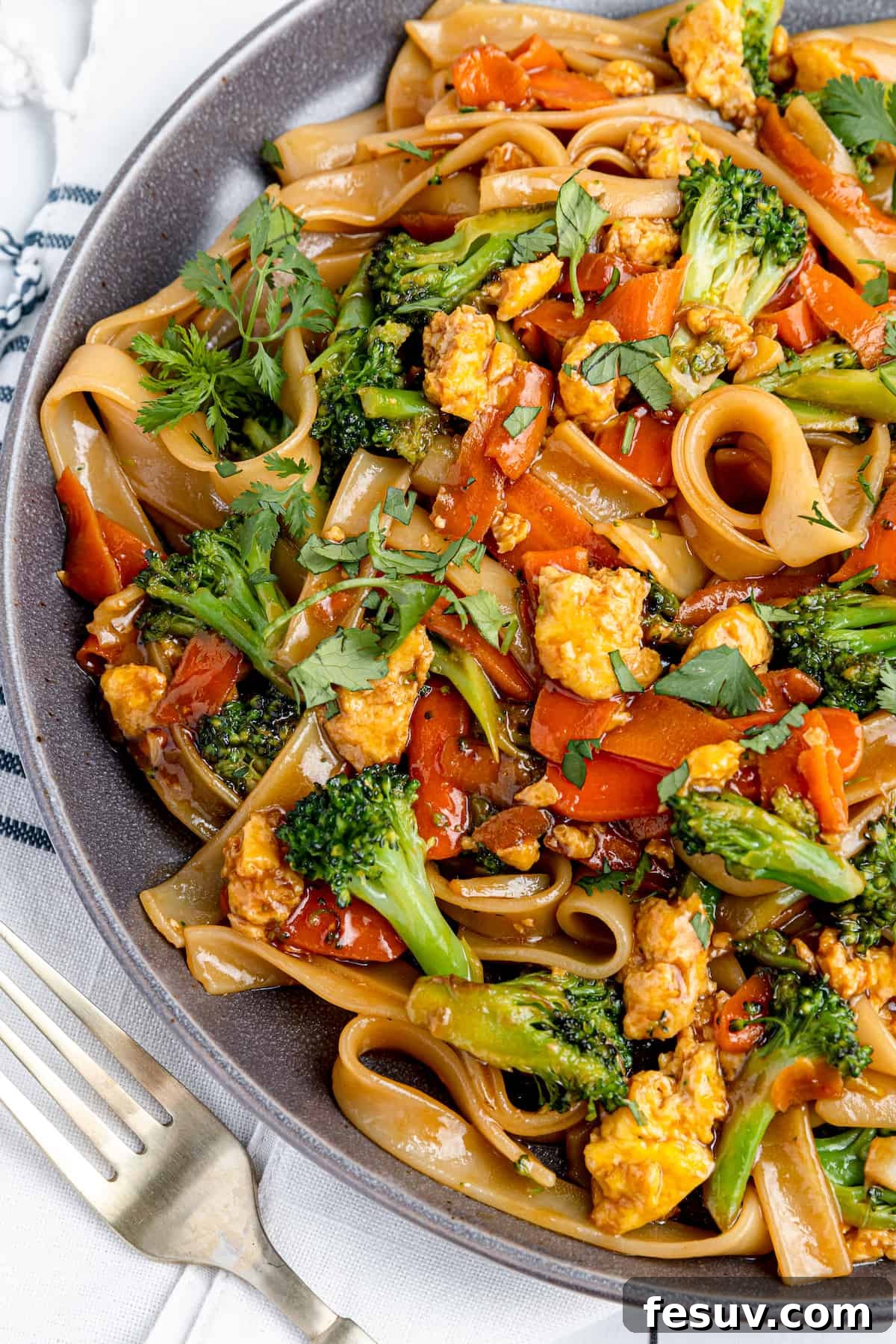
Mastering Easy Homemade Pad See Ew
For those moments when you yearn for an escape to an exotic culinary landscape without leaving your home, Thai cuisine often springs to mind. Its vibrant flavors, aromatic spices, and harmonious blend of sweet, sour, salty, and spicy notes create an unforgettable dining experience. Among the countless Thai delicacies, Pad See Ew stands out as a true masterpiece – a dish that’s both comforting and exciting. Pronounced “Pat-See-You,” this pan-fried noodle delight comes together quickly in a wok or a sturdy skillet, making it a perfect choice for a weeknight meal.
As a devoted fan of hearty noodle dishes, I can confidently say that this homemade Pad See Ew holds a special place in my heart. Its signature appeal lies in the way the wide, flat rice noodles are beautifully caramelized in a rich, glossy sauce primarily made from oyster sauce and various soy sauces. This unique cooking technique imbues the noodles with an incredible depth of flavor and a wonderfully chewy texture, a hallmark of truly exceptional Pad See Ew.
What makes this dish universally appealing is its clever combination of familiar and exotic. While the distinct Thai flavors offer an exciting culinary journey, the presence of comforting ingredients like scrambled eggs, crisp broccoli, and tender carrots ensures even the most discerning palates will find something to adore. The “brown sauce” might sound simple, but it’s the carefully balanced heart of the dish, transforming humble ingredients into a symphony of taste.
Understanding Pad See Ew: A Thai Culinary Gem
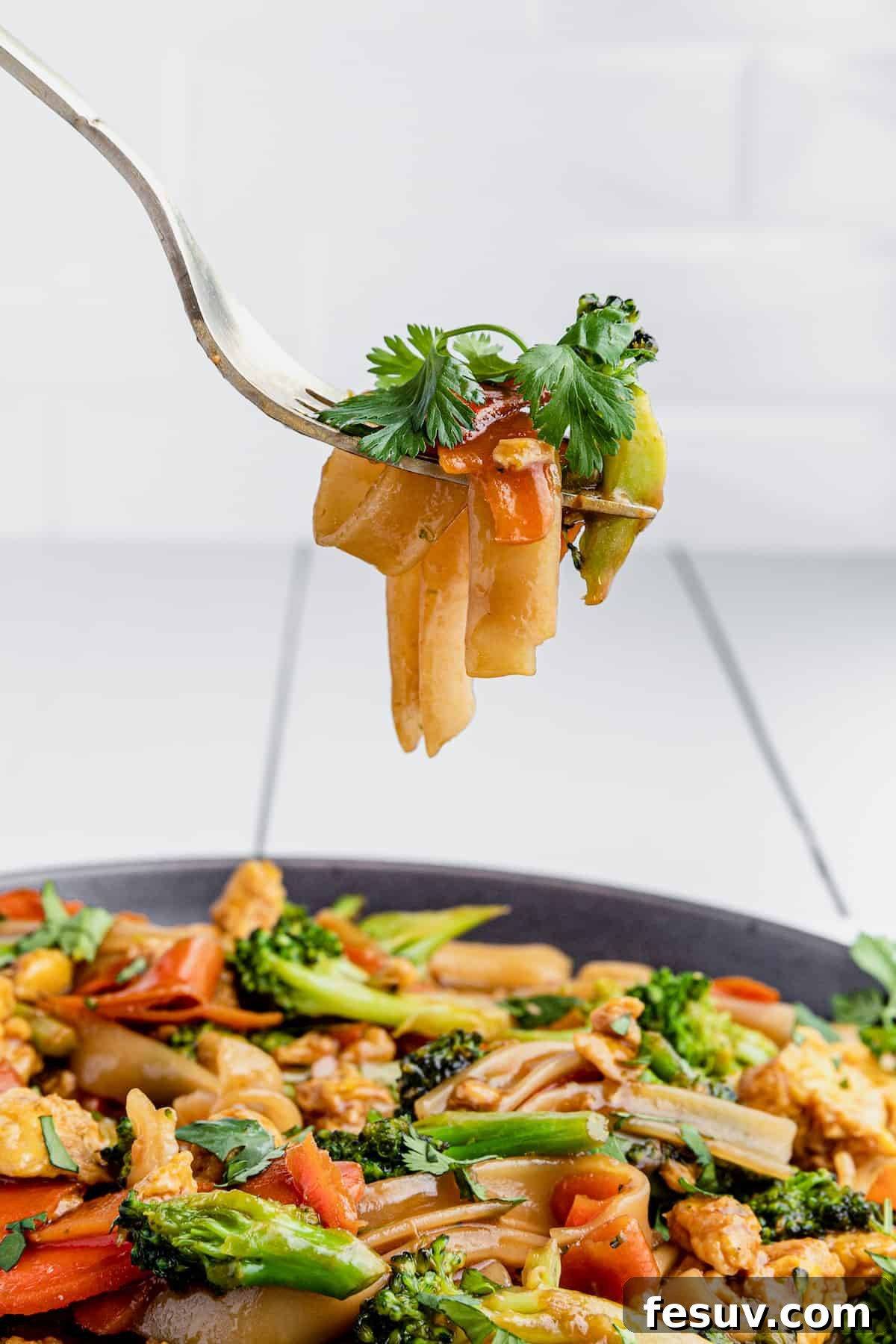
Pad See Ew, a popular street food staple in Thailand, translates literally to “fried with soy sauce,” perfectly capturing its essence. This incredibly flavorful dish is characterized by its broad, flat rice noodles, often referred to as “Sen Yai,” which are stir-fried with Chinese broccoli (gai lan), scrambled egg, and an exquisite sauce that balances sweetness, saltiness, and a subtle tang. It’s a testament to the simplicity and power of Thai flavor combinations.
The defining characteristic of authentic Pad See Ew is the coveted “wok char” or “wok hei.” This occurs when the noodles, cooked over intensely high heat in a well-seasoned wok, caramelize and develop slightly crispy, charred edges, infusing the entire dish with a smoky depth that is utterly irresistible. This isn’t just about cooking; it’s about building complex flavors through expert technique. The noodles absorb the rich sauce, creating a tender yet firm bite that contrasts beautifully with the other ingredients.
Beyond the noodles and Chinese broccoli, scrambled egg is a standard addition, providing essential protein and a creamy texture that enriches the overall experience. Many authentic recipes also feature a spicy chili vinegar, made by steeping finely chopped chilis in rice wine vinegar, offered on the side for those who prefer an extra kick. This allows diners to customize the heat level to their preference, enhancing the sweet and savory notes of the main dish.
The versatility of Pad See Ew also allows for various additions. While delicious on its own, it readily accommodates your choice of protein, such as thinly sliced chicken, succulent shrimp, or tender pork. Feel free to incorporate other vegetables like bell peppers or mushrooms to make it a truly personalized culinary creation.
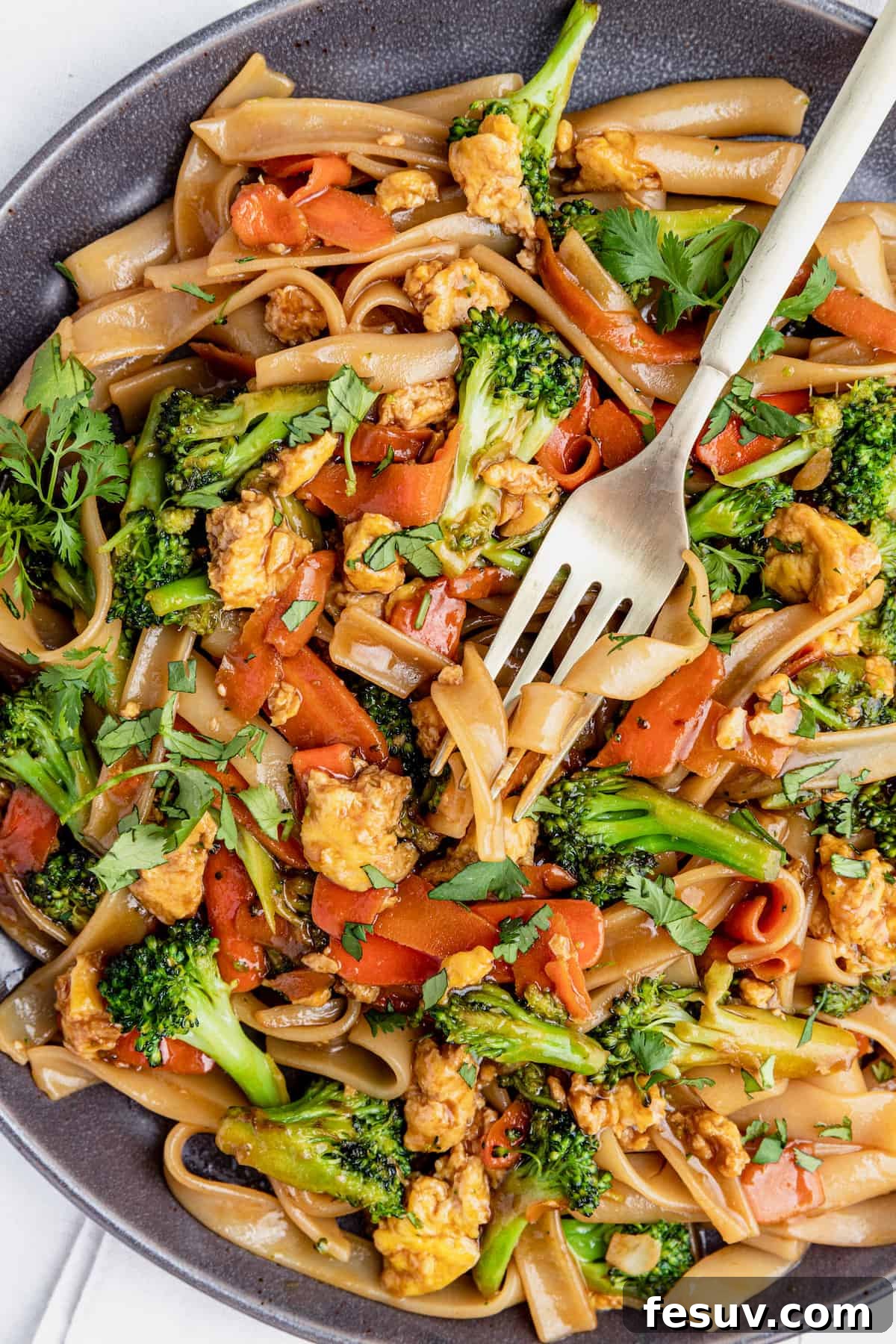
Gathering Your Ingredients for Perfect Pad See Ew
Unlike some stir-fry dishes that demand exotic ingredients, Pad See Ew relies on accessible components that are increasingly found in most grocery stores. With wide rice noodles, rich oyster sauce, and versatile soy sauce readily available, a delicious Thai meal is always within reach!
Essential Ingredients for Pad See Ew
- Wide, Flat Rice Noodles: The cornerstone of Pad See Ew. Authentic versions use “Sen Yai” noodles, which are broad and fresh. If fresh aren’t available, dried wide flat noodles work wonderfully. As an easy substitute, flat pad Thai noodles (Sen Lek) can also be used, offering a slightly different but equally delicious texture.
- Olive Oil: A good quality olive oil is excellent for stir-frying, providing a neutral base. Feel free to substitute with other high smoke-point oils like coconut oil, avocado oil, or grapeseed oil based on your preference.
- Garlic: Freshly minced garlic is non-negotiable for its aromatic depth. For convenience, a garlic press can save prep time.
- Eggs: Two large eggs, lightly beaten, add a wonderful scramble that absorbs the sauce and provides a comforting texture.
- Broccoli: While standard broccoli florets, chopped into bite-sized pieces, are a perfectly good choice, seeking out Chinese broccoli (gai lan) will elevate the authenticity and flavor profile with its slightly bitter, distinct taste.
- Carrots: Fresh matchsticks, thin shreds, or very thin slices of carrot add a touch of sweetness, color, and additional texture.
- Cilantro: A garnish of fresh chopped cilantro brightens the dish with its vibrant, herbaceous notes, offering a beautiful visual and aromatic finish.
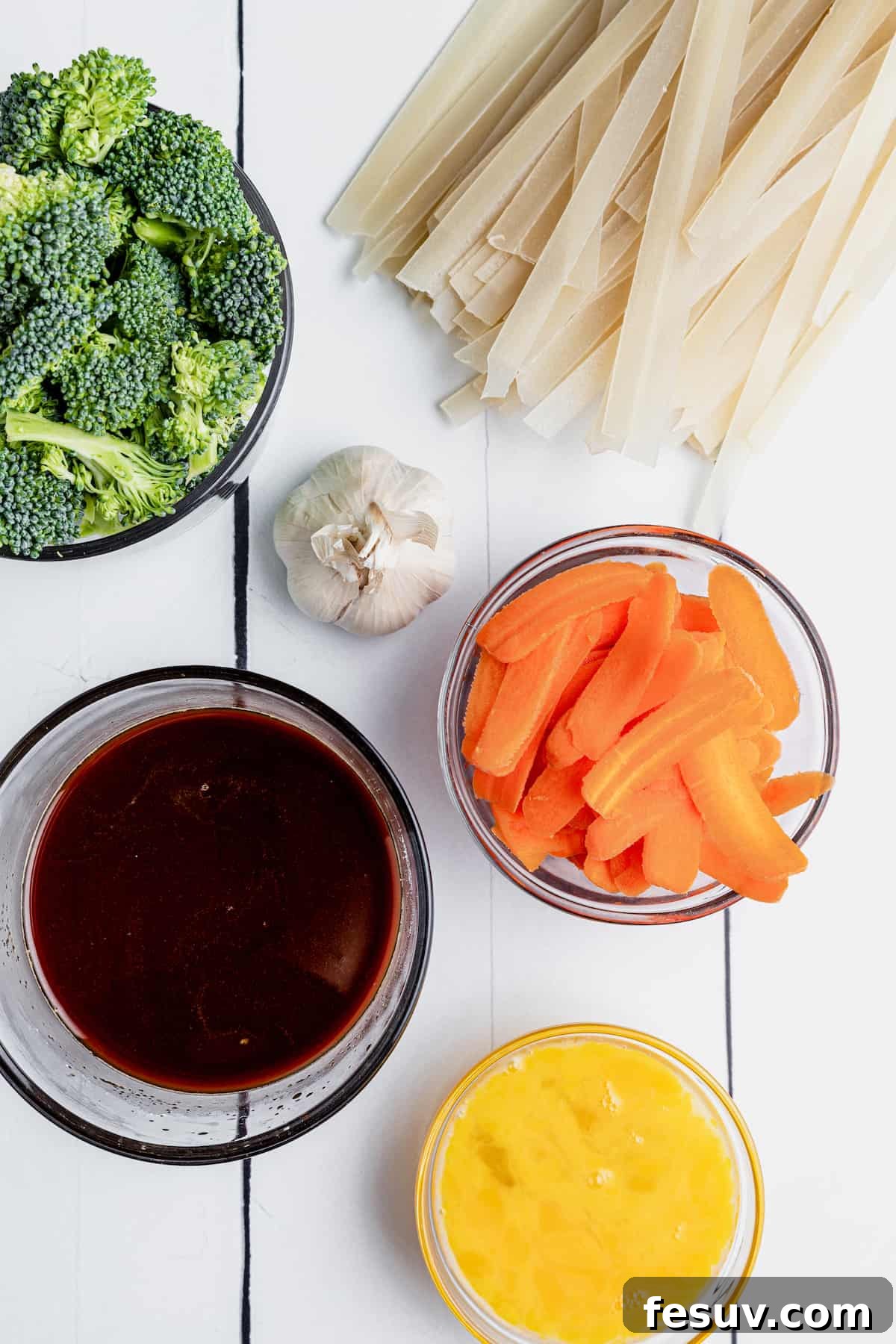
Crafting the Signature Pad See Ew Sauce
- Oyster Sauce: This thick, dark, and savory condiment is vital for Pad See Ew. It provides a rich umami depth and a subtle sweetness that is irreplaceable. Ensure you use a good quality brand for the best results.
- Olive Oil: A small amount for the sauce helps combine ingredients and adds to the glossiness.
- Soy Sauce: Low-sodium soy sauce is generally recommended to control the saltiness, allowing the other flavors to shine. For dietary alternatives, tamari (gluten-free) or coconut aminos can be used. Some authentic recipes also call for dark soy sauce for color and depth, which you can add a touch of if desired.
- Brown Sugar: Dark brown sugar is preferred for its deeper molasses notes, contributing to the dish’s signature sweetness and aiding in caramelization. Honey or pure maple syrup are also suitable natural sweeteners.
- Rice Wine Vinegar: This light, slightly sweet, and delicate vinegar provides the essential tangy element, balancing the richness of the other sauces. It’s a versatile ingredient that also shines in salad dressings and marinades.
- Arrowroot Powder or Cornstarch: A small amount of either helps to thicken the sauce, ensuring it beautifully coats the noodles and vegetables, rather than becoming watery.
Step-by-Step Guide to Making Perfect Pad See Ew
Creating this iconic Thai street food at home is a surprisingly straightforward process. The key is to have all your ingredients prepped and ready (mise en place) before you start cooking, as stir-frying moves quickly. The process involves blending your aromatic sauce, then expertly stir-frying the ingredients in a specific sequence: vegetables, eggs, and finally, the noodles and sauce, ensuring each component cooks perfectly and absorbs the rich flavors.
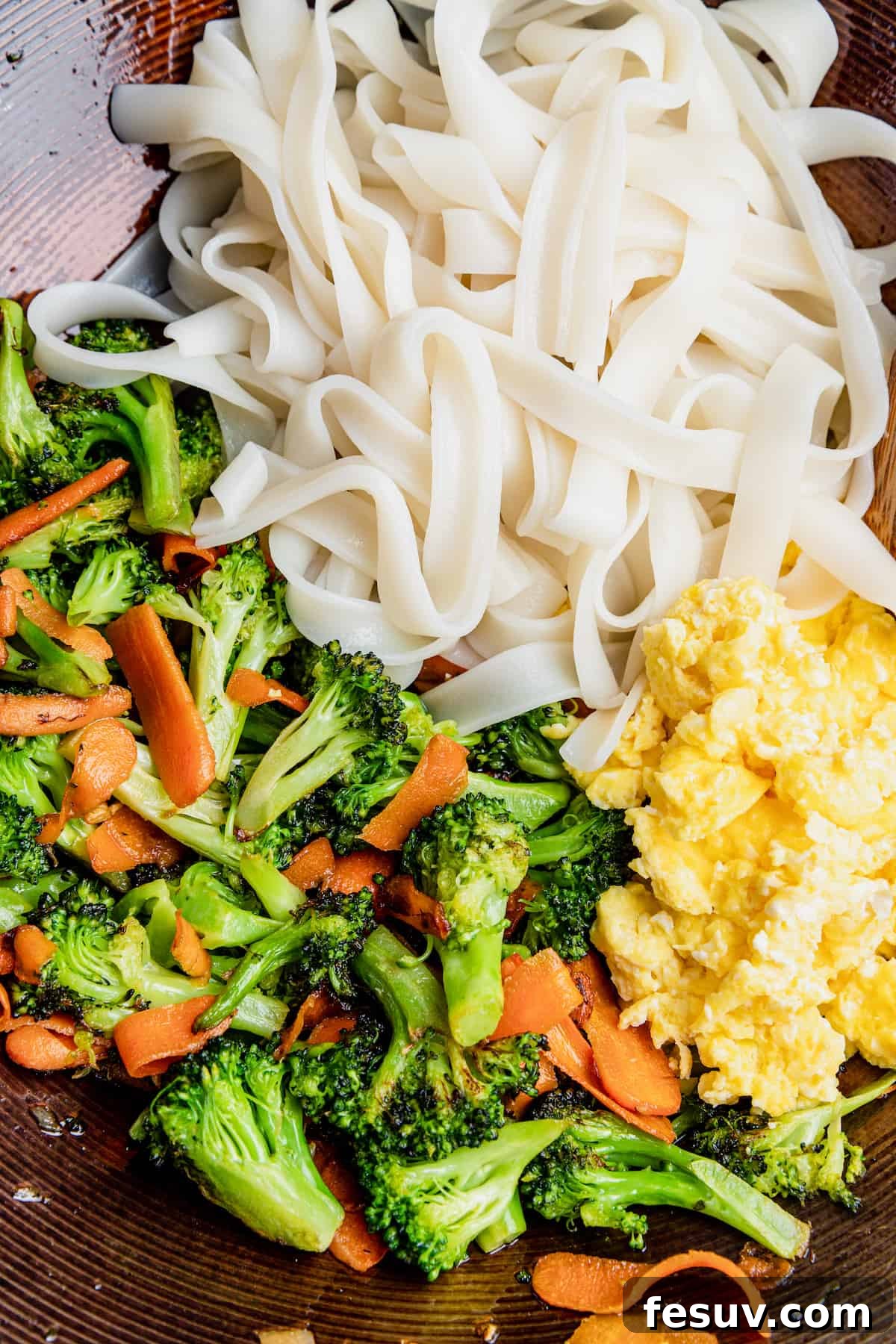
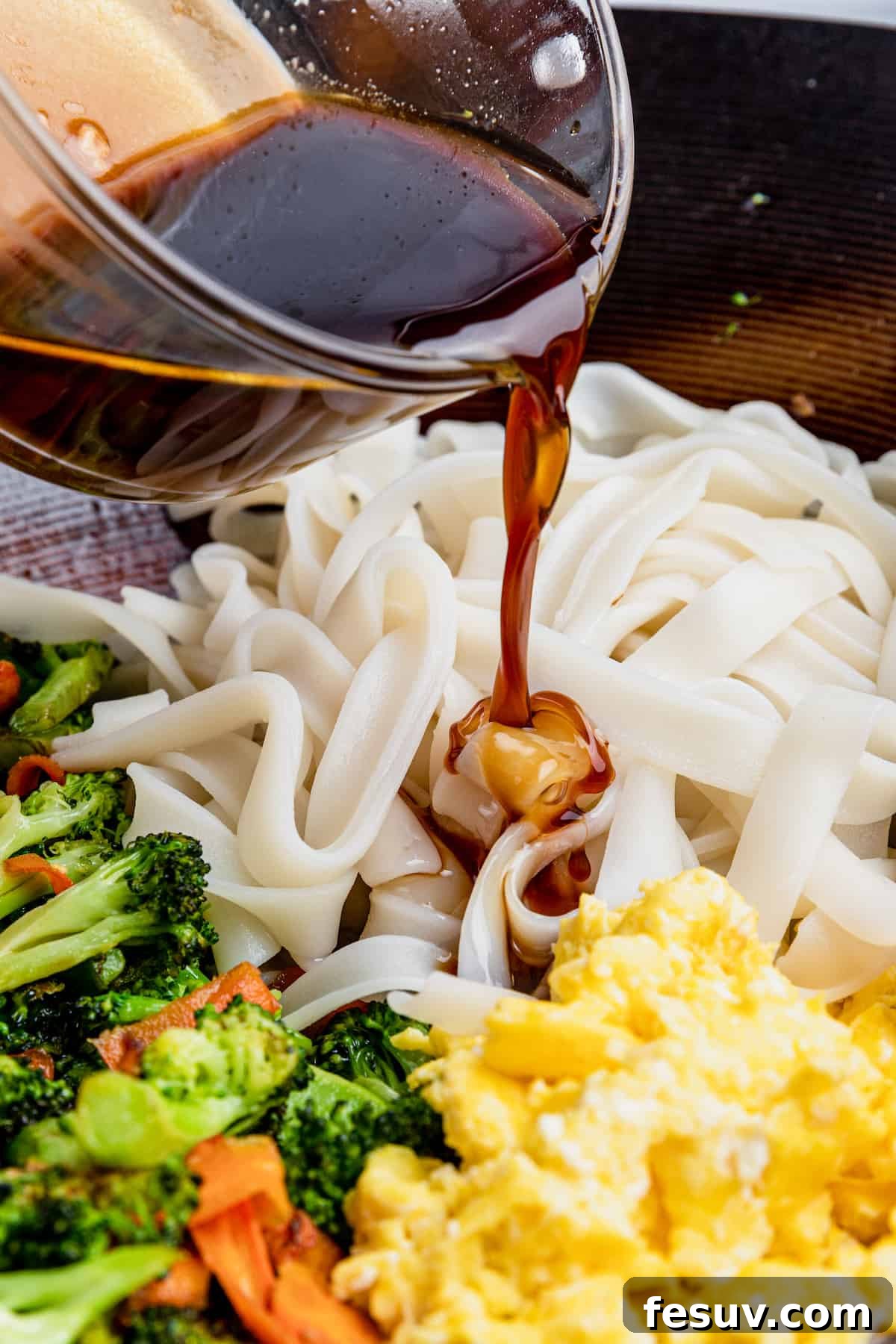
- Prepare the Sauce: In a small bowl, combine the oyster sauce, olive oil, soy sauce, brown sugar, rice wine vinegar, and arrowroot powder or cornstarch. Whisk diligently with a fork or spoon until all ingredients are thoroughly mixed and the thickener is dissolved. Set this flavorful sauce aside.
- Cook the Rice Noodles: Bring several cups of water to a rolling boil in a medium pot. Add your wide rice noodles and cook them strictly according to the package instructions. This is crucial for achieving the perfect al dente texture that will hold up to stir-frying. Once cooked, drain them immediately to prevent overcooking and stickiness.
- Stir-Fry the Vegetables: While your noodles are cooking, heat two tablespoons of olive oil in a wok or a large, heavy skillet over medium-high heat. Add the minced garlic and sauté for about 30 seconds, or until it releases its fragrant aroma. Immediately add the chopped broccoli and carrots. Stir-fry for 6-8 minutes, or until the vegetables are tender-crisp. Remember to stir frequently to ensure even cooking and prevent burning.
- Scramble the Eggs: Once the vegetables are cooked to your liking, push them gently to one side of the wok, creating an empty space. Pour the beaten eggs into this empty section. Allow them to set slightly, then scramble them, breaking them into small, fluffy pieces as they cook.
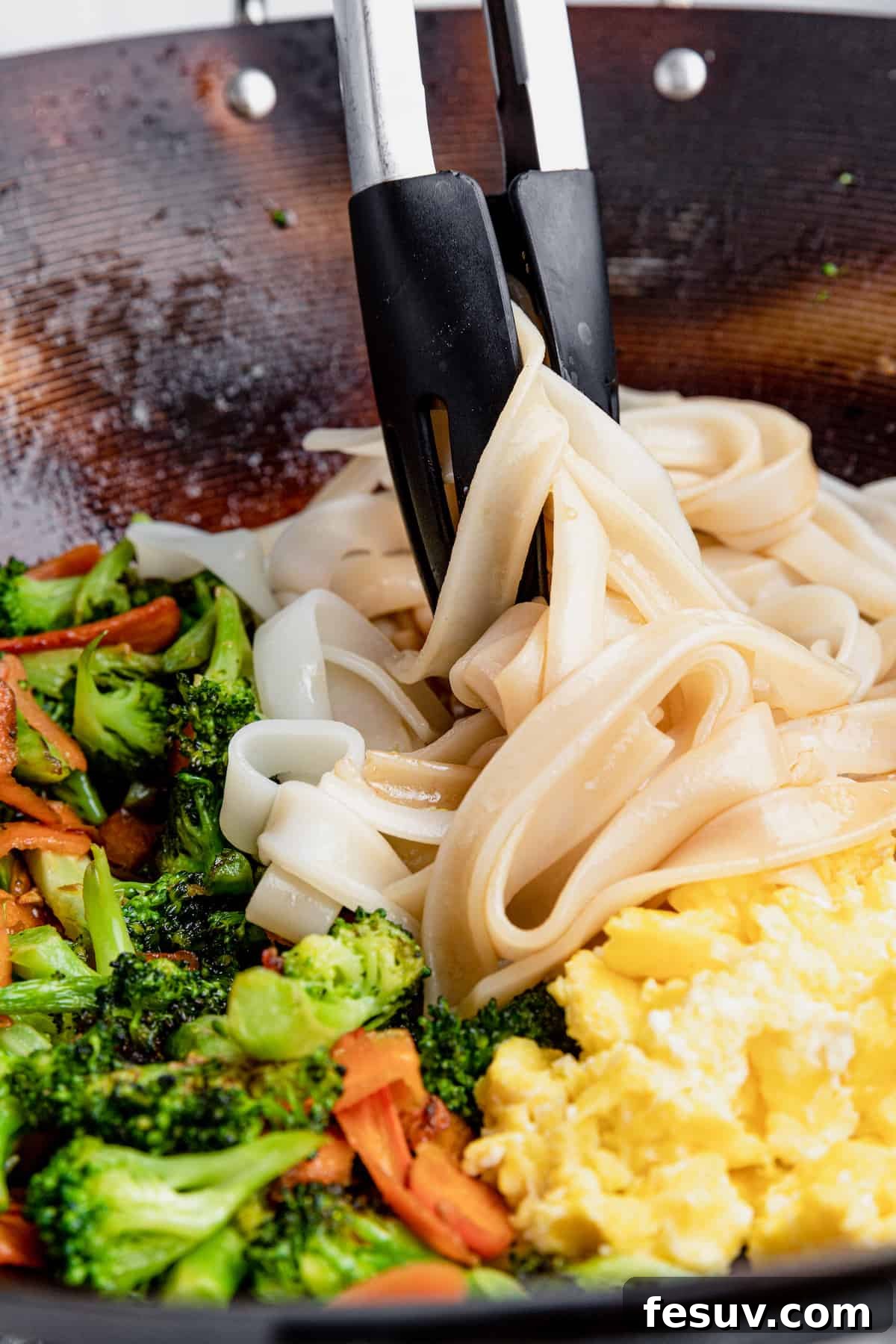
- Combine Noodles and Sauce: Finally, add the pre-cooked and drained rice noodles, along with the prepared sauce, directly into the wok with the vegetables and eggs. Using tongs or two spatulas, gently toss everything together to combine, ensuring the noodles are thoroughly coated with the rich sauce. Continue cooking for an additional 1-2 minutes. During this stage, avoid over-stirring. Allowing the noodles to rest against the hot surface of the wok for short periods will encourage that desirable “wok char” and caramelization.
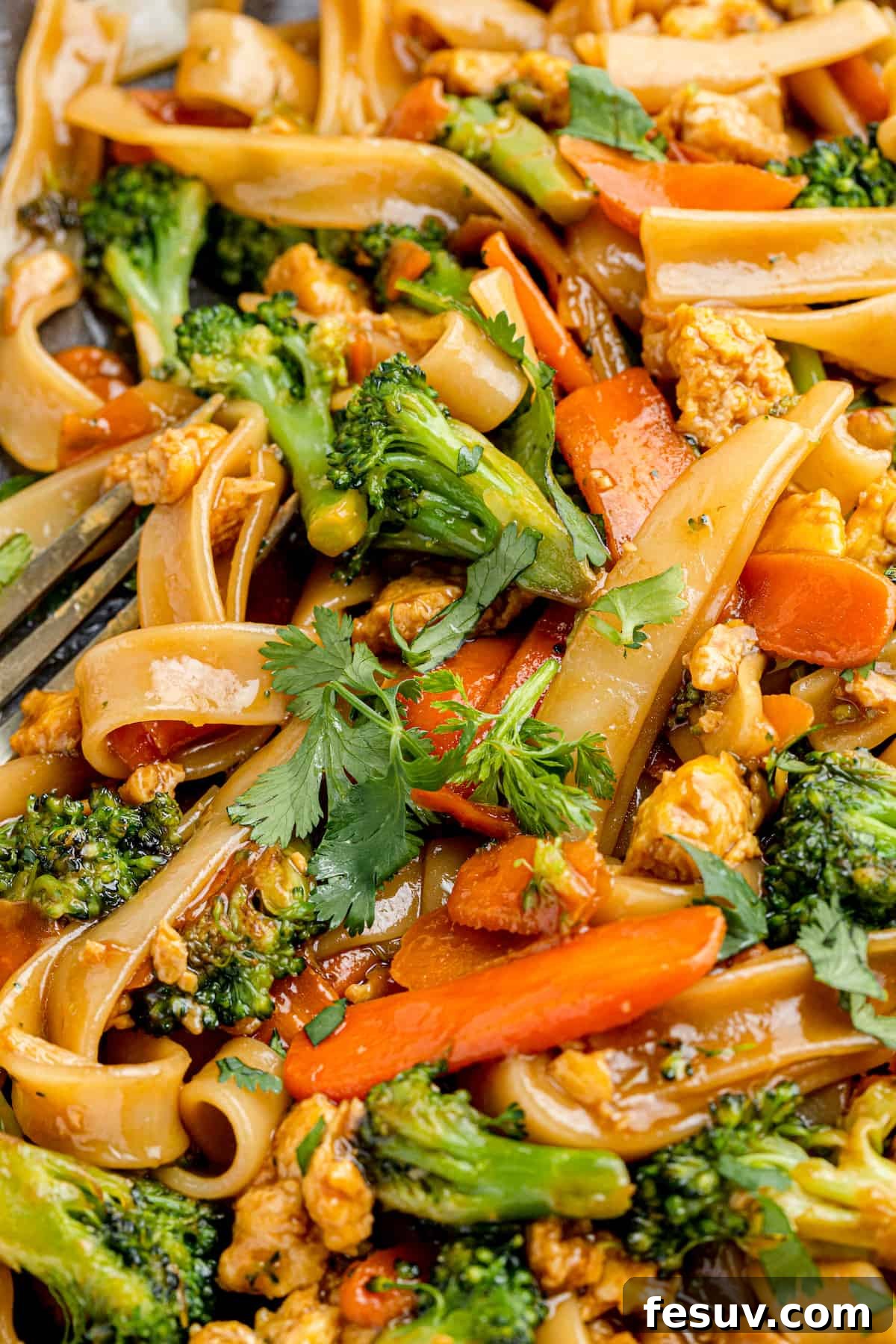
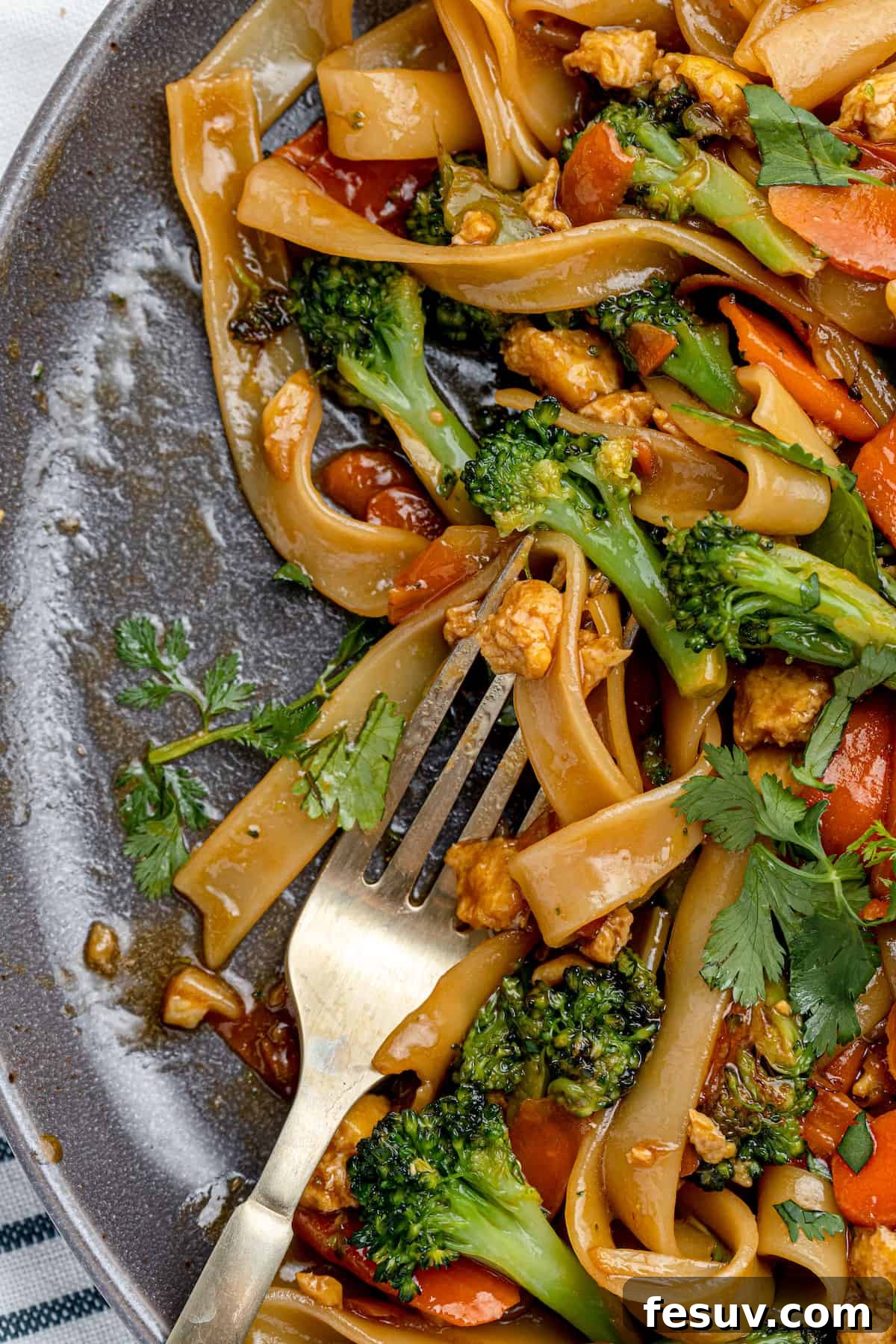
- Serve Immediately: Transfer your freshly cooked Pad See Ew to individual serving bowls or a large communal dish. If using, sprinkle with fresh chopped cilantro for a burst of freshness and color. Serve hot and enjoy the incredible flavors of your homemade Thai masterpiece!
Essential Tips for Pad See Ew Perfection
Ready to elevate your stir-fry game? Keep these expert tips in mind to achieve truly restaurant-quality Pad See Ew every time!
- Maximize “Wok Char”: The hallmark of great Pad See Ew is the slightly caramelized, smoky flavor from the noodles hitting the hot wok. To achieve this, ensure your wok or pan is searing hot, and avoid overcrowding. If your pan is smaller, cook the noodles in two batches. Let the noodles sit undisturbed on the hot surface for about 30-60 seconds before tossing, allowing them to develop those delightful browned bits.
- Perfect Noodle Texture: Don’t overcook your rice noodles initially! They should be al dente, as they will continue to cook in the wok. Overcooked noodles will become mushy and break apart during stir-frying. Rinsing cooked noodles in cold water can also help prevent them from sticking together.
- Add a Protein Punch: While delicious as a vegetarian dish, Pad See Ew is fantastic with added protein. Stir in thinly sliced and pre-cooked chicken, beef, pork, or shrimp during the last minute of stir-frying to ensure it’s heated through without overcooking. Marinating your chosen protein beforehand can add another layer of flavor.
- Customize Your Veggies: Don’t limit yourself to just broccoli and carrots. Feel free to incorporate other quick-cooking vegetables like bell peppers, snow peas, mushrooms, or baby corn. Add tougher vegetables earlier and more tender ones later to ensure everything cooks evenly.
- Balance the Flavors: Thai cuisine is all about balancing sweet, sour, salty, and spicy. Taste your sauce before adding it to the wok and adjust as needed. A squeeze of lime juice at the end can brighten the flavors, and a pinch of chili flakes or a dash of chili oil can add heat.
- Garnish for Impact: Beyond cilantro, consider chopped roasted peanuts for crunch, sliced green onions for a fresh bite, or a drizzle of spicy chili vinegar for an authentic Thai touch. These garnishes not only add visual appeal but also enhance the textural and flavor experience.
Delightful Serving Suggestions
When I prepare this exquisite Pad See Ew, I often like to complement it with additional dishes to create a truly memorable meal. Juicy Cajun chicken thighs offer a wonderful contrast, while a selection of fun, Asian-inspired sides helps round out the feast. Crispy shrimp tempura adds a satisfying crunch, a comforting bowl of egg drop soup provides a cozy touch, and making chicken potstickers can turn dinner into an engaging, hands-on activity for the whole family. It’s a simple, flavorful approach to dinner that leaves everyone feeling satisfied and happy.
Pad See Ew
Ingredients
For the Pad See Ew
- 10 ounces flat wide rice noodles, or substitute flat pad Thai noodles
- 2 tablespoons olive oil
- 4 cloves garlic, minced
- 2 large eggs, beaten
- 2 cups broccoli florets, chopped (or substitute Chinese broccoli, if available)
- ½ cup carrot shreds or very thin sliced carrot
- Fresh chopped cilantro, for garnish (optional)
For the Sauce
- 6 tablespoons oyster sauce
- 2 tablespoons olive oil
- ¼ cup low sodium soy sauce
- 1 tablespoon dark brown sugar
- 4 teaspoons rice wine vinegar
- 1 teaspoon arrowroot powder or cornstarch (for thickening)
Instructions
- Make the sauce. Combine all sauce ingredients in a small bowl and mix together thoroughly. Set aside.
- Cook the noodles. In a medium pot, bring water to a boil and cook the noodles according to package directions until al dente. Drain well.
- Sauté the vegetables. Meanwhile, heat two tablespoons of olive oil in a wok or heavy skillet over medium-high heat. Add the minced garlic and saute for about 30 seconds, or until fragrant. Add the chopped broccoli and sliced carrots, and cook for 6-8 minutes, or until tender-crisp, stirring frequently.
- Add the eggs. Push the cooked veggies to one side of the wok. Pour the beaten eggs into the empty side and scramble, breaking them into small pieces as they cook.
- Toss in the noodles and sauce. Add the cooked noodles and the previously prepared sauce to the wok; toss gently to combine all ingredients. Continue cooking for 1 to 2 minutes, allowing the noodles to caramelize slightly against the hot wok surface.
- Serve. Transfer your Pad See Ew to bowls or a serving dish. Garnish with fresh chopped cilantro, if desired, and serve immediately.
Equipment
-
Large Wok or Skillet
Nutrition
Nutritional information is an estimate and provided as a courtesy. Values may vary according to the specific ingredients, brands, and tools used. Please use your preferred nutritional calculator for more detailed and accurate information, especially for dietary planning.
Storing and Reheating Your Pad See Ew Leftovers
- Fridge Storage. To maintain the freshness and flavor of your leftover Pad See Ew, transfer it to an airtight container. It can be safely stored in the refrigerator for up to 3 days. Proper storage is key to enjoying your delicious meal later.
- Reheating Instructions. When you’re ready to enjoy your leftovers, place them in a covered skillet over low to medium-low heat. If the dish appears dry, add a small splash of water or a tiny bit of extra soy sauce to help rehydrate the noodles and sauce. Gently heat, stirring occasionally, until the vegetables, eggs, and noodles are thoroughly heated through and the sauce is simmering gently. Avoid high heat, which can dry out the noodles.
Craving More Homemade Takeout Favorites?
- Savory Beef Stir Fry with Glass Noodles
- Classic Chicken Lo Mein
- Irresistible General Tso’s Chicken
- Flavorful Steak Fried Rice