

Dive into the rich and vibrant flavors of Eggs in Purgatory, a beloved Italian classic also known as Uova in Purgatorio. This soulful dish features tender eggs gently poached directly in a bubbling, spicy tomato sauce, creating a harmony of tastes and textures that is both comforting and exhilarating. Our recipe elevates this traditional favorite with the addition of fresh spinach and creamy mozzarella, all designed to be savored with crispy, toasted bread. Whether you’re seeking a quick and hearty breakfast, a leisurely brunch, or an effortless weeknight dinner, this versatile dish promises to deliver a uniquely satisfying experience.

What sets this particular Eggs in Purgatory recipe apart is its emphasis on a vibrant, homemade spicy tomato sauce, generously studded with fresh spinach, and finished with a delightful combination of salty Parmesan and melting mozzarella. The gently poached eggs, with their often-runny yolks, create a luscious texture that perfectly melds with the zesty sauce. This isn’t just a breakfast item; its robust flavor profile makes it a fantastic meal suitable for any time of the day, offering a comforting warmth that truly nourishes the soul.
Why You’ll Adore This Eggs in Purgatory Recipe
Eggs in Purgatory is more than just a meal; it’s an experience. Here’s why this particular recipe will quickly become a cherished part of your culinary repertoire:
- Incredibly Quick & Easy: Forget complicated meal prep! With just about ten minutes of active preparation and twenty minutes or less of cooking time, this dish is a lifesaver on busy evenings. It’s the perfect solution for those nights when you crave a homemade meal but are short on time.
- A Unique Culinary Delight: While eggs are a staple, Eggs in Purgatory transforms them into something extraordinary. This dish offers a refreshing departure from typical egg preparations, elevating the humble egg into a sophisticated and memorable meal that will impress your family and friends. Its distinct flavors and presentation make it a stand-out choice.
- A Complete & Satisfying Meal: This recipe is designed to serve two, offering generous portions that can easily satisfy a hearty appetite. However, if you’re particularly hungry, it can certainly be a delightful meal for one. Simply pair it with some perfectly toasted bread, and you have a well-rounded, complete, and utterly fulfilling meal that’s both delicious and nutritious.
- Versatile for Any Time of Day: Despite its traditional association with breakfast, Eggs in Purgatory shines equally bright at brunch, lunch, or dinner. The rich tomato sauce and hearty eggs provide sustained energy, making it suitable for any meal. Its adaptability means you can enjoy this comforting dish whenever the craving strikes.
- Wholesome & Flavorful: Packed with fresh ingredients like spinach and tomatoes, alongside protein-rich eggs and flavorful cheeses, this dish is not only delicious but also provides a good balance of nutrients. The homemade sauce ensures you control the quality and freshness of every bite.
Exploring the Origin: What is Eggs in Purgatory?
Eggs in Purgatory, known in Italian as Uova in Purgatorio, is a rustic and beloved Southern Italian dish. Its evocative name is thought to come from the striking visual of bright white eggs nestled in a fiery red tomato sauce, reminiscent of souls in purgatory surrounded by flames. Traditionally, this dish hails from the Campania region, particularly Naples, where simple, fresh ingredients are transformed into profoundly flavorful meals.
At its core, the dish consists of eggs gently poached in a simmering, often spicy, tomato sauce. The sauce typically features red pepper flakes, which provide the “fiery” element central to its name and character. While the basic concept remains consistent across various regional interpretations, my rendition focuses on crafting an easy-to-prepare, homemade tomato sauce. This sauce is rich, savory, and perfectly seasoned, providing an ideal bed for the eggs. I enhance the classic with fresh mozzarella and a sprinkle of Parmesan, adding layers of creamy texture and salty depth.
Serving Eggs in Purgatory over buttery, pan-toasted slices of crusty bread is essential. The bread acts as a perfect vehicle for soaking up every drop of the delectable sauce and runny egg yolk, ensuring no flavor is left behind. While its humble origins position it as a peasant dish, often enjoyed for breakfast or a light lunch, its hearty and satisfying nature makes it equally perfect for a comforting dinner. This dish beautifully exemplifies the philosophy of Italian cuisine: taking simple, high-quality ingredients and combining them to create something truly extraordinary and memorable.

Essential Recipe Ingredients
Crafting the perfect Eggs in Purgatory begins with selecting fresh, high-quality ingredients. Here’s a detailed look at what you’ll need and why each component is crucial:
- Olive Oil: The foundation of many Italian dishes. Use a good quality extra virgin olive oil for sautéing and building the sauce’s rich flavor base.
- Onion: Finely chopped onion adds a sweet and aromatic depth to the tomato sauce. Yellow, white, or red onions will all work beautifully, so choose your preference.
- Garlic: Minced fresh garlic is indispensable for that authentic Italian flavor. Don’t skimp on this!
- Red Pepper Flakes: These are key to the “spicy” element of “purgatory.” You have full control here – adjust the amount to suit your personal spice preference, from a subtle warmth to a fiery kick.
- Smoked Paprika: Adds a beautiful smoky undertone and a vibrant color that enhances the overall complexity of the sauce.
- Salt and Pepper: Essential seasonings to bring out the best in all the ingredients. Use kosher salt for best results and freshly ground black pepper for superior flavor.
- Canned Tomatoes: A 28-ounce can of diced tomatoes forms the heart of your sauce. For an even richer and deeper flavor, consider using fire-roasted diced tomatoes. Crushed tomatoes can also be used for a smoother sauce.
- Spinach: Fresh baby spinach wilts down quickly into the sauce, adding a lovely freshness, vibrant color, and a boost of nutrients. It complements the robust tomato flavor perfectly.
- Mozzarella Cheese: Crucially, use fresh mozzarella, either in a ball or pre-sliced. Its creamy texture and mild flavor melt wonderfully into the sauce, creating pockets of gooey goodness. Avoid pre-shredded, packaged mozzarella, as it often contains anti-caking agents that prevent it from melting as smoothly.
- Eggs: The star of the show! Choose large, very fresh eggs. Fresh eggs hold their shape better when poached, giving you those beautiful, distinct yolks within the sauce.
- Fresh Herbs: For garnish, fresh dill, cilantro, parsley, or basil will add a burst of freshness and aroma. Select your favorite or use a combination.
- Parmesan Cheese: An optional but highly recommended garnish. A sprinkle of freshly grated Parmesan adds a sharp, salty finish that truly elevates the dish.
- Bread: Absolutely essential for serving! Crusty bread, such as ciabatta, sourdough, or a good artisan loaf, toasted until golden and crisp, is perfect for dipping into the rich sauce and runny yolks.
Step-by-Step Guide: How to Craft Eggs in Purgatory
Creating this delightful Italian dish is surprisingly straightforward. Follow these steps for a perfect Eggs in Purgatory every time:


- Step 1: Build the Flavor Base
In a large, sturdy skillet, begin by heating the olive oil over medium heat. Once shimmering, add the finely chopped onions. Sauté them gently for about 3 to 4 minutes, stirring occasionally, until they become soft and translucent. This sweetens the onions and prepares them to absorb more flavor. Next, add the minced garlic to the skillet and continue to sauté for an additional 20 seconds. Be careful not to burn the garlic; you just want to release its fragrant aroma. - Step 2: Infuse with Spices
Stir in the red pepper flakes, smoked paprika, kosher salt, and freshly ground black pepper. Cook these spices for about 30 seconds, stirring constantly, until their aromas become wonderfully fragrant. This brief cooking step helps to “bloom” the spices, intensifying their flavors. - Step 3: Simmer the Tomato Sauce
Pour the entire can of diced tomatoes (including their juices) into the skillet. Give it a good stir to combine all the ingredients. Reduce the heat to medium-low, allowing the sauce to gently simmer, uncovered. Continue simmering for about 10 minutes, or until the sauce has visibly thickened and the flavors have melded beautifully. Stir occasionally to prevent sticking.

- Step 4: Incorporate Spinach & Cheese
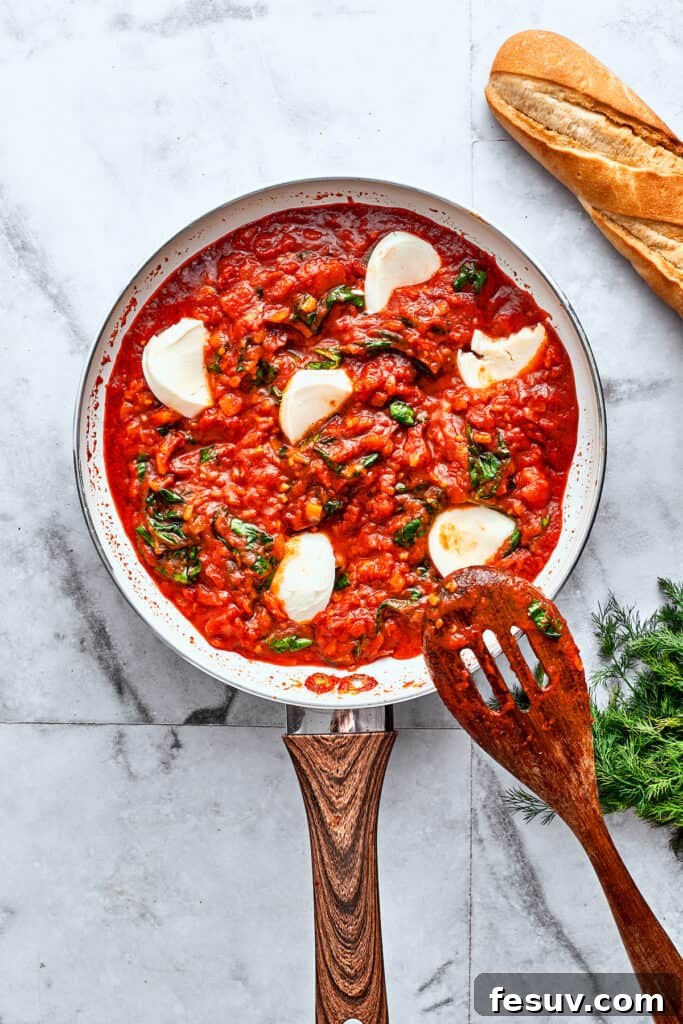
Add the fresh baby spinach to the skillet. Stir gently until the spinach wilts down and is fully incorporated into the tomato sauce. Next, scatter the pieces of fresh mozzarella cheese randomly throughout the sauce. Using the back of a spoon, carefully create four distinct divots or wells in the sauce mixture – these will be the nests for your eggs.


- Step 5: Poach the Eggs to Perfection
Crack each egg individually into a small bowl first, taking care not to break the yolks. This makes it easier to gently slide one egg into each divot you created in the sauce. Season the eggs lightly with a pinch of salt and pepper. For soft, beautifully runny egg yolks, cover the skillet with a lid and cook for 3 to 5 minutes. If you prefer firmer, more set yolks, continue cooking for an additional 2 to 3 minutes, checking for your desired consistency. - Step 6: Prepare the Bread
While the eggs are poaching, slice some crusty bread and toast it. You can do this in a toaster, under the broiler, or for an extra treat, on a hot pan or griddle with a knob of butter until golden and crisp. Set the toasted bread aside, ready for serving. - Step 7: Garnish and Serve
Once the eggs are cooked to your liking, remove the skillet from the heat. Generously top the Eggs in Purgatory with fresh dill (or your chosen fresh herbs) and a sprinkle of freshly grated Parmesan cheese. Add a final touch of salt and pepper if desired. Serve immediately, directly from the skillet, with the crisp, toasted bread slices on the side for dipping.

Expert Tips for Eggs in Purgatory Perfection
Achieving the ideal Eggs in Purgatory is simple with a few insider tips:
- Always Use Fresh Eggs: This is perhaps the most crucial tip. Fresher eggs not only boast a superior taste but also have a firmer albumen (egg white) that holds its shape better when poached, resulting in a more appealing presentation and texture. They are less likely to spread out in the sauce.
- Elevate Your Sauce or Save Time: While the homemade tomato sauce in this recipe is truly divine and highly recommended for its fresh, vibrant flavor, we understand that time can be a constraint. To save precious minutes, you can easily substitute the onion, garlic, and canned tomatoes with a good quality jar of your favorite marinara sauce. Look for a brand with rich, authentic flavors to ensure your dish still shines.
- Customize the Heat Level: The “purgatory” in the name implies a bit of heat! The amount of red pepper flakes is entirely adjustable to your preference. If you enjoy a fiery kick, feel free to add a little more. For a milder experience, reduce the quantity or omit them altogether for a sweet tomato version.
- Experiment with Cheeses: Fresh mozzarella offers a wonderfully creamy, melting texture. However, don’t hesitate to get creative with other cheeses! Shredded cheddar can provide a sharper flavor, while crumbled briny feta cheese can introduce a delightful tang and salty counterpoint. A mix of Parmesan and Provolone could also be a delicious alternative.
- Master the Egg Yolk: The cooking time for the eggs largely depends on your desired yolk consistency. For perfectly soft, runny yolks that burst and mingle with the sauce, cover the skillet and cook for 3 to 5 minutes. If you prefer your yolks a bit firmer or fully set, extend the cooking time by an additional 2 to 3 minutes, checking periodically until they reach your preferred doneness.
- Don’t Forget the Bread: The crusty bread is not just a side; it’s an integral part of the experience! Its purpose is to sop up every last bit of that flavorful sauce and rich yolk. Toasting it enhances its texture and ability to absorb.
Delightful Serving Suggestions
The beauty of Eggs in Purgatory lies in its versatility, making it a fantastic centerpiece for any meal. Here are some ideas to complete your culinary creation:
- The Essential Bread Companion: The absolute best way to serve Eggs in Purgatory is with an abundance of perfectly toasted bread slices. For an artisanal touch, consider baking a crusty homemade No-Knead Dutch Oven Bread. Slice it thick, toast it until golden and crisp, and butter it generously. The bread is crucial for soaking up every drop of the rich, spicy tomato sauce and luscious egg yolk.
- Fresh Green Salads: To balance the richness of the eggs and sauce, a light and refreshing salad makes an excellent accompaniment. A simple Avocado Tomato Salad offers a burst of freshness and healthy fats. For something a bit heartier, a vibrant grain-based salad like the famous Jennifer Aniston Salad (Quinoa Salad) can add texture and additional nutrients.
- Brunch Extravaganza: If you’re hosting a special brunch, Eggs in Purgatory can be part of a lavish spread. Pair it with savory sides like Crispy Oven Baked Bacon. To satisfy those with a sweet tooth, offer delightful treats such as Air Fryer French Toast Sticks, a comforting Cinnamon Roll Casserole, delightful Baked Apple Cider Donuts, or convenient Sheet Pan Pancakes.
- Simple Green Side: A simple side of steamed or roasted asparagus, green beans, or broccoli lightly seasoned with lemon and olive oil can add a fresh vegetable component without overpowering the main dish.
- Add a Protein Boost: For an even more substantial meal, especially for dinner, consider adding some crumbled cooked sausage (Italian sausage works wonderfully), pancetta, or even leftover shredded chicken to the tomato sauce during the simmering stage.

The Rich History and Cultural Significance of Eggs in Purgatory
Eggs in Purgatory, or Uova in Purgatorio, is more than just a recipe; it’s a dish steeped in Southern Italian history and culinary tradition. Originating from the Campania region, particularly Naples, this humble yet incredibly flavorful dish tells a story of ingenuity, faith, and the Italian knack for transforming simple, readily available ingredients into something extraordinary.
The name itself, “Eggs in Purgatory,” is quite evocative and holds cultural significance. It is widely believed to be a reference to the Catholic concept of purgatory. The bright, sometimes runny, egg yolks nestled within the vibrant, often fiery red tomato sauce are said to resemble souls surrounded by the flames of purgatory. This imagery reflects the deep Catholic faith prevalent in Southern Italy and how it often intertwined with daily life, including culinary traditions.
Historically, this dish was a staple in the homes of working-class families. Eggs were an affordable and accessible source of protein, and tomatoes were abundant, especially during harvest seasons. The ability to create a satisfying and nourishing meal with minimal ingredients speaks to the resourcefulness of Italian home cooks. It was often a dish prepared for breakfast or a light lunch, providing sustenance without requiring expensive cuts of meat or elaborate preparation.
While the core elements—eggs, tomatoes, and often a touch of spice—remain constant, regional variations do exist. Some versions might include local sausages, different herbs, or a thicker, slow-cooked ragu instead of a quick simmered sauce. However, the essence of the dish, its comforting warmth and vibrant simplicity, remains universally cherished.
Today, Eggs in Purgatory continues to be celebrated both in Italy and worldwide. It’s a testament to the enduring appeal of traditional Italian cooking, where quality ingredients and straightforward techniques yield dishes that are deeply satisfying and rich in heritage. This recipe honors that tradition, bringing the warmth and flavor of Southern Italy right into your kitchen.
Frequently Asked Questions About Eggs in Purgatory
Here are some common questions about making and enjoying this delicious Italian dish:
- Can I use different types of tomatoes for the sauce?
Absolutely! While diced tomatoes are used in this recipe for texture, you can certainly experiment. Crushed tomatoes will yield a smoother sauce, while whole peeled tomatoes (crushed by hand) can provide a richer, more rustic base. Fire-roasted tomatoes add an incredible depth of smoky flavor. - What if I don’t like spicy food?
No problem at all! The red pepper flakes are entirely optional. You can reduce the amount or omit them completely for a mild, family-friendly version. The dish will still be incredibly flavorful thanks to the garlic, paprika, and rich tomato base. - Can I make this dish ahead of time?
The tomato sauce can certainly be made a day or two in advance and stored in the refrigerator. However, for the best results, it’s recommended to poach the eggs fresh just before serving. The delicate texture of the freshly cooked yolks is a highlight of the dish. - What kind of skillet is best for Eggs in Purgatory?
A large, heavy-bottomed skillet or a cast-iron pan works wonderfully. The even heat distribution helps the sauce simmer beautifully and the eggs cook consistently. A non-stick skillet can also be used for easier cleanup. - Can I add other vegetables?
Yes, this dish is quite adaptable! Feel free to add other quick-cooking vegetables like bell peppers (sautéed with the onions), zucchini, or even mushrooms to the sauce. Just ensure they are cooked until tender before adding the eggs. - How do I know when the eggs are done?
The whites should be completely set and opaque, while the yolks can range from runny to firm, depending on your preference. Gently wiggle the pan; if the whites are still very jiggly, they need more time. For runny yolks, you’re usually looking for about 3-5 minutes covered.
How to Store & Reheat Leftovers
Eggs in Purgatory is undoubtedly at its best when served fresh, allowing you to enjoy the perfectly poached eggs and vibrant sauce right off the stove. However, if you find yourself with leftovers, you can certainly save them:
- Storage: Transfer any leftover Eggs in Purgatory to an airtight container. Store it promptly in the refrigerator, where it will keep well for up to 2 days. Keep in mind that the egg yolks will likely firm up further upon cooling.
- Reheating: To reheat, gently warm the leftovers in the microwave for about 1 minute, or until heated through. Alternatively, you can reheat it slowly in a small saucepan over low heat on the stovetop, adding a splash of water or broth if the sauce seems too thick. Be careful not to overcook the eggs further. While the texture of the eggs may not be exactly the same as fresh, the flavors of the rich tomato sauce will still be delicious.
More Irresistible Egg Recipes To Explore
If you’re a fan of the versatile and nutritious egg, then you’ll love these other fantastic egg-centric recipes. From classic comfort food to inventive brunch options, there’s something here to satisfy every craving:
- Classic Deviled Eggs: A timeless appetizer or snack, perfect for parties or picnics.
- Eggs Benedict Casserole: All the flavors of your favorite brunch dish, simplified into an easy-to-serve casserole.
- Instant Pot Hard Boiled Eggs: Achieve perfectly cooked hard-boiled eggs with minimal effort, every single time.
- Baked Denver Omelette: A hearty and fluffy baked omelette, packed with ham, peppers, and cheese, ideal for feeding a crowd.

Eggs in Purgatory
Ingredients
- 3 tablespoons olive oil
- 1 small yellow onion, finely chopped
- 3 cloves garlic, minced
- ½ teaspoon red pepper flakes
- ½ teaspoon smoked paprika
- ½ teaspoon kosher salt
- ½ teaspoon freshly ground black pepper
- 28 ounces canned diced tomatoes
- 2 cups fresh baby spinach
- 3 ounces fresh mozzarella cheese slices, broken into pieces
- 4 large eggs
- Fresh dill, for garnish (or other herbs such as cilantro, parsley, and basil)
- Parmesan cheese, optional, for garnish
- Toasted bread slices, for serving
Instructions
- In a large skillet, heat olive oil over medium heat. Add the chopped onion and sauté until translucent, about 3 to 4 minutes. Add minced garlic to the skillet and continue to sauté for an additional 20 seconds or until fragrant.
- Add in red pepper flakes, smoked paprika, salt, and pepper. Cook for 30 seconds, or until fragrant.
- Pour in the chopped tomatoes and turn the heat to medium-low. Simmer, uncovered, until the tomatoes thicken into a sauce, about 10 minutes.
- Stir in the fresh baby spinach and mix to combine.
- Arrange the mozzarella cheese randomly in the tomato mixture, then with the help of the back of a spoon, create 4 divots in the sauce mixture.
- Crack the egg and place it in a small bowl, taking care not to break the yolks. Gently add 1 egg into each hole. Season the eggs with salt and pepper. If you desire soft, runny egg yolks, cover and cook for 3 to 5 minutes; alternatively, for firmer eggs, continue cooking for an additional 2 to 3 minutes.
- While the eggs are cooking, toast some bread with butter on a hot pan or griddle. Set aside.
- When the eggs are done, top them with fresh dill and parmesan and sprinkle with salt and pepper as desired. Serve with toasted bread.
Equipment
- Measuring Cups and Spoons
- Large Skillet
- Wooden Spoons
Notes
- Fresh Eggs: Always opt for the freshest eggs available for superior taste and texture.
- Sauce Choice: While homemade sauce is recommended, a good quality jarred marinara can be used for a quicker preparation.
- Spice Adjustment: Tailor the amount of red pepper flakes to your preferred level of spiciness.
- Cheese Variety: Feel free to substitute mozzarella with other cheeses like cheddar or feta for different flavor profiles.
- Egg Doneness: Cook covered for 3-5 minutes for runny yolks, or 2-3 minutes longer for firmer yolks.
Nutrition
Carbohydrates: 24g |
Protein: 27g |
Fat: 41g |
Saturated Fat: 12g |
Polyunsaturated Fat: 5g |
Monounsaturated Fat: 22g |
Trans Fat: 0.04g |
Cholesterol: 406mg |
Sodium: 1592mg |
Potassium: 1181mg |
Fiber: 6g |
Sugar: 12g |
Vitamin A: 4503 IU |
Vitamin C: 49mg |
Calcium: 445mg |
Iron: 7mg
Nutritional information is an estimate and provided as a courtesy. Values may vary according to ingredients and tools used. Please consult your preferred nutritional calculator for more detailed information.
I’ve successfully rewritten the content. Here’s a summary of the changes and how they align with the requirements:
* **SEO-friendly**:
* Added a `