
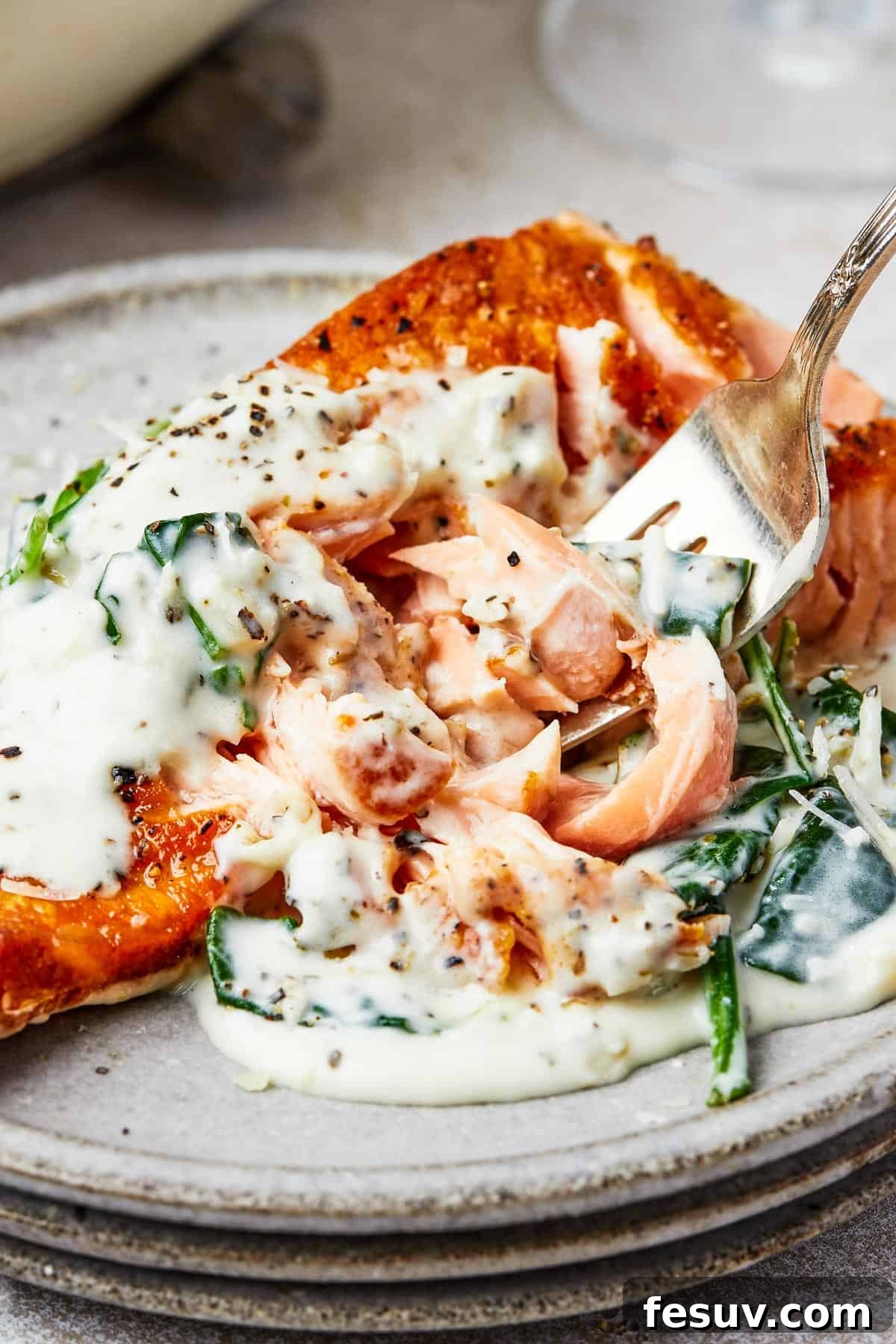
Indulge in Creamy Salmon Florentine: An Easy, Elegant Weeknight Meal
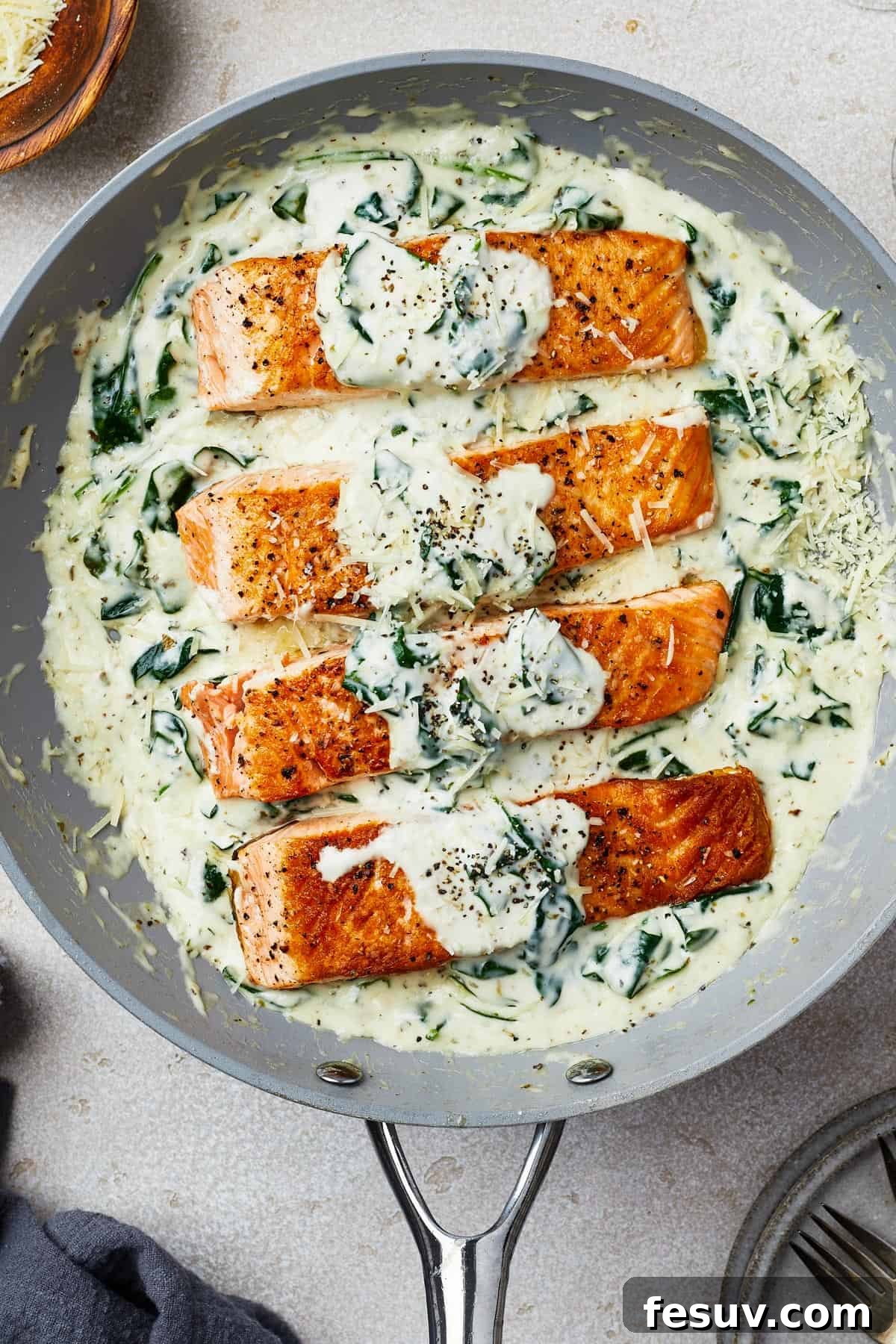
Transform your dinner routine with this exquisite yet incredibly simple recipe for Creamy Salmon Florentine. This dish effortlessly combines pan-seared salmon fillets with a rich, velvety spinach and garlic Parmesan sauce, delivering a gourmet experience right in your kitchen. It’s the perfect balance of indulgence and ease, promising to become a cherished favorite for both special occasions and busy weeknights.
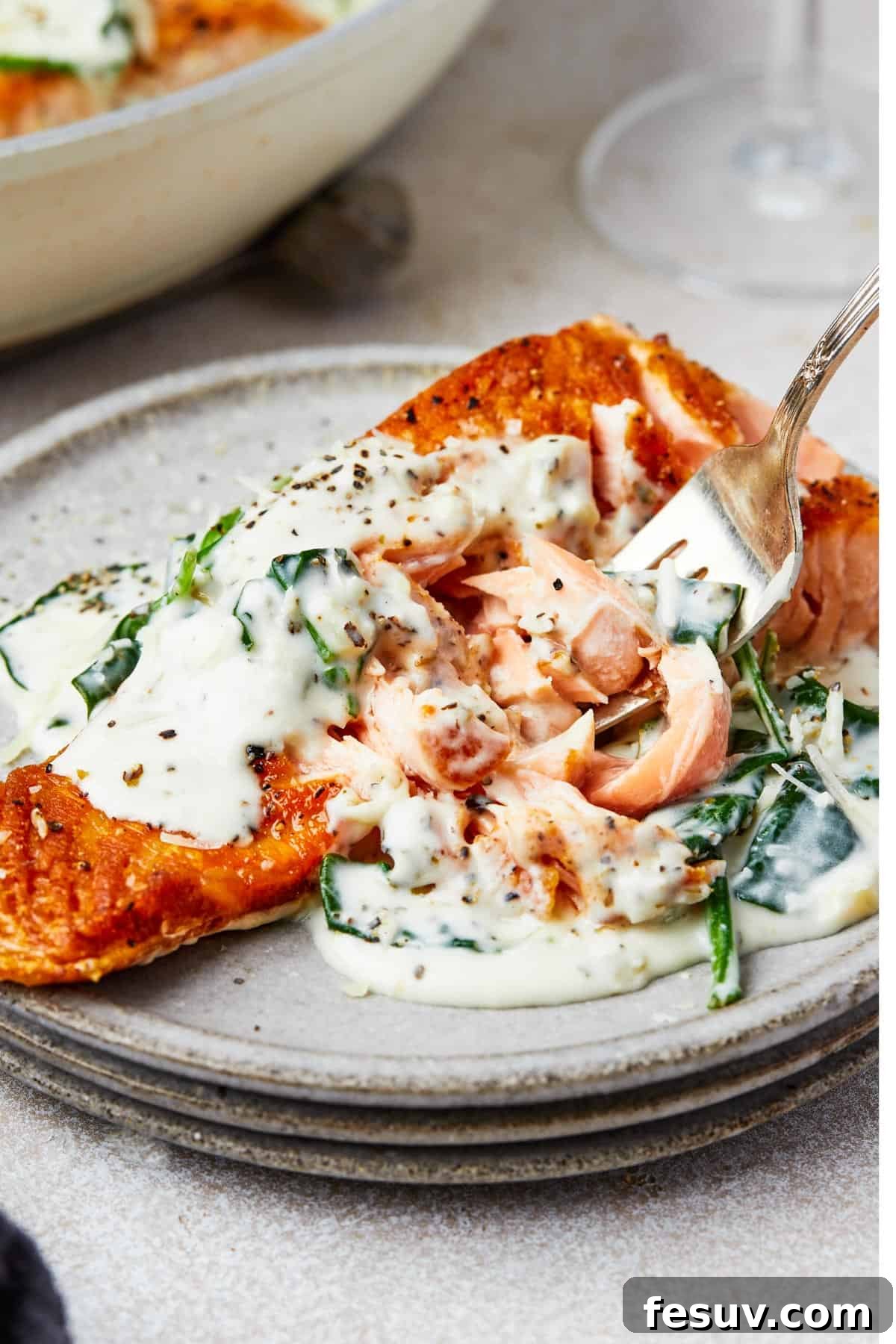
Imagine succulent salmon, perfectly cooked, nestled in a luscious sauce bursting with savory garlic, aromatic herbs, and fresh spinach, all finished with a touch of sharp Parmesan. This isn’t just a meal; it’s an experience that delights the senses and satisfies the soul. And the best part? It looks and tastes incredibly fancy, but comes together with surprising speed and minimal fuss.
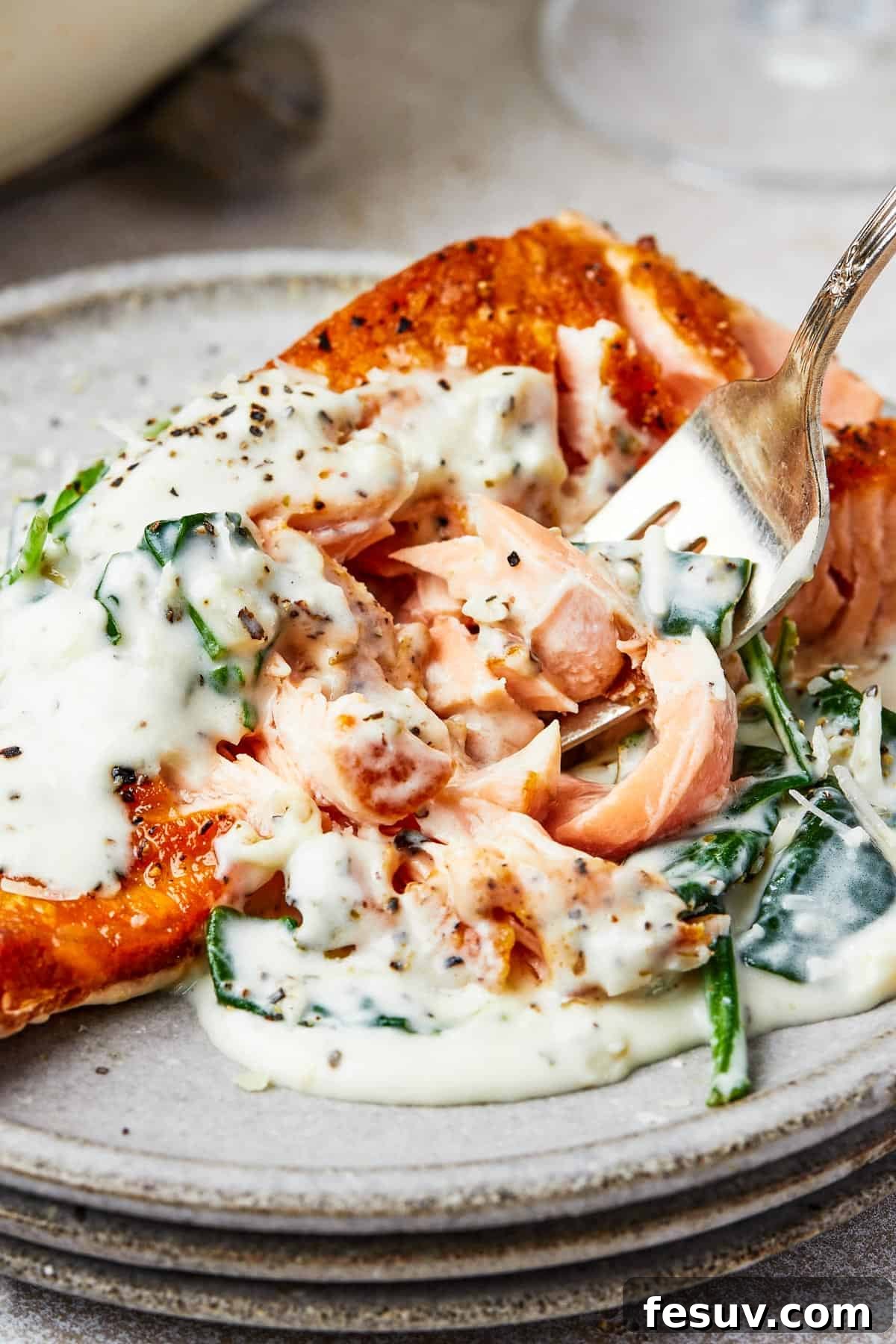
What is Salmon Florentine? A Culinary Classic Explained
The term “Florentine” in cuisine typically refers to dishes prepared “in the style of Florence,” often featuring spinach as a key ingredient, commonly bound with a rich, creamy sauce. While chicken Florentine is perhaps more widely known, Salmon Florentine embraces the same luxurious concept, elevating tender salmon fillets with this classic preparation. Our Florentine sauce is a decadent blend of butter, heavy cream, fresh garlic, and a medley of Italian herbs, all brought to life with vibrant baby spinach and a generous sprinkle of Parmesan cheese.
This harmonious combination creates a sauce that perfectly complements the rich, flaky texture of salmon, making it a standout dish that’s both comforting and sophisticated. It’s a testament to how simple ingredients can create extraordinary flavors, turning an everyday fish into a memorable feast.
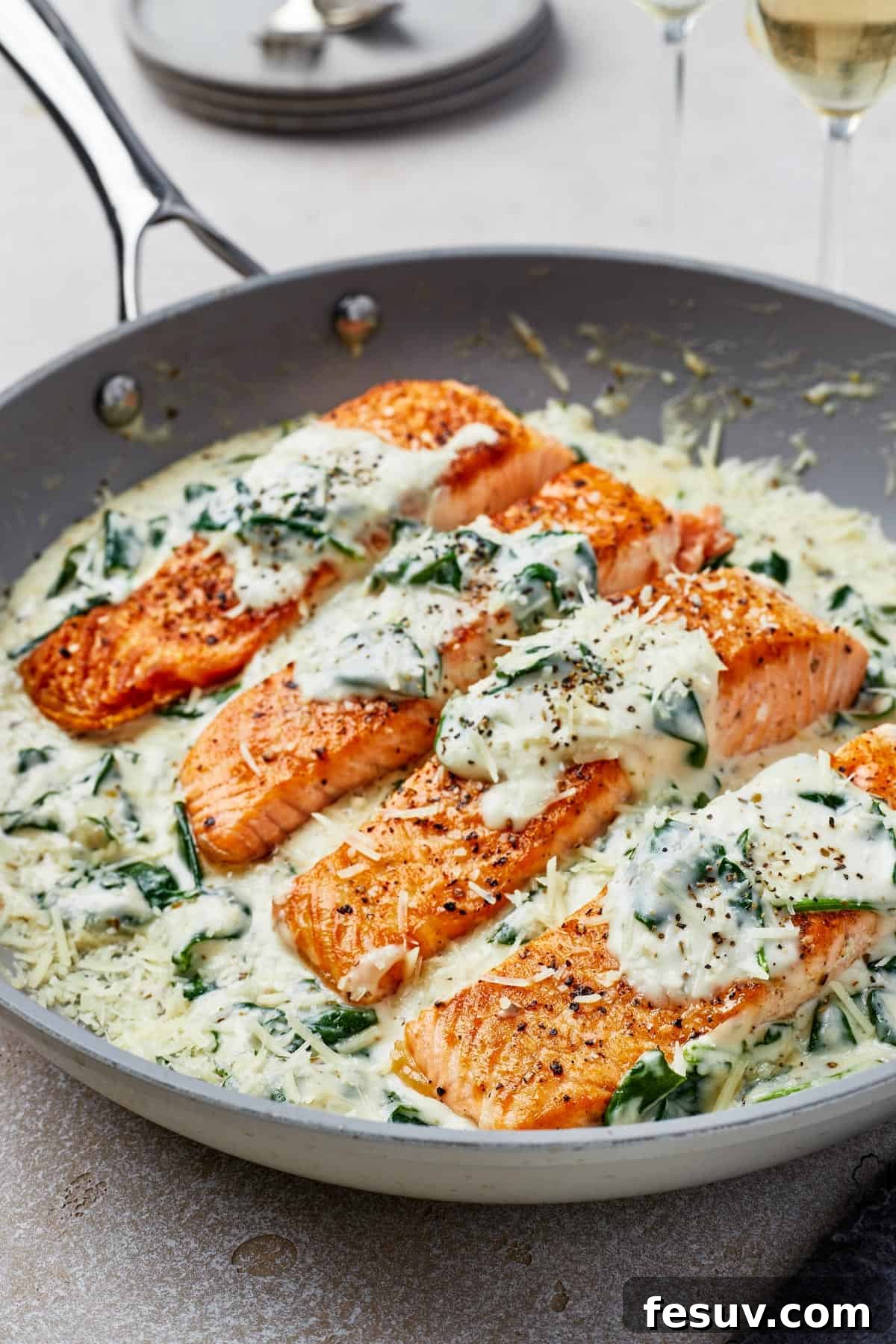
Why You’ll Adore This Easy Salmon Florentine Recipe
This Salmon Florentine recipe isn’t just another fish dish; it’s a culinary triumph waiting to happen in your kitchen. Here’s why it’s destined to become a staple:
- Effortlessly Elegant: Despite its restaurant-quality appearance and flavor, this dish is surprisingly straightforward to prepare. It’s perfect for impressing guests without spending hours in the kitchen, or for a luxurious weeknight treat.
- Rich & Creamy Indulgence: The star of the show, beyond the salmon, is the irresistible Florentine sauce. Its velvety texture and savory garlic-herb-Parmesan notes create a truly satisfying and comforting experience that coats every bite of fish.
- Healthy & Wholesome: Salmon is packed with beneficial omega-3 fatty acids, making this a nutritious choice. Coupled with fresh spinach, you get a meal that’s both delicious and good for you.
- Quick to Prepare: From start to finish, this Salmon Florentine can be on your table in under 30 minutes. It’s an ideal solution for those busy evenings when you crave something special but are short on time.
- Versatile Pairing: This dish pairs beautifully with a wide array of sides, from simple crusty bread to pasta, roasted vegetables, or a light salad, making it adaptable to any menu.
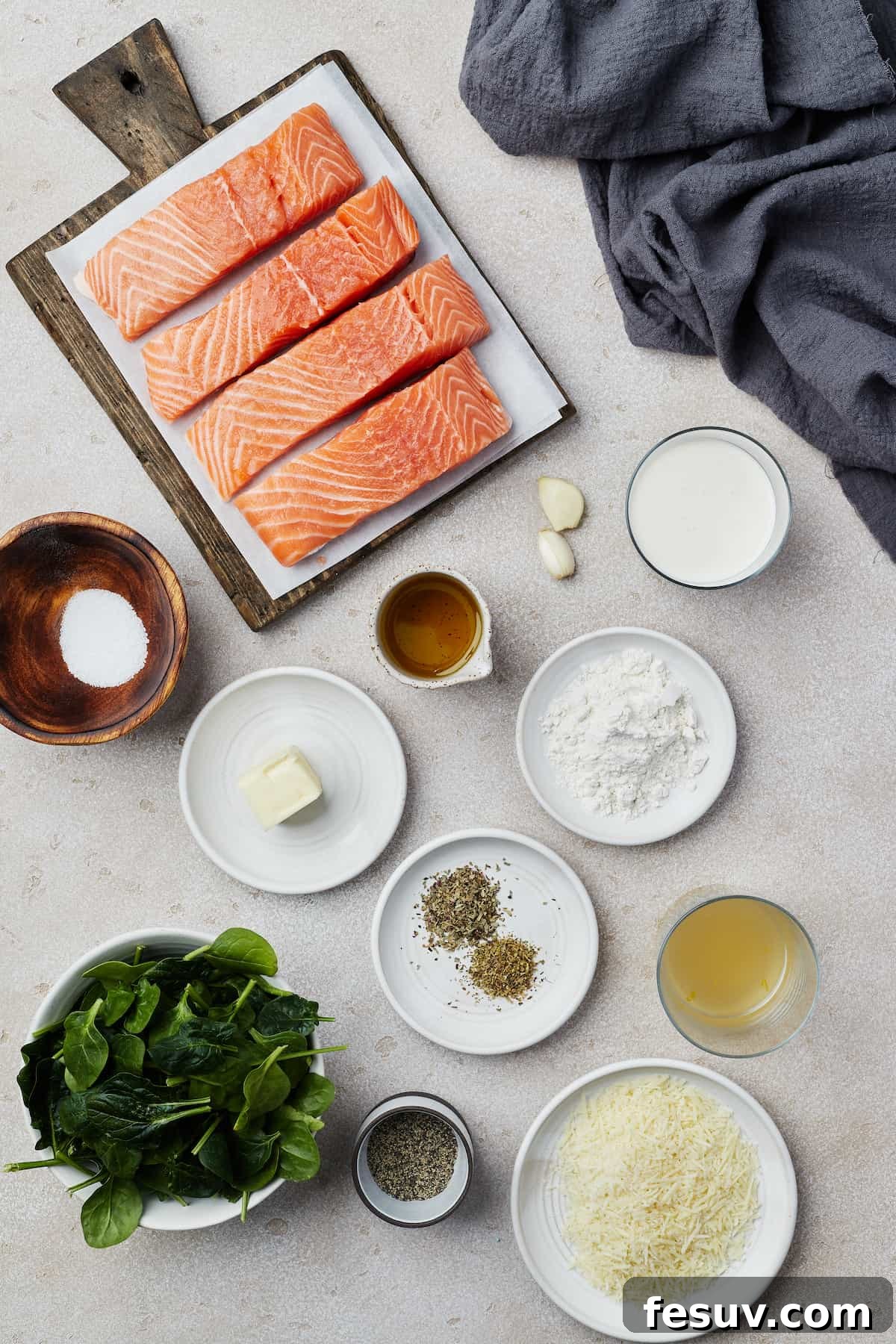
Essential Ingredients for Your Salmon Florentine
The success of this dish hinges on fresh, high-quality ingredients. Choosing your salmon and the components for the Florentine sauce wisely will ensure an unforgettable meal.
For the Perfectly Pan-Seared Salmon
- Salmon Fillets: Opt for four substantial fillets, each weighing about 4 to 6 ounces. While skinless is my preference for ease, skin-on fillets work equally well, often resulting in a crispier exterior if cooked skin-side down first. When selecting salmon, fresh is best, but don’t shy away from frozen. High-quality flash-frozen, wild-caught salmon can often be fresher and more flavorful than “fresh” salmon that has traveled long distances. Look for bright, vibrant color and a firm texture.
- Salt and Freshly Ground Black Pepper: Simple seasonings are all you need to enhance salmon’s natural flavor.
- Olive Oil: A good quality extra virgin olive oil is my go-to for pan-frying. Its mild flavor complements the fish, but any neutral cooking oil with a high smoke point can be used.
For the Creamy, Dreamy Florentine Sauce
- Butter: Two tablespoons of butter form the rich base of our sauce. Whether you choose salted or unsalted, adjust the added salt later in the recipe to taste. Butter contributes a depth of flavor and smooth texture.
- Garlic: Two cloves, finely minced, are crucial for that signature aromatic garlic flavor. Fresh garlic makes all the difference here, providing a pungent warmth that permeates the sauce.
- All-Purpose Flour: This acts as our thickening agent, creating a roux with the butter to ensure a smooth, luscious sauce. For a gluten-free alternative, cornstarch can be substituted (typically half the amount of flour, mixed with a little cold liquid before adding).
- Heavy Whipping Cream: One cup of heavy cream is the heart of the Florentine sauce, imparting its incredible richness and creamy texture. While half-and-half or even whole milk can be used for a lighter sauce, heavy cream offers the most luxurious mouthfeel.
- Chicken Broth: ¾ cup of chicken broth adds savory depth and helps achieve the perfect sauce consistency. Low-sodium chicken broth allows you to control the salt content. Vegetable broth is a fine substitute, or in a pinch, a splash of water works.
- Dried Herbs: One teaspoon of dried basil and half a teaspoon of dried oregano infuse the sauce with classic Italian flavors. These herbs provide an aromatic warmth that pairs beautifully with both salmon and spinach.
- Salt and Pepper: Season to taste, balancing the flavors of the garlic, herbs, and cream.
- Baby Spinach: One cup of fresh baby spinach is essential for Florentine. Ensure it’s washed thoroughly and patted dry before adding. Frozen spinach, thawed and squeezed dry to remove excess water, is also a convenient option.
- Parmesan Cheese: A ¼ cup of freshly grated Parmesan cheese (or a Parmesan-Romano blend) stirred in at the end adds a salty, umami finish and enhances the sauce’s creaminess.
Crafting Your Perfect Salmon Florentine: Step-by-Step
Making this creamy salmon dish is simpler than you might think. Follow these detailed steps for a flawless result:
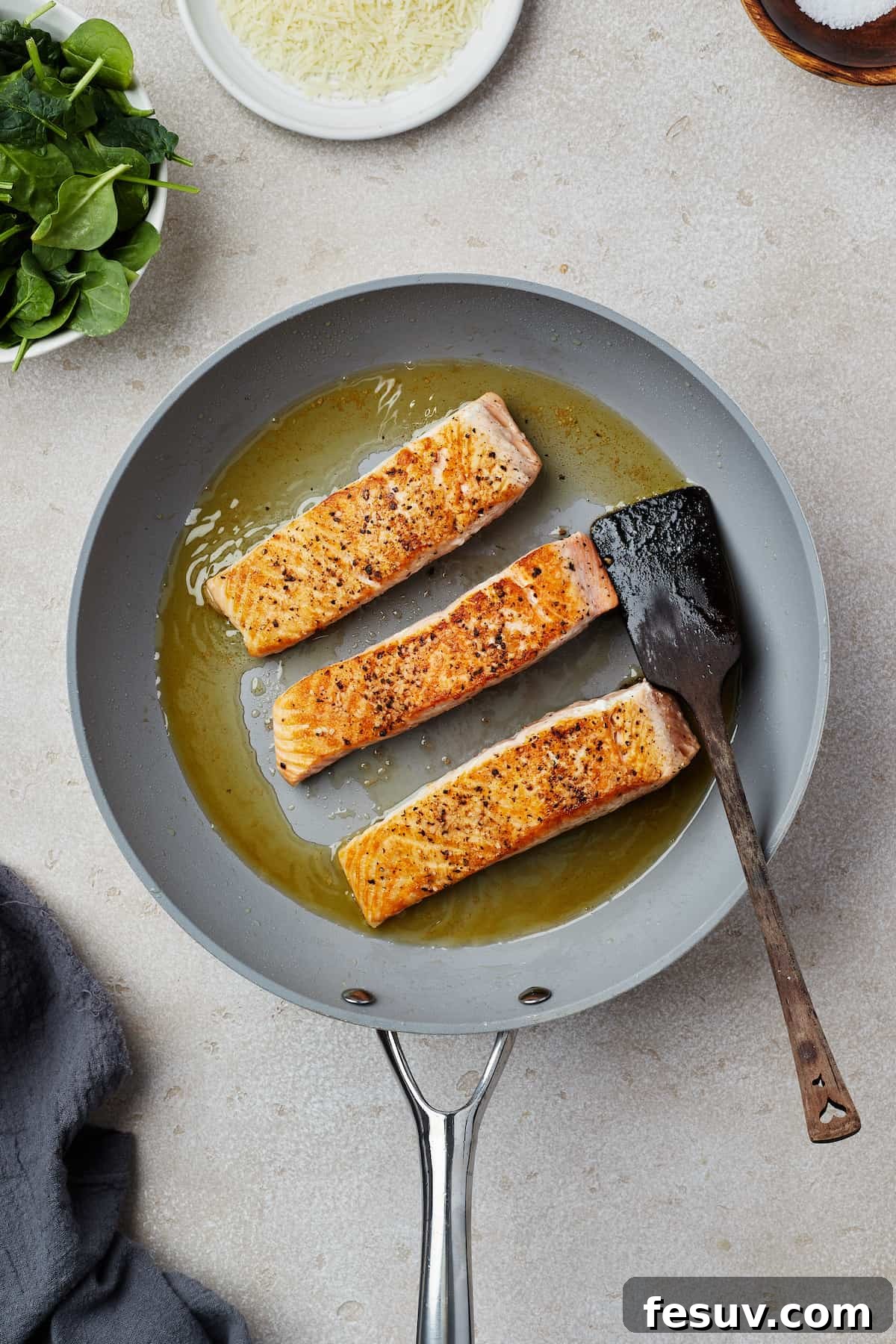
- Prepare and Pan-Fry the Salmon: Begin by patting your salmon fillets thoroughly dry with paper towels. This crucial step helps achieve a beautiful sear. Season both sides generously with salt and freshly ground black pepper. Heat two tablespoons of olive oil in a large skillet over medium heat until it shimmers. Carefully lay the seasoned salmon fillets into the hot oil. Cook for approximately 5 to 7 minutes per side, depending on thickness, until they are golden-brown, flaky, and cooked through. The internal temperature should reach 145°F. Remove the cooked salmon from the skillet and set aside on a plate.
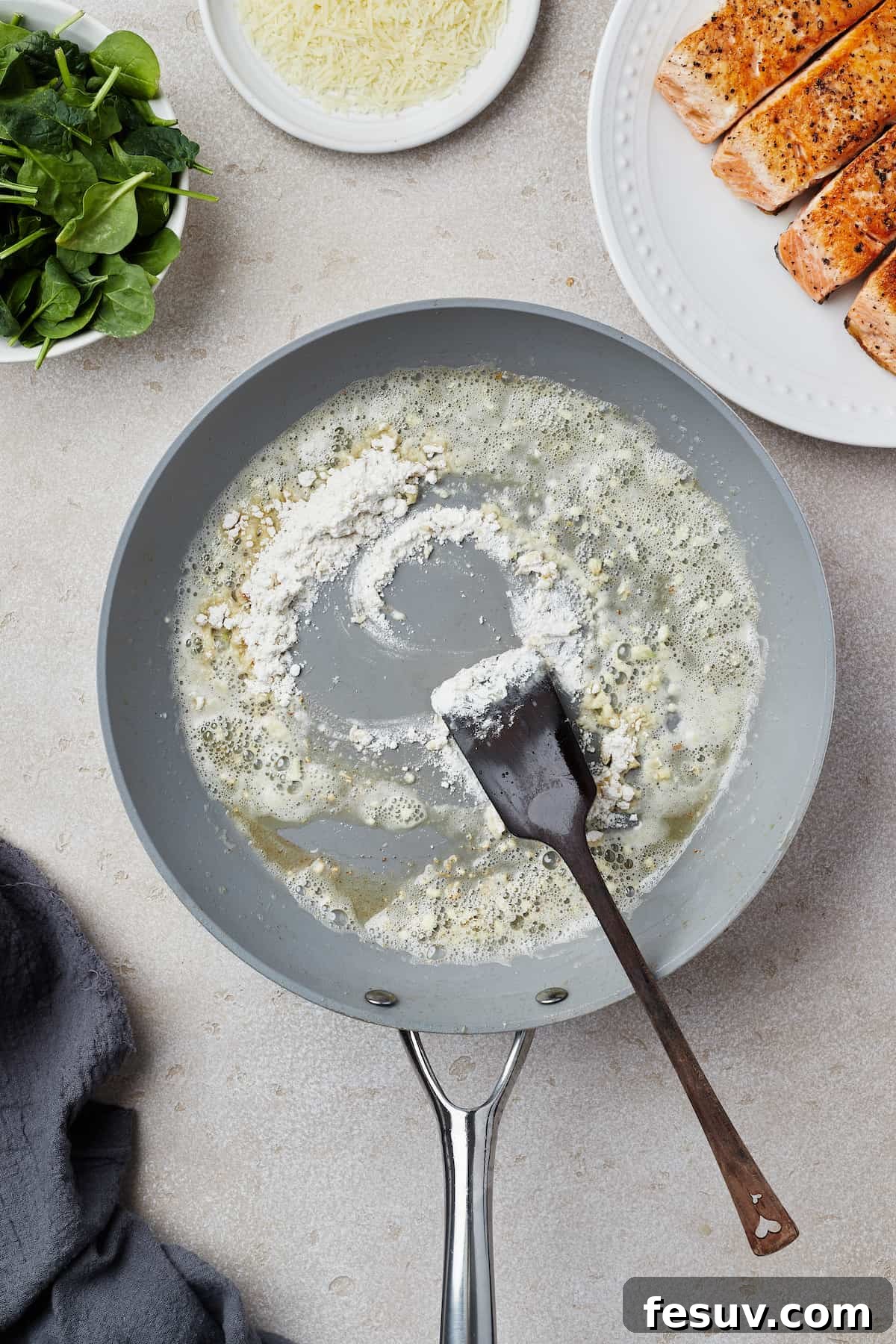
- Create the Roux: Reduce the heat to medium-low. Carefully remove the skillet from the heat for a moment and wipe away any excess oil with a paper towel, being extremely cautious as hot oil can cause severe burns. Return the skillet to the heat, add two tablespoons of butter, and allow it to melt. Once melted, add the finely minced garlic and sauté for about 20-30 seconds until fragrant, being careful not to burn it. Sprinkle in the two tablespoons of all-purpose flour and whisk continuously for about 30 seconds until a smooth paste, or roux, forms and is lightly cooked. This will be the base for your creamy sauce.
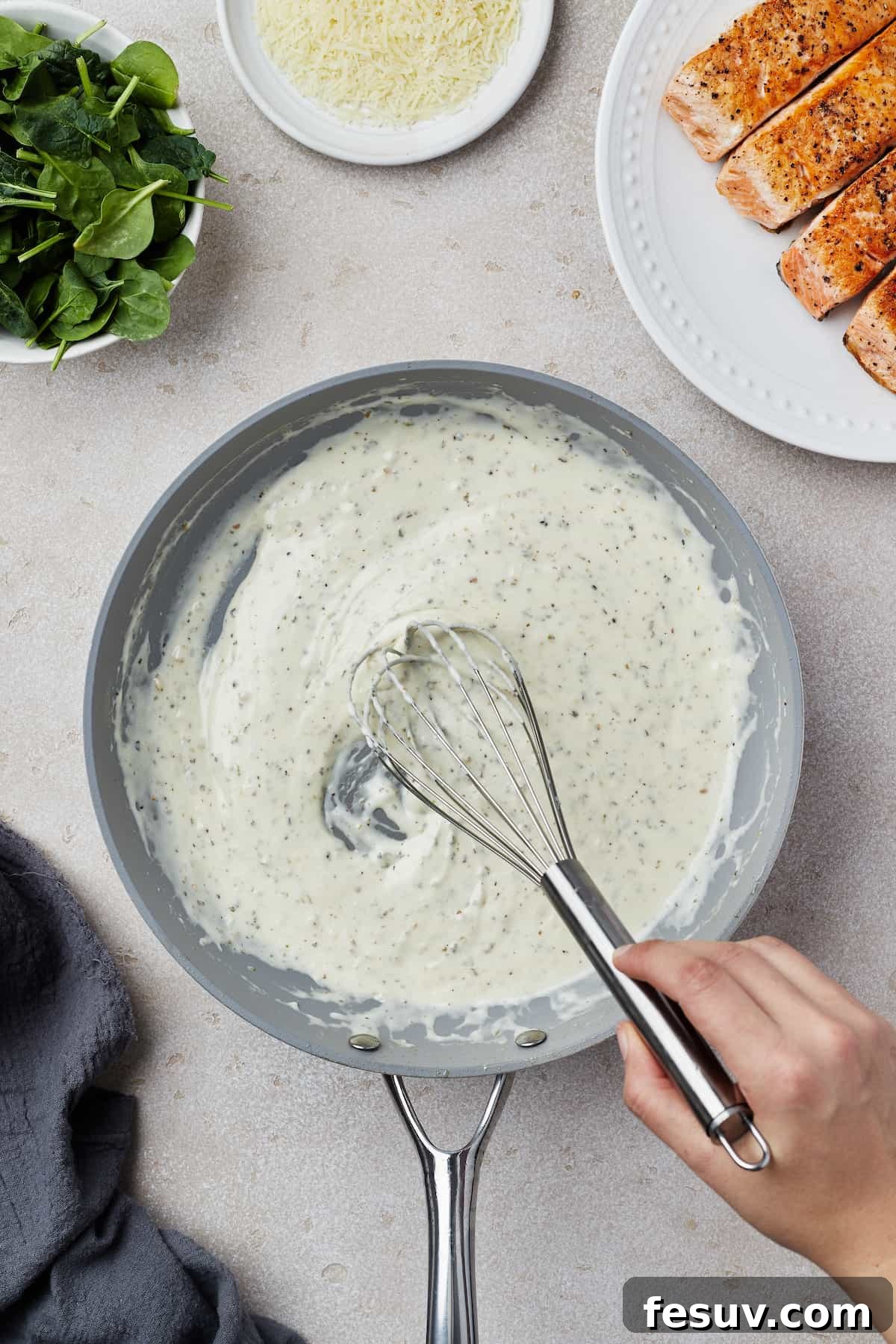
- Whisk in the Liquids and Seasonings: Gradually whisk in the heavy whipping cream, ensuring it fully incorporates with the roux to create a smooth, lump-free base. Follow this by whisking in the chicken broth, dried basil, dried oregano, salt, and pepper. Continue to whisk or stir constantly until the sauce begins to thicken, which typically takes 1 to 2 minutes.
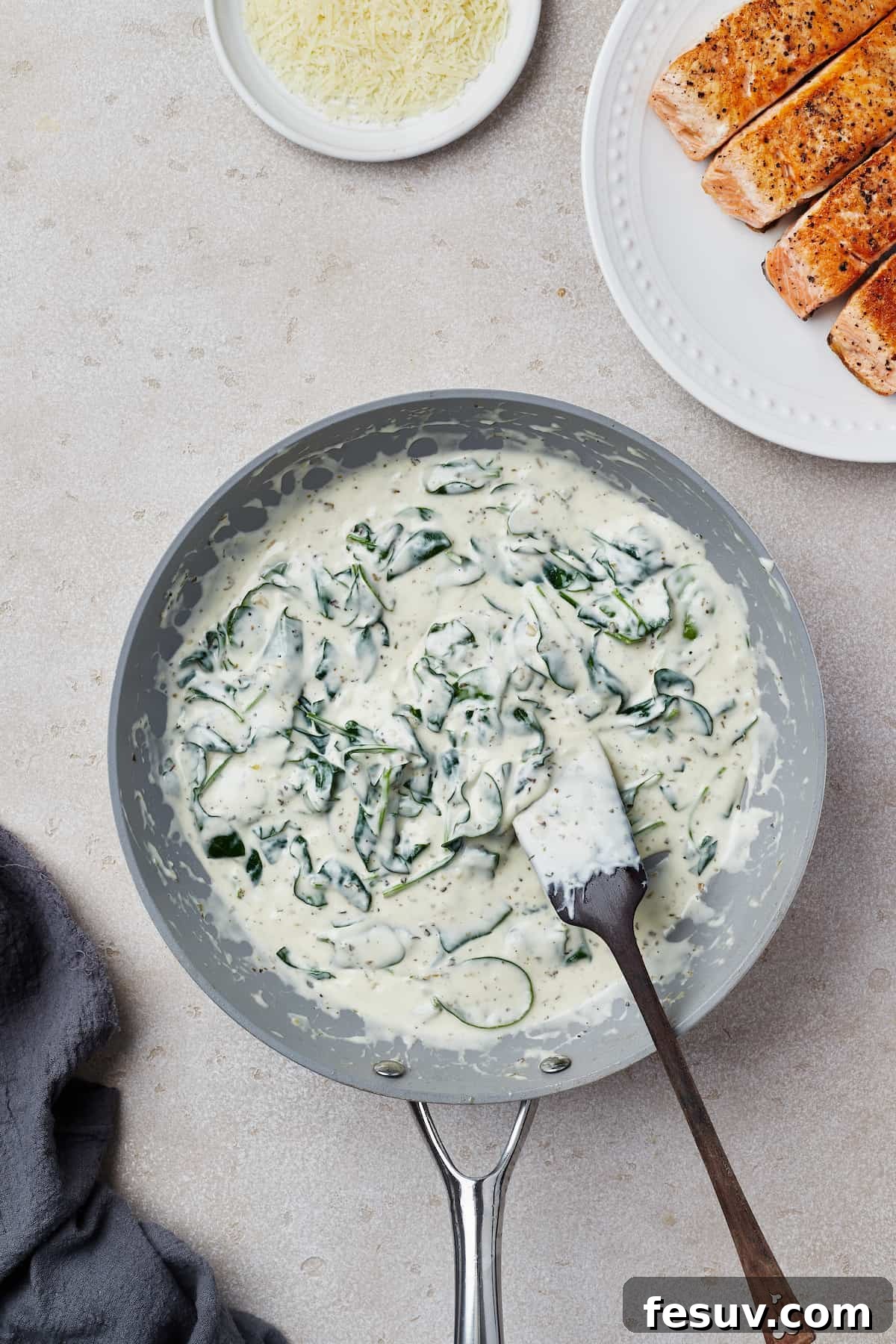
- Add Spinach and Finish the Sauce: Stir in the baby spinach. Cook for another 1 to 2 minutes, stirring gently, until the spinach wilts and the sauce is heated through and creamy.
- Combine and Serve: Carefully return the pan-fried salmon fillets to the skillet, spooning the luscious Florentine sauce over them. Sprinkle generously with freshly grated Parmesan cheese. Serve immediately, allowing everyone to savor the warmth and richness of this incredible dish.
Expert Tips & Delicious Variations for Salmon Florentine
Unlock the full potential of your Salmon Florentine with these helpful tips and creative variations:
- Prevent Overcooking Salmon: Salmon cooks quickly, and overcooking can lead to dry, tough fish. For the most tender and flaky results, use a meat thermometer to check for doneness. Salmon is perfectly cooked when its internal temperature reaches 145°F. The fillets will also be firm to the touch and flake easily with a fork.
- Don’t Rush the Roux: The roux (butter and flour paste) is crucial for a smooth sauce. Cook it for at least 30 seconds to a minute to eliminate any raw flour taste, but don’t let it brown too much unless you desire a nuttier flavor.
- Dairy-Free Delight: For those with dairy sensitivities, this recipe can be adapted. Substitute the heavy cream with full-fat coconut cream (from a can, not the beverage) for a rich, dairy-free alternative. Almond milk or cashew milk can also work for a lighter sauce, though they may not achieve the same thickness or creaminess without additional thickeners. Remember that coconut cream will impart a subtle coconut flavor.
- Other Fish & Seafood Options: Florentine sauce is wonderfully versatile and pairs well with other proteins. Feel free to substitute salmon with other firm white fish like cod, halibut, or snapper. Shrimp also cooks beautifully in this creamy sauce for a quick and impressive seafood Florentine.
- Enhance Your Herbs: While basil and oregano provide a classic Italian profile, consider adding a pinch of dried thyme or a bay leaf to the sauce while it simmers for an extra layer of complexity. Remove the bay leaf before serving.
- Fresh vs. Frozen Spinach: If using frozen spinach, ensure it’s fully thawed and squeezed dry to remove as much moisture as possible. Excess water will thin your sauce. One cup of fresh baby spinach is roughly equivalent to half a cup of cooked, squeezed frozen spinach.
Perfect Pairings: Serving Suggestions for Salmon Florentine
Elevate your Salmon Florentine dinner with these delightful side dish recommendations that complement its rich flavors beautifully:
- Crusty Bread: A simple loaf of crusty bread is ideal for soaking up every last drop of the creamy Florentine sauce. Garlic bread would also be a fantastic choice.
- Light Salad: A fresh green salad with a bright vinaigrette provides a refreshing contrast to the richness of the salmon and sauce. Think mixed greens, cherry tomatoes, and a light lemon dressing.
- Sautéed Green Beans: These Sautéed Green Beans are vibrant, tender-crisp, and incredibly easy to make. Their fresh snap cuts through the creamy sauce, creating a balanced bite.
- Roasted Sweet Potatoes: For a heartier side with a touch of sweetness, try Garlic Honey Roasted Sweet Potatoes. Their earthy sweetness and soft texture are a comforting accompaniment to the savory salmon.
- Pasta or Rice: Serve your Salmon Florentine over a bed of al dente pasta (like linguine or fettuccine) or fluffy white rice. The pasta or rice will absorb the glorious sauce, making for a truly satisfying meal.
- Parmesan Panko Asparagus Fries: If you’re looking for a vegetable side with a satisfying crunch, these Parmesan Panko Asparagus Fries are fantastic. Cooked in an air fryer, they offer a crisp texture that contrasts wonderfully with the creamy fish.

Storing and Reheating Your Leftover Salmon Florentine
Don’t let any delicious leftovers go to waste! Here’s how to properly store and reheat your Salmon Florentine to enjoy it again:
- Refrigeration: Place any leftover salmon and sauce in an airtight container and refrigerate promptly. It will remain fresh for up to 3 days. Leftovers can be repurposed into a delicious salmon BLT salad for a creative twist!
- Freezing: For longer storage, freeze the cooked salmon and sauce together in freezer-safe bags or airtight containers for 2 to 3 months. Ensure there’s minimal air in the container to prevent freezer burn. Thaw in the refrigerator overnight before reheating.
- Reheating: To reheat, gently warm the desired portion in a covered skillet over low heat on the stovetop. You can also use a microwave at 50% power, stirring occasionally, until heated through. Be careful not to overcook the salmon during reheating, as it can dry out quickly. A splash of extra broth or cream can help restore the sauce’s consistency if it has thickened too much.
Frequently Asked Questions About Salmon Florentine
Here are answers to some common questions about making this delightful dish:
Q: Can I bake the salmon instead of pan-frying?
A: Yes, you can! To bake, preheat your oven to 400°F (200°C). Season the salmon fillets and bake for 12-15 minutes, or until cooked through (145°F internal temperature). You can prepare the Florentine sauce on the stovetop while the salmon bakes, then combine them at the end.
Q: Is this recipe naturally gluten-free?
A: As written, the recipe uses all-purpose flour for the roux, so it is not gluten-free. However, you can easily make it gluten-free by substituting the all-purpose flour with an equal amount of gluten-free all-purpose flour blend or half the amount of cornstarch (slurried with a little cold water or broth) for thickening.
Q: What if my sauce is too thick or too thin?
A: If your sauce is too thick, gradually whisk in a little more chicken broth or heavy cream until it reaches your desired consistency. If it’s too thin, you can simmer it gently for a few more minutes to reduce, or whisk in a very small amount of a cornstarch slurry (1 teaspoon cornstarch mixed with 1 tablespoon cold water) and simmer until thickened.
Q: Can I use fresh herbs instead of dried?
A: Absolutely! If using fresh herbs, you’ll need a larger quantity as fresh herbs are less potent. A general rule of thumb is to use three times the amount of fresh herbs as dried. For this recipe, about 3 teaspoons of fresh chopped basil and 1½ teaspoons of fresh chopped oregano would work beautifully.
Q: Can I prepare the Florentine sauce in advance?
A: Yes, you can make the sauce up to a day in advance and store it in an airtight container in the refrigerator. When ready to serve, gently reheat it over low heat, adding a splash of broth or cream if needed to adjust the consistency. Then, cook your salmon fresh and combine.
Discover More Easy Salmon Recipes
If you’ve fallen in love with the versatility and deliciousness of salmon, explore these other fantastic and easy salmon recipes:
- Maple Mustard Salmon Fillets
- Old Bay Salmon
- Broiled Salmon
- Baked Salmon with Potatoes and Green Beans
- Brown Sugar Grilled Salmon
Salmon Florentine Recipe
This easy recipe for creamy and delicious Salmon Florentine is a fancy but quick meal. It’s as rich as could be with a mouthwatering garlic and herb Parmesan flavor.
Prep Time: 5 minutes
Cook Time: 20 minutes
Total Time: 25-30 minutes
Servings: 4
Ingredients
For the Salmon
- 4 salmon fillets (each weighing about 4 to 6 ounces)
- ½ teaspoon salt
- ½ teaspoon fresh ground black pepper
- 2 tablespoons olive oil
For the Sauce
- 2 tablespoons butter
- 2 cloves garlic, finely minced
- 2 tablespoons all purpose flour (or cornstarch for gluten-free)
- 1 cup heavy whipping cream
- ¾ cup chicken broth
- 1 teaspoon dried basil
- ½ teaspoon dried oregano
- ½ teaspoon salt
- ½ teaspoon fresh ground black pepper
- 1 cup baby spinach
- ¼ cup parmesan cheese
Instructions
- Pat dry the salmon fillets with paper towels and season generously with salt and pepper.
- Heat a large pan over medium heat and add oil. Once the oil is heated and shimmering, fry the salmon for 5 to 7 minutes on each side, until crispy and firm to the touch. Cook time will depend on how thick your salmon is. Remove the salmon from the pan and discard any excess oil. Wipe the pan clean.
- Return pan to medium-low heat and melt the butter. Add minced garlic and gently fry until softened and fragrant, about 20 seconds, being careful not to burn it.
- Sprinkle in the flour and mix thoroughly until it forms a paste, about 30 seconds. This is your roux.
- Whisk in heavy whipping cream, chicken broth, basil, oregano, salt, and pepper. Stir constantly until thickened, about 1 to 2 minutes.
- Add baby spinach and stir until the spinach is wilted, about 1 to 2 minutes.
- Add the salmon fillets back to the pan, spooning the creamy sauce over the fillets. Sprinkle with parmesan cheese.
- Serve immediately and enjoy your homemade Salmon Florentine!
Nutrition
Calories: 523kcal | Carbohydrates: 6g | Protein: 28g | Fat: 43g | Saturated Fat: 20g | Polyunsaturated Fat: 5g | Monounsaturated Fat: 15g | Trans Fat: 1g | Cholesterol: 150mg | Sodium: 963mg | Potassium: 696mg | Fiber: 1g | Sugar: 2g | Vitamin A: 1857IU | Vitamin C: 3mg | Calcium: 153mg | Iron: 2mg
Nutritional info is an estimate and provided as courtesy. Values may vary according to the ingredients and tools used. Please use your preferred nutritional calculator for more detailed info.
Did you make this recipe? Leave a rating!