
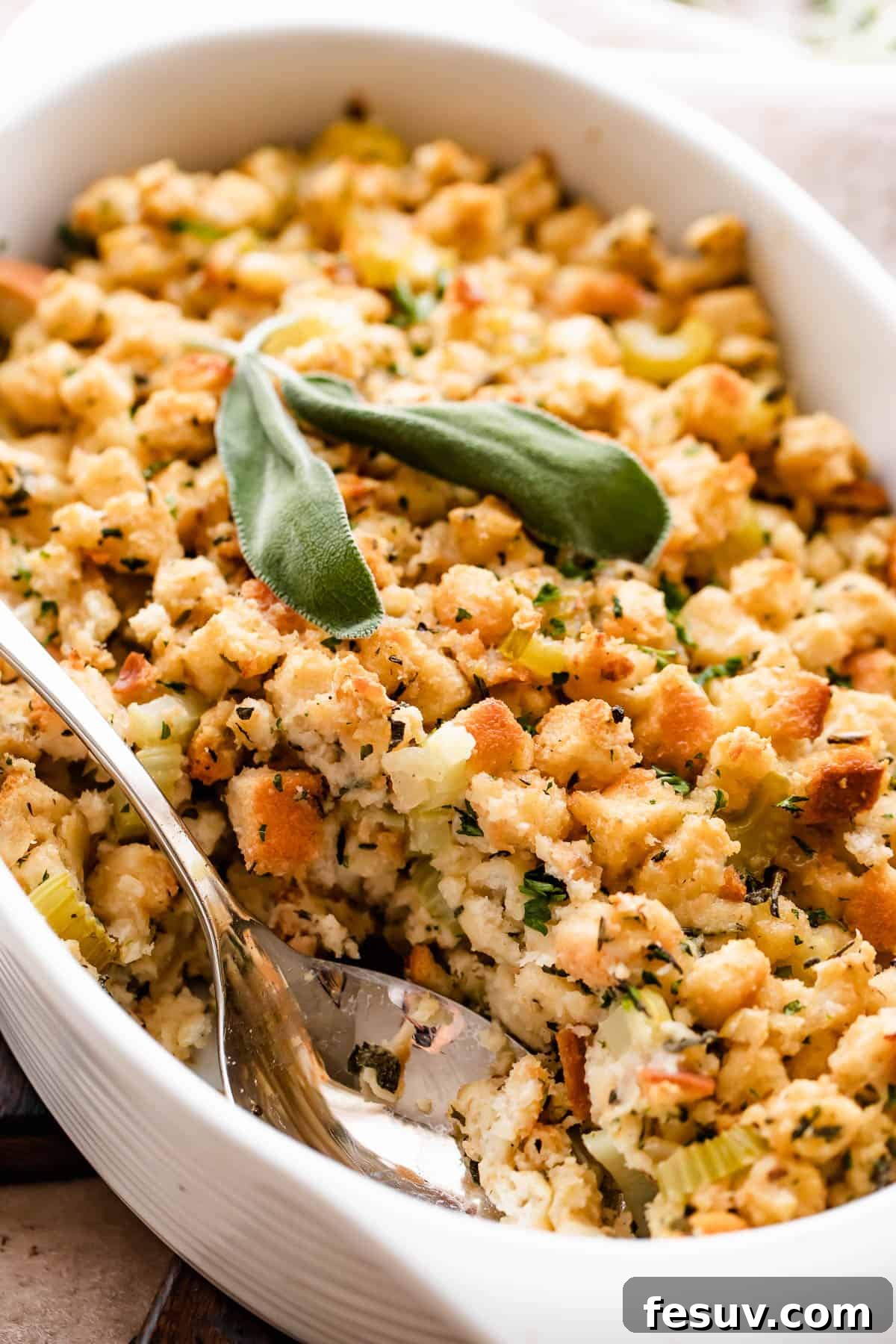
Welcome to a culinary journey that transforms simple ingredients into an extraordinary holiday classic: Easy Herb Stuffing. This dish, built upon a foundation of perfectly toasted French bread, real butter, a medley of fresh herbs, tender vegetables, and a hint of white wine, is destined to become a cherished family favorite. Forget dry, bland stuffing; prepare for a succulent, aromatic side dish that will have everyone reaching for seconds!
The Heartwarming Appeal of Homemade Herb Stuffing
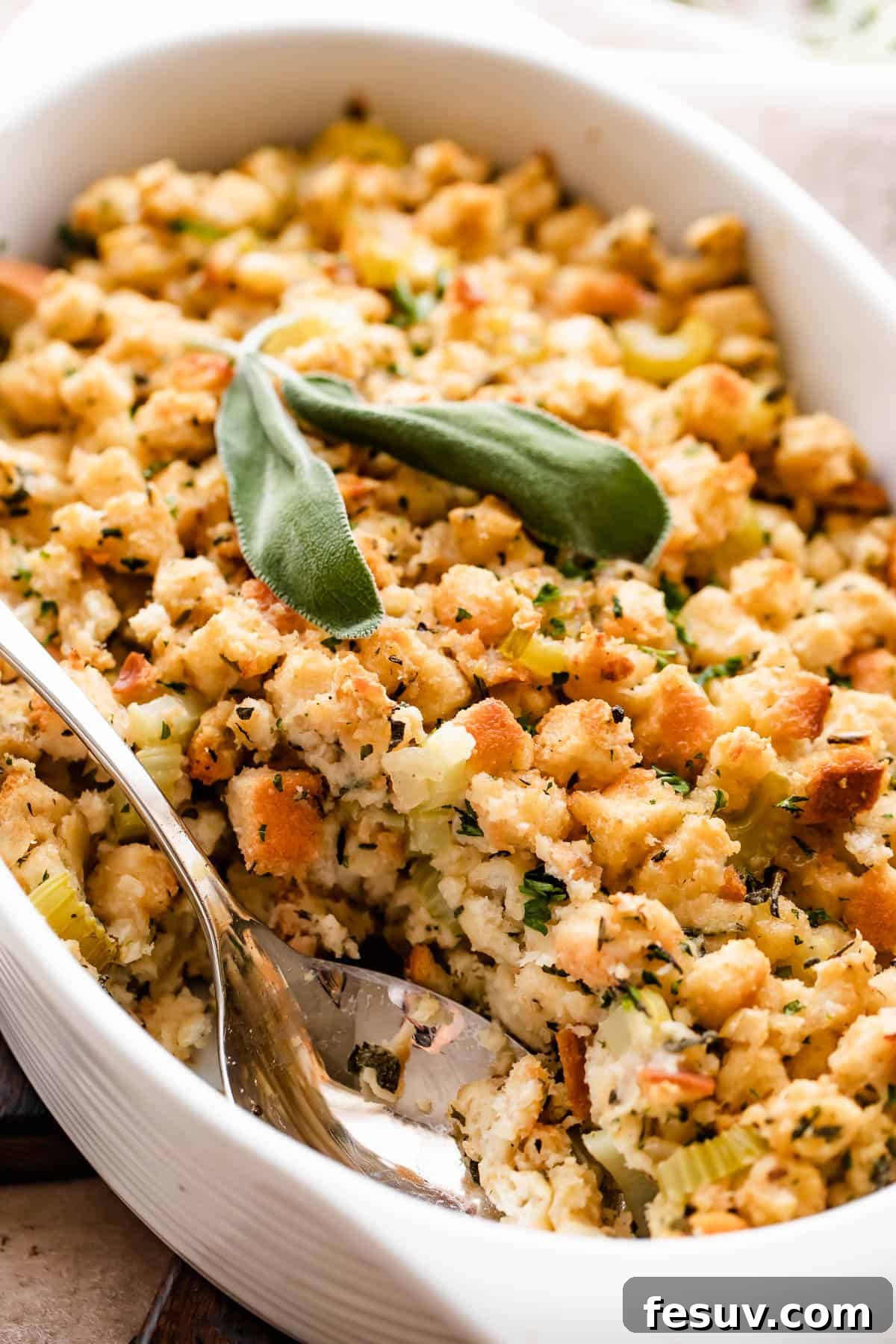
There’s something uniquely comforting and celebratory about a well-made stuffing. For many, it’s the undisputed star of the holiday table, rivaling even the main course. This Easy Herb Stuffing recipe captures that magic, offering a sublime balance of textures and flavors. Each bite delivers the satisfying chew of toasted bread, the subtle crunch of perfectly cooked vegetables, and an explosion of herbaceous notes, all bound together by rich, melted butter and the sophisticated zest of white wine.
Far from being just a side, this homemade stuffing is a testament to the power of simple, quality ingredients. It’s a dish that evokes memories, brings families together, and adds an undeniable warmth to any festive gathering. Whether you’re hosting Thanksgiving, Christmas, or simply craving a taste of home, this recipe ensures a delicious, stress-free experience that will impress even the most discerning palates.
Crafting a Classic: Rich Butter and Aromatic Herbs
Are you a side dish expert, a casserole connoisseur, or simply an aficionado of all things starch, vegetable, and herb? Then you are poised to fall in love with this easy recipe for baked stuffing. It begins with crusty French bread, artfully diced and toasted to perfection, forming the ideal foundation for absorbing all the delicious liquids and flavors. Fresh herbs, vibrant onions, crisp celery, and savory broth unite to create a symphony of tastes that elevates this dish from ordinary to extraordinary.
Unlike traditional methods that involve stuffing poultry, this buttery side dish is baked separately in a casserole. This approach offers significant advantages: it eliminates the risk of undercooked stuffing, ensures your main bird isn’t overcooked and dried out, and allows the stuffing to develop a wonderfully crispy top layer while remaining moist and tender inside. A subtle infusion of garlic and a splash of dry white wine introduce a delightful complexity, reminiscent of classic French culinary techniques, giving this beloved American staple an elegant twist. A couple of whole eggs act as the perfect binder, adding a pleasant richness and contributing to the cohesive, irresistible texture.
Stuffing vs. Dressing: Unraveling the Delicious Debate
The name game can be a bit confusing when it comes to this timeless dish. Depending on your region, you might hear it called “dressing,” “stuffing,” or even “filling.” But is there a real difference that separates these culinary cousins? In essence, not significantly. The core concept remains the same: a savory combination of bread (or sometimes cornbread or rice) moistened with broth and enhanced with aromatic vegetables and herbs.
The traditional distinction dictates that if the mixture is cooked inside the cavity of a bird, it’s referred to as “stuffing.” If it’s baked in a separate dish, it earns the title of “dressing.” However, culinary practices and regional preferences have blurred these lines considerably over time. Many people, myself included, often use the term “stuffing” regardless of whether it’s baked inside or alongside the main course. What truly matters is the irresistible flavor and texture of this beloved side dish, not its technical classification. Call it what you like, as long as you make enough for everyone!
Essential Ingredients for an Unforgettable Herb Stuffing
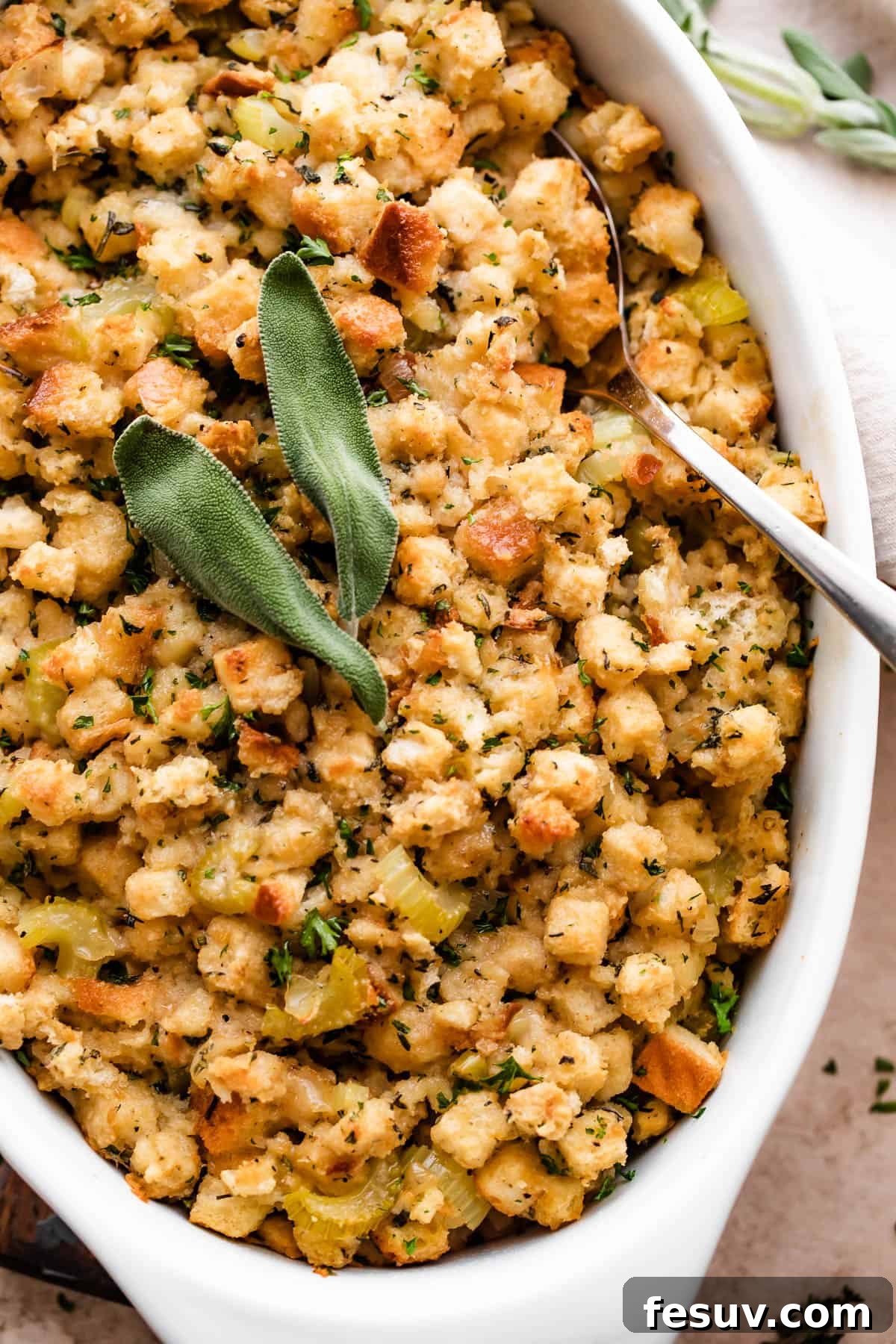
The beauty of homemade stuffing lies in its adaptability, yet the basic recipe is wonderfully straightforward. While countless variations exist, starting with quality ingredients is key to achieving that rich, comforting flavor profile. Here’s a closer look at what you’ll need to create this outstanding Herb Stuffing:
- Bread: The cornerstone of this dish. I highly recommend using a fresh loaf of white French bread. Its slightly crusty exterior and soft, airy interior, when diced into bite-sized cubes and toasted, provide the perfect texture and absorption capacity for all the savory liquids.
- Butter: Real butter is non-negotiable for that authentic, rich flavor. Using unsalted butter gives you complete control over the seasoning, allowing you to adjust the salt content precisely to your taste.
- Onion: A fundamental aromatic for any stuffing. Diced yellow onion, or even white or sweet varieties, adds a crucial layer of savory sweetness and depth as it softens and caramelizes.
- Celery: Chopped celery contributes a subtle, fresh crunch and a complementary aromatic note. Cut the ribs in half lengthwise before chopping into small, uniform pieces for even cooking.
- Garlic: While not universally found in all stuffing recipes, fresh minced garlic is a game-changer here. It infuses the dish with a pungent, mouthwatering aroma and flavor. Four cloves are ideal, but you can adjust to your preference or omit if desired.
- Salt and Pepper: Essential seasonings to enhance all the other flavors. Adjust amounts to taste.
- Wine: A dry white wine is a secret weapon. It deglazes the pan, cuts through the richness of the butter and bread, and imparts a beautiful, nuanced depth of flavor that elevates the entire dish.
- Herbs: The “herb” in Herb Stuffing! A classic blend of fresh parsley, sage, rosemary, and thyme creates an incredibly fragrant and flavorful profile. Think of the famous Simon & Garfunkel song – these herbs are meant to be together! Always opt for fresh herbs if possible, mincing only the leaves for the best taste and texture.
- Broth: Crucial for moistening the toasted bread. Chicken broth is traditional and adds excellent savory notes, ensuring the stuffing isn’t dry.
- Eggs: Two large, whole eggs serve as the binding agent, helping to hold the stuffing mixture together, prevent crumbling, and add a pleasant, custard-like richness.
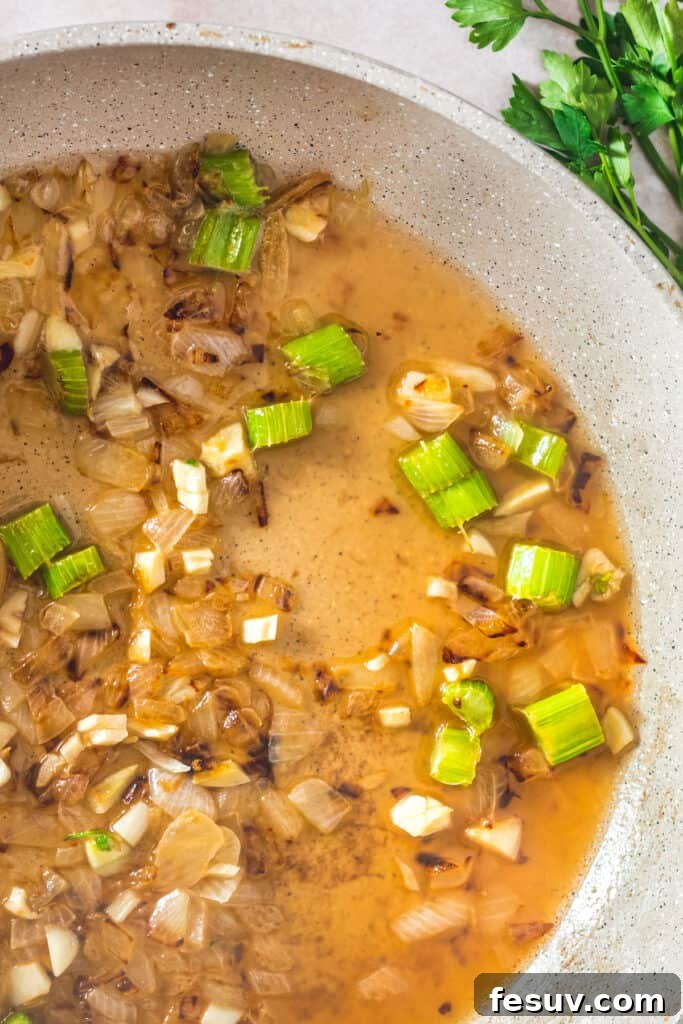
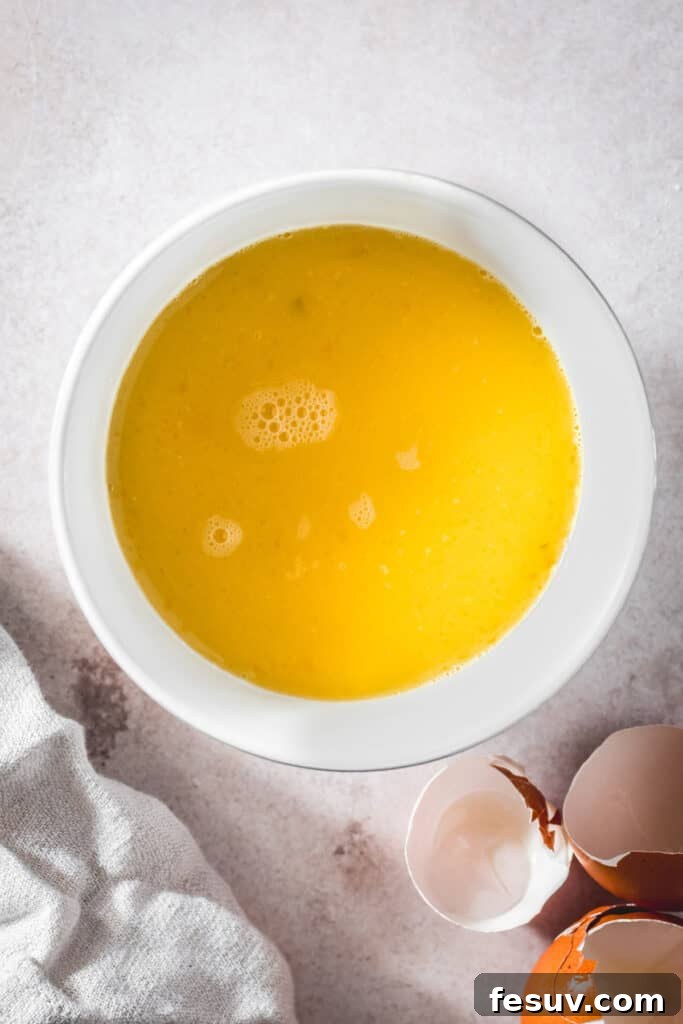
Crafting Your Perfect Homemade Herb Stuffing: A Step-by-Step Guide
Creating homemade stuffing from scratch might sound daunting, but this recipe is incredibly forgiving and simple to follow. It’s essentially a mix-and-bake casserole that yields spectacular results every time. Let’s walk through the process:
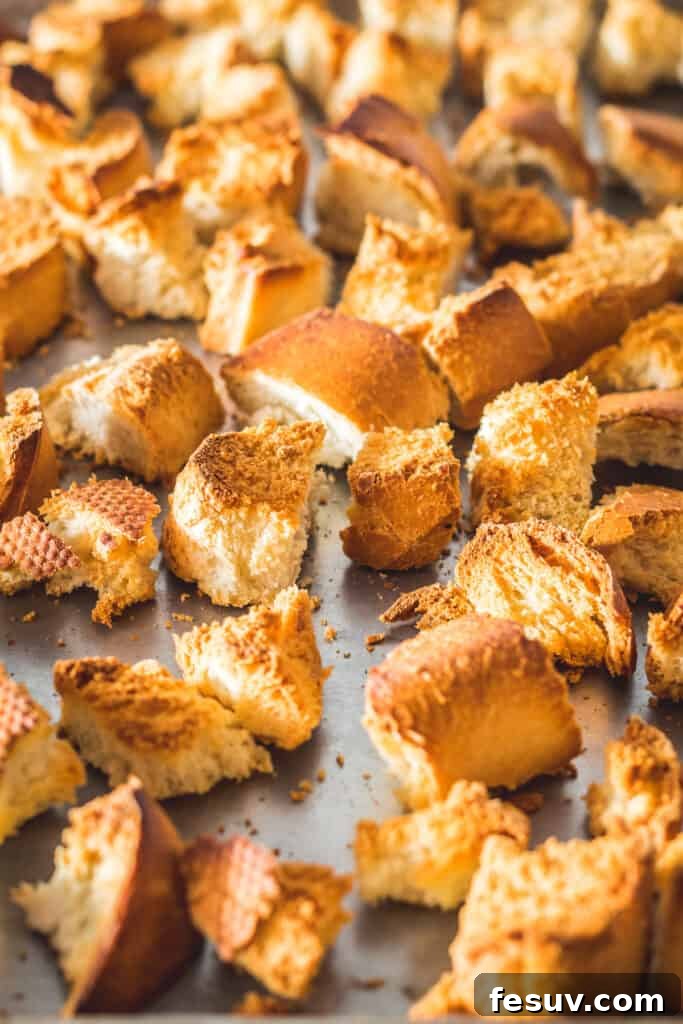
- Toast the Bread Cubes: Begin by preheating your oven to 350°F (175°C). While the oven heats, spread your diced French bread cubes in an even, single layer on a large sheet pan. Once the oven is hot, bake the bread for approximately 10 minutes. The goal here is to dry out and lightly toast the bread, giving it a firm texture that will absorb the liquids without becoming mushy. This crucial step is what prevents soggy stuffing! Once toasted, transfer the cubes to a large mixing bowl and set them aside. Keep the oven on, as you’ll be using it again shortly.
- Cook the Veggies: In a large skillet or pan, melt 2 tablespoons of unsalted butter over medium-high heat. Add the diced onion and chopped celery to the melted butter. Sauté these aromatics, stirring occasionally, until they become tender and just begin to take on a golden hue, typically about 7 to 8 minutes. This process softens their texture and unlocks their sweet, savory flavors. Next, stir in the minced garlic, salt, and black pepper, and continue to cook for another 4 minutes, allowing the garlic to become fragrant. Finally, pour in the dry white wine and let the mixture simmer, stirring until the liquid has reduced by half. This step concentrates the wine’s flavor and deglazes the pan, adding incredible depth to your stuffing base.
- Make the Stuffing Mixture: Carefully pour the fragrant vegetable and wine mixture over the toasted bread cubes in the large bowl. Sprinkle in the minced fresh parsley, sage, rosemary, and thyme. Then, add 1 cup of the chicken broth. Toss everything gently but thoroughly with a large spoon or your hands, ensuring the bread cubes are evenly coated and beginning to absorb the liquids. In a separate small bowl, whisk together the two large eggs with the remaining 1 cup of chicken broth until well combined. Pour this egg-broth mixture over the bread and veggie mixture. Toss once more, making sure all the ingredients are fully incorporated and the bread is moist but not saturated.
- Bake to Perfection: Transfer the entire stuffing mixture into a generously greased baking dish. To achieve that irresistible crispy, buttery topping, dice the remaining ¼ cup of unsalted butter into small pieces and scatter them evenly over the surface of the stuffing. Place the baking dish into your preheated 350°F (175°C) oven and bake for 35 to 40 minutes, or until the top is beautifully browned and the stuffing is heated through and bubbling around the edges. Serve warm and watch it disappear!
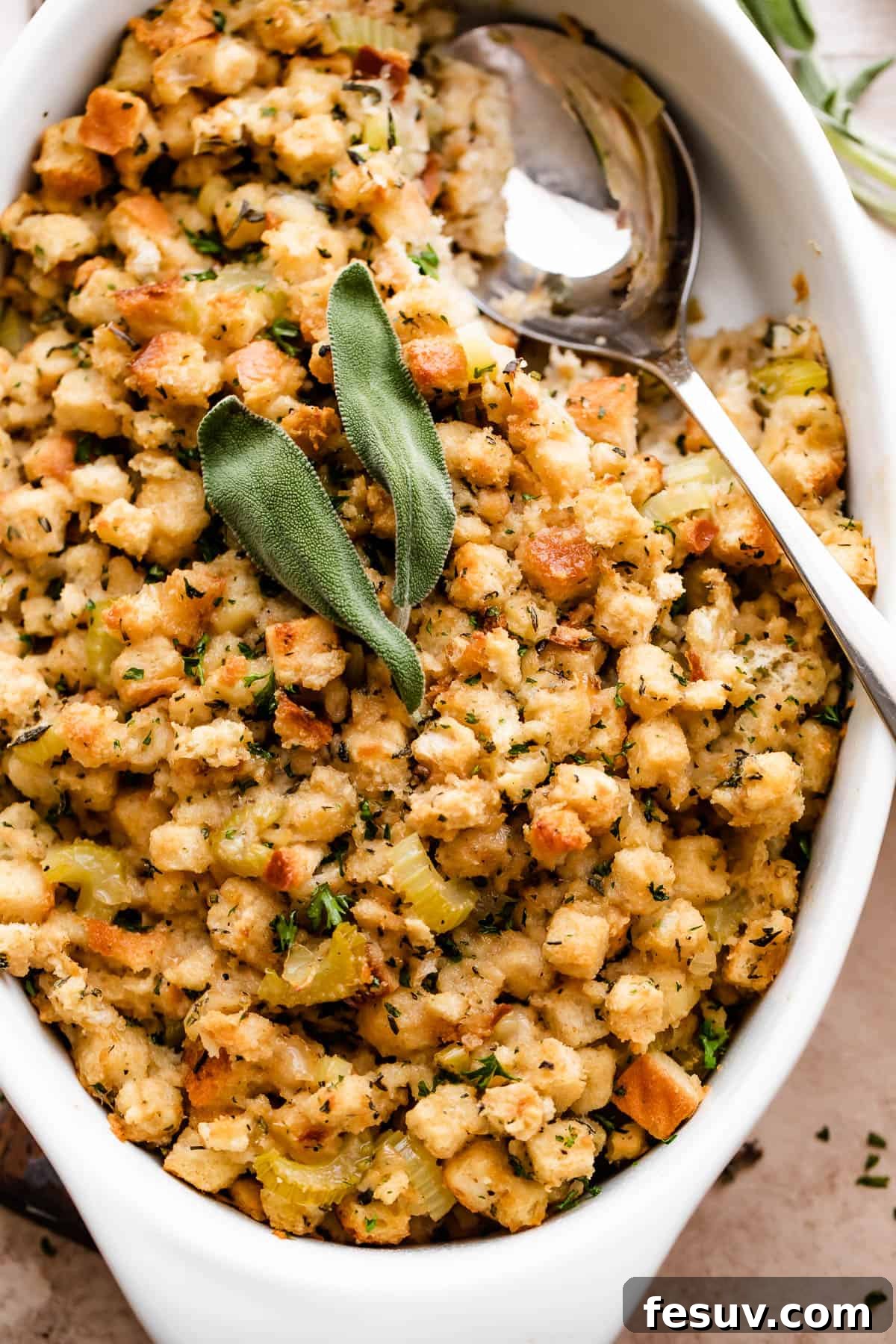
Expert Tips for Stuffing Success Every Time
This recipe provides a fantastic base for delicious homemade stuffing, but a few expert tips can elevate your results even further and help you customize it to your liking. Here’s how to ensure perfect stuffing, every single time:
- Choosing Your Bread Base: While French bread is highly recommended for its texture, feel free to experiment! You can use almost any kind of bread, as long as it’s dried out and toasted to prevent sogginess. Stale bread works perfectly and is often preferred. For a unique twist, try using a combination of half regular white bread and half cornbread, which adds a lovely sweetness and crumbly texture. Artisan sourdough or challah can also lend interesting flavor notes.
- Broth Substitution: Chicken broth provides a classic savory flavor, but for a richer, more specific holiday taste, feel free to substitute it with turkey broth, especially if you’re serving it alongside a turkey roast. Vegetable broth is also an excellent option for a vegetarian version.
- Flavor Boosters & Add-ins: Enhance your stuffing with delightful additions. Crisply cooked, crumbled bacon or savory sausage (sage or fennel sausage is particularly good for a classic holiday aroma) introduces a wonderful meaty depth. For a touch of sweetness and texture, consider adding chopped dried cranberries, apricots, or toasted pecans and walnuts. Sautéed mushrooms or chestnuts can also add an earthy, gourmet touch.
- Make It Vegan or Vegetarian: This recipe is easily adaptable. To make it vegetarian, simply use vegetable broth instead of chicken broth. To go fully vegan, substitute the butter with your favorite plant-based butter alternative and use an egg substitute (such as a flax egg or commercial vegan egg replacer) to bind the mixture. The robust herb and veggie flavors will still shine through.
- Achieving the Perfect Texture: For a softer, more casserole-like stuffing, you can add a little extra broth. For a crispier topping, increase the amount of butter diced over the top or finish with a quick broil in the last few minutes of baking (watch carefully!). Ensure your bread is thoroughly toasted to prevent a gummy texture.
- Presentation Matters: Beyond a traditional baking dish, consider baking your stuffing in muffin tins. This creates individual, perfectly portioned servings with crispy edges all around, making for an elegant and convenient presentation. Alternatively, for a classic “stuffed” turkey look without the associated food safety risks, bake your stuffing separately and then spoon it into the roasted turkey cavity just before serving.
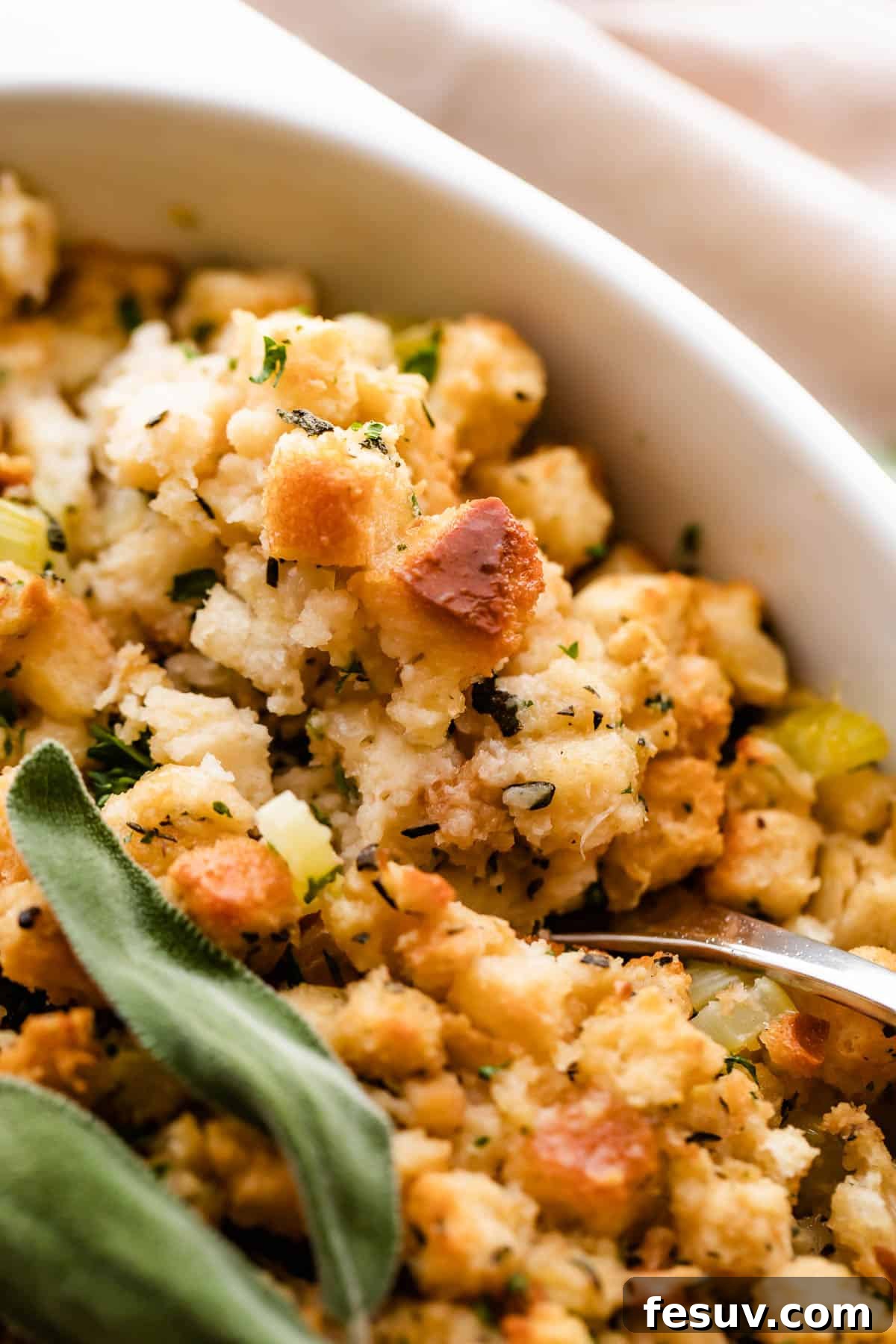
Plan Ahead: Making Your Stuffing in Advance
Holiday cooking can be hectic, so any dish you can prepare ahead of time is a huge bonus. This herb stuffing is an excellent candidate for advance preparation, allowing you to reduce stress on the big day. You can assemble the entire stuffing mixture, including the toasted bread, sautéed vegetables, herbs, broth, and eggs, one day before you plan to bake it. Once mixed, transfer it to your greased baking dish, cover it tightly with plastic wrap or foil, and refrigerate.
When you’re ready to bake, remove the stuffing from the refrigerator about 30 minutes prior to baking. This allows it to come closer to room temperature, ensuring more even cooking. Then, simply proceed with the baking instructions as outlined in the recipe, adding the diced butter on top just before it goes into the oven. This make-ahead option is a lifesaver for busy hosts and ensures fresh, delicious stuffing with minimal last-minute effort.
Creative Ways to Enjoy Leftover Stuffing
While freshly baked stuffing is incredible, many would argue that leftover stuffing is just as good, if not better! A simple reheating with a side of turkey and cranberry sauce is always a winner. Or, if you’re like me, a big bowl microwaved at midnight and enjoyed straight from the kitchen hits differently. But don’t limit yourself to just reheating; leftover stuffing is incredibly versatile and can be transformed into exciting new dishes. Here are a few great ideas to inspire you:
- Savory Waffles: Dust off your waffle maker for a surprisingly delicious breakfast or brunch treat! For every two cups of stuffing, whisk one egg with a splash of milk or extra broth. Stir this into your stuffing mixture. Spread a thin, even layer onto a hot, greased waffle iron and cook until golden brown and heated through. Serve with gravy, a fried egg, or even a dollop of cranberry sauce.
- Ultimate Holiday Sandwiches: Elevate your leftover turkey sandwich to legendary status by adding a few generous spoonfuls of stuffing. It adds incredible flavor and texture. Bonus points for layering with cranberry sauce, a slice of cheese, or a drizzle of warm gravy.
- Stuffing Meatballs or Meatloaf: Give your favorite meatloaf or meatball recipe a holiday twist by substituting some or all of the breadcrumbs with leftover stuffing. The herbs and savory flavors will infuse your meat dish with an amazing depth, creating a truly unique and comforting meal.
- Hearty Stuffing Hash: A stuffing-based skillet hash is fantastic for any meal of the day. Start by sautéing a diced potato or two in a little butter over medium heat until softened and lightly browned. Then, add your leftover stuffing, diced leftover turkey, and a bit more butter if needed. Sauté until everything is heated through and slightly crispy. Season as needed and, for the perfect finish, top with a perfectly fried egg.
Proper Storage and Reheating for Maximum Freshness
To ensure your delicious herb stuffing remains enjoyable days after it’s made, proper storage and reheating are key. Follow these guidelines to keep your leftovers fresh and flavorful:
- Refrigeration: Allow any leftover stuffing to cool completely before storing. Transfer it to airtight containers or sturdy zip-top bags. Stored correctly in the refrigerator, it will remain fresh and safe to eat for up to two days.
- Freezing: For longer storage, leftover stuffing freezes beautifully. Pack cooled stuffing into freezer-safe bags or airtight containers, ensuring as much air as possible is removed to prevent freezer burn. It can be frozen for up to two months. When ready to enjoy, thaw it overnight in the refrigerator before reheating.
- Reheating: To reheat small portions, the microwave is a convenient option. Heat in 1-minute intervals, stirring occasionally, until thoroughly warmed through. For larger quantities or to restore some crispiness, you can reheat leftover stuffing in the oven. Place it in a baking dish, cover with foil (to prevent drying out), and bake at 350°F (175°C) for about 20-30 minutes, or until heated through. For a crispier top, remove the foil for the last 5-10 minutes.
Easy Herb Stuffing Recipe
Toasted French bread forms the base of this Easy Herb Stuffing, made with real butter, fresh herbs, tender veggies, and wine.
Author: Katerina | Easy Weeknight Recipes
Prep Time: 10 minutes
Cook Time: 25 minutes
Baking Time: 40 minutes
Total Time: 1 hour 15 minutes
Servings: 8
Ingredients
- 1 whole loaf (1 pound) white French bread, diced
- ¼ cup unsalted butter plus 2 tablespoons
- 1 large yellow onion, diced
- ½ cup celery, chopped
- 4 cloves garlic, minced
- 1 teaspoon salt
- 1 teaspoon black pepper
- ½ cup dry white wine
- ½ cup flat leaf parsley, minced
- 2 tablespoons fresh sage leaves, minced
- 2 tablespoons fresh rosemary, leaves only, minced
- 2 tablespoons fresh thyme, leaves only, minced
- 2 cups chicken broth
- 2 large eggs
Instructions
- Preheat the oven to 350°F (175°C).
- Place the bread cubes in a single layer on a sheet pan and bake for 10 minutes, or until dry and toasted. Transfer the bread cubes to a large bowl, and set aside.
- In a large sauté pan, heat 2 tablespoons butter over medium-high heat until melted. Add the onion and celery, and cook until the vegetables have softened and begun to lightly brown, about 7 to 8 minutes.
- Add the garlic, salt, and pepper to the vegetables. Sauté for 4 more minutes.
- Add the wine, and allow it to cook until reduced by half, about 5 more minutes.
- Remove the vegetable mixture from the heat. Transfer it to the bowl with the bread cubes. Add the parsley, sage, rosemary, and thyme, along with 1 cup of the chicken broth. Toss well to combine, and set aside.
- In a small bowl, whisk together the eggs with the remaining 1 cup of chicken broth. Pour this over the bread mixture, and toss well to combine.
- Transfer the mixture to a prepared baking dish. Dice the ¼ cup of butter into small pieces, and sprinkle the pieces over the top of the bread mixture.
- Bake for 40 minutes, or until browned on top and hot in the middle. Serve warm.
Nutrition
Calories: 277kcal | Carbohydrates: 36g | Protein: 9g | Fat: 10g | Saturated Fat: 6g | Polyunsaturated Fat: 1g | Monounsaturated Fat: 3g | Trans Fat: 1g | Cholesterol: 61mg | Sodium: 888mg | Potassium: 235mg | Fiber: 2g | Sugar: 2g | Vitamin A: 738IU | Vitamin C: 14mg | Calcium: 72mg | Iron: 3mg
Nutritional info is an estimate and provided as courtesy. Values may vary according to the ingredients and tools used. Please use your preferred nutritional calculator for more detailed info.
More Easy Holiday Side Dishes
No holiday meal is complete without a spread of incredible side dishes that complement your main course. If you loved this Easy Herb Stuffing, be sure to explore these other fantastic recipes that are perfect for any festive occasion:
- Easy Roasted Vegetables: A colorful and healthy addition, simple to prepare and packed with flavor.
- Perfect Homemade Cranberry Sauce: Far superior to canned, this sweet and tart sauce is a must-have accompaniment.
- The Best Sweet Potato Casserole: A decadent and comforting dish, perfect for satisfying your sweet tooth.
Enjoy crafting these delicious sides and making your holiday meals truly unforgettable!