
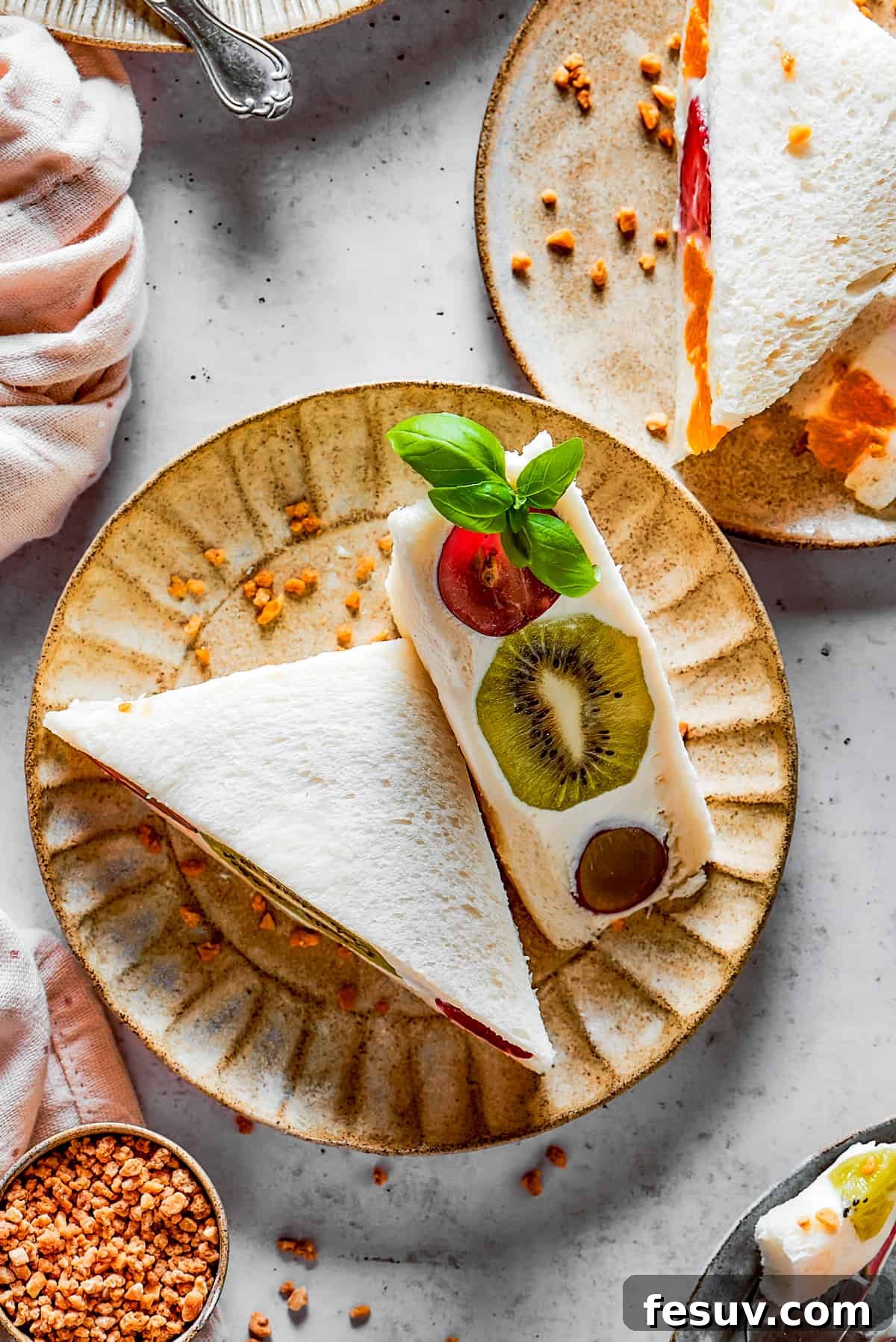
Prepare to be enchanted by a culinary creation that is as delightful to behold as it is to taste: the Japanese Fruit Sando. This exquisite fruit sandwich, a beloved staple in Japan, offers a symphony of light, sweet, and fruity flavors, making it an ideal choice for a sophisticated lunchtime treat, a charming tea party indulgence, or simply a refreshing snack. Its artistic presentation, featuring vibrant fresh fruit nestled within creamy whipped cream and soft white bread, transforms a simple sandwich into an edible work of art. The beauty of the Fruit Sando lies in its versatility—you can effortlessly adapt it with your favorite seasonal fruits, ensuring a unique experience every time.
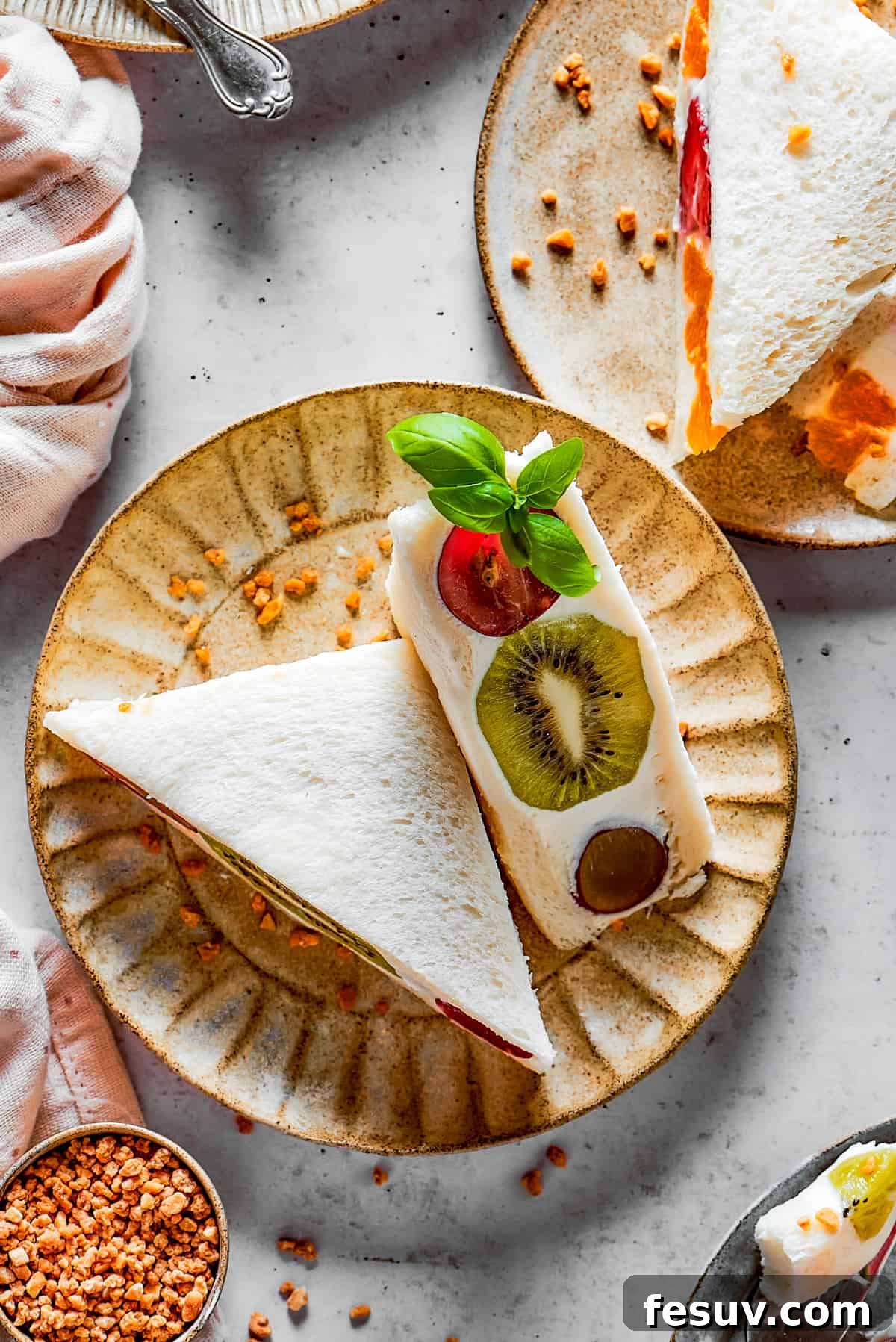
Discover the Delight of Japanese Fruit Sando: A Sweet & Easy Recipe
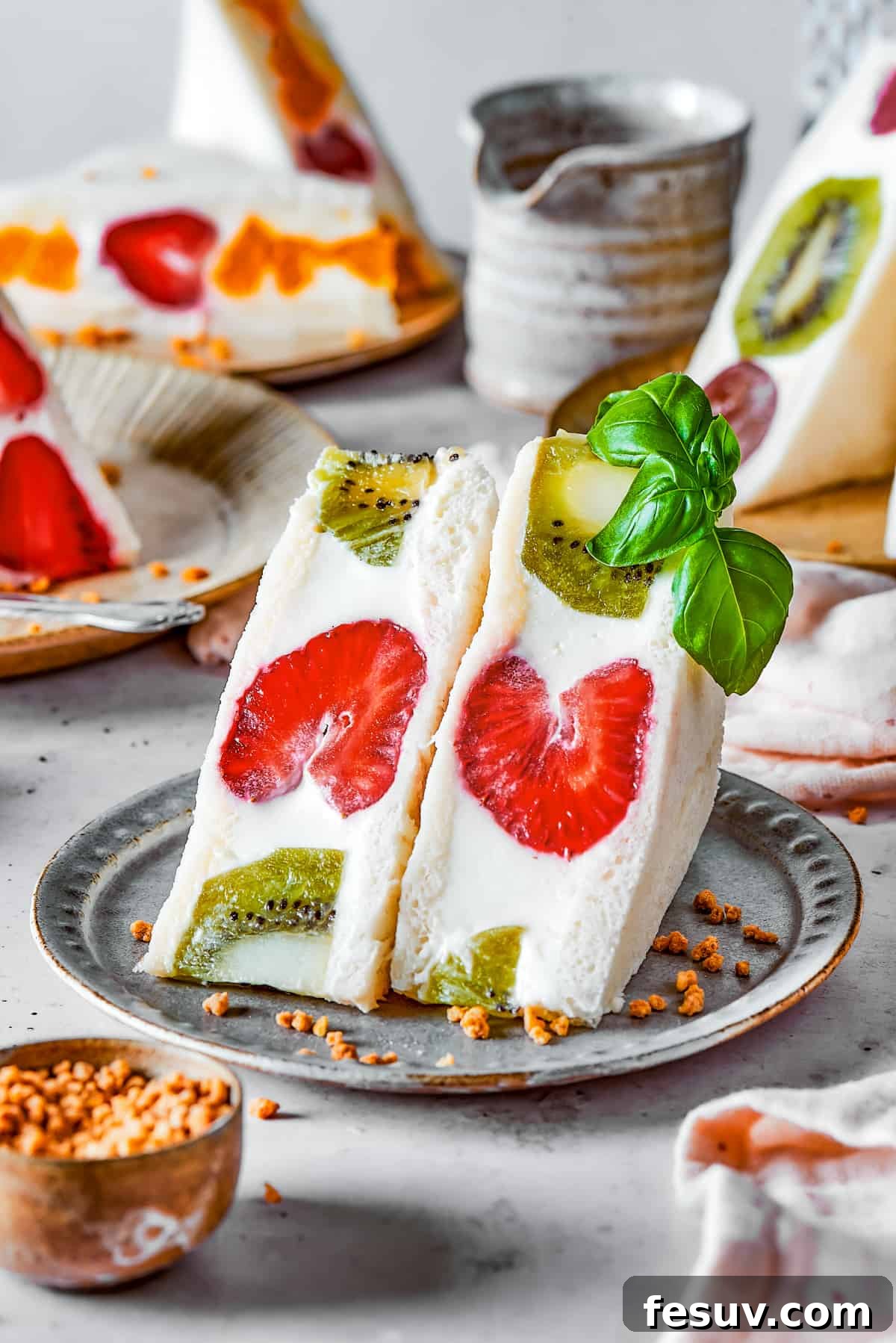
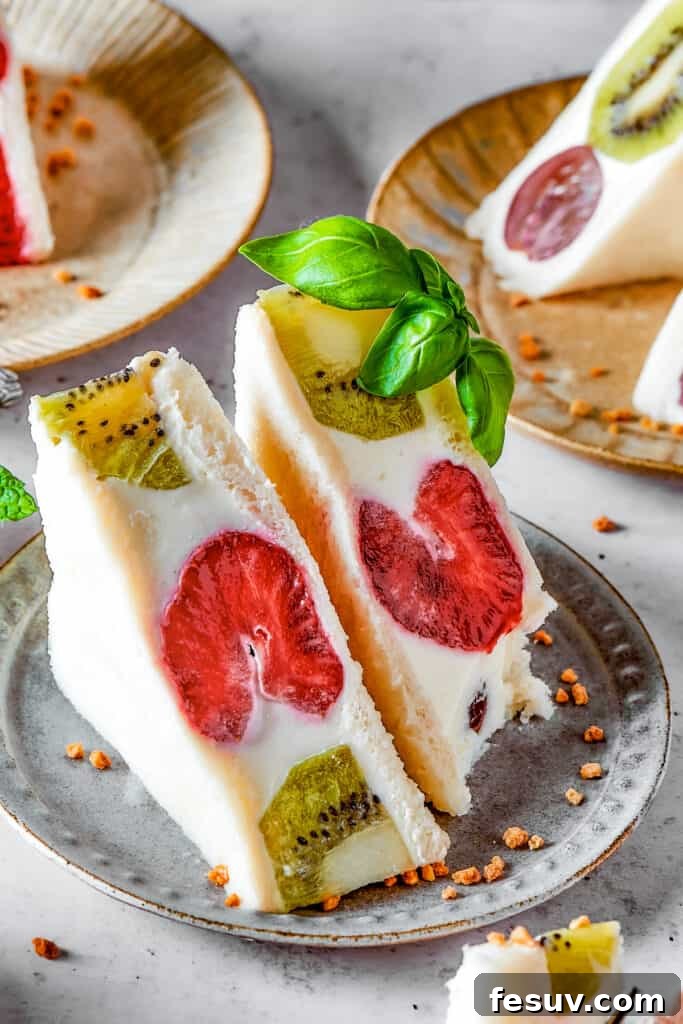
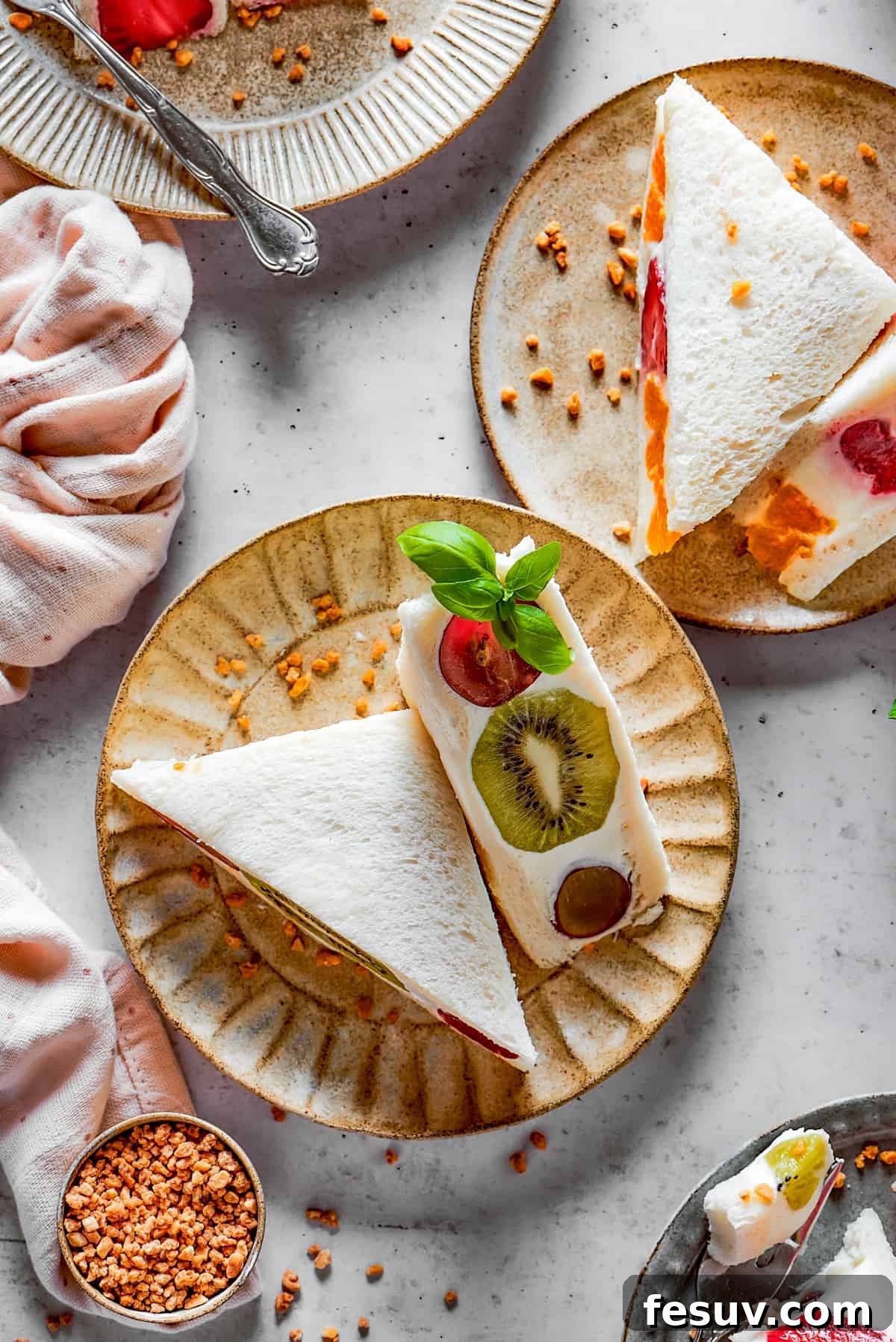
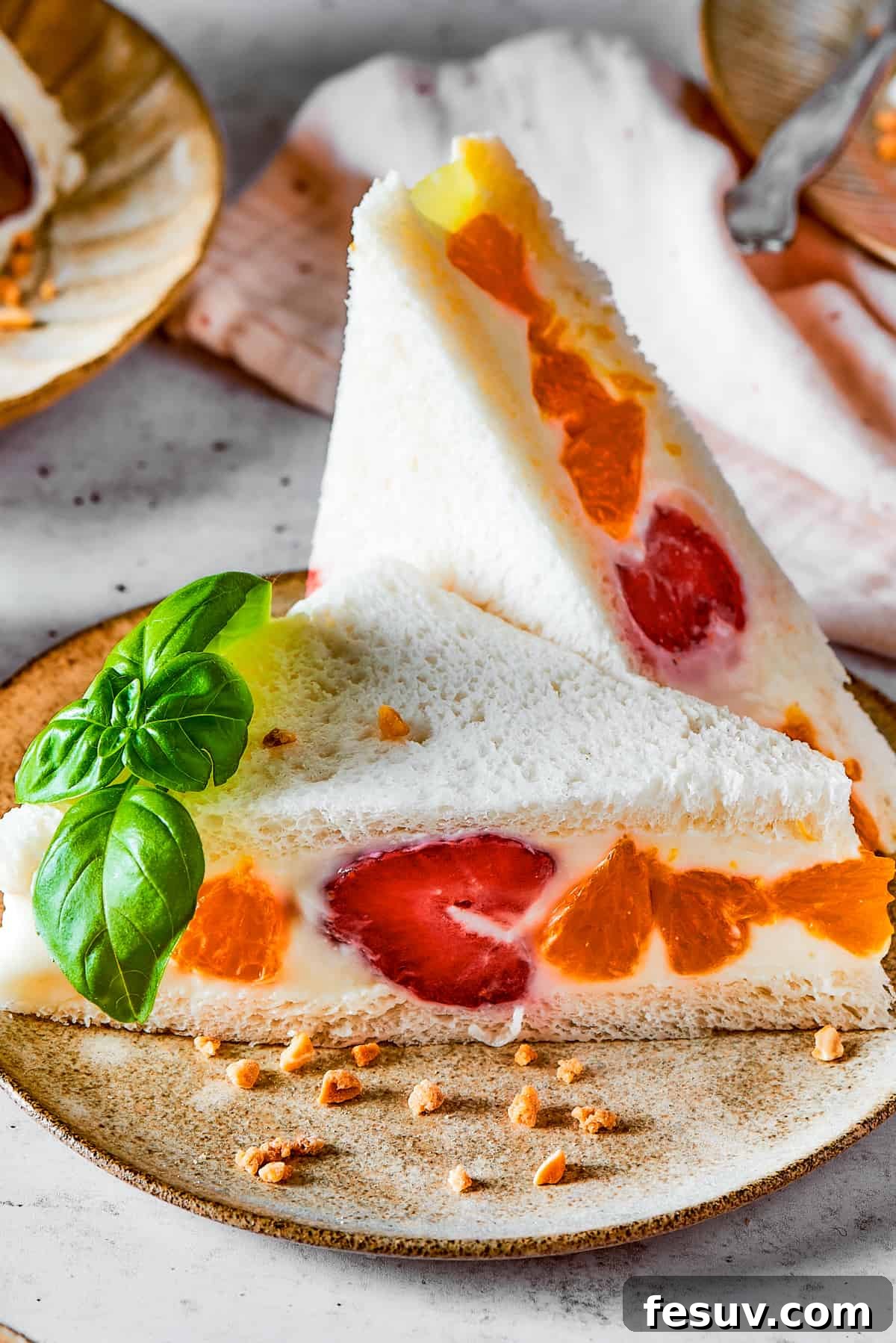
Have you ever encountered the mesmerizing Japanese fruit sandwich, affectionately known as a Fruit Sando? Originating from the bustling convenience stores (konbini) and fruit parlors of Japan, these captivating sandwiches have captivated taste buds worldwide with their minimalist elegance and fresh appeal. Each sando is a carefully constructed masterpiece, comprising pillowy soft white bread, generous layers of snowy-white sweetened whipped cream, and perfectly cut, bite-sized pieces of fresh fruit. The magic truly unfolds when these sandwiches are sliced; the cross-section reveals a stunning mosaic of colorful fruit framed by the cloud-like cream, creating a visual feast that’s as enticing as its taste.
Beyond its aesthetic charm, a Fruit Sando offers a unique balance of textures and flavors. The yielding softness of the bread, the rich smoothness of the whipped cream, and the juicy burst of fresh fruit combine to create a sensation that is both satisfying and incredibly light. It’s a sophisticated yet remarkably simple treat that can elevate any meal or gathering. Whether packed as a delightful lunchbox surprise, presented at a elegant baby shower or bridal brunch, or served as a centerpiece for an afternoon tea party, a homemade Fruit Sando is guaranteed to impress. The best part? Despite its showstopping appearance, crafting these beautiful sandwiches is surprisingly straightforward, requiring only a few basic ingredients and minimal effort. If you can make a classic peanut butter and jelly sandwich, you possess all the skills needed to create this Japanese delicacy!
Why You’ll Love This Fruit Sando Recipe
This Japanese Fruit Sando recipe isn’t just about making a sandwich; it’s about creating an experience. Here’s why this particular sweet treat will become a favorite in your kitchen:
- Light & Refreshing: While indulging your sweet tooth, this fruity sandwich remains remarkably airy and light. The fresh fruit takes center stage, providing a burst of natural sweetness and essential hydration, making it a perfect pick-me-up without feeling heavy. It’s a dessert that refreshes, ideal for warmer weather or a palate cleanser after a savory meal.
- Effortlessly Elegant: Don’t let the stunning, show-stopping appearance fool you. Despite looking like they were crafted by a professional patissier, Fruit Sandos are incredibly easy to assemble. With just a few simple steps, you can create a dessert that looks like it came from a high-end café, proving that elegance doesn’t always require complex techniques.
- Customizable & Creative: This recipe encourages creativity! You have complete freedom to arrange your favorite fruits in any pattern or combination you desire. Experiment with contrasting colors and shapes to make each sando a unique masterpiece. From geometric designs to whimsical arrangements, the possibilities are endless, allowing you to personalize every creation.
- Perfect for Any Occasion: Its versatility makes the Fruit Sando suitable for a wide array of events. It’s a fantastic addition to a picnic spread, an eye-catching item for a brunch buffet, a refined snack for an afternoon tea, or a delightful surprise in a school lunch. Its unique charm makes it a conversation starter and a memorable treat for guests of all ages.
- Make-Ahead Marvel: Planning ahead is a breeze with Fruit Sandos. Yes, that’s right! As long as you select fruits that are firm and not excessively watery, you can prepare these delicious sandwiches a day in advance. Simply wrap them tightly in plastic wrap and store them in your refrigerator, ready to be sliced and served when needed, without compromising on freshness or flavor.
Essential Ingredients for Your Perfect Fruit Sando
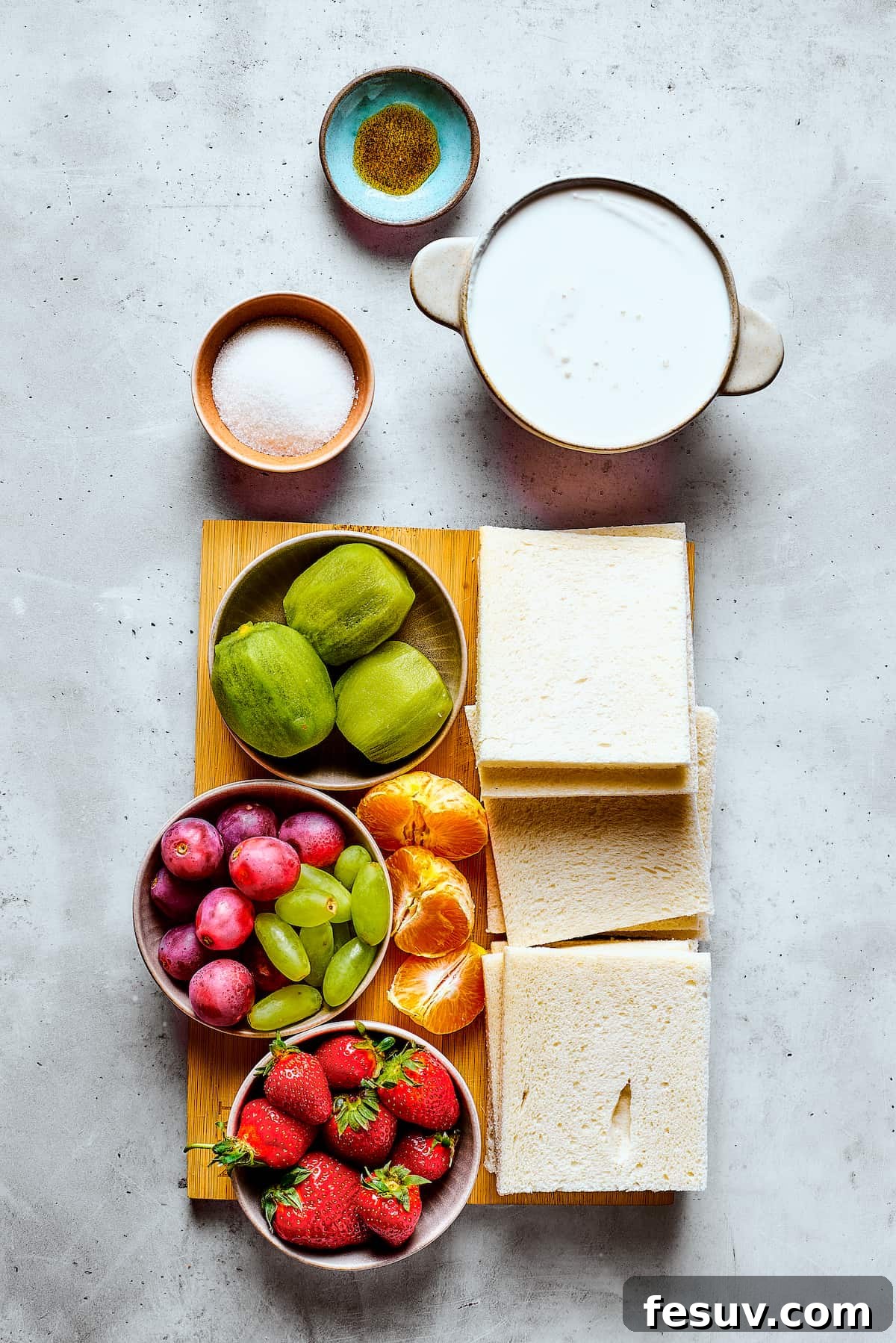
Crafting the perfect Japanese Fruit Sando relies on selecting the right components. Each ingredient plays a crucial role in achieving that delightful balance of flavor and texture:
- Bread: The foundation of any good sando is the bread. For an authentic experience, use soft white sandwich bread, ideally Japanese milk bread (Shokupan), which is renowned for its exceptional softness, slight sweetness, and fluffy texture. If Shokupan isn’t available, any high-quality, ultra-soft white bread will work. It’s essential to trim off the crusts to ensure clean edges and a uniform, appealing appearance.
- Heavy Whipping Cream: This is the heart of the creamy filling. You’ll need heavy whipping cream (with at least 36% fat content) to create a stable, airy, and rich whipped cream that holds its shape beautifully. Ensure it’s very cold before whipping for the best results.
- Sugar: Granulated sugar or caster sugar is used to sweeten the whipped cream, balancing the richness and complementing the natural sweetness of the fruit. Adjust the amount to your taste; some prefer a less sweet cream to let the fruit shine, while others enjoy a sweeter indulgence.
- Vanilla Extract: A hint of pure vanilla extract elevates the flavor of the whipped cream, adding a warm, aromatic note. While optional, it deepens the cream’s profile and creates a more cohesive taste experience.
- Fresh Fruit: The star of the show! An assortment of fresh, ripe fruits is key. Excellent choices include vibrant strawberries (halved or quartered), thinly sliced kiwis, seedless grapes (halved), and juicy mandarin oranges. Consider fruits with contrasting colors and textures for visual appeal and a dynamic flavor profile.
How to Make a Fruit Sando: A Step-by-Step Guide
Making a Japanese Fruit Sando is a delightful and surprisingly simple process. The key steps involve careful layering, a tight wrap, and a crucial chilling period to ensure your sandwiches are perfectly firm and visually stunning when cut. Follow these steps for an exquisite result:
- Step 1: Prepare Your Ingredients. Begin by preparing your bread. Using a sharp knife, such as a bread knife, carefully trim off all the crusts from your white sandwich bread slices. Aim for clean, straight edges to ensure a tidy final product. Next, wash and thoroughly dry your chosen fruits. Prepare them by slicing larger fruits like strawberries or kiwi into desired shapes, remembering how they will appear in the cross-section.
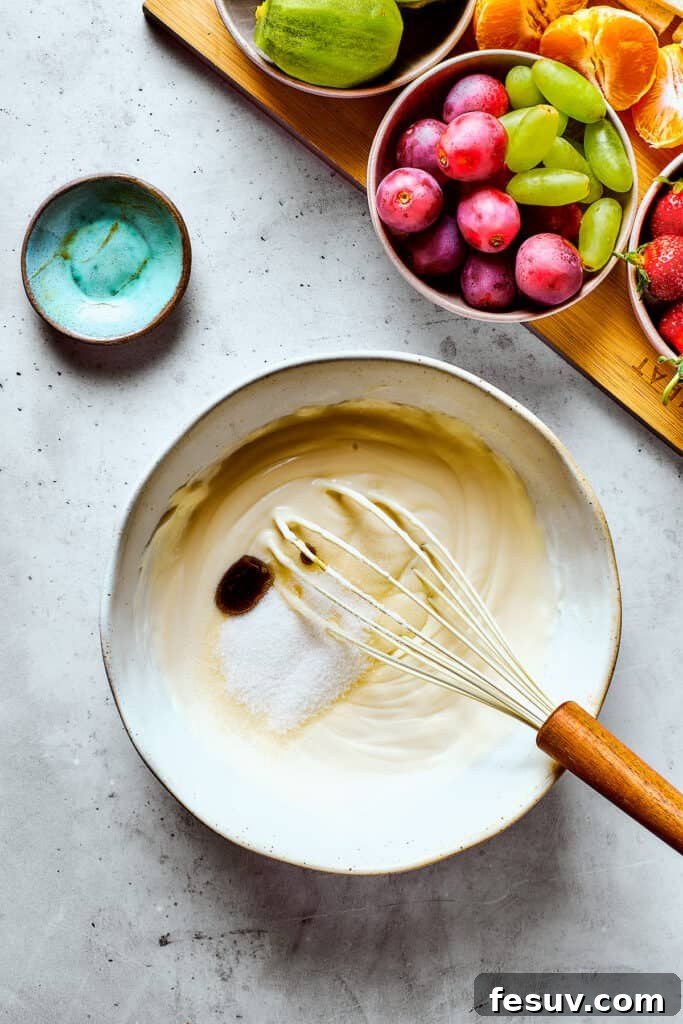
- Step 2: Master the Whipped Cream. In a chilled mixing bowl (preferably a metal bowl chilled in the freezer for 10-15 minutes), combine the heavy whipping cream, granulated sugar, and vanilla extract. Using an electric mixer on medium-high speed, whip the mixture until it becomes light, fluffy, and forms stiff peaks. Stiff peaks mean that when you lift the beaters, the cream holds its shape firmly without collapsing. Be careful not to over-whip, or you risk turning it into butter.
- Step 3: Assemble with Artistry. Lay out your trimmed bread slices on a clean work surface. Spread a thin, even layer of the prepared whipped cream on each slice. This initial layer acts as a barrier and ensures the fruit adheres well. Now comes the artistic part: arrange your prepped fruit on the bread. Think about the diagonal cut you’ll make later. You want to strategically place the fruit so that when the sandwich is sliced diagonally, a beautiful, clear pattern of the fruit’s interior is revealed. Use a generous amount of fruit to fill the space. Once the fruit is arranged, spoon another generous amount of whipped cream over the fruit, gently pressing it down. Ensure the cream completely surrounds and covers all the fruit pieces, filling any gaps. This helps to secure the fruit and creates a solid core for the sandwich.
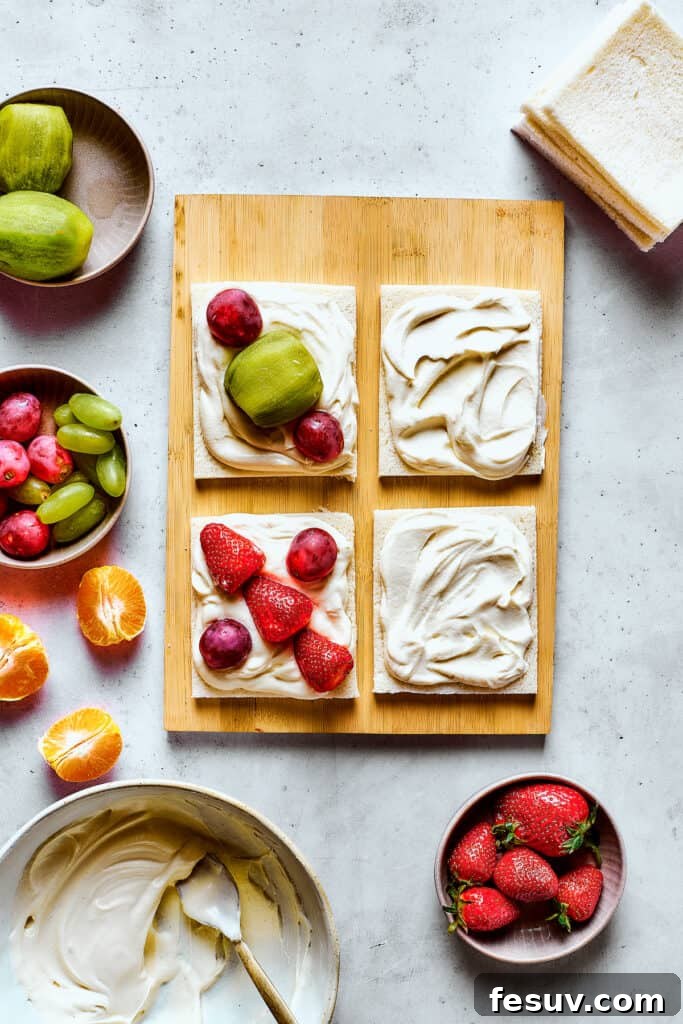
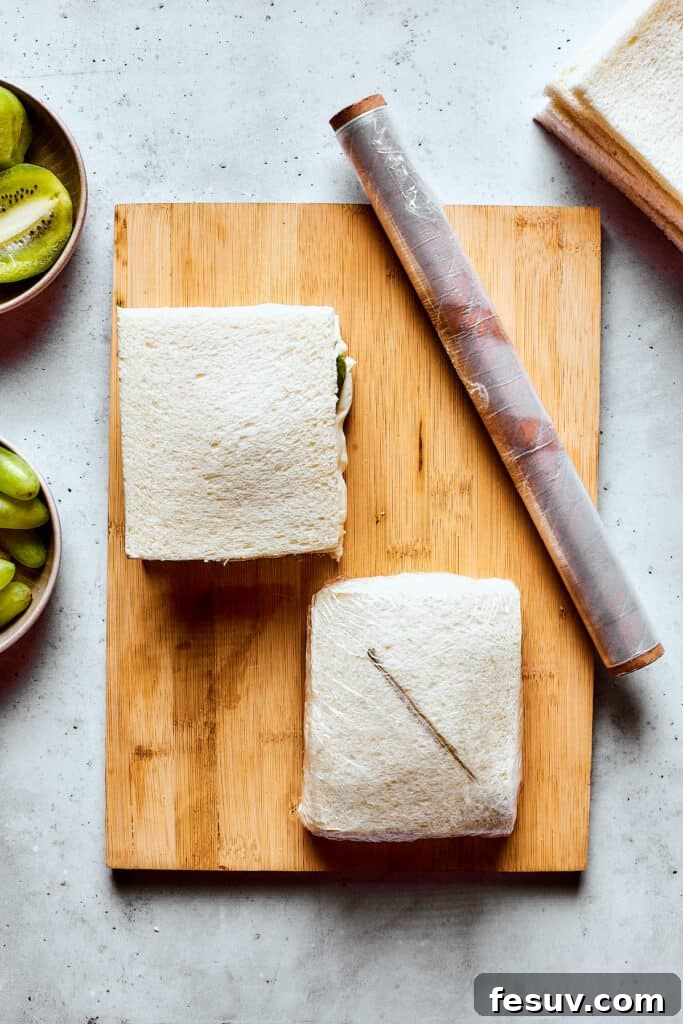
- Step 4: The Crucial Chill. Carefully place the remaining bread slices on top of the cream-laden fruit, gently pressing down to form the complete sandwich. Individually wrap each sandwich tightly in plastic wrap. This tight wrapping is vital as it helps to compress the sandwich evenly and keep it intact during chilling. For added precision, you can use a food-safe marker to draw a line on the plastic wrap indicating where you intend to cut the sandwich later, ensuring your fruit pattern is perfectly centered. Place the wrapped sandwiches on a flat tray or plate. To achieve beautifully even and compact sandwiches, place another plate or a lightweight cookie sheet on top of the wrapped sandwiches, then add a gentle weight (such as a couple of soup cans, bags of beans, or sturdy coffee mugs). This pressing step helps to firm up the cream and fruit, preventing gaps. Chill the pressed sandwiches in the refrigerator for at least one hour, or ideally, for a few hours.
- Step 5: Cut and Serve Beautifully. When you’re ready to serve, carefully unwrap each chilled sandwich. Place it on a cutting board. Using a very sharp, clean knife (a serrated bread knife works wonders), slice the sandwich according to your marked line or preferred diagonal. For the cleanest cuts, wipe your knife clean with a damp cloth between each slice to prevent cream and fruit residue from smearing. Arrange the gorgeous fruit sando halves on a platter, showcasing their vibrant cross-sections. Serve immediately and enjoy the exquisite taste and stunning presentation!
Expert Tips for Fruit Sando Perfection
While making this delightful sweet sandwich is quite simple, a few expert tips can elevate your Fruit Sando from good to absolutely perfect. Keep these pointers in mind for the best results:
- Timing is Everything: Don’t rush the process! Allocate sufficient time for each stage: whipping the cream, meticulously prepping and drying the fruit, thoughtfully arranging the fruit patterns, and, most importantly, the crucial chilling period. Budgeting a little more time than you anticipate will ensure a stress-free and enjoyable preparation, leading to a superior final product.
- Achieving Stiff Peaks in Whipped Cream: The texture of your whipped cream is paramount. It’s vital to whip the heavy cream until it reaches firm, fluffy, and stiff peaks. This means that when you lift your beaters, the cream holds its shape without drooping. If you under-whip, the cream will be too loose, leading to soggy sandwiches. If you over-whip, the cream will become grainy and separate, transforming into butter instead of a light, airy filling. Ensure your cream, bowl, and beaters are very cold before starting for optimal whipping.
- Choosing Your Fruits Wisely: Not all fruits are created equal for Fruit Sandos. Opt for fruits that are firm, ripe, and relatively low in water content. Berries, kiwi, mango, and mandarin segments are excellent choices. Avoid overly ripe or mushy fruits, as they can release too much moisture and make the bread soggy, especially during the chilling process. Dry your fruits thoroughly after washing to prevent excess water.
- The Art of Arranging Fruit: The visual appeal of a Fruit Sando comes from its perfectly revealed cross-section. Before placing your top slice of bread, envision where you plan to cut the sandwich. Arrange your fruits strategically along that anticipated cut line to create a striking pattern. This foresight ensures each sliced piece is a beautiful display of color and form.
- Optimal Chilling Time: The chilling step is non-negotiable. You need to chill the sandwiches for at least an hour to allow the cream to firm up and the sandwich to set properly. This also helps the flavors meld together. For an even firmer and easier-to-cut sandwich, you can chill them for up to two days. Just remember to use firm, non-watery fruits for longer storage.
- Cutting Techniques for a Flawless Reveal: For the cleanest, most precise cuts that show off your artistic fruit arrangement, use a very sharp, serrated knife (like a bread knife) that you’ve run under hot water and then wiped dry. Clean the knife between each slice to avoid smearing cream or fruit juices, ensuring each piece is picture-perfect.
Creative Variations & Customization Ideas
While the classic Fruit Sando is a masterpiece in itself, its simplicity lends itself beautifully to creative variations. Feel free to experiment and make these sweet sandwiches truly your own:
- Fruit Combinations: Go beyond the usual strawberries and kiwi! Explore tropical fruits like thinly sliced mango, pineapple, or passion fruit. Berries such as blueberries, raspberries, and blackberries add vibrant color and tangy notes. Consider seasonal fruit platters for inspiration, mixing and matching for unique flavor profiles and visual appeal.
- Flavored Whipped Cream: Infuse your whipped cream with different flavors. A touch of matcha powder can give it an earthy, sophisticated twist. Cocoa powder creates a chocolatey indulgence, while lemon or orange zest can add a bright, citrusy zing. A splash of liqueur, like Grand Marnier or a fruit cordial, can also provide a subtle adult flavor.
- Bread Alternatives: While soft white bread is traditional, don’t hesitate to try other options. Brioche bread offers a richer, buttery taste that pairs wonderfully with fruit and cream. Even a subtle whole wheat bread can add a nuttier flavor if you prefer. Just ensure the bread is soft and fresh.
- Sweetener Alternatives: Instead of granulated sugar, you can use powdered sugar (confectioners’ sugar) for an even smoother whipped cream texture. Maple syrup or honey can also be used for a more natural sweetness, though they might slightly alter the consistency of the cream.
- Presentation Ideas: Beyond the diagonal cut, consider cutting your sandos into small squares or triangles for bite-sized delights. You can also use cookie cutters to create fun shapes for children’s parties. A sprinkle of powdered sugar or a fresh mint sprig on top can add a final decorative touch.
Serving Suggestions: More Than Just a Dessert
While Fruit Sandos undoubtedly lean into dessert territory with their sweet and creamy nature, their light and refreshing qualities also make them a fantastic addition to various meals. Think of them as a delightful, sweet side for lunch or brunch. Here are some pairing suggestions to round out your meal:
- Brunch & Breakfast Pairings: Fruit Sandos are a natural fit for brunch. Pair them with savory breakfast staples like crispy bacon or a fluffy omelet for a balanced sweet and salty experience. The lightness of the sando cuts through the richness of breakfast meats, creating a harmonious spread.
- Light Lunch Companions: For a light and satisfying lunch, serve your Fruit Sando alongside a fresh, vibrant salad. A crisp green salad with a citrus vinaigrette or a protein-packed chicken salad would complement the sweetness beautifully. It’s an unexpected but incredibly refreshing combination.
- Pasta Salad: Any cold pasta salad would be a superb partner for a fresh fruit sando. The savory and often tangy notes of a pasta salad, like a mouthwatering Creamy Shrimp Pasta Salad, provide a wonderful contrast to the sweet fruit and cream. It’s a summery, light, and filling duo all at once.
- Crispy Bacon: Crisp, meaty bacon is always a hit, so if you’re hosting brunch or a casual lunch, definitely add this to the menu. My Crispy Oven Baked Bacon method takes all the hassle out of making it, ensuring perfectly crunchy strips every time.
- Eggs, Any Way: Eggs are a staple at my house, and we like them every way you can serve them! For a truly crowd-pleasing option that will make mouths water, make a batch of Classic Deviled Eggs. Their rich, savory flavor and creamy texture create a delightful contrast with the sweet Fruit Sando.
- Afternoon Tea Delights: Fruit Sandos are practically tailor-made for afternoon tea. Serve them alongside traditional scones with jam and clotted cream, delicate finger sandwiches, and an assortment of pastries for a truly elegant spread. Their visual appeal makes them a standout item on any tea tray.
Storing Your Fruit Sando for Freshness
Proper storage is key to maintaining the freshness and integrity of your Japanese Fruit Sando, especially if you’re making them ahead of time. Here are the best practices for storing this delicate treat:
- As previously mentioned, you can store a Fruit Sando wrapped tightly in plastic wrap directly in your refrigerator. It will keep well for anywhere from one hour up to two days. For optimal freshness and to prevent sogginess when storing for longer periods (e.g., overnight or for two days), it’s crucial to use firm, non-watery fruits. Berries, especially whole and uncut berries, tend to hold up very well. Avoid fruits that oxidize quickly or release a lot of moisture, like very ripe bananas or some melon varieties, as they can discolor or make the bread and cream soggy.
- Do not attempt to freeze a Fruit Sando. The bread will become damp and watery upon thawing, and the whipped cream’s texture will likely become icy and lose its light, fluffy consistency. Fruit Sandos are best enjoyed fresh and chilled from the refrigerator.
- Always ensure your sandwiches are wrapped very snugly in plastic wrap to prevent air exposure, which can dry out the bread and potentially cause the cream to absorb refrigerator odors.
Frequently Asked Questions (FAQ)
Here are some common questions about making and enjoying Japanese Fruit Sandos:
- What kind of bread is best for Fruit Sando?
The best bread is Japanese milk bread, known as Shokupan, due to its incredibly soft, fluffy texture and subtle sweetness. If Shokupan is unavailable, any high-quality, very soft, crustless white sandwich bread will work well. The key is its pliability and neutral flavor that won’t overpower the fruit and cream.
- Can I use store-bought whipped cream?
While convenient, store-bought aerosol whipped cream is generally not recommended for Fruit Sandos. It tends to be less stable and can deflate or become watery, leading to soggy sandwiches. It’s best to use fresh heavy whipping cream and whip it yourself for the ideal firm and fluffy texture that holds up well.
- How long do Fruit Sandos last?
When properly wrapped and refrigerated, Fruit Sandos are best consumed within 1-2 days. The freshness largely depends on the type of fruit used. Fruits that don’t release much moisture will extend their shelf life, while very juicy or delicate fruits might make the sandwiches best enjoyed within a day.
- What fruits should I avoid in Fruit Sandos?
Avoid fruits that are overly ripe, mushy, or have a very high water content, such as watermelon or very ripe tomatoes (botanically a fruit!). These can make the bread soggy quickly. Also, fruits that brown easily, like apples, should be avoided unless treated with lemon juice, though this might introduce an unwanted flavor. Stick to firm, colorful, and less watery options.
- Is Fruit Sando a breakfast, snack, or dessert?
Fruit Sando is incredibly versatile! In Japan, it’s commonly found as a snack or light breakfast item in convenience stores. Its sweet profile also makes it a perfect light dessert, and its elegant appearance makes it ideal for brunches or afternoon tea parties. It truly fits into any category where you desire a fresh, sweet treat.
Fruit Sando
by Katerina | Easy Weeknight Recipes
A Japanese Fruit Sando is so light, sweet, and fruity that it’s the perfect lunchtime treat or tea party indulgence.
Prep Time: 15 minutes
Chill Time: 1 hour
Total Time: 1 hour 15 minutes
Servings: 4
Ingredients
- 8 slices white bread, crusts trimmed off
- 1½ cups heavy cream
- 2 tablespoons granulated sugar
- 1 teaspoon pure vanilla extract
- assorted fruits, for serving, such as strawberries, kiwi, grapes, and mandarins
Instructions
- Use a sharp knife to trim off the crusts of the bread, creating clean edges.
- In a mixing bowl, whip the heavy cream using an electric mixer on medium speed until it thickens. Add the sugar and vanilla extract, then continue whipping until stiff peaks form. Set aside.
- Lay out 8 slices of bread on a clean work surface and spread a thin layer of heavy cream on each.
- Arrange a layer of fruits on top, covering them evenly. You can mix and match different fruits according to your preference.
- Take the whipped cream mixture and spoon it over the fruit layer, spreading it evenly to cover the entire surface.
- Place the remaining four slices of bread on top of the cream layer, pressing down gently.
- Wrap firmly with plastic wrap and put the fruit sandwiches on a plate or sheet pan.
- Make sure to mark the direction of the diagonal fruit line, as this will guide you when cutting the sandwich later.
- Place another plate or sheet pan on top of the sandwiches, and place something heavy and firm on top to press them evenly. Allow the sandwiches to rest in the refrigerator for at least an hour.
- Cut the sandwiches into desired shapes, such as triangles or rectangles. You can also leave them as whole sandwiches if you prefer.
- Serve the Fruit Sando immediately, or refrigerate for a few hours to allow the flavors to meld together.
Notes
- Timing: Keep in mind that you will need enough time to whip the cream, prep the fruit, arrange the patterns, and chill the sandwiches. Budget more time than you think you’ll need for this, so you don’t feel rushed.
- Whipping the Cream: It is important to whip the cream to stiff, fluffy peaks (in other words, the cream holds its shape when you lift the beaters out, and doesn’t sink back down). If you under-whip, the sandwiches will be soggy. If you over-whip, you will end up with grains of butter instead of whipped cream!
- Make-Ahead: You need to chill the sandwiches for at least an hour to firm up. You can actually chill them for up to two days, if you prefer – but just be sure to use firm, un-mushy fruit that will not become watery or soft.
- Cutting: I cut my sandwiches on the diagonal, but you can cut them however you like: in half, into squares, or into small triangles. You can even serve the sandwiches whole.
Nutrition facts are estimates only.
Nutrition
Calories: 566kcal | Carbohydrates: 59g | Protein: 8g | Fat: 34g | Saturated Fat: 21g | Polyunsaturated Fat: 2g | Monounsaturated Fat: 8g | Trans Fat: 0.01g | Cholesterol: 101mg | Sodium: 272mg | Potassium: 303mg | Fiber: 4g | Sugar: 31g | Vitamin A: 1849IU | Vitamin C: 4mg | Calcium: 173mg | Iron: 2mg
Nutritional info is an estimate and provided as courtesy. Values may vary according to the ingredients and tools used. Please use your preferred nutritional calculator for more detailed info.
The Japanese Fruit Sando is more than just a sweet treat; it’s a celebration of simplicity, fresh flavors, and artistic presentation. With its soft bread, luxurious whipped cream, and vibrant fruit, it offers a refreshing escape that delights both the eyes and the palate. Whether you’re making it for a special occasion or simply to brighten a mundane day, this recipe provides an easy path to creating a truly beautiful and delicious experience. So, gather your favorite fruits, whip up some cream, and embark on the delightful journey of crafting your very own perfect Fruit Sando. You’ll be amazed at how such a simple combination can yield such an unforgettable taste.