
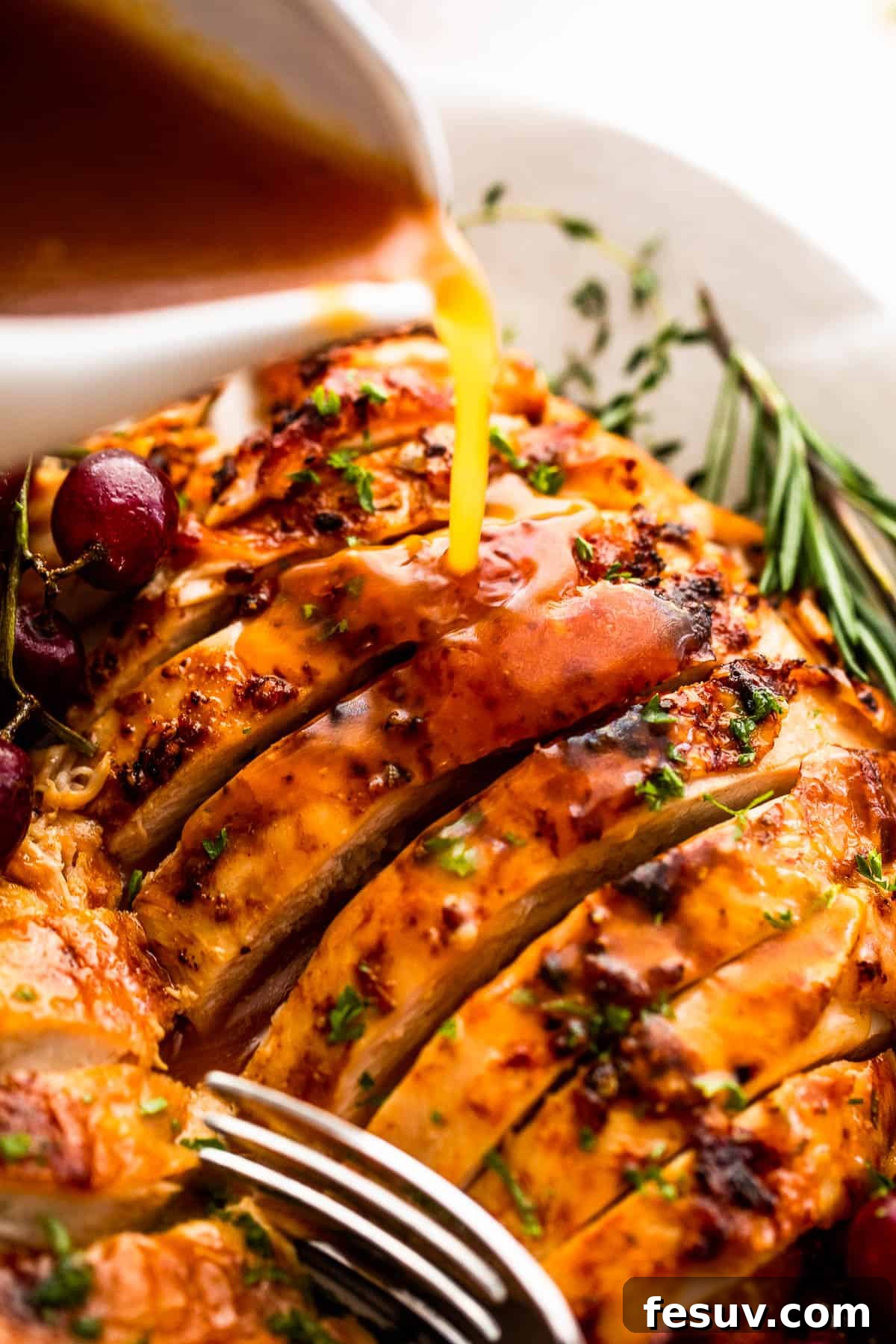
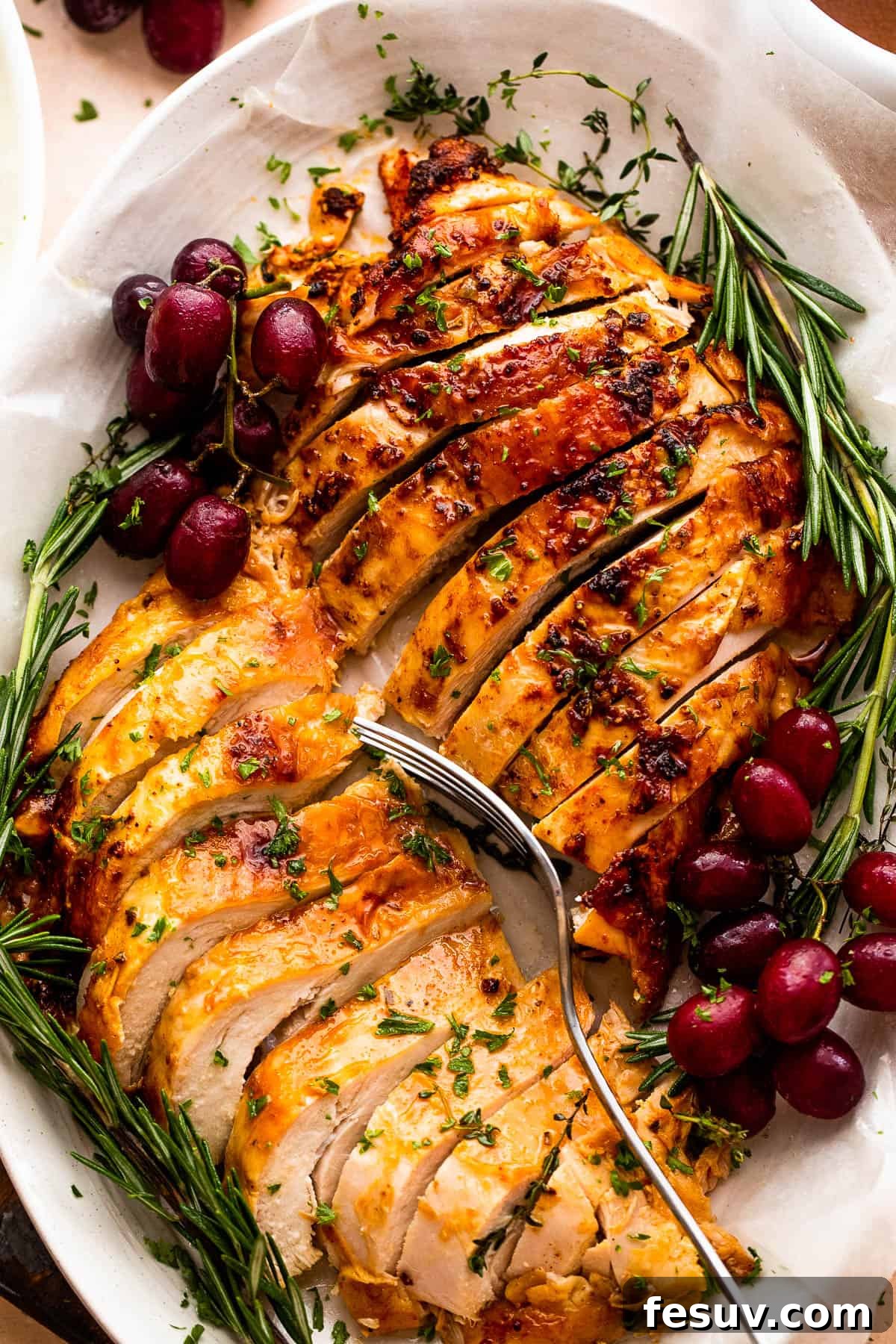
Are you searching for the ultimate guide to roasting a perfectly succulent, incredibly juicy turkey breast? Look no further! This comprehensive tutorial on How to Roast Turkey Breast is meticulously designed to simplify the process, ensuring you achieve a masterpiece every time. You’ll fall in love with the rich, buttery, and aromatic herbal flavors of this timeless, classic recipe, making it an instant family favorite for holidays and everyday meals alike.
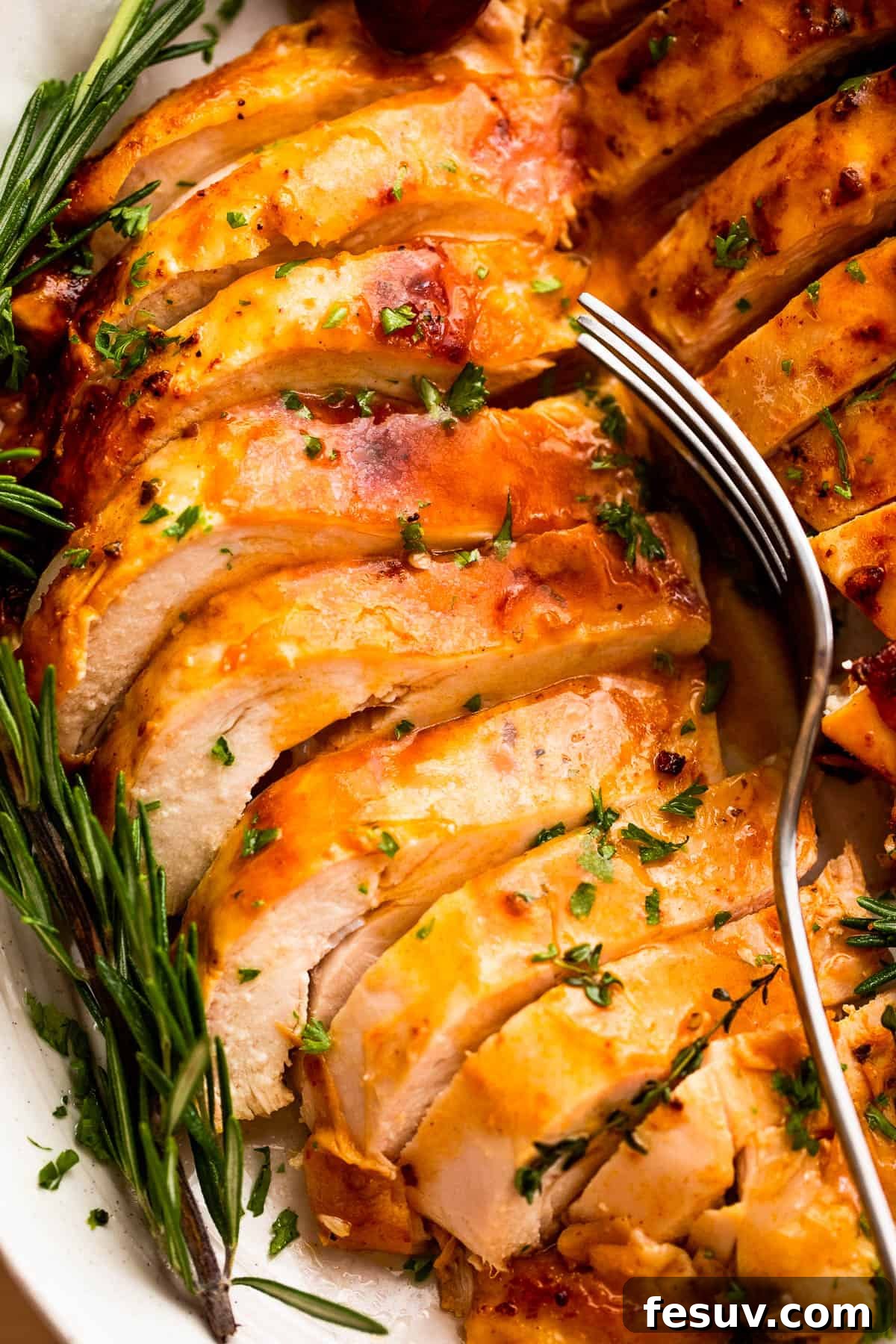
Achieving Perfection: Effortless Classic Roasted Turkey Breast
The anticipation of holiday feasts is truly something special. From the comforting aroma of sage and onion stuffing to the vibrant sweetness of cranberry sauce, Thanksgiving dinner is a culinary celebration of warmth and tradition. While the full spectrum of side dishes like creamy green bean casserole, fluffy mashed potatoes, tender yeast rolls, and decadent pumpkin pie all contribute to the festive spread, there’s no denying that for many, the star of the show remains the turkey.
Traditionally, a grand, golden-brown whole roast turkey takes center stage, its carving a ceremonial highlight of the meal. However, roasting an entire bird isn’t always practical or necessary. For smaller gatherings, or when you simply prefer the delicate white meat, a roasted turkey breast presents an elegant, simpler, and equally delicious alternative. It’s an ideal choice if you or your guests aren’t keen on dark meat, or if you plan to serve turkey alongside another main course like a glazed ham. Opting for a turkey breast significantly reduces cooking time, frees up valuable oven space, and delivers that nostalgic, savory flavor reminiscent of Grandma’s holiday cooking.
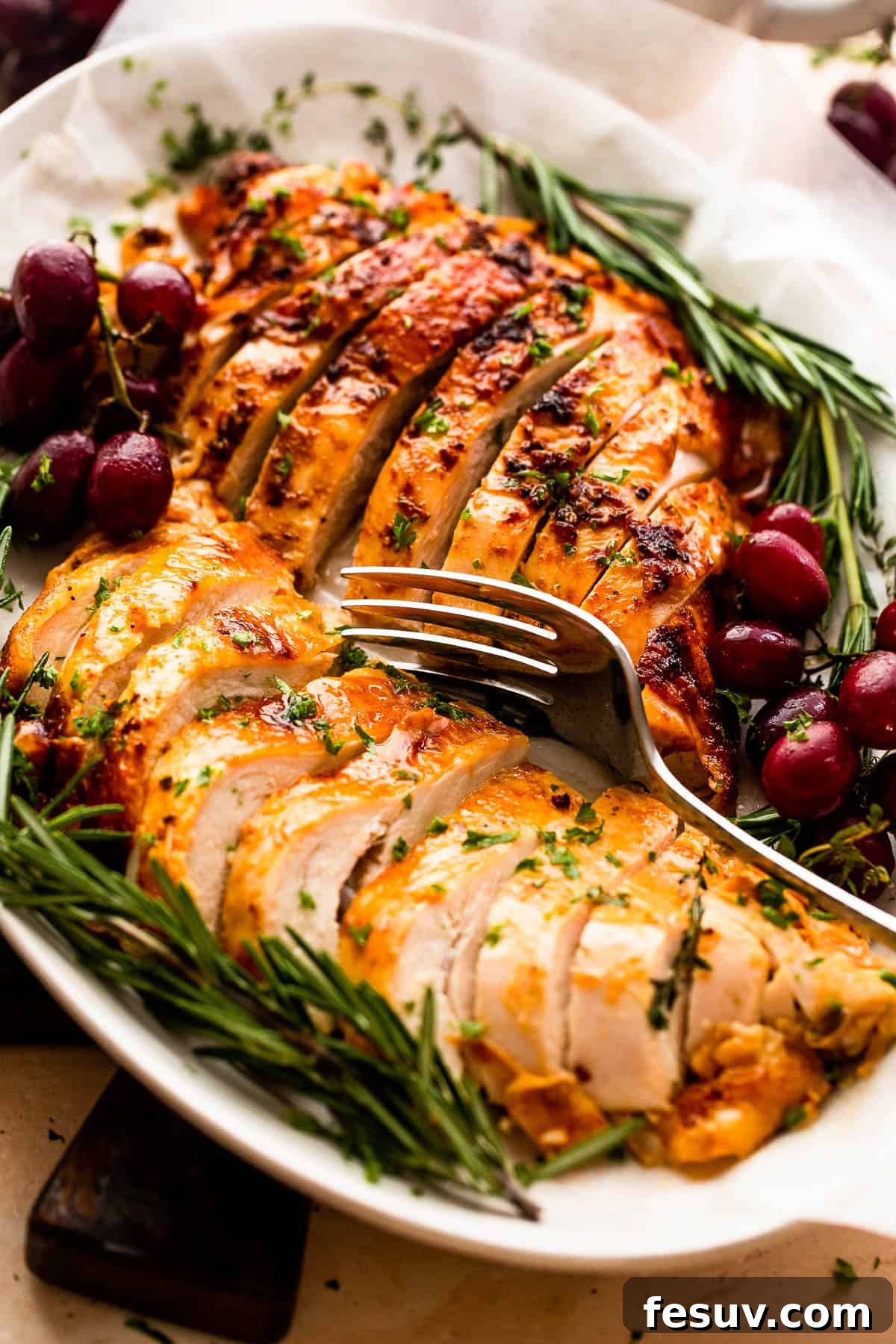
Essential Ingredients for a Flavorful Turkey Breast
Crafting a truly memorable roasted turkey breast doesn’t require a complex list of exotic ingredients. In fact, some of the best holiday dishes rely on simple, high-quality components to create profound, comforting flavors. Here’s what you’ll need to achieve that perfect blend of tenderness and taste:
- Turkey Breast: For this recipe, we recommend a 4 to 5-pound bone-in, skin-on turkey breast. The bone adds extra flavor and helps the meat cook more evenly, while the skin crisps beautifully and protects the meat from drying out. If purchasing frozen, ensure it’s fully thawed in the refrigerator before you begin cooking, typically requiring 24 hours per 4-5 pounds.
- Butter: Melted or softened unsalted butter is a crucial element. It infuses the turkey with a rich, decadent flavor and, most importantly, helps keep the breast incredibly moist during roasting. For a dairy-free alternative, olive oil or a plant-based butter substitute can be used, though the flavor profile will differ slightly.
- Fresh Herbs: Herbs are the soul of a classic roast turkey. Our go-to combination features fresh rosemary and thyme, which impart an earthy, fragrant aroma. However, feel free to personalize your blend. Classic choices like sage and parsley are fantastic, as are oregano, basil, marjoram, or a pre-mixed herbes de Provence. If fresh herbs aren’t available, dried herbs can be substituted; use about one-third of the amount of fresh herbs, as dried herbs are more concentrated.
- Salt and Pepper: These fundamental seasonings are essential for enhancing the turkey’s natural flavors. Don’t be shy with freshly ground black pepper; its pungent warmth beautifully complements the rich turkey and herbaceous notes. Kosher salt is preferred for its coarse texture and even distribution.
- Garlic Powder: While fresh minced garlic is always an option, garlic powder offers a more consistent and intense garlic flavor that permeates the meat thoroughly during the long roasting time. It’s a convenient and highly effective way to add depth.
- Paprika: Made from dried, ground peppers, paprika contributes a lovely earthy sweetness and a beautiful reddish hue to the turkey skin as it roasts, enhancing its visual appeal and adding a subtle smoky undertone. Sweet paprika is typically used, but a touch of smoked paprika can add another layer of complexity.
Mastering the Art of Classic Roast Turkey Breast
The primary concerns when roasting turkey are consistently delicious flavor and, crucially, maintaining moisture. Turkey breast, being a lean protein with less fat than dark meat, can dry out quickly if not prepared correctly. This tried-and-true roasting method is designed to deliver a remarkably juicy and flavorful result every single time:
- Prepare Your Oven and Roasting Pan: Begin by preheating your oven to a high temperature of 450˚F (232°C). This initial high heat is key for searing the turkey skin and locking in juices. Next, prepare your roasting pan. You can either place a sturdy roasting rack inside, elevating the turkey for even air circulation, or create a bed of roughly chopped, scrubbed vegetables such as carrots, celery, and onions. These vegetables not only elevate the turkey but also infuse the drippings with aromatic flavors, perfect for making gravy later.
- Prepare the Turkey and Butter Mixture: Carefully position the turkey breast on your prepared roasting rack or vegetable bed. Using paper towels, thoroughly pat the turkey dry on all sides. This crucial step promotes crispy skin. In a small bowl, melt the butter (either in the microwave or a small saucepan). Stir in your finely chopped fresh herbs, kosher salt, garlic powder, paprika, and freshly ground black pepper until all ingredients are well combined.
- Flavor the Turkey to Perfection: Gently loosen the skin over the turkey breast, being careful not to detach it entirely. This creates a pocket for flavor. Rub half of your seasoned butter mixture directly onto the meat under the skin. This ensures the breast meat itself is tender and flavorful, not just the skin. Then, generously rub the remaining butter mixture all over the top and sides of the turkey skin. Finally, give the entire turkey a final sprinkle of extra salt and pepper for a perfectly seasoned exterior.
- The Roasting Process: Once the turkey is prepped and in the oven, immediately reduce the oven temperature to 325˚F (160°C). The initial high heat will create that desirable crispy, golden skin, while the subsequent lower temperature allows the turkey to roast slowly and evenly until it reaches ideal doneness. Roast the turkey breast for approximately 1 ½ to 2 ½ hours. The most reliable way to check for doneness is using an instant-read meat thermometer, inserted into the thickest part of the breast without touching the bone. The turkey is perfectly cooked when its internal temperature reaches 155˚F to 160˚F (68°C to 71°C). Remember that the temperature will rise an additional 5-10 degrees while resting due to carry-over cooking.
- The Essential Rest: Once the turkey reaches the target internal temperature, remove it from the oven. This step is non-negotiable for a truly juicy turkey. Loosely tent the turkey with foil and let it rest undisturbed for at least 20 minutes. This allows the juices to redistribute throughout the meat, resulting in a more tender and moist final product.
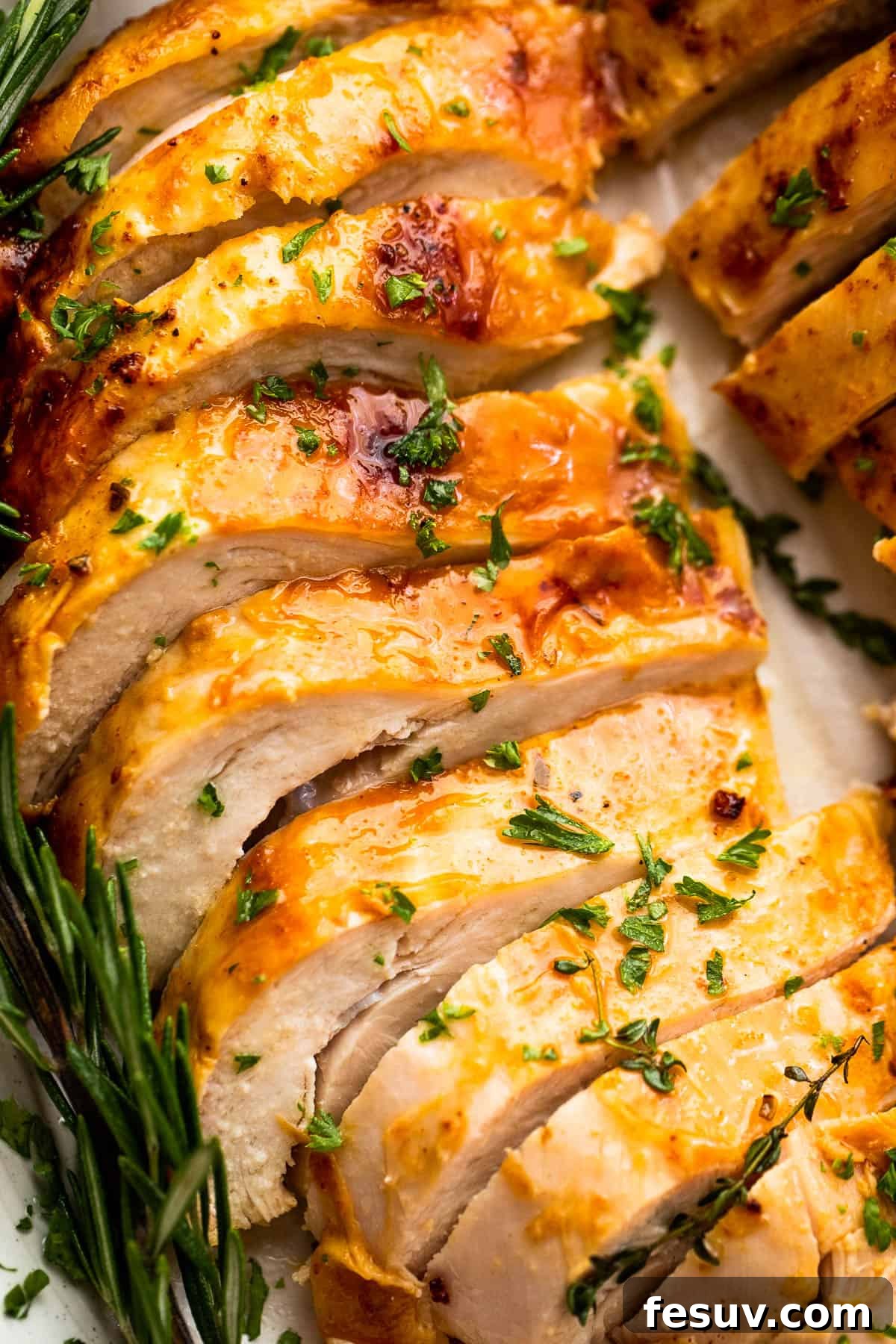
- Carve and Serve: Transfer the rested turkey breast to a clean cutting board. To carve, locate the breast bone and, using a sharp knife, slice along one side of the bone, keeping the knife as close to the rib cage as possible. Follow the contour of the bone until the entire breast half is removed. Repeat on the other side. Then, slice the turkey breast against the grain into desired thicknesses. Arrange the slices beautifully on a platter and serve immediately with your favorite sides and a generous pour of warm gravy.
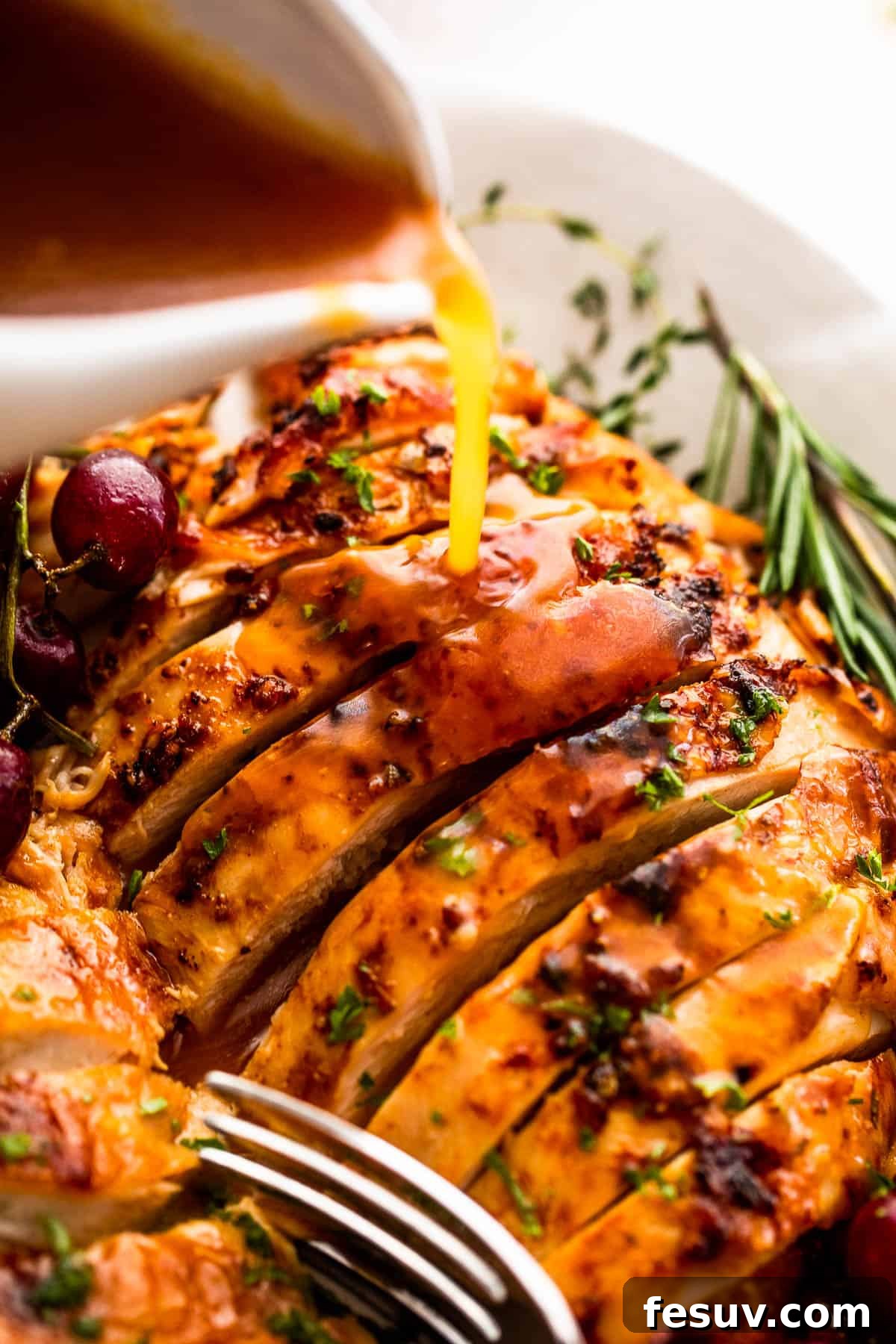
Should a turkey breast be roasted covered or uncovered?
For that coveted golden-brown, crispy skin, you should roast the turkey breast uncovered for the majority of the cooking time. The direct heat helps render the fat and achieve a beautiful caramelization. If you notice the skin is browning too quickly before the meat is cooked through, simply create a loose “tent” with aluminum foil and lightly rest it over the turkey. This shields the skin from direct heat, preventing it from burning while allowing the internal meat to continue cooking. Be sure to remove the foil for the last 10-15 minutes of cooking to ensure the skin is perfectly crisp.
How long do I cook a turkey breast per pound?
Cooking times can vary based on your oven’s calibration, the exact size and shape of your turkey breast, and whether it’s bone-in or boneless. However, as a general guideline, a bone-in turkey breast typically requires about 18 to 20 minutes of cooking time per pound at 325°F (160°C). A 4-5 pound turkey breast will usually take between 1.5 to 2.5 hours. Always prioritize the internal temperature over strict timing. The turkey is safely done and wonderfully juicy when the internal temperature, measured in the thickest part of the breast, reaches 155˚F to 160˚F (68°C to 71°C) before resting. The juices should also run clear when pierced with a knife.
Expert Tips for a Flawless Roast Turkey Breast
Roasting a turkey breast is a relatively straightforward endeavor, and by simply adhering to the core instructions, you’re well on your way to a magnificent meal. However, a few additional insights can elevate your results from good to truly exceptional. Read on for these invaluable tips:
- To Brine, or Not to Brine? The decision to brine hinges on two factors: your specific turkey and your available time. Many turkey breasts sold in supermarkets are pre-brined or injected with a saline solution to enhance moisture, making additional brining unnecessary and potentially leading to an overly salty product. Always check the packaging. If your turkey breast is natural and unflavored, brining can significantly improve its moisture and flavor, especially if you have the time (usually 8-12 hours). A simple turkey brine recipe typically involves salt, sugar, and aromatics in water. However, if time is short, don’t fret; this recipe will still yield a delicious, juicy turkey without brining.
- Calculate the Right Amount of Turkey: A single 4 to 5-pound bone-in turkey breast generally serves 4 to 6 people, providing ample portions for a main course. If you’re hosting a larger gathering, anticipating significant leftovers, or simply want more turkey, consider roasting two turkey breasts or opting for a larger cut. Always factor in about 1 to 1.5 pounds of bone-in turkey per person.
- Basting is Often Optional for Breast: Unlike a whole turkey, which can benefit from basting to maintain moisture over a longer cooking period, turkey breast cooks more quickly and effectively retains its juices with the butter rub under and over the skin. Frequent opening of the oven door for basting can actually drop the oven temperature and extend cooking time, potentially drying out the meat. For this recipe, basting is generally not required, allowing for a more hands-off approach. If you feel the skin is getting too dry, a light brush with pan drippings or additional melted butter near the end of cooking is sufficient.
- Bring to Room Temperature: For the most even cooking, always allow your thawed turkey breast to sit at room temperature for at least 30-60 minutes before placing it in the oven. This helps the meat cook more uniformly from edge to center, preventing the outside from drying out before the inside is cooked through.
- Use a Reliable Meat Thermometer: This is your best friend for perfectly cooked poultry. An instant-read thermometer takes the guesswork out of roasting and prevents both undercooking and overcooking, which is the main cause of dry turkey.
Delightful Serving Suggestions for Your Roasted Turkey Breast
Your beautifully roasted turkey breast deserves to be accompanied by an array of delectable side dishes. Here are some of our tried-and-true holiday favorites that perfectly complement the savory turkey:
- Fluffy Dinner Rolls: A basket of warm, tender rolls is a must-have. Our easy No-Knead Dinner Rolls are exceptionally flavorful and light, requiring minimal prep and no intensive kneading, making them a stress-free addition to any feast. They’re perfect for soaking up gravy!
- Sweet Potatoes Reinvented: Move beyond the traditional marshmallow-topped casserole and try these Honey Garlic Roasted Sweet Potatoes. Cubed sweet potatoes are tossed in a savory-sweet glaze and roasted until caramelized, offering a wonderfully balanced side that everyone will adore.
- Classic Green Bean Casserole: A timeless staple, a creamy green bean casserole with crispy fried onions provides a delightful texture and rich flavor contrast to the turkey. It’s comfort food at its finest.
- Savory Brussels Sprouts: Even those skeptical of Brussels sprouts will be won over by these tender-crisp options. Our Slow Cooker Parmesan Brussels Sprouts offer a hands-off approach to perfectly cooked sprouts, seasoned with savory Parmesan for an irresistible bite.
- Cranberry Sauce: Whether homemade or store-bought, a tart and sweet cranberry sauce is the ideal accompaniment to rich turkey, cutting through its richness with a burst of fruity brightness.
- Homemade Gravy: Don’t let those flavorful pan drippings go to waste! Use them to create a rich, savory gravy to pour generously over your turkey and mashed potatoes.
Creative Ideas for Utilizing Leftover Thanksgiving Turkey
One of the best parts about roasting turkey is the abundance of delicious leftovers! Don’t let a single shred go to waste. Repurpose your cooked turkey into exciting new meals with these inspiring ideas:
- Turkey Sandwiches: The simplest and most classic way to enjoy leftovers! Pile sliced turkey high on soft rolls with a dollop of cranberry sauce and a leaf of lettuce. For a gourmet twist, make these delightful Leftover Turkey Salad Sandwiches, combining shredded turkey with creamy dressing and serving them on buttery croissants.
- Hearty Casseroles: Transform your turkey into a comforting casserole. This easy Turkey and Wild Rice Casserole offers a satisfying blend of two types of rice, tender celery and mushrooms, and flavorful turkey, all bound together in a light, creamy, and cheesy sauce. It’s a wholesome meal that warms from within.
- Spicy Chili: Give your turkey a zesty makeover by turning it into a batch of chili. Adapt your favorite White Chicken Chili recipe by substituting the chicken with shredded or diced leftover turkey. It’s a festive, laid-back dinner that the whole family will love, especially on a chilly evening.
- Turkey Pot Pie: Use leftover turkey in a rich, creamy pot pie filling topped with a flaky pastry crust. It’s the ultimate comfort food for a post-holiday meal.
- Turkey Noodle Soup: Create a soothing and flavorful turkey noodle soup using leftover turkey broth (if you made any from the bones) and shredded turkey meat. Perfect for a light, nourishing meal.
Properly Storing and Reheating Roasted Turkey Breast
To ensure your leftover turkey breast remains delicious and safe to eat, proper storage and reheating are crucial:
- To Refrigerate: Once cooled, slice or shred the turkey meat and store it in shallow, airtight food storage bags or containers. Place it in the refrigerator within two hours of cooking. Properly stored turkey breast will remain fresh and delicious for 3 to 4 days.
- To Freeze: For longer storage, remove the turkey meat from the bone. Tightly wrap individual portions of turkey meat in plastic wrap, then place them into heavy-duty freezer bags or airtight freezer-safe containers. Press out as much air as possible from the bags before sealing to prevent freezer burn. Frozen turkey breast can be stored for up to 6 months. Thaw overnight in the refrigerator before reheating.
- To Reheat: The key to reheating turkey breast without drying it out is low heat and added moisture. Place the sliced or shredded turkey in a covered skillet or oven-safe dish with a splash of chicken broth or water. Heat on low on the stovetop or in a 300˚F (150°C) oven until the turkey is fully heated through. Avoid microwaving large quantities as it can unevenly heat and dry out the meat. Do not overcook when reheating, as this is the quickest way to end up with dry, tough turkey.
Print Recipe
5 from 4 votes
How To Roast Turkey Breast
Katerina | Easy Weeknight Recipes
15 minutes
2 hours
20 minutes
2 hours 30 minutes
6
Ingredients
- 4 to 5 pounds bone-in, skin-on turkey breast,, completely thawed*
- 4 tablespoons butter,, melted
- 1 tablespoon finely chopped fresh herbs,, I use rosemary and thyme
- ½ tablespoon kosher salt
- 1 teaspoon garlic powder
- 1 teaspoon paprika
- ½ teaspoon fresh ground black pepper
Instructions
-
Preheat oven to 450˚F (232°C).
-
Set a roasting rack inside of a roasting pan, or create a bed of chopped vegetables.
-
Transfer the turkey breast to the roasting rack or vegetable bed.
-
Melt the butter and to the melted butter add chopped fresh herbs, salt, garlic powder, paprika, and pepper; whisk until completely incorporated.
-
Using paper towels, pat dry the turkey breast thoroughly.
-
Gently loosen the skin and rub half of the butter mixture under the skin, directly onto the meat. Then, using a pastry brush, brush the remaining butter mixture all over the top and sides of the turkey skin.
-
Season the turkey breast all over with an additional sprinkle of salt and pepper.
-
Immediately reduce the oven temperature to 325˚F (160°C).
-
Roast the turkey breast for 1.5 to 2.5 hours, or until the internal temperature reaches 155˚F to 160˚F (68°C to 71°C) when measured with an instant-read meat thermometer in the thickest part of the breast, avoiding the bone. As a guide, turkey breast needs to cook for about 18 to 20 minutes per pound. Begin checking the temperature around the 1.5-hour mark and continue checking every 15 minutes thereafter until done.
-
If the skin begins to brown too quickly, lightly tent a piece of foil over it to prevent burning. Remove the foil for the last 10-15 minutes if desired for extra crispiness.
-
Pull out the cooked turkey breast and let it rest, loosely tented with foil, for 20 minutes. This is crucial for juicy meat.
-
Transfer to a cutting board and, starting at the breast bone, carve the turkey off the bone keeping your knife as close to the ribs as possible.
-
Then, cut the turkey breast into slices against the grain and serve immediately.
Notes
- For the absolute best results and most even cooking, ensure your turkey breast is not only completely thawed but also allowed to come to room temperature for at least 30-60 minutes before you begin preparation.
Nutrition Facts
Carbohydrates: 1g |
Protein: 65g |
Fat: 13g |
Saturated Fat: 6g |
Polyunsaturated Fat: 2g |
Monounsaturated Fat: 4g |
Trans Fat: 1g |
Cholesterol: 183mg |
Sodium: 1272mg |
Potassium: 751mg |
Fiber: 1g |
Sugar: 1g |
Vitamin A: 476IU |
Vitamin C: 1mg |
Calcium: 47mg |
Iron: 2mg
Nutritional info is an estimate and provided as courtesy. Values may vary according to the ingredients and tools used. Please use your preferred nutritional calculator for more detailed info.
Did you make this recipe? Leave a rating
More Delectable Holiday Favorites
Complete your holiday menu with these other festive and flavorful dishes:
- Pork Loin Roast with Root Vegetables
- Perfectly Juicy Whole Roast Turkey
- Classic Christmas Ham with Brown Sugar Glaze