
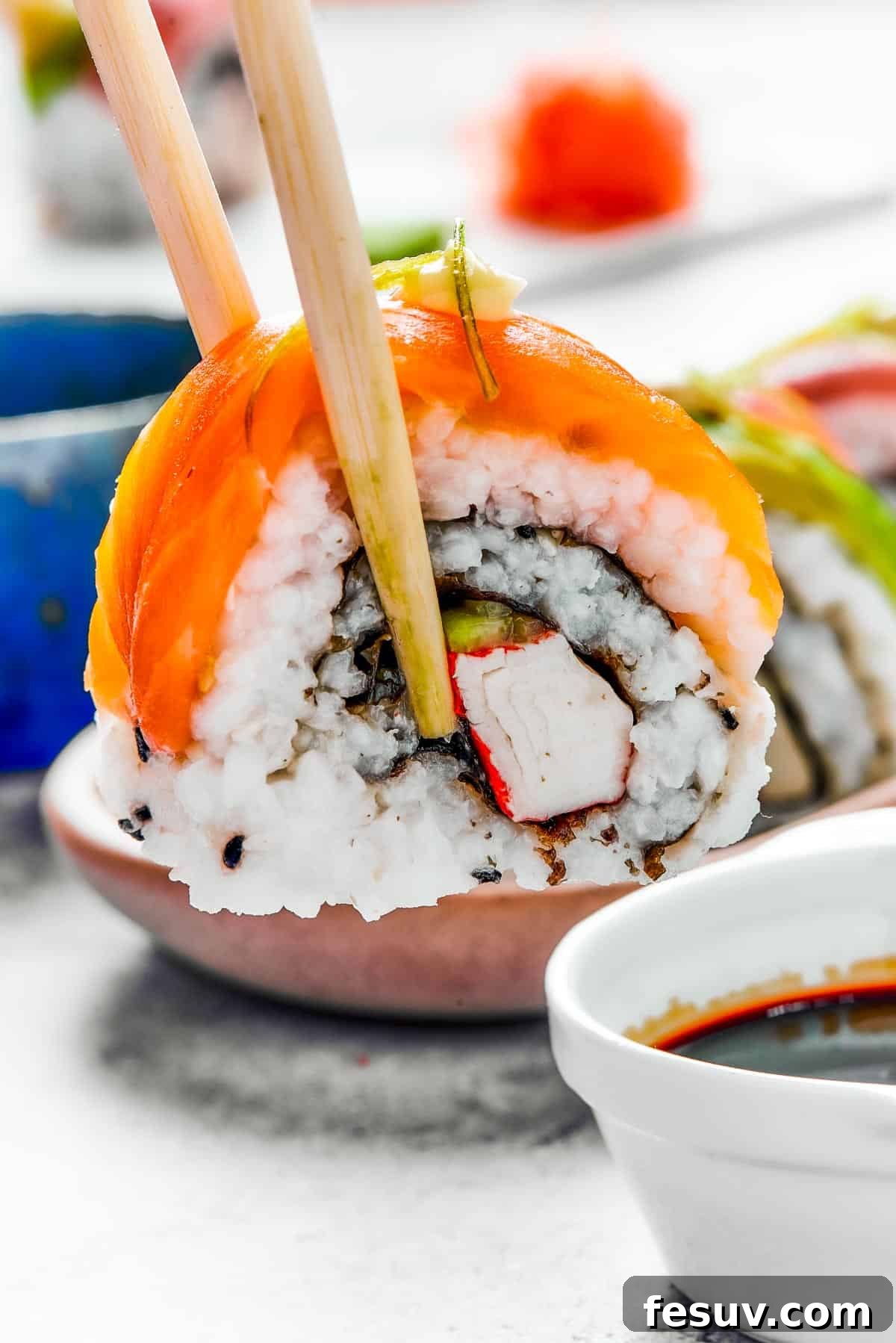
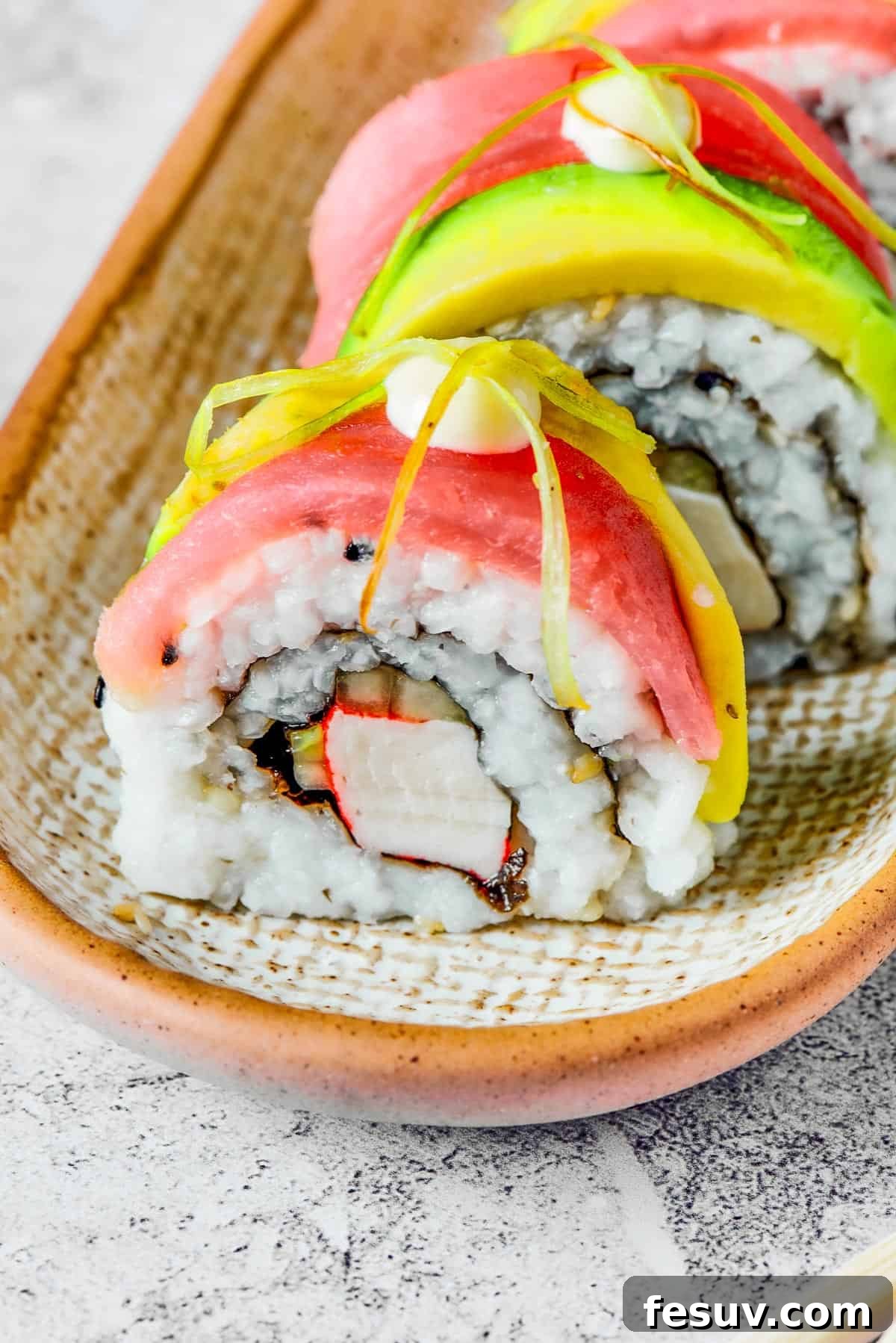
Embark on a culinary journey to Japan right from your kitchen with this incredibly simple yet stunning Rainbow Roll recipe. Bursting with fresh flavors and vibrant colors, this mouthwatering sushi roll features succulent salmon, rich tuna, creamy avocado, and crisp cucumber, creating a symphony of textures and tastes. It’s not just a meal; it’s an experience, surprisingly easy to master even for novice sushi makers.
For those who love to experiment, consider incorporating a sweet and savory twist with teriyaki salmon or elevating your Japanese-inspired feast by pairing your homemade sushi with crunchy shrimp tempura. Get ready to impress yourself and your loved ones with this restaurant-quality dish!
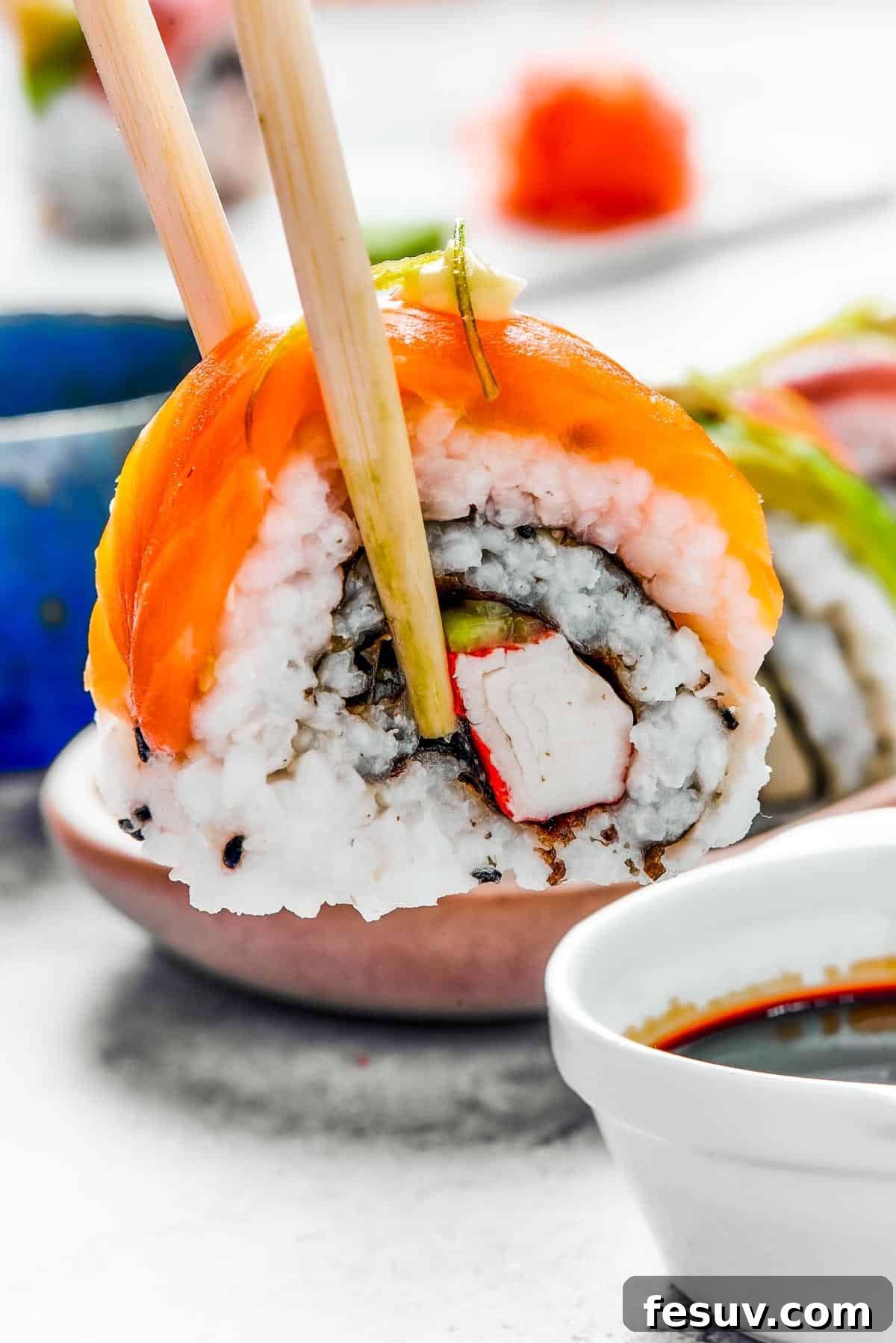
Unlock the Secret to Restaurant-Style Sushi at Home: The Rainbow Roll
Sushi holds a special place in my heart as a go-to meal for dining out. The sheer variety of flavors and creative combinations always makes it a fresh and exciting option. However, the joy of sushi doesn’t have to be limited to restaurant visits or takeout orders. Imagine crafting your favorite rolls, like the visually stunning Rainbow Roll, right in the comfort of your own kitchen. It’s more achievable than you might think, requiring just a bit of time and a handful of quality ingredients.
While some gourmet sushi creations demand expert chef skills and extensive preparation, the beloved Rainbow Roll is a fantastic entry point into the world of homemade sushi. This classic is celebrated for its beautiful presentation and delightful taste, all while being surprisingly straightforward to assemble. Forget complicated techniques; this guide will walk you through creating a sushi experience that rivals your favorite Japanese eatery, making fresh, delicious sushi a regular part of your culinary repertoire.
Understanding the Freshness: Is Rainbow Roll Sushi Raw?
Yes, traditionally, Rainbow Rolls are indeed made with raw, sushi-grade tuna and salmon. This recipe embraces those authentic, fresh ingredients to deliver the true Rainbow Roll experience. While variations with cooked seafood exist, the vibrant flavors and delicate textures of raw fish are what truly define this iconic roll. Don’t let the idea of working with raw fish intimidate you; achieving a delicious and safe homemade Rainbow Roll doesn’t require years of sushi chef training. With the right ingredients and careful preparation, you can confidently create this masterpiece.
The key to using raw fish safely in sushi lies in sourcing “sushi-grade” or “sashimi-grade” fish. This classification indicates that the fish has been handled and frozen specifically to eliminate parasites, making it safe for raw consumption. It’s crucial to purchase your fish from reputable fishmongers or specialty stores that explicitly label their products as safe for sushi. Never use regular grocery store fish unless it’s specifically marked as sushi-grade, as it may not have undergone the necessary freezing processes to ensure safety.
Essential Ingredients for Your Vibrant Rainbow Roll
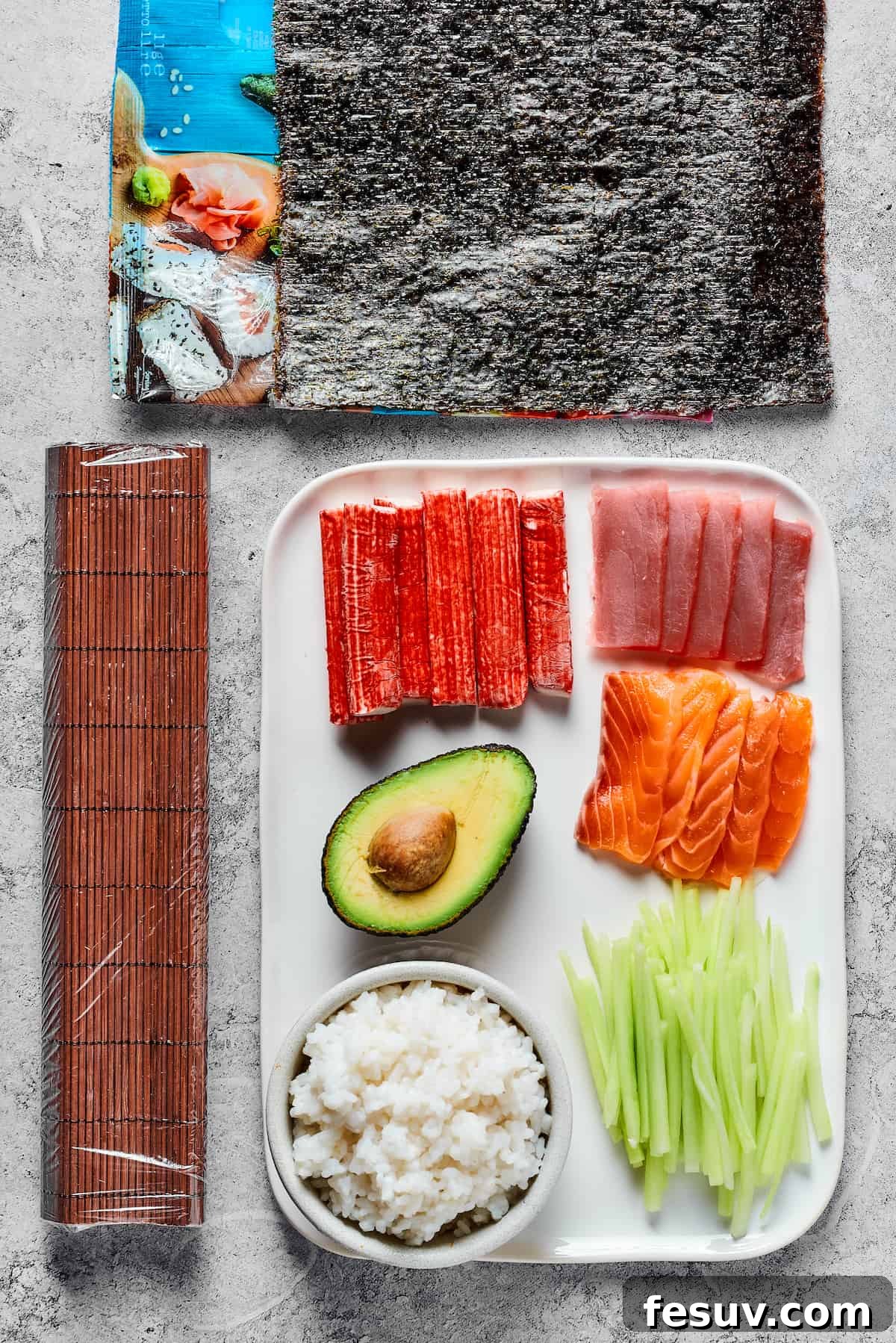
Despite its complex appearance, the Rainbow Roll relies on a surprisingly concise list of fresh, high-quality ingredients. Each component plays a vital role in creating its distinctive flavor and eye-catching presentation. Here’s a detailed look at what you’ll need to gather before you begin your sushi-making adventure:
- Sushi Rice: The foundation of any great sushi roll. You’ll need about 4 ½ ounces of prepared sushi rice. This isn’t just plain rice; it’s short-grain Japanese rice seasoned with a mixture of rice vinegar, sugar, and salt, giving it that characteristic tangy and slightly sweet flavor. You can prepare it from scratch using a dedicated sushi rice recipe or opt for pre-packaged sushi rice available at most Asian markets or well-stocked grocery stores. Ensure it’s cooled to room temperature before use for optimal handling and texture.
- Sushi-Grade Salmon: For that beautiful orange layer. Aim for 2 to 4 thin slices of raw, fresh, sushi-grade salmon. Sourcing this from a trusted fishmonger is paramount for safety and flavor. Its buttery texture and rich taste are indispensable to the Rainbow Roll.
- Sushi-Grade Tuna: Providing the striking red layer. You’ll need 2 to 4 thin slices of raw, fresh, sushi-grade tuna. Similar to salmon, ensure it’s from a reputable source, specifically marked for raw consumption. Tuna offers a firmer texture and distinct, slightly sweet flavor.
- Avocado: Adding a creamy, verdant touch. One avocado, sliced thinly, preferably to the same thickness as your fish slices. Look for avocados that are ripe but firm, yielding slightly to gentle pressure. Avoid mushy avocados, which will be hard to slice neatly, or very hard ones, which lack flavor and creamy texture.
- Nori: The edible seaweed wrapper. One standard sheet of nori seaweed is all you need. Nori provides a subtle oceanic flavor and is essential for holding the roll together. Choose high-quality, crisp nori for the best results.
- Imitation Crab Meat (Surimi): A popular filling for many sushi rolls. You’ll need about 2 pieces of imitation crabmeat, also known as surimi. This adds a sweet, slightly flaky texture to the interior of the roll. While imitation crab is common, you could substitute with real crab meat for a more luxurious touch, or even cooked shrimp for another variation.
- Cucumber: For a refreshing crunch. One cucumber, peeled and sliced lengthwise into thin, even strips. Cucumber provides a cool, crisp counterpoint to the richer ingredients, adding a delightful textural contrast and freshness.
- Toasted Sesame Seeds: Aromatic and nutty finish. One tablespoon of toasted sesame seeds. These are sprinkled on the rice layer, adding a crucial roasted nuttiness and a pleasant visual appeal to the exterior of the roll.
Can You Eat Raw Fish from the Grocery Store for Sushi? The Importance of Sushi-Grade Fish
This is a critical point for anyone venturing into homemade sushi: **it is generally not considered safe to consume raw fish purchased from a regular grocery store unless it is explicitly labeled as “sushi-grade” or “sashimi-grade.”** The distinction is vital for food safety. True sushi-grade fish has been handled, processed, and, most importantly, frozen to specific temperatures for a certain duration to kill potential parasites. This freezing process is non-negotiable for raw consumption.
A good rule of thumb is to:
- Only buy from reputable fishmongers or specialty seafood markets: These establishments are more likely to understand and adhere to the strict guidelines for sushi-grade fish.
- Look for explicit labeling: If the fish isn’t clearly marked “sushi-grade” or “sashimi-grade” and you intend to eat it raw, it’s best to avoid it. Don’t hesitate to ask your fishmonger about the fish’s origin, handling, and whether it has been previously frozen for raw consumption.
- Freshness is key, but not the only factor: While “fresh” fish is always desirable, for raw consumption, “sushi-grade” implies specific safety processing beyond mere freshness.
Prioritizing food safety will ensure your homemade sushi experience is not only delicious but also worry-free.
Essential Tools for Crafting Your Own Sushi
Beyond the ingredients, having the right tools makes the sushi-making process much smoother and more enjoyable. You don’t need a professional sushi bar setup, but these basic items are incredibly helpful:
- Bamboo Sushi Mat (Makisu): This flexible mat is indispensable for rolling sushi tightly and evenly. It provides the necessary leverage to shape your roll perfectly.
- Sharp Knife: A very sharp knife is crucial for clean cuts. A dull knife will squish and tear the roll, ruining its presentation and potentially its structure. A long, thin blade, like a chef’s knife or even a sashimi knife, works best.
- Plastic Wrap: Highly recommended for covering your bamboo mat. This prevents rice from sticking to the mat, making cleanup a breeze and ensuring a smoother roll. It also helps in pressing the toppings onto the roll.
- Small Bowl of Water (with a splash of rice vinegar): Keep this handy for wetting your hands. Sushi rice is incredibly sticky, and dampening your hands prevents it from clinging, allowing for easier spreading and handling. The vinegar helps prevent sticking even further and adds a subtle antibacterial touch.
- Cutting Board: A stable surface for preparing your ingredients and cutting your finished rolls.
Mastering the Art: Step-by-Step Instructions for Your Rainbow Roll
Assembling a Rainbow Roll is an art that’s surprisingly forgiving. Don’t worry about perfection on your first try; even slightly imperfect rolls taste absolutely delicious. The key is gentle precision and understanding the sequence. Here’s how to create your stunning sushi roll, step by step:
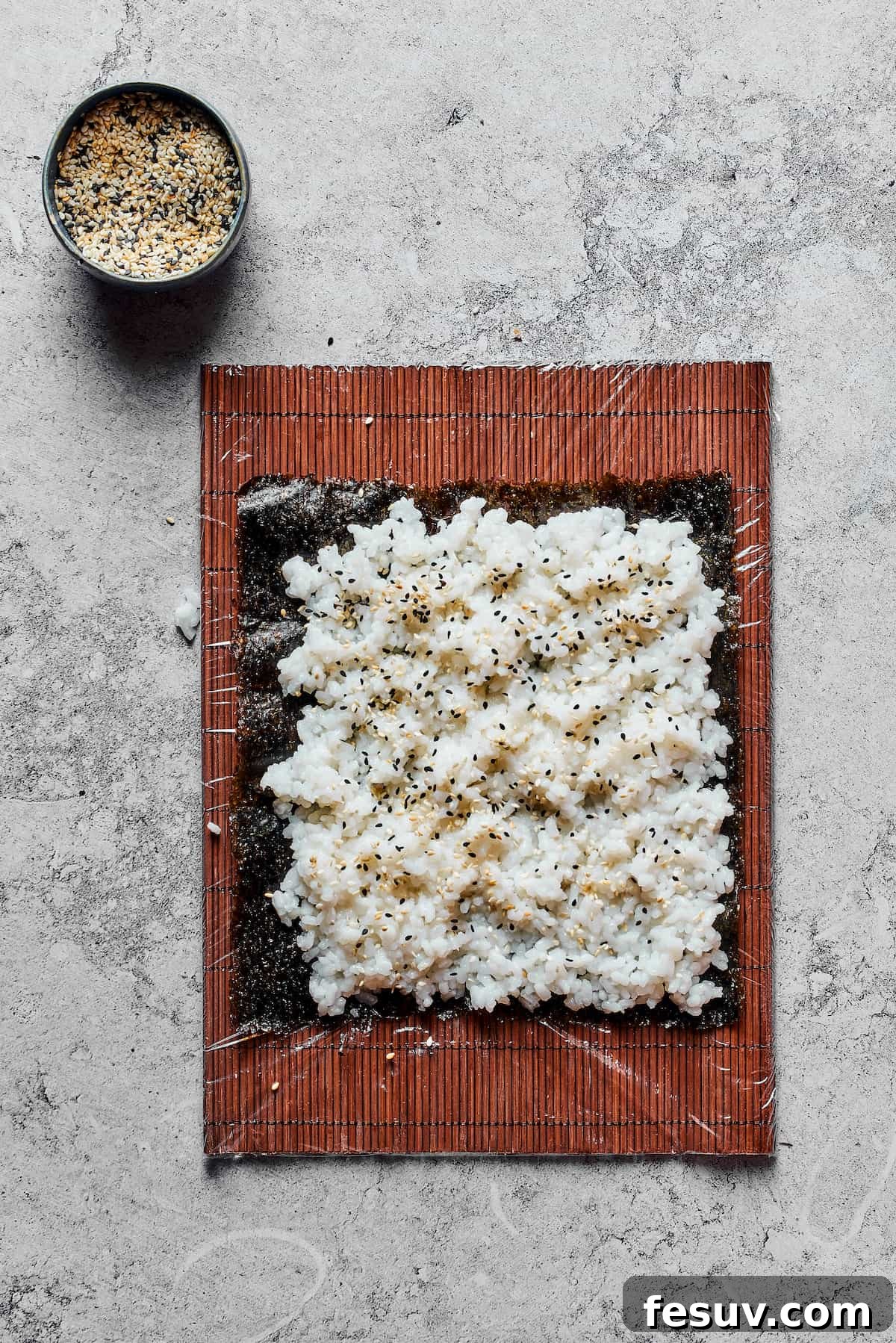
- Prepare Your Workspace and Base. Begin by laying your bamboo sushi mat on a clean, dry food preparation surface. To prevent rice from sticking and to ensure easy cleanup, wrap the bamboo mat completely in plastic wrap. Then, place one sheet of nori seaweed, shiny side down (or rough side up, depending on the nori), on the plastic-wrapped mat. Evenly spread the prepared sushi rice over the nori, covering it completely to the edges. A thin, even layer is best. Sprinkle the toasted sesame seeds over the rice. Carefully flip the nori sheet over so the rice layer is now facing down on the mat.
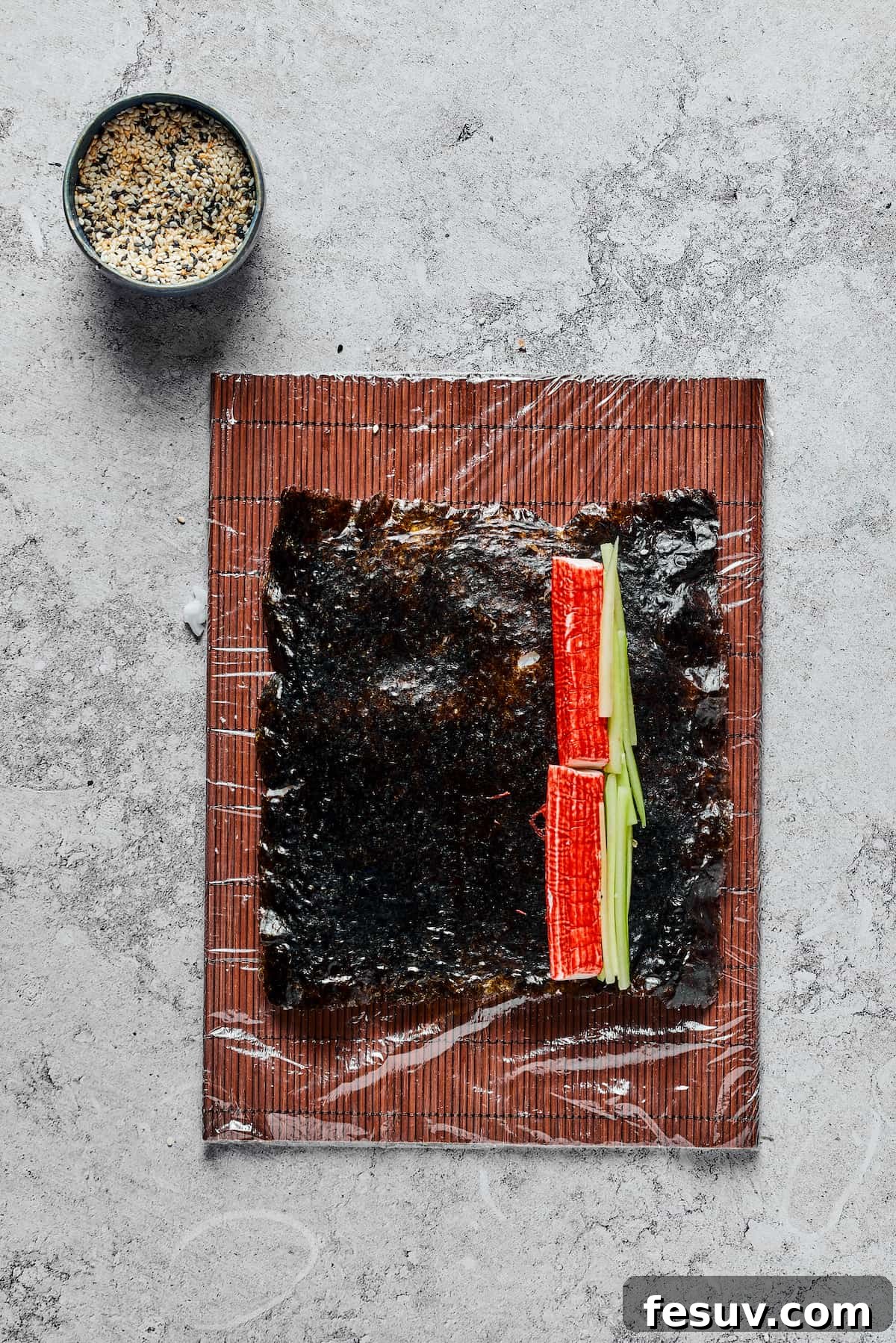
- Fill the Rainbow Roll with Interior Goodness. Along the bottom third of the rice-covered nori sheet (the side closest to you), arrange your imitation crabmeat and cucumber slices lengthwise. Ensure the filling is evenly distributed but not overstuffed, as this can make rolling difficult. Keep your thumbs on the sides of the bamboo mat closest to you, gently holding the fillings in place with your fingers.
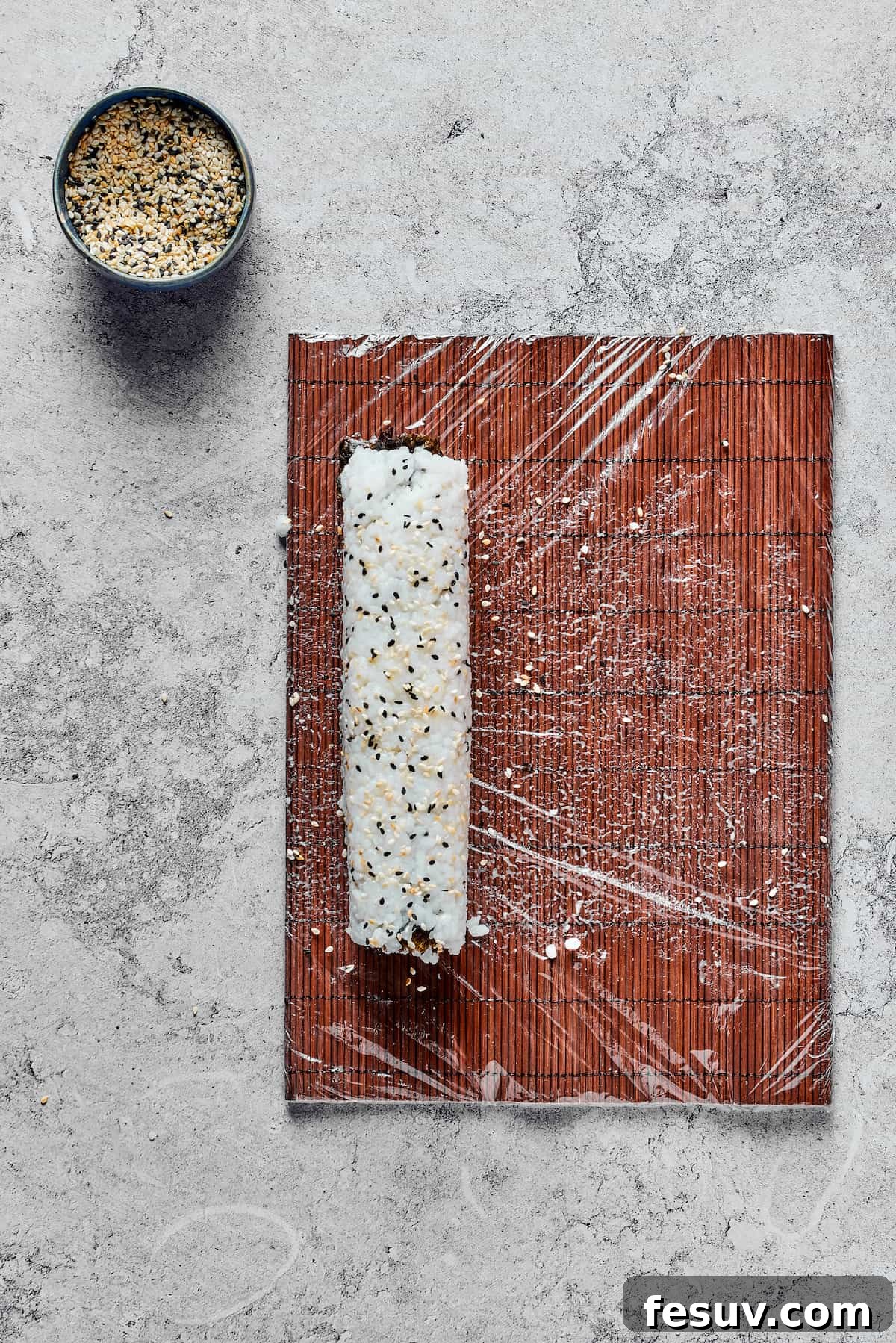
- Roll with Care and Precision. Begin to roll the mat forward, tucking in the edge of the nori and rice over the filling. Apply gentle but firm pressure, lifting the edge of the bamboo mat as you roll to ensure a tight, compact cylinder. Continue rolling, pulling the mat away from you as the roll forms. Once you’ve reached the end, give the roll a final gentle squeeze through the mat to seal and shape it into a neat cylinder.
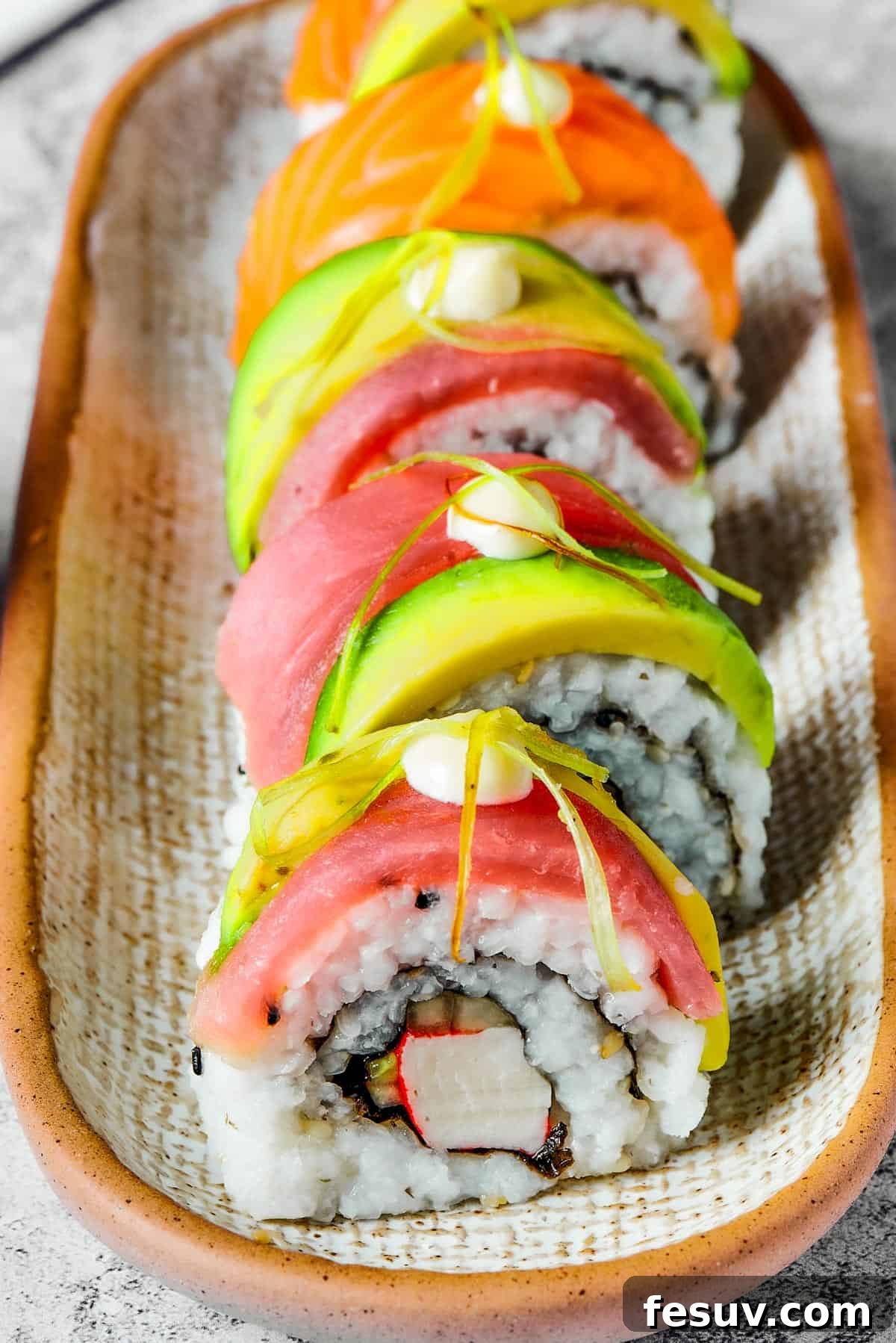
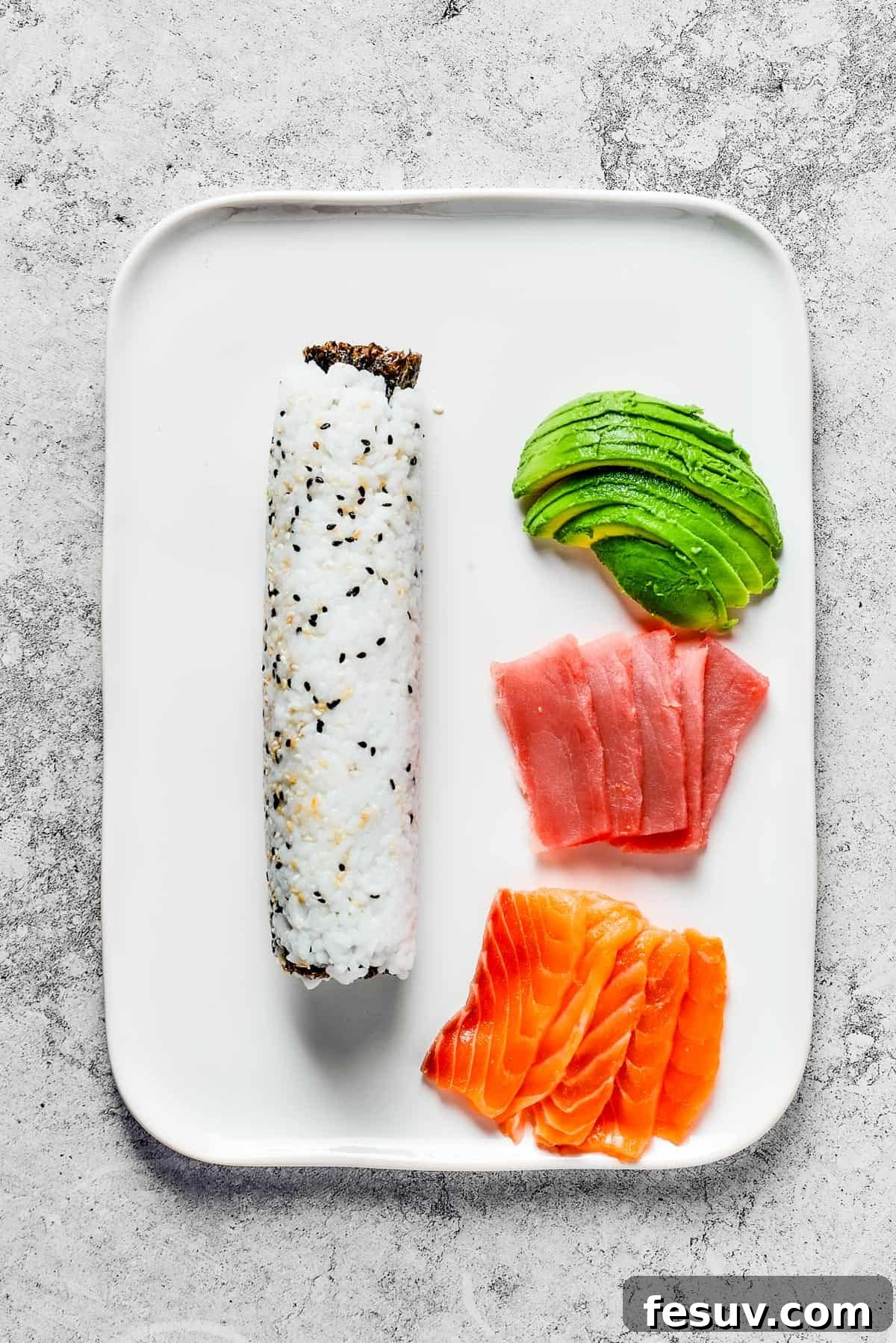
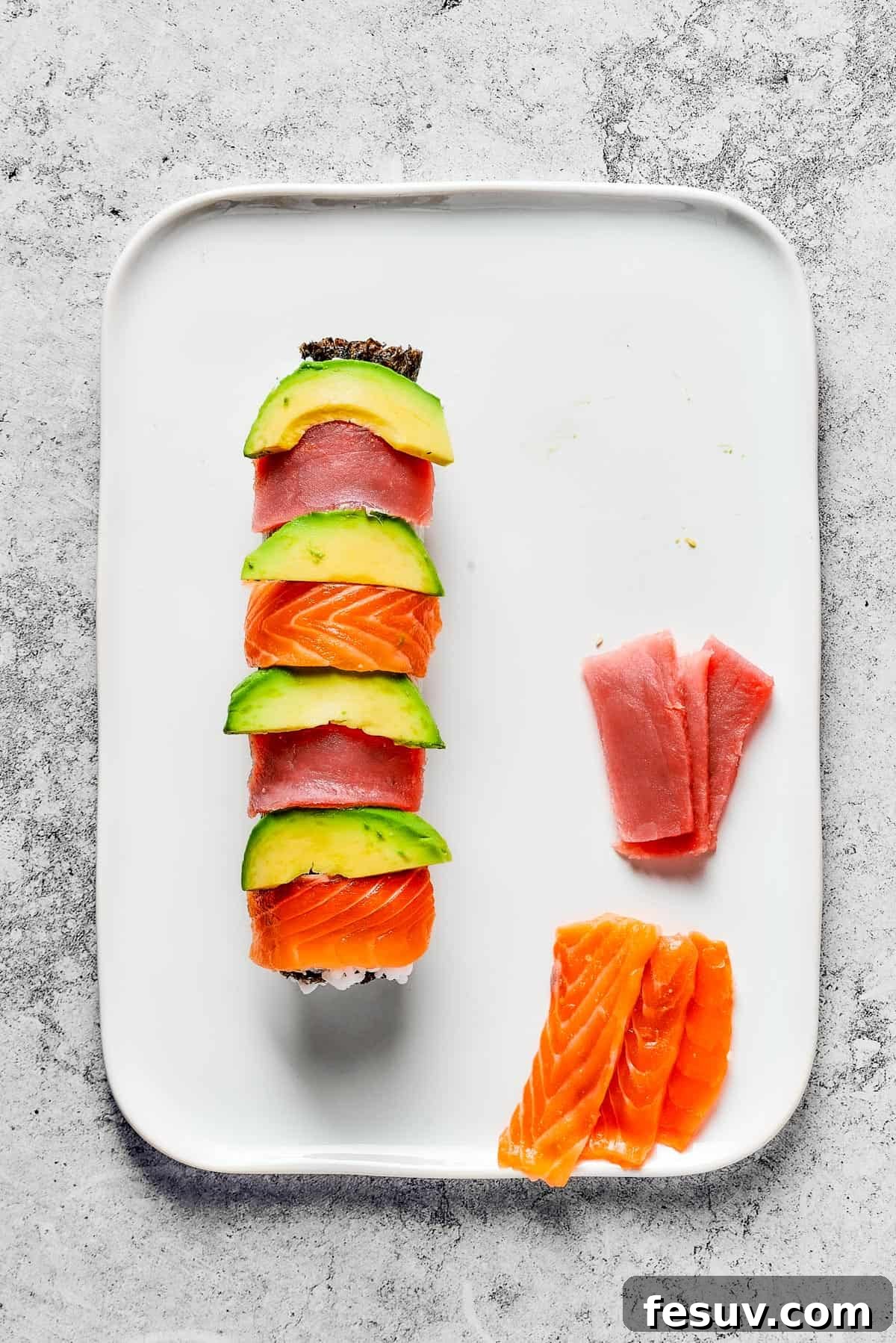
- Create the Vibrant Rainbow Topping. Now for the breathtaking “rainbow” layer! Prepare your sushi-grade tuna, salmon, and avocado by slicing them very thinly – aiming for uniform slices, about 0.1 inches thick, is ideal. Carefully arrange these vibrant slices alternately over the top of your rolled sushi. You can overlap them slightly to create a fuller, more colorful effect.
- Gently Press and Finish the Roll. Once your toppings are arranged, carefully place the bamboo mat (still covered in plastic wrap) back over the topped sushi roll. Gently but firmly press down on the mat, applying even pressure across the entire roll. This helps to secure the delicate fish and avocado slices onto the rice, ensuring they don’t fall off when you cut the roll.
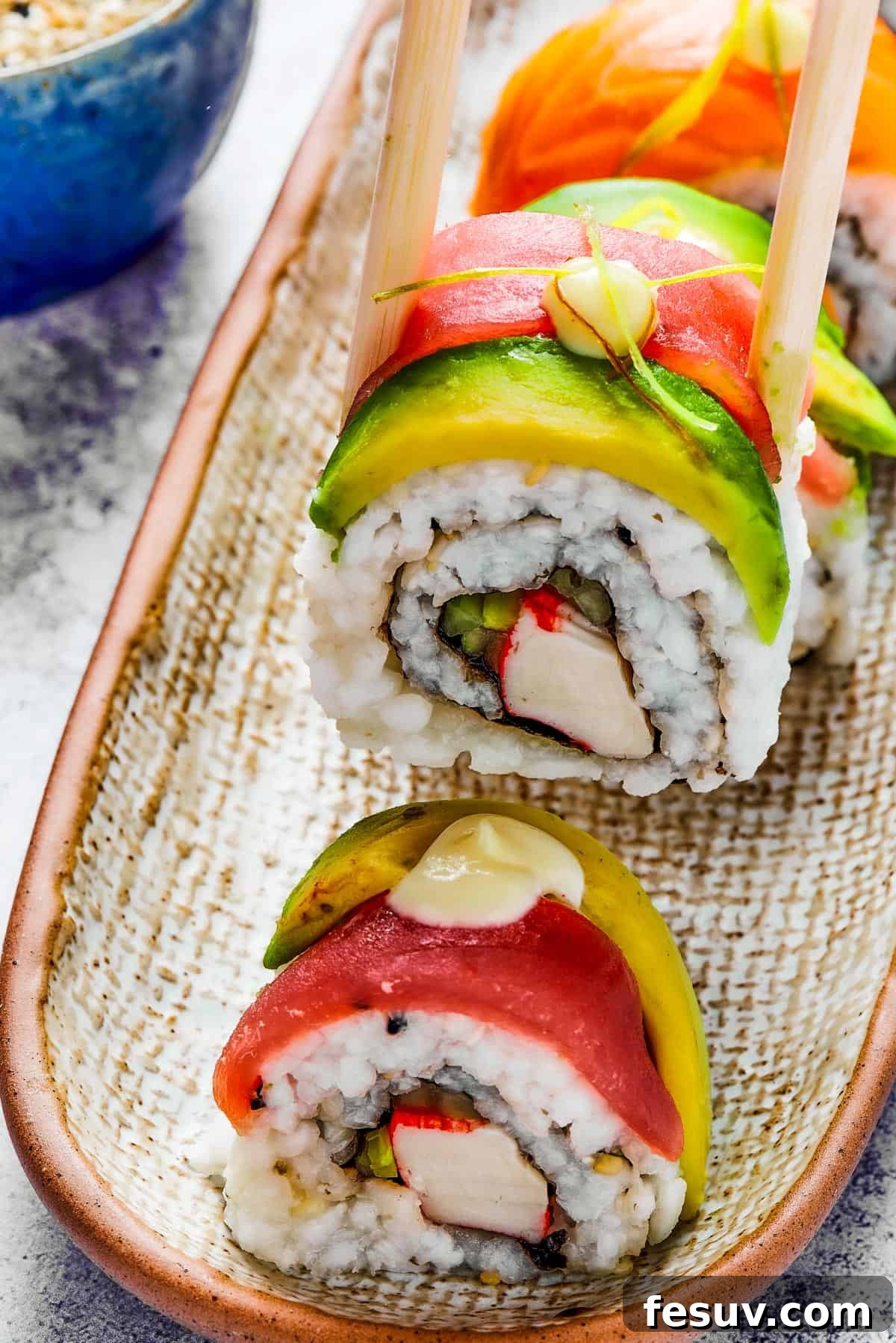
- Slice and Serve. Using a very sharp knife (this is crucial!), cut the sushi roll into 6 or 8 even pieces. To prevent sticking and ensure clean cuts, wipe your knife with a damp cloth after every few slices. You want to slice straight down, avoiding a sawing motion that can crush the roll. Arrange the beautifully cut sushi pieces on a serving plate. Serve immediately with a very small amount of Japanese mayonnaise (if desired), along with traditional accompaniments like soy sauce, zesty wasabi, and sweet pickled ginger.
Tips for Sushi-Making Success and Creative Variations
Making sushi at home, especially for the first time, can feel daunting, but it’s a rewarding experience. These tried-and-true tips will help you achieve outstanding results and make the process more enjoyable. Happy sushi-rolling!
- Keep Your Hands Moist: Sushi rice is notoriously sticky. To prevent it from clinging to your fingers, lightly wet your hands with water (and a splash of rice vinegar, if desired) before handling the rice. Re-wet them as needed.
- Don’t Overfill Your Roll: It’s tempting to pack in as much filling as possible, but an overstuffed roll is much harder to close and cut neatly. A moderate amount of filling ensures a well-proportioned and manageable roll.
- Gentle but Firm Pressure: When rolling, apply enough pressure to make the roll compact and hold its shape, but not so much that you squeeze out the filling or mash the rice. It’s a delicate balance that comes with practice.
- The Power of a Sharp Knife: A sharp knife is your best friend when cutting sushi. A dull blade will tear the nori and squish the delicate ingredients. Keep a damp cloth nearby to wipe your blade clean after every few cuts; this prevents rice from sticking and ensures perfectly clean slices.
- Add a Splash of Color with Mango: For an extra layer of sweetness and a brilliant splash of yellow, try layering some thin slices of fresh mango alongside your fish and avocado on top of the roll. It adds a tropical twist that’s absolutely delicious.
- Spice Things Up: If you enjoy a bit of heat, mix sriracha with Japanese mayonnaise to create a creamy, spicy drizzle. You can pipe this over the finished rolls for a flavorful kick, or serve it on the side for dipping.
- Practice Makes Perfect: Don’t be discouraged if your first few rolls aren’t picture-perfect. Sushi rolling is a skill that improves with practice. Focus on the flavor, and the aesthetics will follow.
Elevate Your Meal: Delicious Serving Suggestions for Your Sushi
Your homemade Rainbow Rolls are fantastic on their own, but pairing them with complementary dishes can transform your meal into an unforgettable Japanese feast. These easy-to-make pan-Asian inspired recipes offer savory flavors and wonderful textures that perfectly accompany sushi:
- Crispy Shrimp Tempura: Lightly battered and perfectly fried shrimp tempura is a beloved Japanese restaurant staple. Making your own Shrimp Tempura at home is easier than you think, and fair warning—they’re incredibly addictive!
- Fresh Golden Veggie Spring Rolls: For a lighter, refreshing side, these Golden Veggie Spring Rolls are a family favorite. They’re light, crispy, and packed with nutritious vegetables, offering a delightful crunch.
- Comforting Egg Drop Soup: Perfect as a warm starter or a simple, light side dish, Egg Drop Soup is both nourishing and incredibly simple to prepare. Experience the comforting warmth of this classic soup alongside your sushi.
- Steamed Edamame: A classic and healthy appetizer. Simply steam or boil frozen edamame pods and sprinkle with a touch of sea salt. It’s a quick, easy, and satisfying snack.
- Miso Soup: A staple of Japanese cuisine, miso soup is a light, savory broth made with dashi (fish and seaweed stock) and miso paste, often containing tofu and wakame seaweed. It’s a perfect warm accompaniment.
- Gyoza (Japanese Dumplings): Pan-fried or steamed, savory gyoza filled with pork and vegetables are a fantastic addition to any Japanese meal. Their crispy bottoms and tender fillings are irresistible.
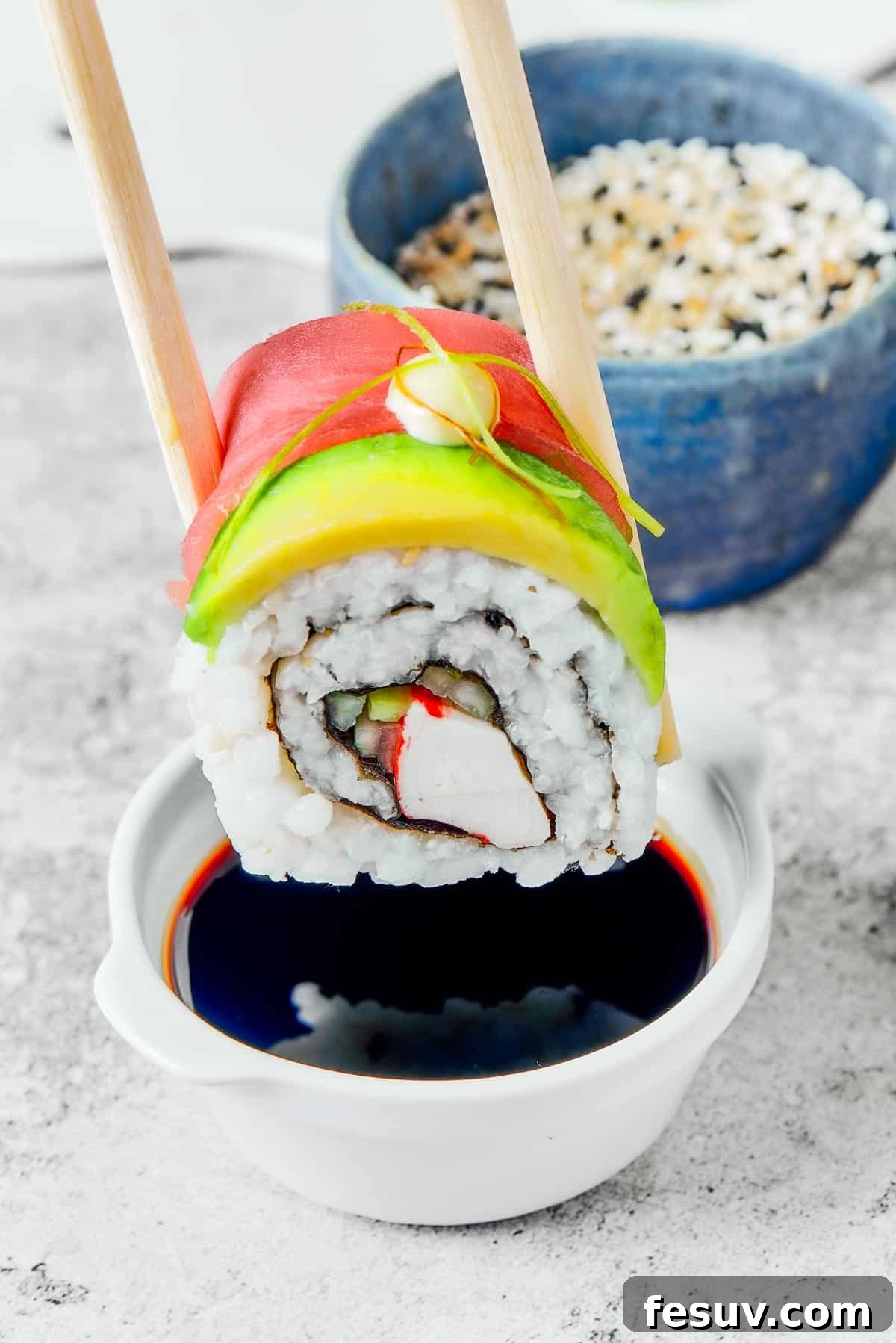
Don’t forget the traditional condiments: high-quality soy sauce, a dab of potent wasabi (use sparingly!), and refreshing pickled ginger (gari) to cleanse your palate between different sushi pieces. A small dish of Japanese mayonnaise or a spicy mayo drizzle can also add a creamy, rich element.
Storing Your Homemade Rainbow Rolls: What You Need to Know
While sushi is undeniably best enjoyed fresh, you can safely store any leftover Rainbow Rolls for a short period. Proper storage is crucial, especially since this recipe contains raw fish.
- If you have leftovers, wrap the individual pieces tightly in plastic wrap to prevent them from drying out and to minimize exposure to air. Then, place the wrapped sushi in an airtight container.
- Refrigerate immediately. For food safety reasons, ensure the sushi goes into the fridge no more than one hour after it was prepared.
- Consume within 24 hours. The delicate balance of flavors and textures, particularly of the raw fish and rice, is best preserved within this timeframe. After 24 hours, the quality can significantly diminish, and food safety risks increase.
Freezing Sushi: Is It a Good Idea?
While technically possible to wrap sushi tightly and freeze it for a very short period, I strongly advise against it for this Rainbow Roll recipe, or most sushi containing rice and raw fish.
- The primary issue lies with the sushi rice. After freezing and thawing, the rice tends to become dry, hard, and lose its desirable sticky, yet tender, texture. It often becomes grainy and unpleasant to eat.
- The raw fish, while technically safe if frozen properly from the start, can also suffer in texture upon thawing, potentially becoming mushy or watery.
- The delicate structure of the rolls is compromised, making them more likely to fall apart.
For the best possible flavor, texture, and overall enjoyment, this Rainbow Roll dish is truly best savored freshly made. Plan to consume it within the recommended 24-hour refrigeration period rather than attempting to freeze it for later.
Frequently Asked Questions About Rainbow Rolls and Sushi
What makes a Rainbow Roll “rainbow”?
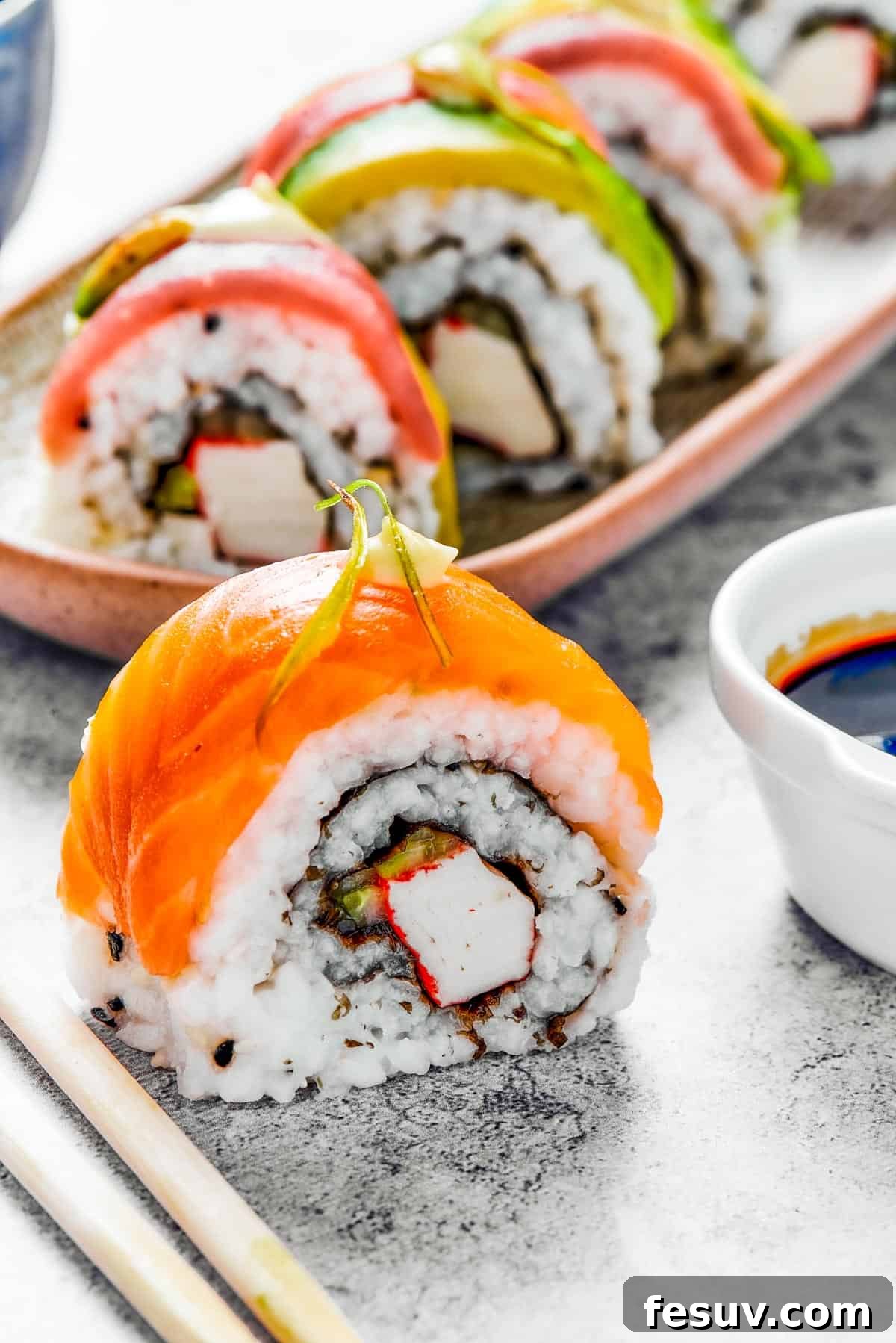
The “rainbow” in a Rainbow Roll refers to the vibrant array of toppings draped over the outside of the sushi roll. Typically, these toppings include thinly sliced salmon (orange), tuna (red), and avocado (green), creating a beautiful, multi-colored display that resembles a rainbow. This visual appeal, combined with the fresh flavors, makes it a popular choice.
What is the difference between sushi and sashimi?
Sushi generally refers to dishes made with vinegared rice. It can include raw fish, cooked seafood, or vegetables. Sashimi, on the other hand, is simply thinly sliced raw fish or seafood, served without rice. So, while all sashimi can be part of a sushi meal, not all sushi includes sashimi (raw fish).
Can I make a Rainbow Roll without raw fish?
Absolutely! While traditional Rainbow Rolls feature raw salmon and tuna, you can easily adapt this recipe to your preferences. Consider using thinly sliced cooked shrimp, smoked salmon, or even grilled chicken for a cooked protein option. For a delicious vegetarian version, simply omit the fish and crab, and focus on colorful vegetables like extra avocado, bell peppers, carrots, or mango. The “rainbow” effect can still be achieved with various vibrant veggies.
What is sushi rice, and why is it important?
Sushi rice (sushi-meshi) is short-grain Japanese white rice that has been seasoned with a dressing of rice vinegar, sugar, and salt. This seasoning gives it its distinctive slightly sweet, tangy flavor and unique sticky texture, which is crucial for holding the roll together and balancing the other ingredients. Regular long-grain rice will not work as a substitute because it lacks the necessary starch and stickiness.
What’s the best way to slice the fish and avocado for the topping?
For the best presentation and texture, slice your sushi-grade fish and avocado thinly and uniformly. Aim for slices about 0.1 inches thick. For fish, use a very sharp knife and slice against the grain for a tender bite. For avocado, peel it first, then slice it lengthwise or crosswise into thin, even strips or fans. Consistency in thickness will ensure your rainbow topping looks neat and beautiful.
Explore More Fabulous Seafood Recipes
If you’re a fan of the sea’s bounty, don’t stop at sushi! Dive into these other incredible seafood dishes that are perfect for any weeknight or special occasion:
- Blackened Balsamic Tuna Steaks: A flavorful and quick dish that brings restaurant-quality tuna to your table.
- Salmon Florentine: Elegant and rich, this salmon dish with creamy spinach is a sophisticated choice.
- Crab Cake Sliders: Bite-sized delights that are perfect for appetizers or a light, flavorful meal.
We hope this comprehensive guide inspires you to create your own stunning and delicious Rainbow Rolls at home. Enjoy the process, savor the flavors, and impress your taste buds with this vibrant culinary creation!