

Unlock the secret to an unforgettable meal with this comprehensive guide to preparing a succulent, herb-crusted Rack of Lamb. This elegant main course, featuring tender lamb enveloped in a flavorful Dijon mustard and aromatic breadcrumb coating, promises to be a showstopper at any gathering. Forget complicated techniques; this recipe focuses on simplicity without compromising on gourmet taste, making it achievable for even novice cooks.
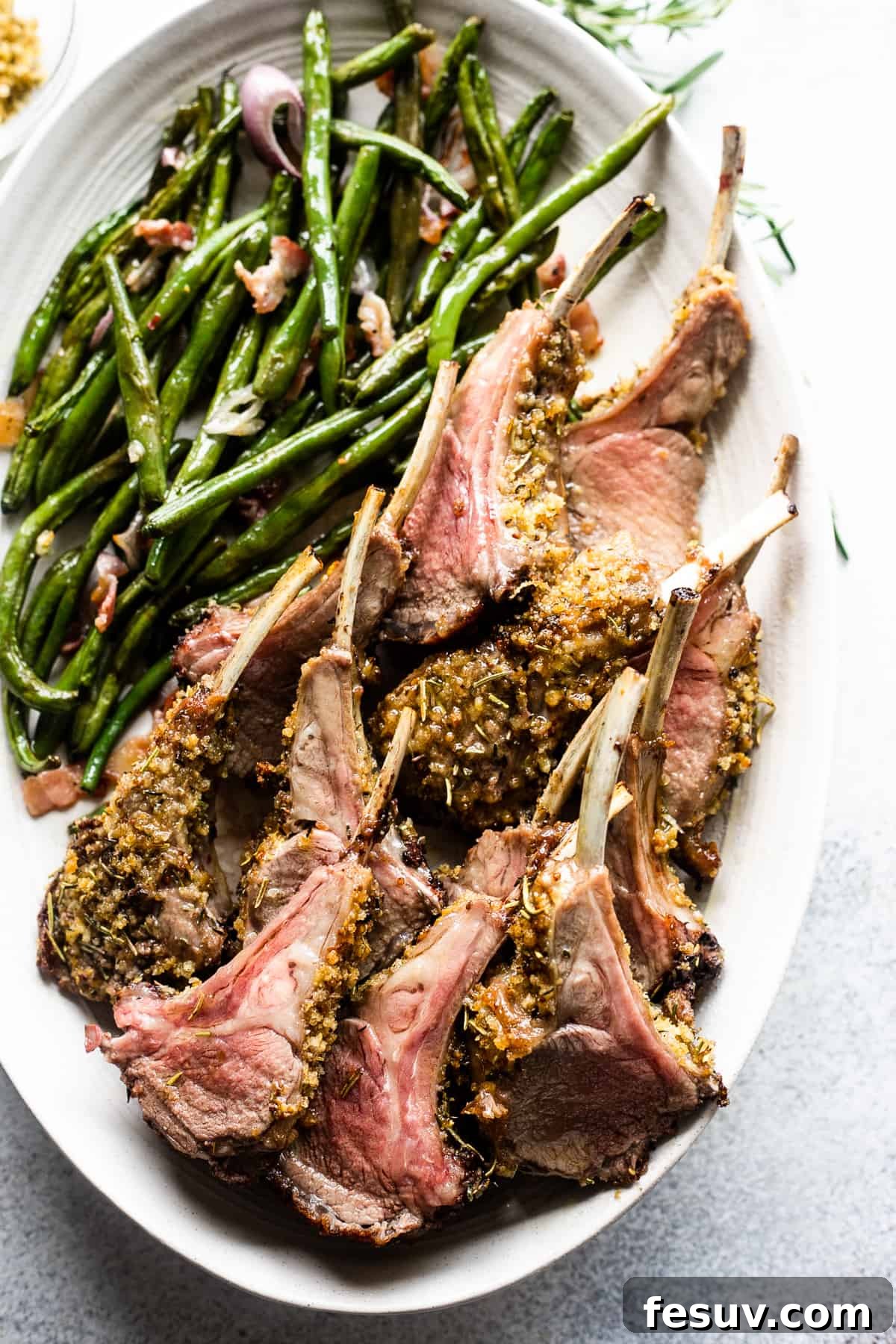
If you’re searching for the ultimate dinner recipe to elevate your special occasions, look no further than this incredibly easy roasted rack of lamb. It truly embodies culinary excellence, delivering remarkably tender and juicy lamb, crowned with a crisp, herb-infused crust, and cooked to a delicate pink perfection. Roasting quickly in a hot oven, this method demystifies lamb preparation, making it accessible even for those new to cooking this exquisite meat. The critical use of a reliable meat thermometer guarantees flawless timing, ensuring a practically foolproof result every time. The robust, gourmet flavor profile of this dish is genuinely extraordinary, making it a memorable centerpiece for holidays, celebrations, or any time you desire a luxurious meal with minimal fuss.
Understanding the Rack of Lamb: A Premium Cut Explained
A rack of lamb is essentially a primal cut consisting of a series of rib chops that remain connected, akin to a beef rib roast, but derived from lamb. Typically, a full rack contains eight ribs, though smaller portions are also available. This particular cut is highly prized for its exceptional tenderness and rich, delicate flavor. Given its inherent tenderness, it is best enjoyed when cooked to a rare or medium-rare internal temperature, allowing its natural juices and succulence to truly shine. Often, a rack of lamb is “frenched,” a culinary technique where the meat and fat are trimmed from the ends of the rib bones, exposing them for an elegant presentation. This luxurious option is not only impressive but also surprisingly straightforward to cook, making it a fantastic choice for home chefs looking to create a high-end dining experience without hours of kitchen work.
Essential Ingredients for Your Classic Rack of Lamb
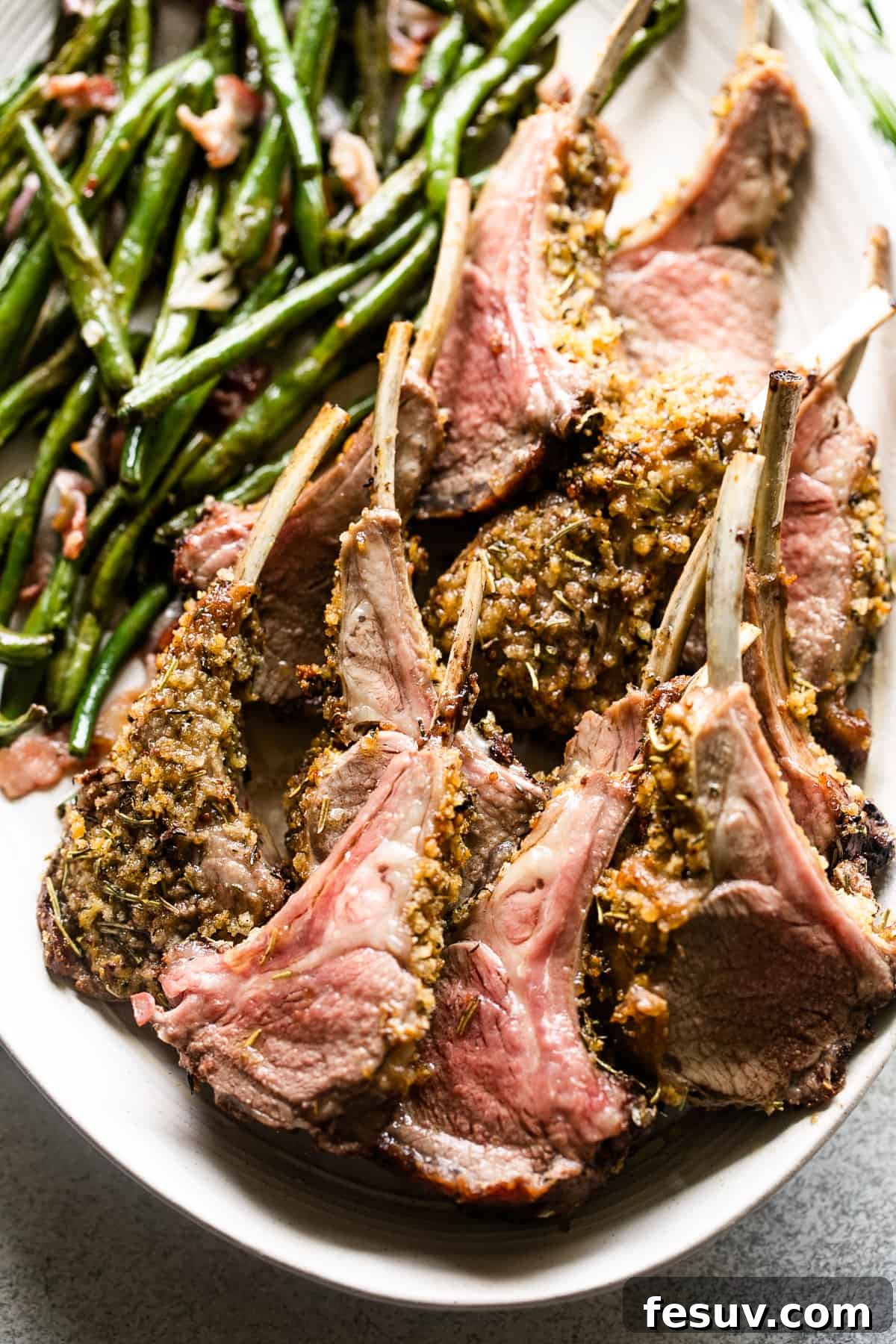
Crafting this classic rack of lamb recipe requires only a handful of fundamental ingredients, each playing a pivotal role in developing the complex and utterly delightful flavors that make this dish so special. Sourcing quality ingredients will significantly enhance your final result. Here’s a detailed breakdown of what you’ll need and why:
- Breadcrumbs: The foundation of our irresistible crust. You have flexibility here; traditional fine breadcrumbs create a dense, even coating, while Panko crumbs offer a lighter, crispier texture. For a gluten-free or low-carb alternative, pork rind crumbs work wonderfully, providing a savory crunch.
- Aromatic Herbs: A fragrant blend of crushed dried rosemary and thyme forms the aromatic heart of the crust, imparting a classic, earthy flavor that beautifully complements lamb. While dried herbs are convenient and potent, you can certainly use fresh herbs if preferred. Just ensure they are very finely chopped to adhere well to the lamb.
- Garlic Powder: This adds a concentrated, savory garlic essence to the crust that is both robust and deeply satisfying, without the risk of burning fresh garlic during roasting.
- Olive Oil: Used in both the crust mixture and for searing the lamb, olive oil helps bind the breadcrumbs and creates a beautiful golden-brown sear. A good quality extra virgin olive oil is preferred for its flavor, but any neutral oil like vegetable or canola oil can be substituted.
- Rack of Lamb: The star of our dish. This recipe typically calls for one 8-to-10 bone rack of lamb, weighing approximately 1.5 to 2 pounds. It should ideally be trimmed and frenched, meaning excess fat and meat are removed from the rib bones for a clean presentation. For best results and even cooking, allow the meat to come to room temperature for about 30-60 minutes before you begin preparation.
- Salt and Freshly Ground Black Pepper: These fundamental seasonings are crucial for enhancing the lamb’s natural flavor. Seasoning generously before cooking ensures deep flavor penetration throughout the meat.
- Fresh Garlic Cloves: Crushed fresh garlic, briefly seared with the lamb, infuses the meat with a pungent, aromatic flavor that differentiates it from the garlic powder in the crust. No need to mince; simply crushing the cloves releases their oils effectively.
- Dijon Mustard: This ingredient is a game-changer! Dijon mustard acts as a flavorful adhesive for the breadcrumb crust, providing a tangy, slightly spicy kick that cuts through the richness of the lamb and adds a layer of complex flavor. While Dijon is highly recommended, any robust mustard you have on hand can work in a pinch.
Mastering the Art of Roasting a Rack of Lamb
Now, let’s delve into the most crucial aspect: the cooking process. Given that rack of lamb cooks relatively quickly, it’s advisable to prepare any side dishes in advance or start them before you embark on the main course to ensure everything is ready to serve simultaneously.
- Initial Preparation: Oven, Crust, and Lamb. Begin by preheating your oven to a robust 450˚F (230˚C) and ensure the oven rack is positioned in the center. Next, prepare the flavorful crust mixture: in a shallow bowl or baking dish, combine the breadcrumbs, crushed dried rosemary, dried thyme, garlic powder, and two tablespoons of olive oil. Stir thoroughly until the ingredients are well integrated and resemble coarse, moist crumbs. A shallow dish makes coating the lamb significantly easier than a deep mixing bowl. Finally, take your rack of lamb, pat it completely dry with paper towels to ensure a good sear, and season generously all over with salt and freshly ground black pepper.
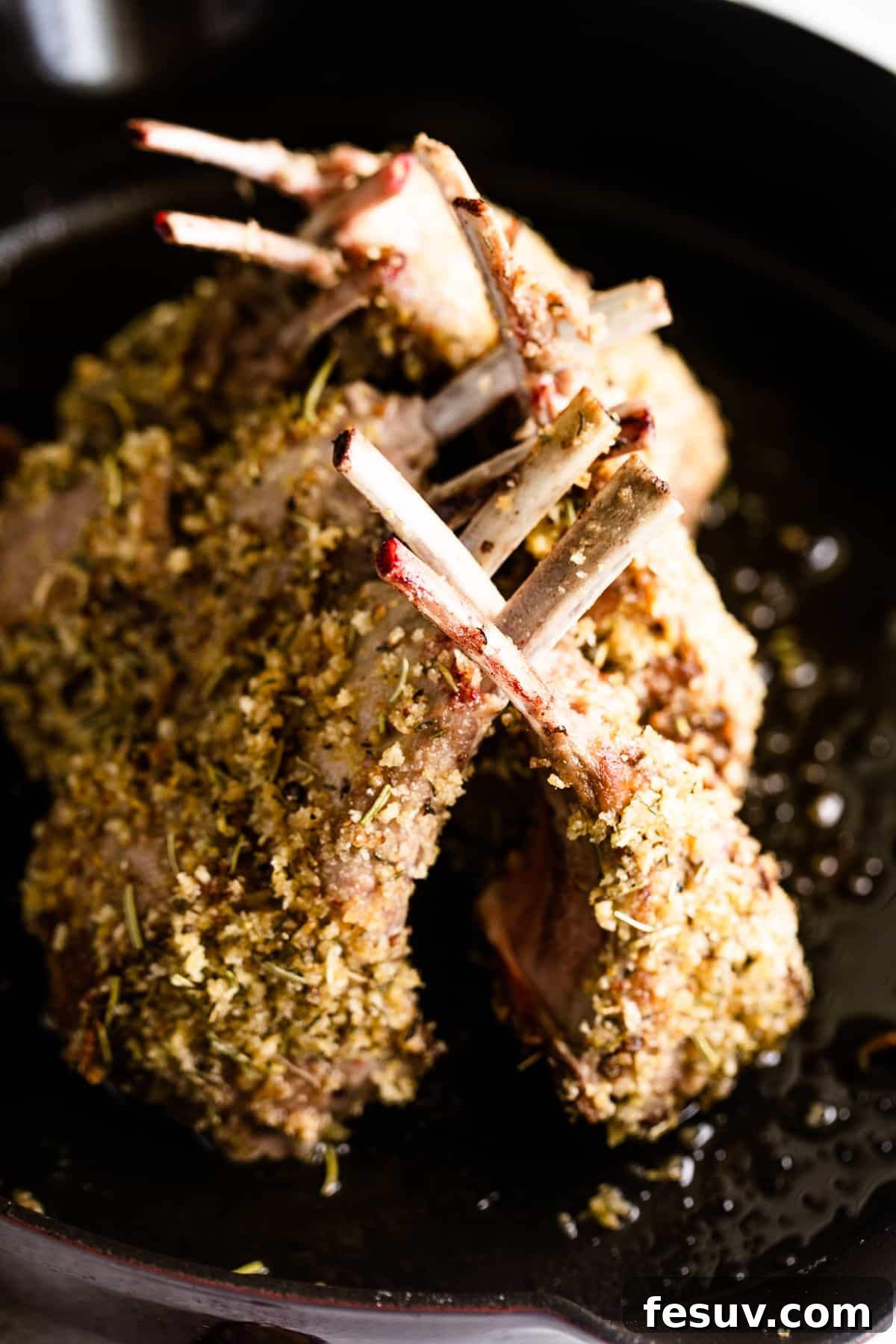
- Achieving a Perfect Sear. To lock in those precious juices and develop a rich, golden-brown exterior, heat two tablespoons of olive oil (or vegetable oil) in a large, oven-safe skillet over high heat until shimmering. Once the oil is hot and just beginning to smoke, add the crushed garlic cloves to the pan, allowing them to infuse the oil with their aroma for about 30 seconds. Carefully place the rack of lamb, fat-side down first if applicable, into the hot skillet. Sear for approximately 1 to 2 minutes per side, turning with tongs, until each side is beautifully browned. This crucial step creates a flavorful crust through the Maillard reaction.
- Coating and Readying for Roasting. Remove the skillet from the heat. Carefully transfer the seared lamb rack from the skillet to a clean surface. Using a pastry brush, generously coat the entire seared surface of the lamb with Dijon mustard. Then, roll the lamb rack in your prepared breadcrumb mixture, pressing gently to ensure an even and thick coating. Return the coated lamb to the same oven-safe skillet. To prevent the exposed rib bones from burning during roasting, loosely cover them with a small piece of aluminum foil.
- The Roasting Process. Place the skillet with the lamb into your preheated oven. Roast for 15 to 22 minutes, or until the internal temperature reaches your desired doneness. For rare lamb, aim for 125˚F (52˚C). For medium-rare, target 135˚F (57˚C). I cannot emphasize this enough: always use an Instant-Read Meat Thermometer inserted into the thickest part of the meat (avoiding the bone) for precise and safe cooking results. Begin checking the temperature around the 15-minute mark to prevent overcooking.
- The Essential Resting Period. Once cooked to your preference, remove the lamb from the oven and transfer it to a clean cutting board. Tent it loosely with aluminum foil and allow it to rest for at least 10 minutes. This resting period is vital; it allows the muscle fibers to relax and the internal juices to redistribute evenly throughout the meat, resulting in a more tender and moist final product. Skipping this step can lead to dry lamb.
- Carve and Serve! After resting, use a sharp carving knife to slice the rack of lamb into individual chops, cutting carefully between the ribs. Arrange the chops on a serving platter, garnish with fresh parsley for a pop of color and freshness, and serve immediately to your eager guests.
To Cut or Not to Cut: Preparing Your Rack of Lamb
The decision to cut your rack of lamb before cooking largely depends on how it was purchased. If your lamb came “un-frenched” (meaning the meat and fat are still attached to the rib bones), you might choose to french it yourself for aesthetic reasons, or simply leave it as is for a more rustic presentation. Additionally, it’s always advisable to trim away any excessive white fat from the top of the rack and remove any silvery membrane (silver skin) you might observe, as these can become tough when cooked. However, it is generally not recommended to portion the rack into individual chops before cooking. Roasting the rack whole helps to keep the meat moist and ensures more even cooking. Carving the rack into individual chops after it has roasted and rested allows the juices to remain locked in, resulting in juicier, more flavorful servings.
Pro Tips for a Flawless Rack of Lamb
Achieving a restaurant-quality rack of lamb at home is easier than you think, especially with these insider tips:
- Choosing a Quality Lamb Rack: The foundation of a delicious dish starts with selecting the best ingredients. When choosing your rack of lamb, look for meat that is rosy-red or even a delicate pink in color. Avoid lamb that appears dark red, as this can indicate it’s not as fresh, which can lead to a tougher texture and less appealing flavor. Another excellent indicator of fresh, tender lamb is a pure white fat cap with a fine grain, free from discoloration or a rough, grainy appearance. A pleasant, mild aroma is also a good sign; steer clear of any strong, gamey smells.
- The Art of Frenching: Is it Worth It? Most classic recipes for rack of lamb specify that the lamb should be “frenched.” This traditional butchering technique involves removing the layer of fat and meat attached to each rib bone, leaving the tender “eye” of the chop attached to a clean, exposed bone. This results in a visually stunning, elegant presentation that often serves as a convenient “handle” for diners. While frenching certainly enhances the dish’s aesthetic appeal, it is not strictly necessary for flavor or tenderness. In fact, some connoisseurs prefer to leave the rib meat and fat intact, appreciating their rich flavor and slightly chewy texture. Ultimately, whether to french your lamb is a personal preference based on desired presentation and taste. Your butcher can typically french the rack for you upon request.
- Understanding Serving Sizes: If you’re not accustomed to cooking lamb, it’s important to note that lamb chops and a rack of lamb can appear quite small compared to cuts of beef or pork. When planning your meal, a good rule of thumb is to allow for 2 to 3 chops per person for a satisfying portion. Therefore, if you are hosting more than three or four guests, you will likely need to purchase two racks of lamb to ensure everyone gets a generous serving. Consider your guests’ appetites and whether other substantial sides will be served when determining the exact quantity.
Perfect Pairings: What to Serve with Rack of Lamb
To serve your magnificent rack of lamb, simply whip up one or two complementary side dishes. The lamb is undoubtedly the star, so there’s no need for overly complicated accompaniments. Here are some tried-and-true favorites that will enhance this classic main course:
- Roasted Carrots: In my culinary opinion, roasted carrots are an absolute must-have alongside lamb and beef alike! The natural sweetness of carrots beautifully balances the richness of lamb. Consider these shiny, ultra-flavorful Honey Balsamic Roasted Carrots for an especially gorgeous and delicious option.
- Potatoes, Gloriously Versatile: You can never go wrong with potatoes when serving lamb. Their comforting and neutral profile makes them a perfect canvas. Whether you prefer tender baked potatoes, crispy roasted potatoes with herbs, or the creamy indulgence of Classic Creamy Mashed Potatoes, any choice is sure to please your guests.
- A Fresh Veggie Medley: Boost the visual appeal and nutritional value of your meal with a vibrant vegetable medley. These mouthwatering Grilled Vegetables with Lemon Dressing offer a refreshing contrast to the savory lamb, providing brightness and textural variety. A simple green salad with a light vinaigrette also works wonders.
- Rich Sauces: While the lamb is incredibly flavorful on its own, a complementary sauce can elevate the dish further. A classic mint sauce, a red wine reduction, or a vibrant chimichurri would all pair wonderfully.
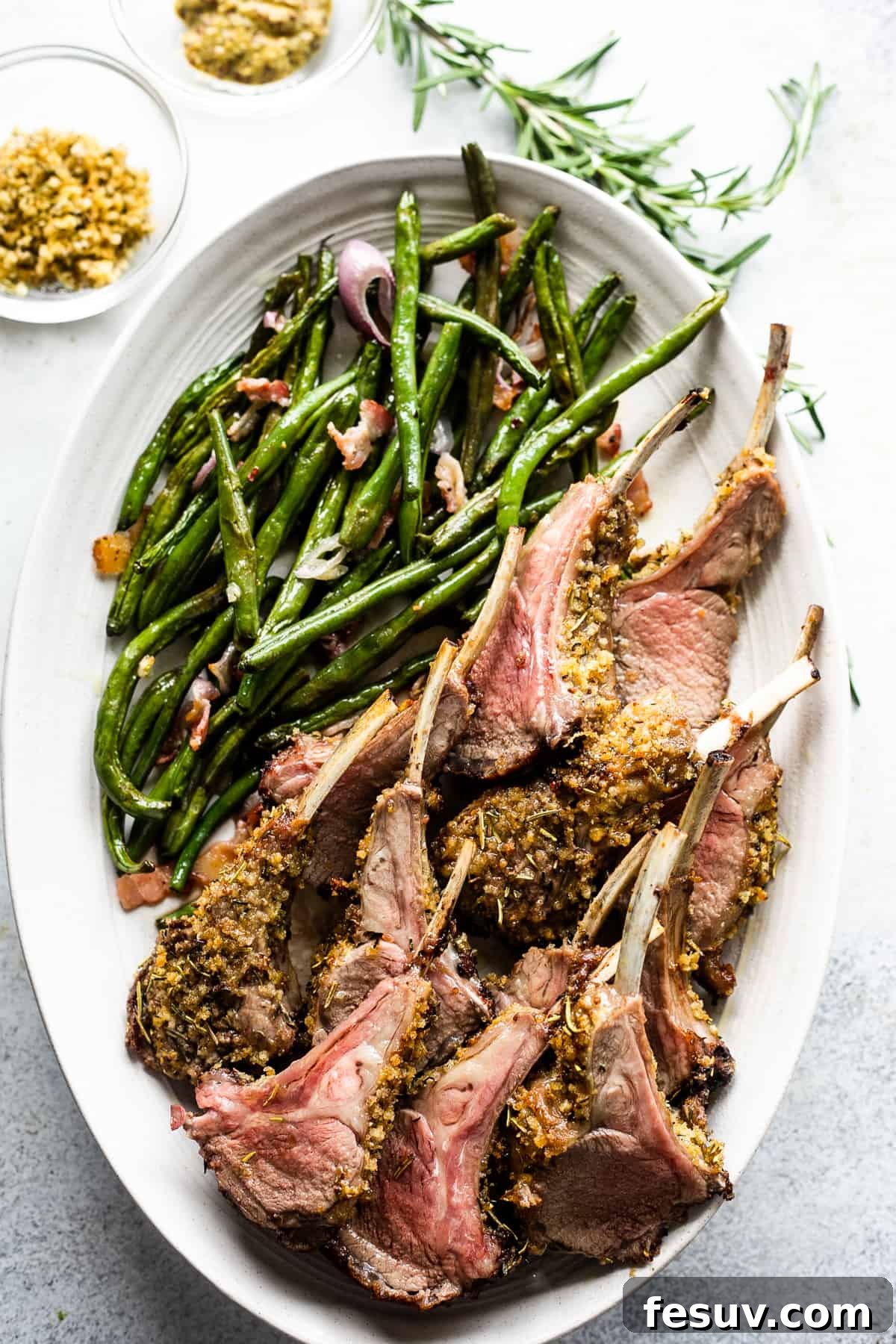
- Seasonal Greens: Lightly sautéed spinach with garlic, blanched asparagus, or perfectly steamed green beans (as shown in the images) are simple yet elegant choices that let the lamb shine.
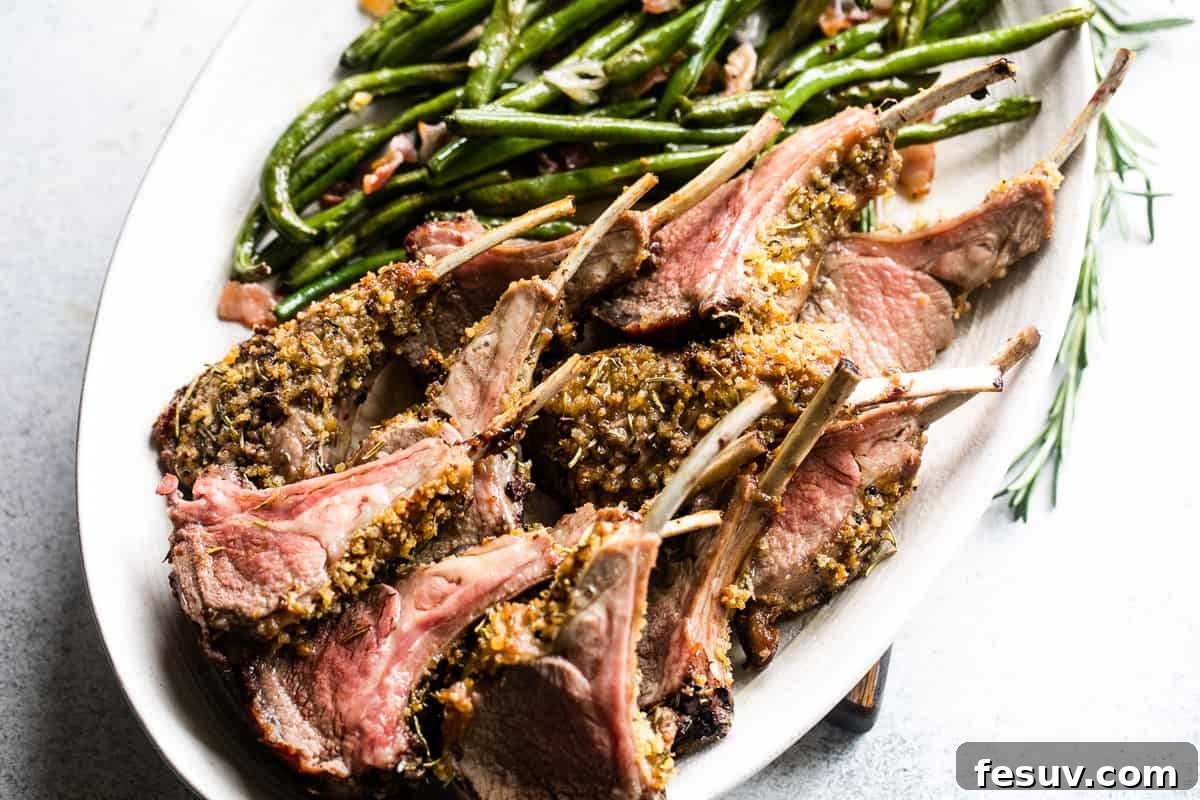
Storing and Reheating Leftover Lamb
Should you be fortunate enough to have any leftover lamb, proper storage and reheating are key to maintaining its deliciousness:
- To **store** leftover lamb, allow it to cool completely, then wrap it tightly in plastic wrap or place it in an airtight container. It will keep well in the refrigerator for up to 3 days. For longer storage, you can freeze it for up to 2 months. Thaw frozen lamb in the refrigerator overnight before reheating.
- When **reheating**, the goal is to warm it through without overcooking and drying out the delicate meat. You can serve the lamb at room temperature for a quick option. To reheat gently, place the lamb chops in a covered skillet over medium-low heat, adding a tablespoon or two of water or broth to create steam and prevent dryness. Reheat just until warm, being very careful not to let the lamb cook further than its original doneness. You can also reheat in a low oven (around 250°F / 120°C) until just warm.
Classic Rack of Lamb
by Katerina | Easy Weeknight Recipes
Rack of lamb coated in Dijon mustard and a rich breadcrumb crust. It’s a great recipe for entertaining and for the holidays!
Prep Time: 10 minutes
Cook Time: 30 minutes
Resting Time: 15 minutes
Total Time: 55 minutes
Servings: 4
Ingredients
FOR THE CRUST
- ½ cup breadcrumbs, or panko crumbs, or pork rind crumbs
- 1 teaspoon crushed dried rosemary
- 1 teaspoon dried thyme
- 1 teaspoon garlic powder
- 2 tablespoons olive oil
FOR THE RACK OF LAMB
- 1 (8 to 10 bone) rack of lamb, about 1.5 to 2 pounds, trimmed and frenched
- ¾ teaspoon salt, or to taste
- ½ teaspoon fresh ground black pepper, or to taste
- 2 tablespoons olive oil
- 4 cloves garlic, crushed
- 2 tablespoons Dijon mustard
Instructions
- Preheat oven to 450˚F (230˚C) and set oven rack in the center position.
- In a square or rectangular baking dish, combine the bread crumbs, dried rosemary, thyme, and garlic powder; add 2 tablespoons olive oil and stir until thoroughly combined. Set aside. (Using a shallow dish makes coating the lamb much easier.)
- Pat the lamb rack completely dry with paper towels, then season it generously with salt and pepper all around.
- Heat 2 tablespoons olive oil in a large oven-safe skillet over high heat until shimmering.
- When the oil is hot, stir in the crushed garlic and sear the rack of lamb for about 1 to 2 minutes per side, or until just browned on all sides.
- Remove the skillet from heat; carefully remove the lamb from the skillet.
- Brush the lamb generously with Dijon mustard and roll it in the breadcrumb mixture, pressing gently to ensure a thorough coating.
- Return the coated lamb to the skillet and cover the exposed rib bones with aluminum foil to prevent them from burning during roasting.
- Roast for 15 to 22 minutes, or until the internal temperature registers at 125˚F (52˚C) for RARE, or 135˚F (57˚C) for medium-rare. Please use an Instant Read Meat Thermometer for accurate results, and begin checking the temperature around the 15-minute mark.
- Remove lamb from oven; transfer to a cutting board and loosely cover with foil. Let rest for 10 minutes before cutting.
- Cut in between the ribs to create individual chops, garnish with fresh parsley, and serve immediately.
Nutrition
Calories: 652kcal | Carbohydrates: 12g | Protein: 21g | Fat: 58g | Saturated Fat: 21g | Polyunsaturated Fat: 5g | Monounsaturated Fat: 28g | Cholesterol: 94mg | Sodium: 688mg | Potassium: 300mg | Fiber: 1g | Sugar: 1g | Vitamin A: 17IU | Vitamin C: 1mg | Calcium: 61mg | Iron: 3mg
Nutritional information is an estimate and provided as a courtesy. Values may vary according to the ingredients and tools used. Please consult your preferred nutritional calculator for more detailed information.
Explore More Classic Main Courses
If you enjoyed this elegant rack of lamb recipe, you might also like to try these other delightful main courses that are perfect for any weeknight or special occasion:
- Salmon Florentine: A delicious and quick fish dish bathed in a creamy spinach sauce.
- Roast Pork Tenderloin with Potatoes: A comforting and hearty meal featuring tender pork and roasted vegetables.
- Creamy Chicken Marsala: A rich and flavorful Italian-American classic that’s surprisingly easy to make.